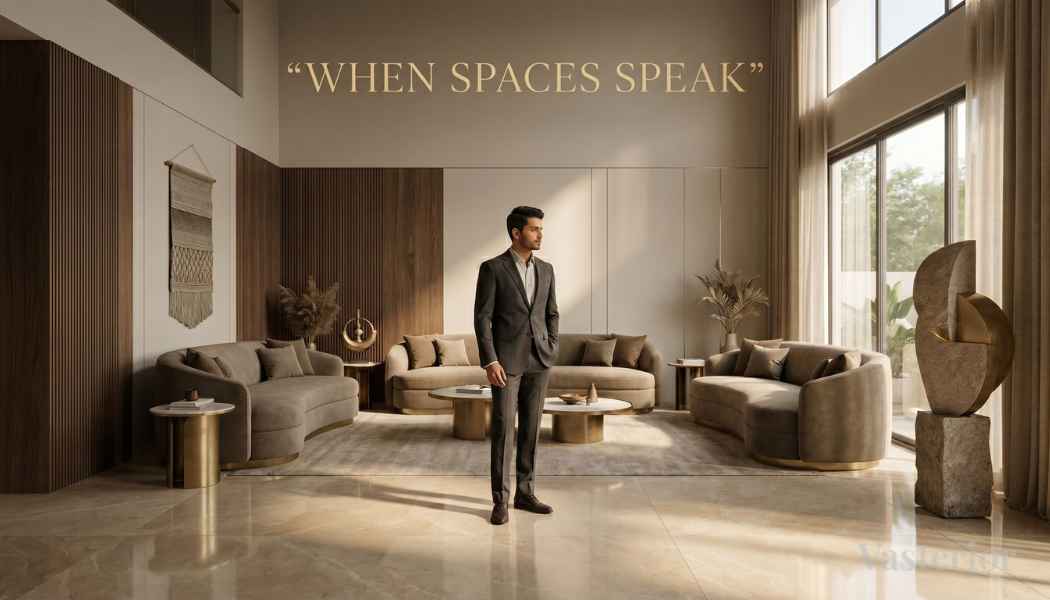
A marble entrance. Designer lighting. Imported furniture. Premium textures layered with precision.
Everything looks extraordinary.
Yet the atmosphere feels heavy.
The conversations feel shorter. Productivity feels slower. Sleep feels lighter. Decision making feels clouded. Energy levels fluctuate through the day. Even luxurious offices and carefully designed homes sometimes carry a strange emotional weight that people experience instantly the moment they walk in.
Modern architecture celebrates visual perfection. Human experience, however, responds to something far deeper.
A space carries memory, movement, direction, light behaviour, proportion, emotional rhythm, and energetic flow. Beauty creates attraction. Alignment creates harmony. That distinction changes everything.
At Vasterior, spatial transformation begins with a deeper understanding of how architecture interacts with human emotion, movement, mindset, and energetic intelligence. Through the integration of luxury interiors and MahaVastu principles, spaces evolve into environments that feel expansive, grounded, elevated, and deeply supportive.
The Illusion Of Visual Perfection
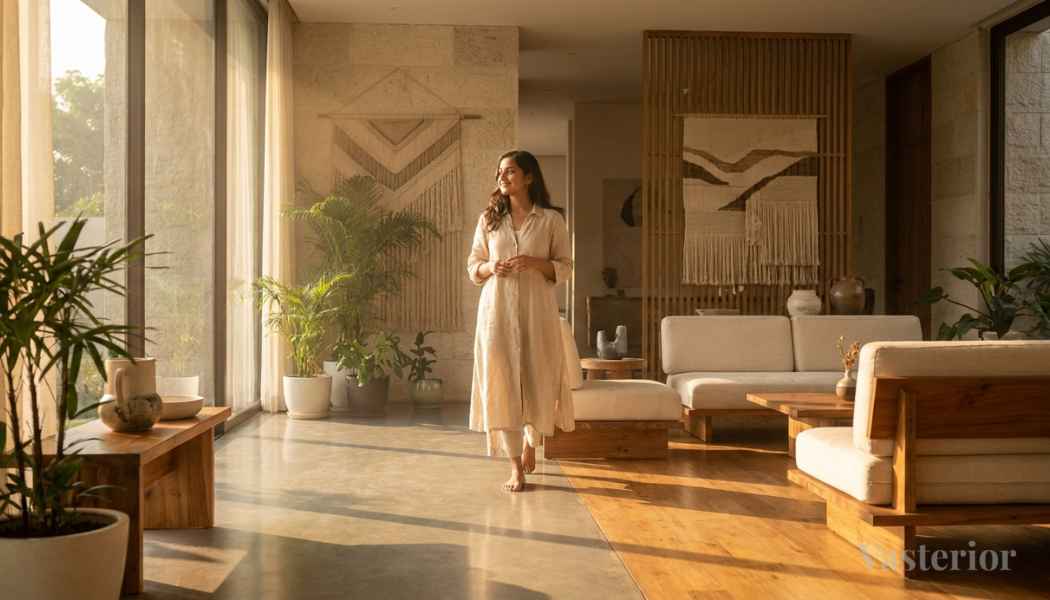
A visually appealing space creates instant admiration. Human psychology responds naturally to symmetry, texture, lighting, and aesthetics. Luxury design carries aspirational value. It communicates taste, status, refinement, and ambition.
Yet emotional comfort emerges from a completely different layer of spatial experience.
Many contemporary interiors focus heavily on appearance while spatial balance receives minimal attention. Rooms filled with expensive materials sometimes feel emotionally disconnected because the directional planning, energy movement, and functional rhythm create internal friction.
A living room may appear elegant while carrying excessive visual density. A workspace may feature sophisticated décor while the directional energy reduces focus and momentum. A bedroom may include premium finishes while the positioning of elements affects emotional relaxation.
Humans respond to spaces through subconscious environmental processing. Every direction, proportion, colour, shape, and flow pattern influences emotional behaviour.
That explains why some cafés feel instantly comforting while others feel emotionally distant despite similar aesthetics. That explains why certain offices inspire clarity while others feel mentally exhausting.
Spatial intelligence influences emotional experience long before logic enters the conversation.
Why Humans Emotionally Respond To Spaces
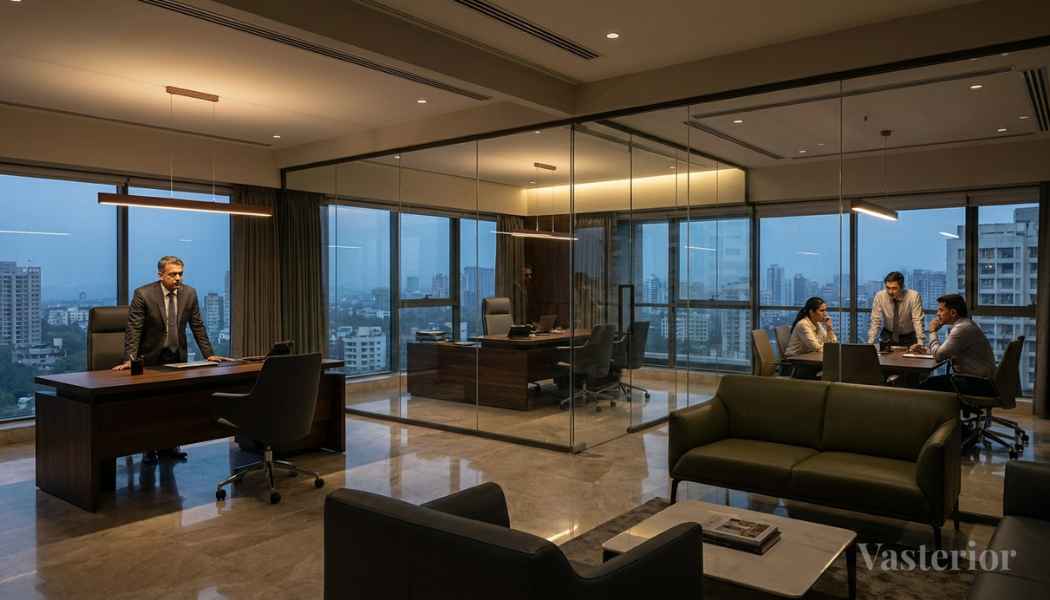
Architecture influences the nervous system continuously. Natural light affects hormonal rhythm. Ceiling height affects perception of freedom. Directional openness affects cognitive ease. Movement pathways affect subconscious comfort. Colour palettes influence emotional behaviour.
The human mind constantly interprets environmental signals.
A cluttered visual field creates energetic pressure. Restricted circulation affects emotional flow. Sharp spatial interruptions influence irritation levels. Harmonious proportions create ease and calmness.
Luxury design today extends beyond visual storytelling. It enters the realm of emotional engineering.
This shift explains the growing interest in wellness architecture, mindful interiors, biophilic design, and MahaVastu-guided spatial planning. People seek spaces that feel aligned with their inner rhythm.
Gen Z audiences especially connect deeply with emotionally intelligent spaces. This generation values aesthetic appeal alongside emotional resonance, intentionality, wellness, and energetic clarity.
A luxury space today carries emotional depth alongside visual sophistication.
When Aesthetics And Energy Move In Different Directions
A beautifully designed home can still feel emotionally restless. An elegant office can still experience communication friction. A modern factory can still experience workflow pressure and operational inconsistency.
Energy alignment influences the emotional and functional atmosphere of a space.
Directional planning shapes how movement, light, weight distribution, and activity patterns interact throughout the day.
For example, spaces with excessive energetic intensity in areas associated with rest often create overstimulation. Workspaces with weak directional support for focus may affect consistency and decision-making flow.
Luxury architecture reaches its highest expression when aesthetics and energetic intelligence move together. This philosophy forms the foundation of Vasterior's approach toward spatial transformation.
Every material selection, directional placement, colour palette, texture composition, and layout decision contributes toward a deeper experiential outcome.
Signs A Space Feels Emotionally Misaligned
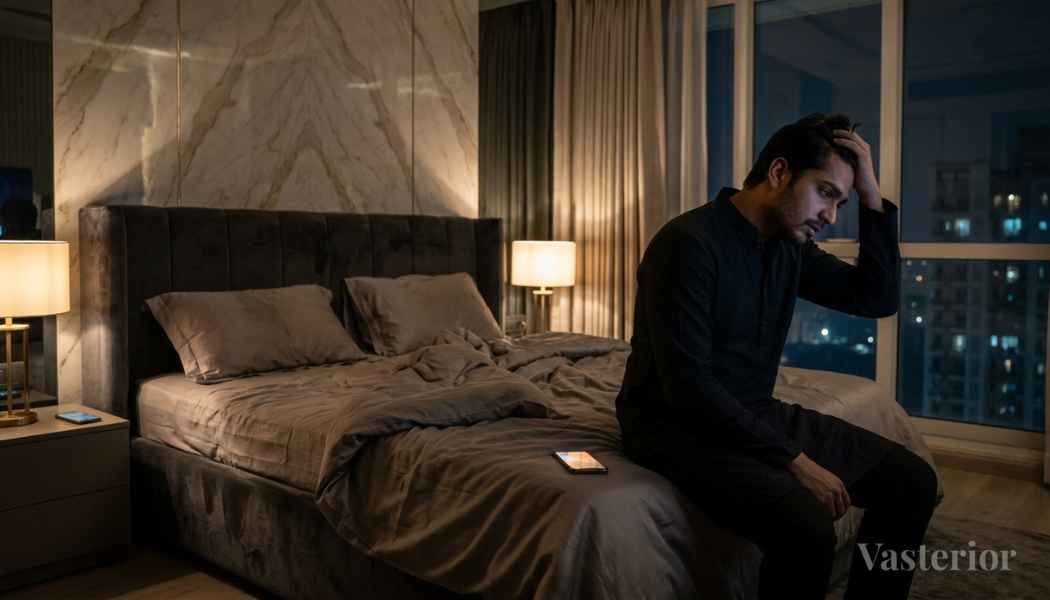
A space communicates continuously through feeling. Certain signs often indicate energetic imbalance within homes, offices, warehouses, and factories:
- Mental fatigue during specific hours
- Reduced creative flow
- Emotional heaviness within particular zones
- Interrupted sleep rhythm
- Frequent communication tension
- Low workplace enthusiasm
- Slow operational movement
- Difficulty maintaining focus
- Visual beauty with emotional disconnect
- Inconsistent momentum despite strong effort
These experiences influence lifestyle, relationships, productivity, leadership quality, and emotional wellbeing. Spatial alignment supports flow, consistency, clarity, and emotional grounding.
The Psychology Of Layout And Directional Planning
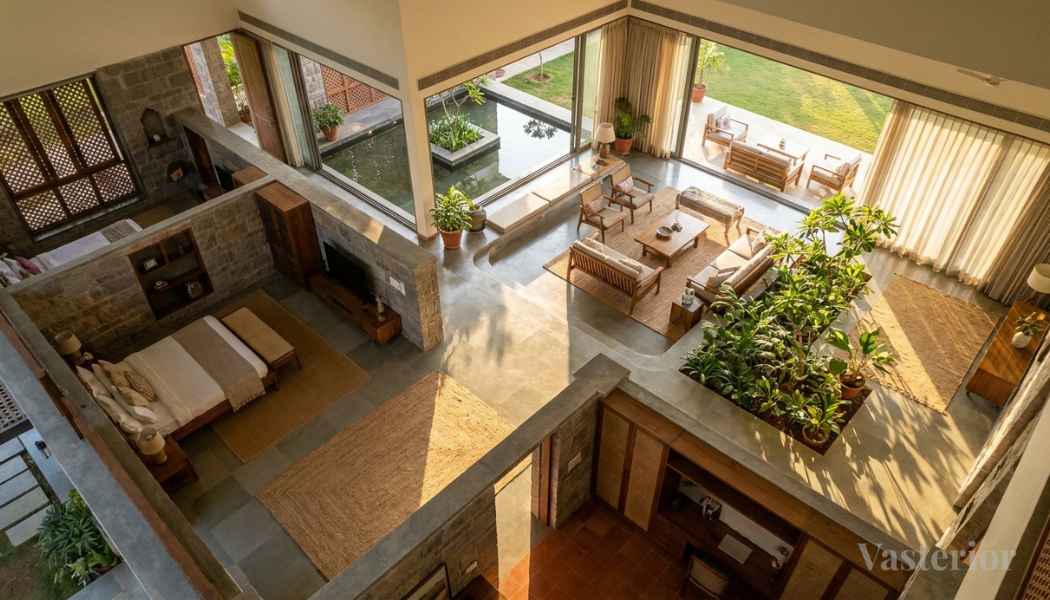
Direction influences environmental behaviour. Morning light patterns affect emotional activation. Air movement influences freshness perception. Weight distribution affects energetic grounding. Open zones influence expansion and mental clarity.
Traditional architectural sciences recognised directional intelligence centuries ago. Contemporary environmental psychology now explores similar principles through behavioural research and sensory studies.
MahaVastu enhances this understanding by interpreting directional energies through practical spatial alignment.
- Eastern zones support vitality and growth-oriented activities
- Northern spaces support movement, opportunities, and communication
- Southern areas support stability and structure
- Western zones support consistency and long-term sustenance
When design decisions align with these energetic qualities, spaces feel naturally supportive. This integration creates interiors that feel emotionally fluid while maintaining luxurious sophistication.
MahaVastu-guided colour planning considers directional compatibility alongside psychological effect.
This creates visual harmony alongside energetic coherence.
Luxury today embraces intentionality. Every texture, finish, colour, proportion, and directional choice contributes toward the emotional intelligence of a space.
Why Luxury Spaces Thrive Through Energetic Intelligence
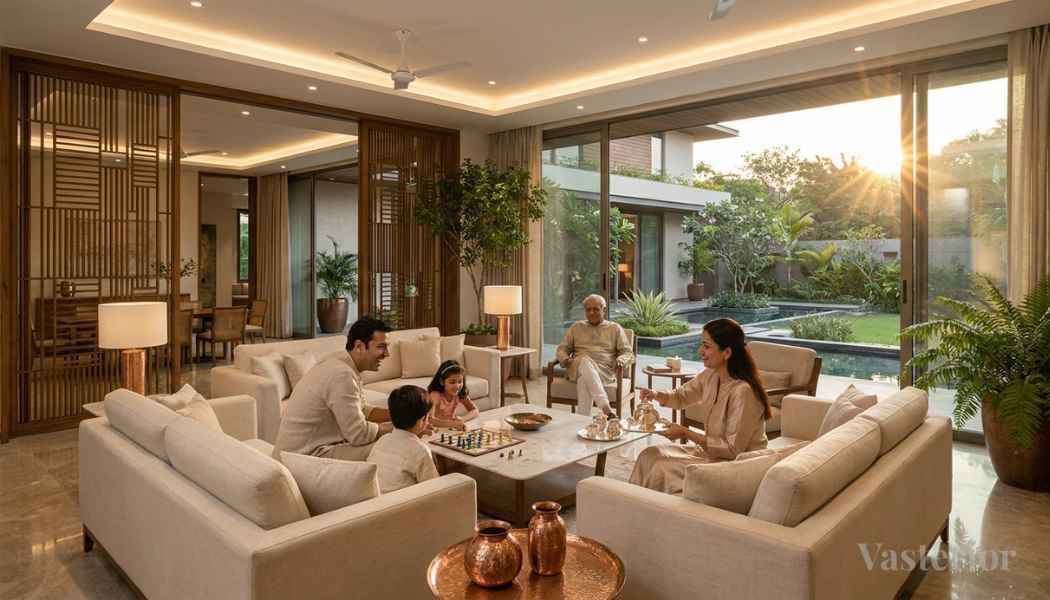
The future of luxury design extends beyond appearance. Modern clients seek:
- Emotional wellbeing
- Mental clarity
- Personal resonance
- Spatial harmony
- Wellness integration
- Energetic comfort
- Meaningful environments
This evolution transforms interior design into a deeply human experience.
A well-aligned space supports:
Luxury now feels experiential rather than decorative. This philosophy sits at the heart of Vasterior's design language.
How Vasterior Approaches Spatial Transformation
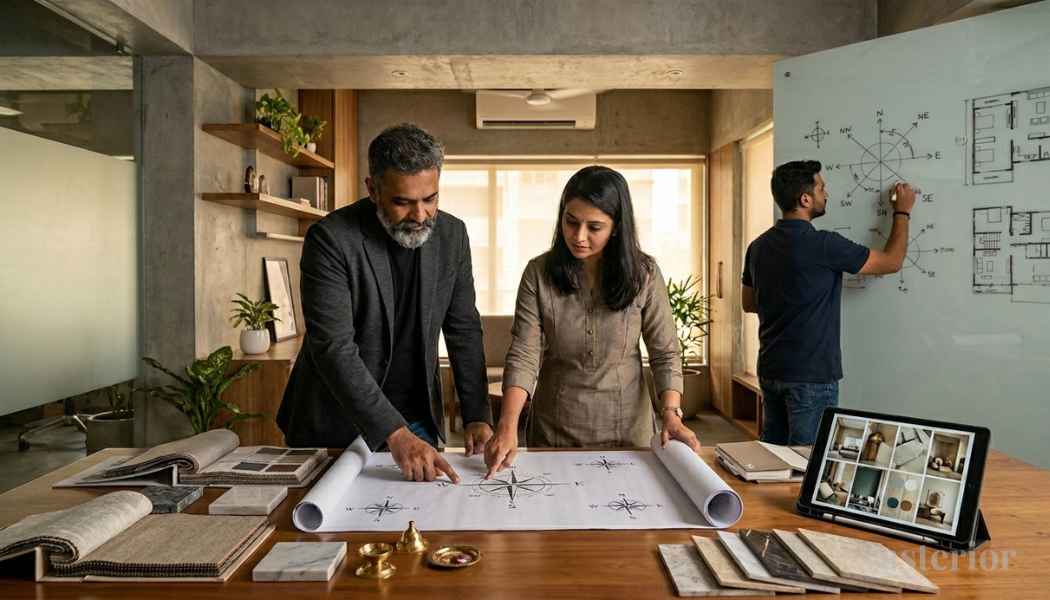
Vasterior approaches interiors through the intersection of luxury aesthetics, spatial psychology, and MahaVastu intelligence.
Each project receives a personalised understanding of:
From luxury residences to industrial spaces, the focus remains centred around creating environments that feel expansive, elegant, grounded, and emotionally supportive.
A factory becomes more than infrastructure. A residence becomes more than décor. An office becomes more than a workspace. The space evolves into a living ecosystem that supports the people within it.
- Directional energy
- Human movement patterns
- Functional requirements
- Emotional experience
- Architectural rhythm
- Material harmony
- Colour psychology
- Energetic alignment
Why The Future Of Design Feels More Human
People remember how spaces make them feel. That emotional memory influences relationships with homes, workplaces, brands, and environments.
A beautifully aligned space creates emotional ease that people experience immediately.
The lighting feels softer. The atmosphere feels calmer. Conversations feel lighter. Productivity feels smoother. Creativity flows naturally.
Luxury enters a completely different dimension when design aligns with human energy and emotional intelligence. That is where visual beauty transforms into meaningful experience.
Conclusion
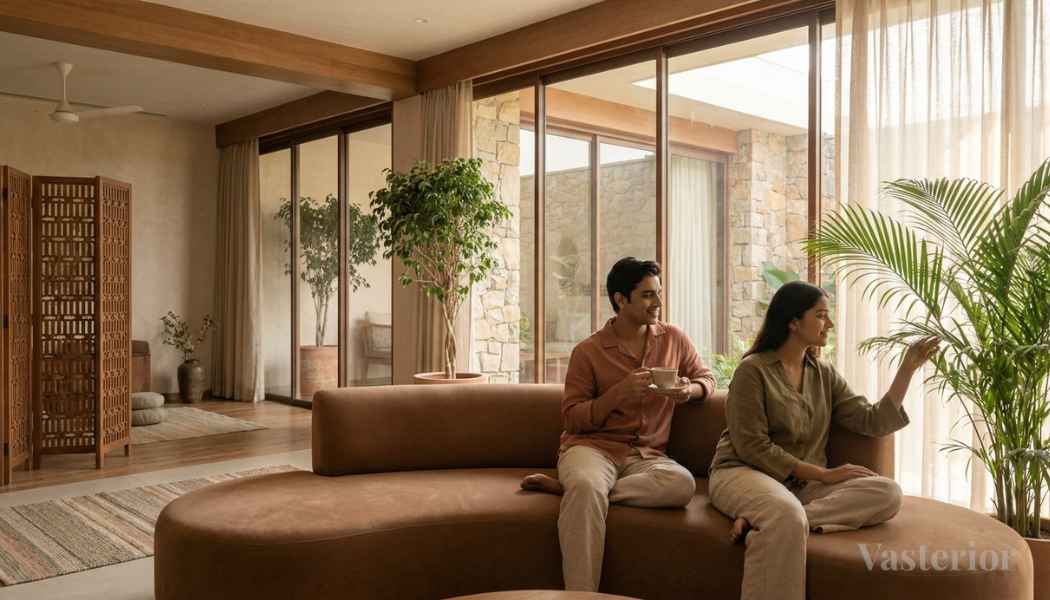
A beautiful space creates admiration. An aligned space creates transformation.
The future of luxury interiors belongs to environments that combine aesthetics with emotional resonance, directional intelligence, and energetic harmony.
Homes, offices, factories, and commercial spaces thrive through thoughtful alignment of structure, colour, light, movement, and purpose.
At Vasterior, every project begins with the belief that architecture shapes human experience in profound ways. Through luxury interiors guided by MahaVastu principles, spaces evolve into environments that support clarity, harmony, prosperity, creativity, and emotional wellbeing.
For personalised spatial guidance and thoughtfully aligned interiors, Vasterior welcomes meaningful conversations through +91 9100883355 or via info@vasterior.com where every project begins with understanding the energy story of the space itself.
Frequently Asked Questions
1. Why do beautiful spaces sometimes feel emotionally heavy?
Spatial alignment, directional planning, colour psychology, lighting behaviour, and movement flow influence emotional comfort alongside aesthetics.
2. How does MahaVastu influence interior design?
MahaVastu aligns directional energies with spatial functions to create harmony, clarity, and supportive environments.
3. Why does factory shed slope direction matter?
Shed slope direction influences environmental flow, light movement, energetic balance, operational rhythm, and workforce comfort.
4. Which colours support better energy in industrial spaces?
Balanced earthy tones, refined blues, calming greens, and directional colour alignment support clarity, focus, and stability.
5. How does spatial psychology affect productivity?
Environmental design influences attention span, emotional comfort, movement quality, and cognitive performance.
6. What makes luxury interiors feel emotionally comforting?
Balanced layouts, thoughtful lighting, intentional colours, natural movement flow, and energetic harmony create emotional resonance.
7. How does Vasterior approach factory and warehouse design?
Vasterior combines luxury planning, MahaVastu principles, spatial psychology, and operational functionality for aligned industrial environments.
8. Which directions support growth and movement in MahaVastu?
Northern and Eastern directional energies traditionally align with expansion, opportunities, vitality, and movement.
9. How do colours influence workplace energy?
Colours affect mood, alertness, communication quality, visual comfort, and emotional atmosphere within workspaces.
10. Why is energy alignment becoming important in modern luxury design?
Modern luxury increasingly focuses on emotional wellbeing, intentional living, wellness integration, and meaningful spatial experiences.