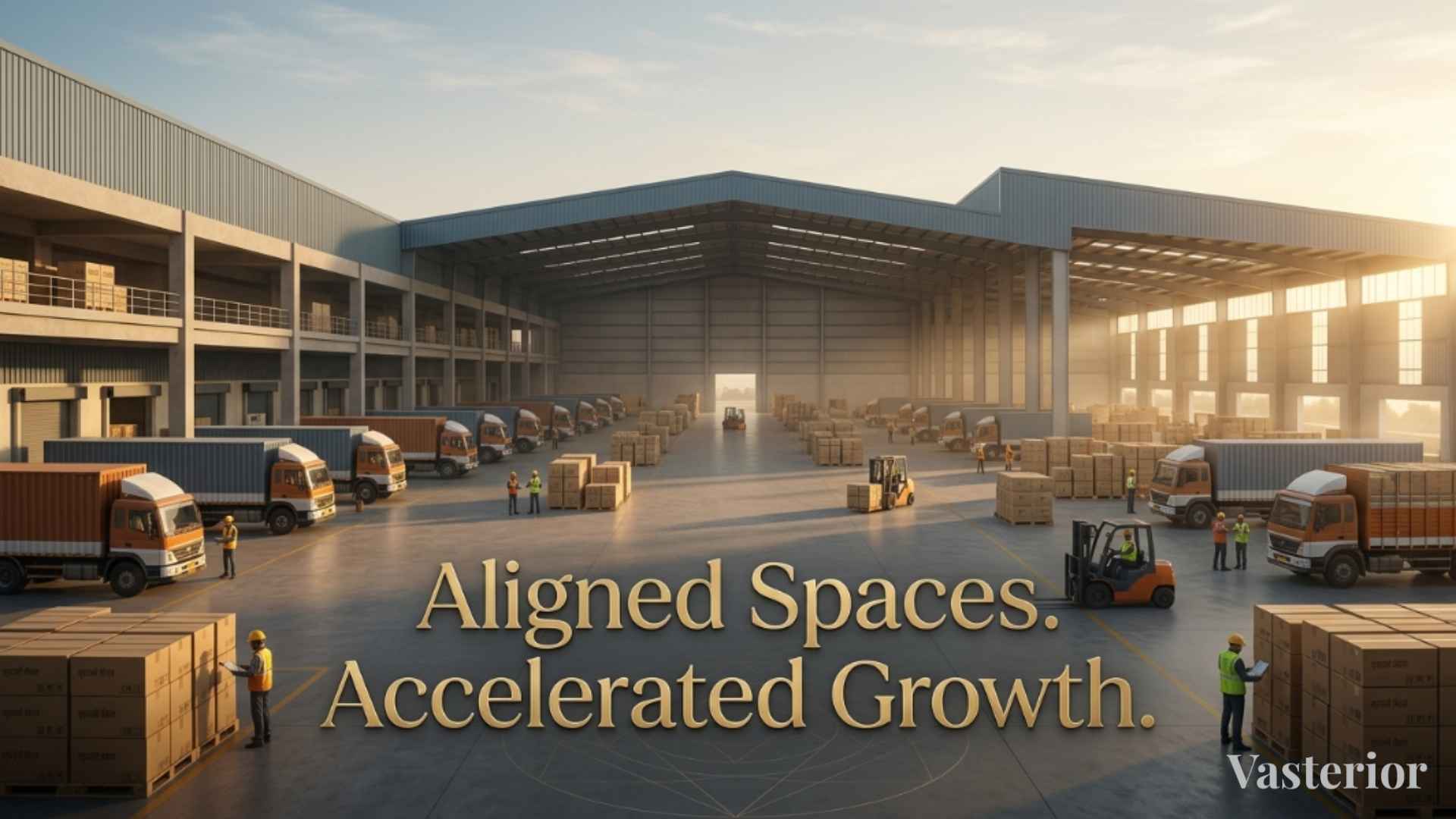
A warehouse is not merely a storage facility. It is the heartbeat of movement, distribution, cash flow, inventory management, and business continuity.
Every carton stacked, every shipment dispatched, and every operational process unfolding inside that structure contributes to the rhythm of a company's growth.
Yet many business owners unknowingly operate from warehouses that feel constantly "heavy". Payments get delayed. Stock gets damaged repeatedly. Employee efficiency drops. Operational stress rises. Unexpected legal issues appear. Teams struggle to stay aligned. Despite strong investments and smart business plans, growth starts feeling painfully slow.
What if the issue is not always strategy?
What if the space itself is resisting the flow of progress?
Modern businesses invest heavily in logistics technology, automation, machinery, manpower, and inventory systems. However, very few pay attention to spatial energy alignment. This is where Warehouse Vastu becomes a powerful business tool rather than a mystical belief system.
A well-aligned warehouse supports clarity, movement, stability, productivity, and financial circulation. On the other hand, an energetically imbalanced industrial space can quietly amplify operational friction over time.
Today's entrepreneurs are no longer dismissing Vastu as outdated philosophy. They are approaching it as spatial intelligence. Especially in warehouses and factories, where movement, storage, weight distribution, directional flow, and energy concentration directly affect day-to-day operations.
In this detailed guide, we will explore the most common warehouse Vastu problems, their impact on business growth, the importance of shed slope directions and industrial colour selection, along with practical and modern Vastu solutions that can help transform the energy of a commercial space.
Why Warehouse Vastu Matters More Than Ever
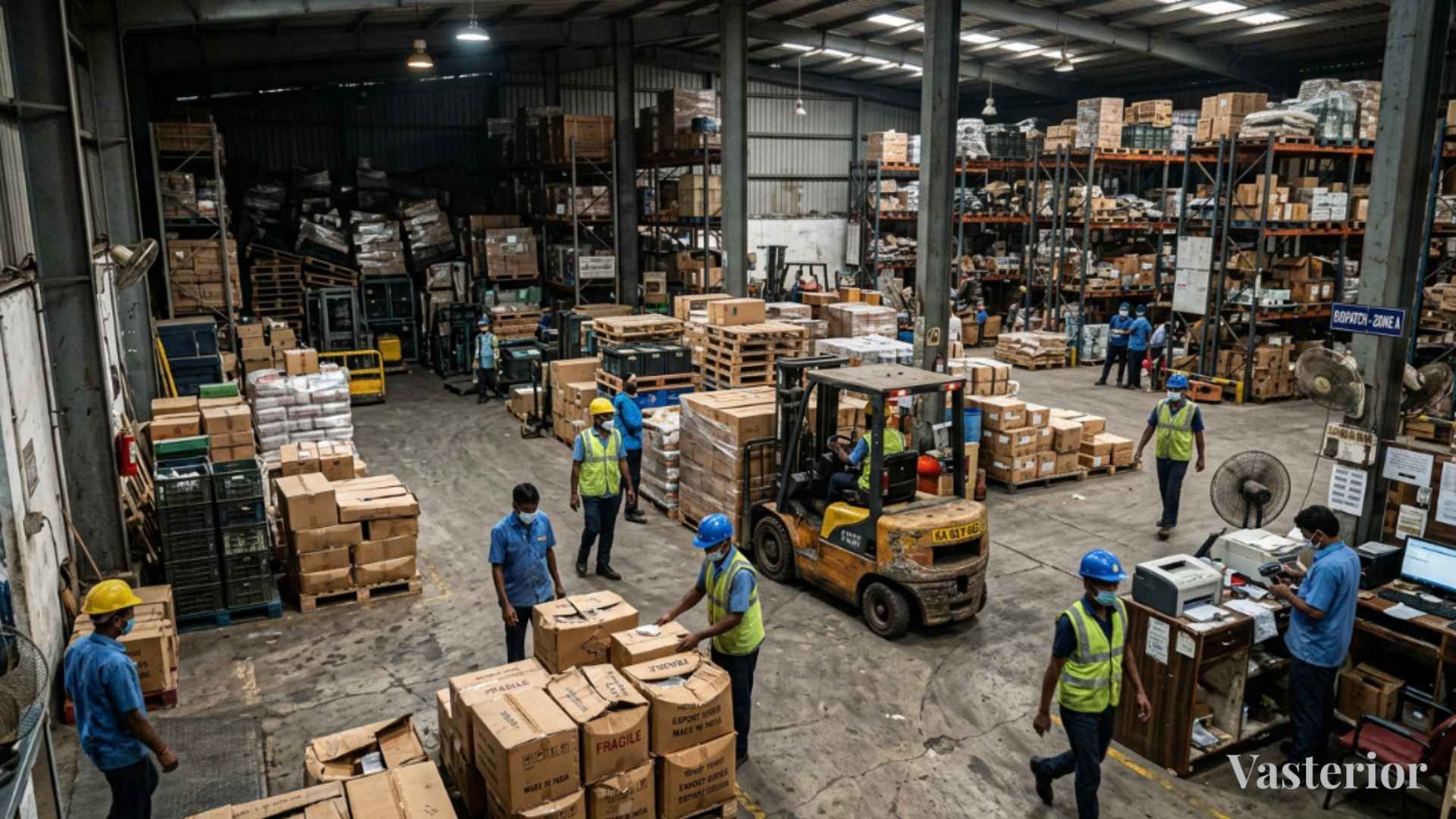
Warehousing has evolved dramatically in recent years. Businesses are scaling faster. Logistics networks are becoming more demanding. Storage systems are becoming smarter. Operational pressure is increasing every quarter.
In such an environment, even small inefficiencies create massive long-term consequences.
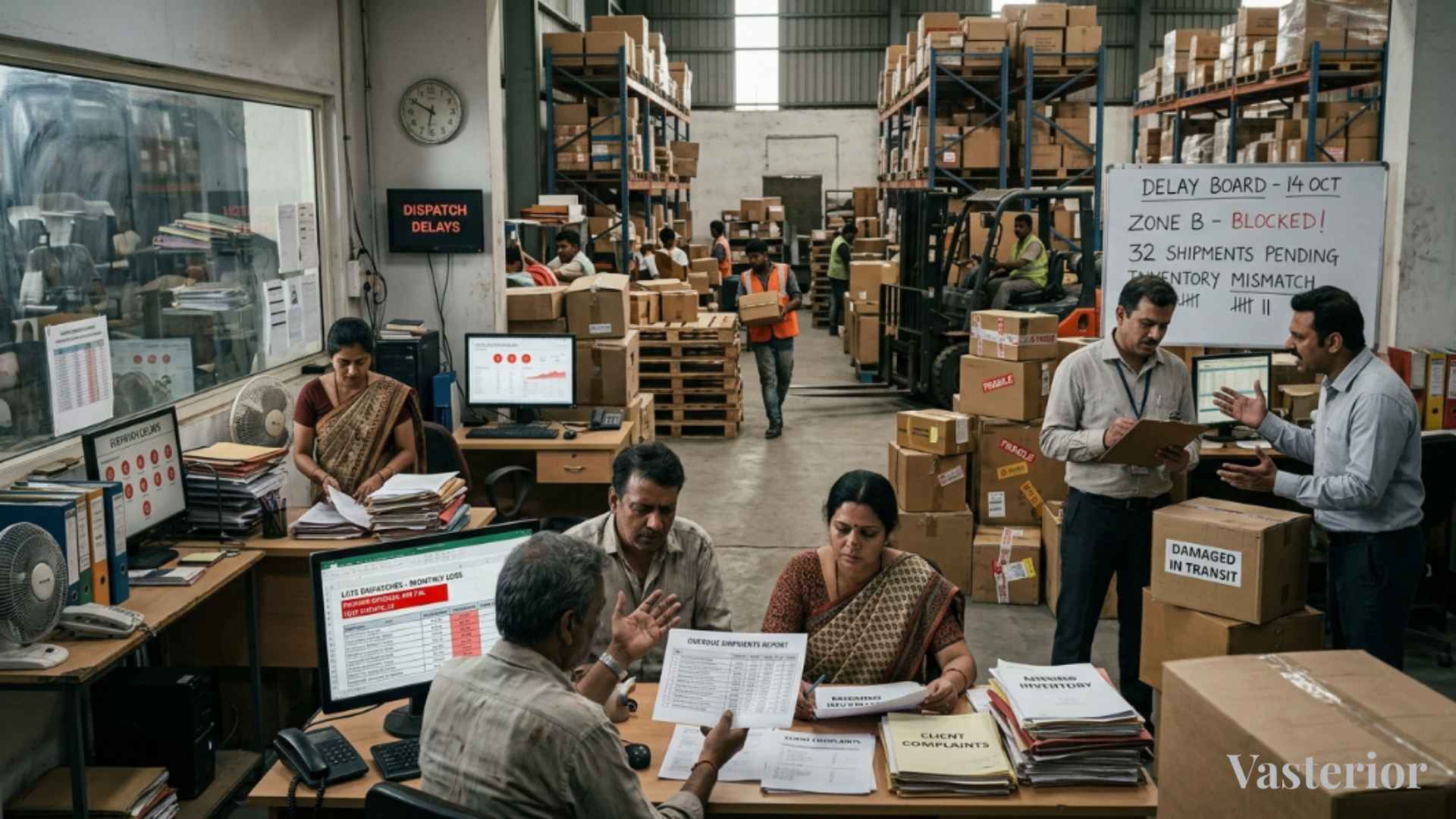
A poorly aligned warehouse often creates invisible friction. The space may appear structurally fine, yet teams constantly feel exhausted, inventory movement slows down, client relationships become unstable, or financial consistency starts weakening.
Vastu works on the principle that every direction carries a specific energetic quality. When industrial functions oppose those natural directional energies, imbalance begins to develop.
This imbalance may not show immediate effects. But over months and years, it can quietly impact productivity, decision-making, employee harmony, and business growth.
Most Common Warehouse Vastu Problems
Incorrect Warehouse Entrance Placement
The entrance acts as the mouth of energy for any commercial or industrial property. A poorly placed entrance can create financial instability, operational delays, and unnecessary business pressure. Entrances placed in energetically sensitive zones often lead to constant movement without actual progress.
Ideally, warehouse entrances should align with the functional nature of the business and the directional balance of the plot.
A wrongly positioned main gate may also affect:
- Client acquisition
- Inventory movement
- Employee stability
- Vendor relationships
- Cash flow momentum
Heavy Storage in the North East
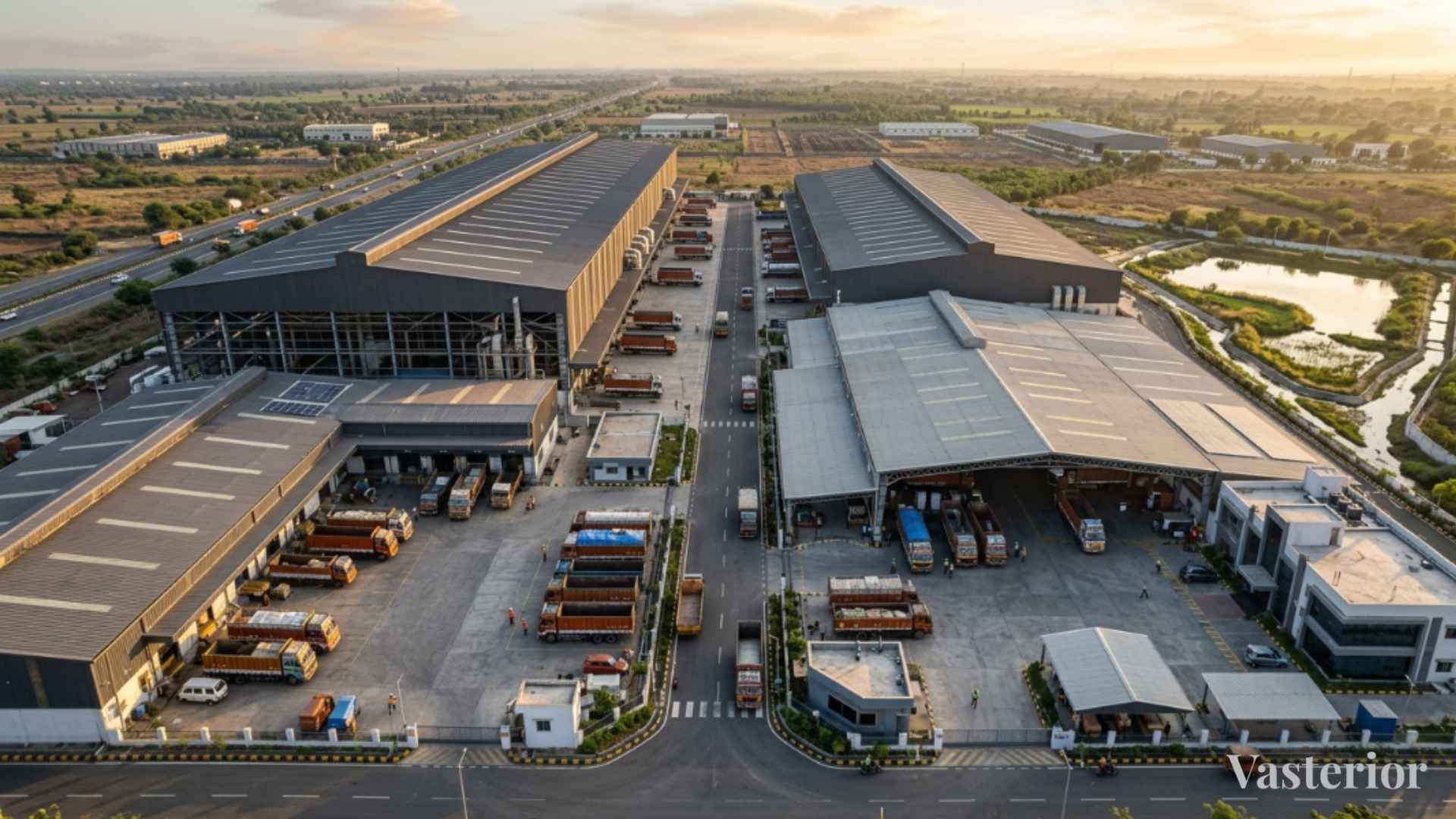
One of the most common warehouse Vastu mistakes is placing heavy inventory in the North East zone. The North East symbolises clarity, vision, flow, and expansion. Blocking this area with heavy racks, machinery, scrap material, or overloaded inventory can create stagnation in growth and financial opportunities.
Businesses operating with blocked North East zones often experience:
- Slow business growth
- Poor decision-making
- Repeated confusion
- Delayed expansion
- Mental fatigue among leadership teams
Keeping this zone lighter and cleaner helps maintain energetic movement inside the warehouse.
South West Imbalance
The South West zone represents stability, authority, grounding, and long-term financial security. When this area is cut, weak, cluttered, lower than other directions, or improperly utilised, businesses often struggle with instability and inconsistent growth.
Common symptoms include:
- High employee turnover
- Weak managerial control
- Client instability
- Financial unpredictability
- Lack of business consistency
Heavy storage and stronger structural support in the South West generally improve stability.
Wrong Loading and Unloading Zones
Logistics movement must flow intelligently. Improper dispatch and loading zones can create operational chaos and repeated delays. Businesses may experience confusion in shipment management, inventory mismatch, or inefficient movement patterns.
Directional alignment of loading bays helps maintain smoother movement cycles within industrial operations.
Water Placement Errors
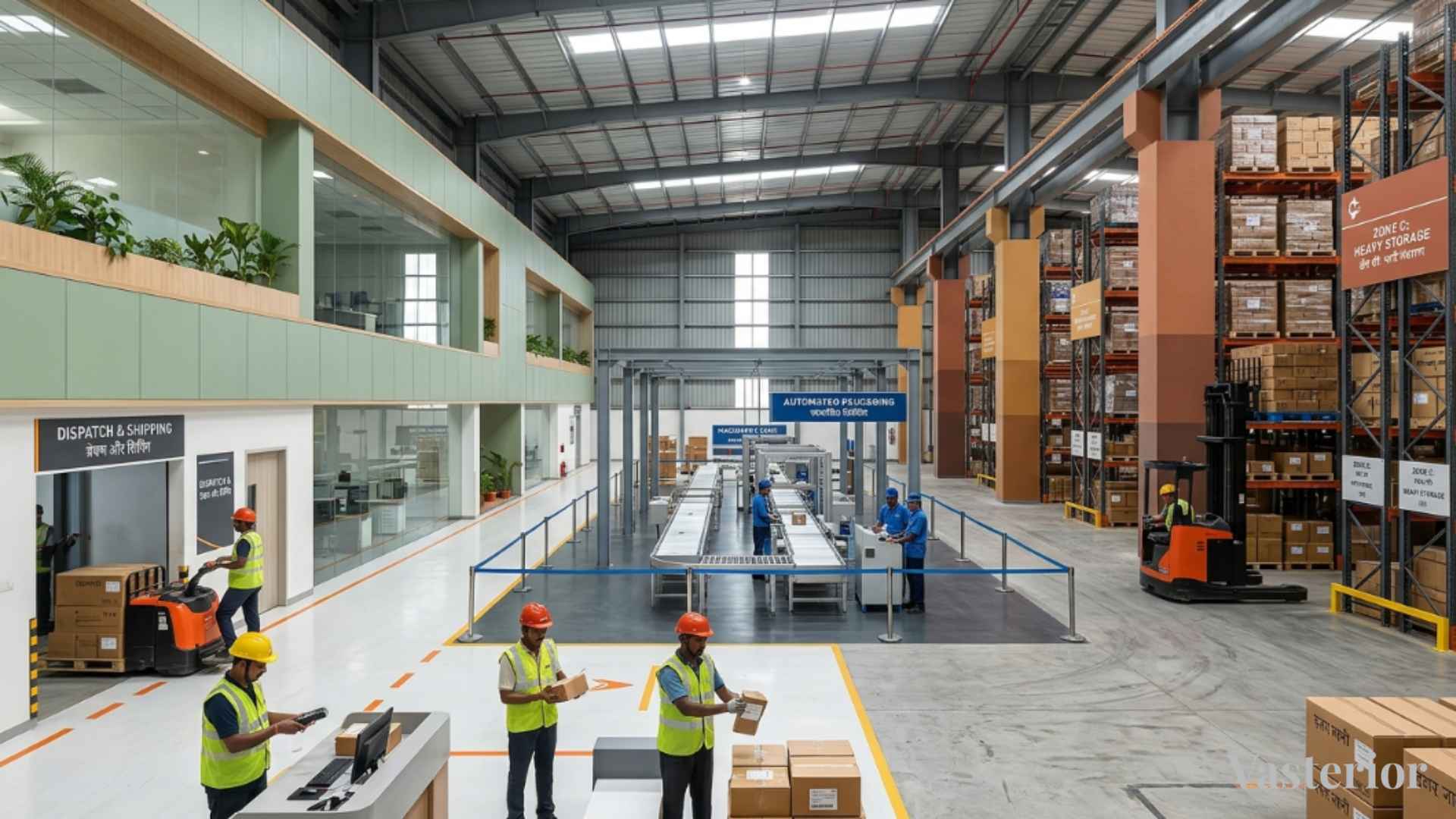
Water bodies and underground tanks hold significant importance in Vastu. Incorrect water placement in South or South West zones may create:
- Financial drainage
- Emotional stress
- Business uncertainty
- Unstable operational control
Water elements are generally considered more beneficial in North, North East, or East zones depending on the property structure.
Machinery Placement Issues
Large industrial machinery generates intense activity energy. Improper placement may result in:
- Frequent breakdowns
- Operational inefficiency
- Increased repair costs
- Worker fatigue
- Aggressive workplace atmosphere
Heavy machinery is often better suited for South, West, or South West zones where grounding energies are stronger.
Clutter and Blocked Energy Flow
Many warehouses become victims of uncontrolled storage culture. Unused pallets, damaged inventory, scrap material, broken furniture, and unmanaged corners silently create stagnant energy pockets.
Clutter does not merely occupy physical space. It affects mental clarity, workflow efficiency, and overall movement energy.
An organised warehouse almost always feels operationally lighter.
Improper Lighting and Ventilation
Dark and suffocating industrial spaces reduce alertness and productivity. Natural light, air circulation, and balanced illumination improve:
- Team morale
- Operational focus
- Energy circulation
- Workplace positivity
Warehouses lacking proper ventilation often feel energetically exhausted.
Toilets in Sensitive Zones
Toilets placed in critical directional zones may disturb the energy balance of the warehouse. Incorrect toilet placement can affect:
- Financial consistency
- Employee health
- Workplace harmony
- Administrative clarity
Proper zoning becomes essential during warehouse planning.
How Warehouse Vastu Defects Affect Business Growth
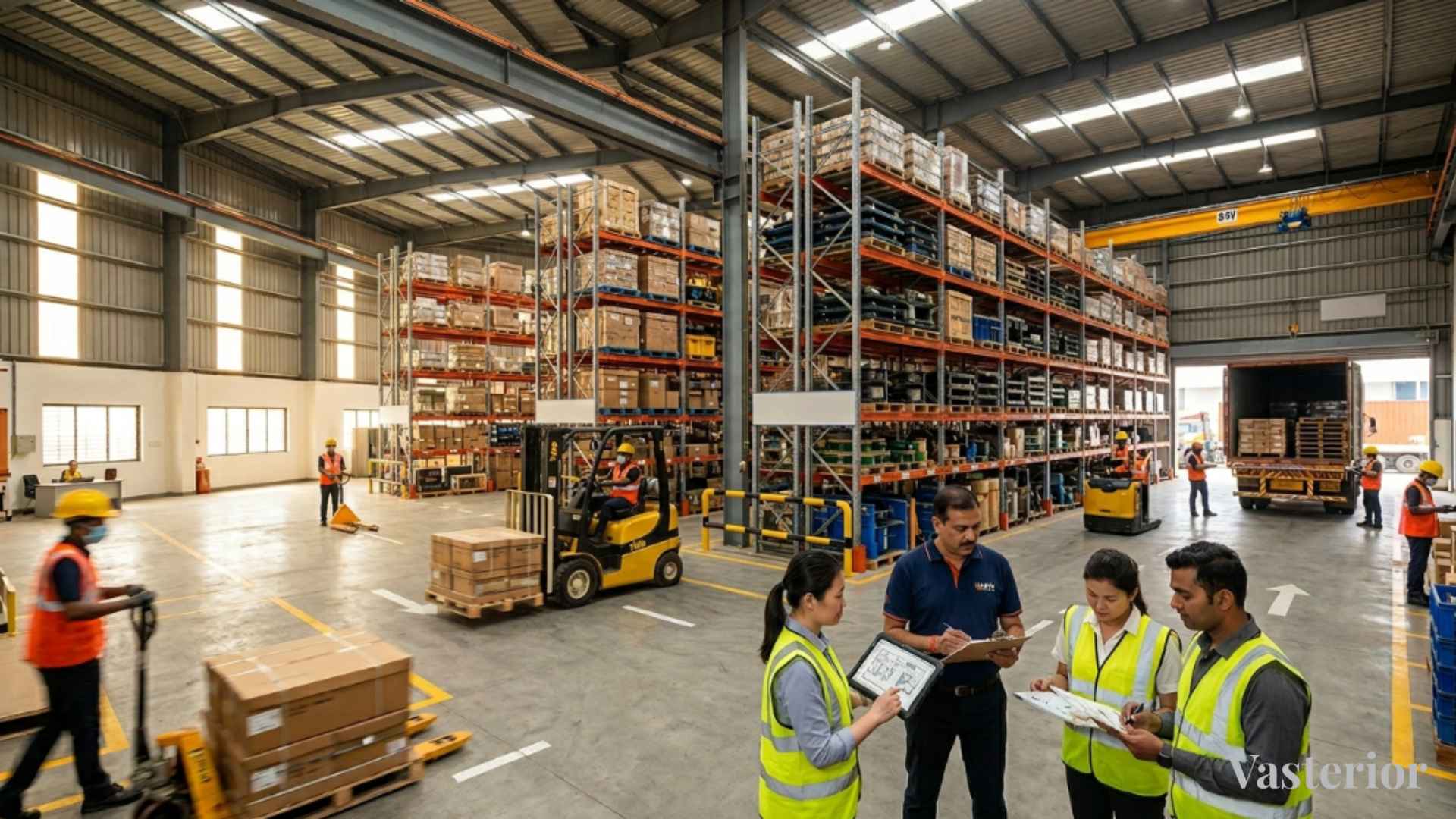
Many industrialists focus solely on numbers, systems, and manpower. Yet they overlook the environment in which these systems operate.
Space affects psychology.
Psychology affects decisions.
Decisions affect business outcomes.
An energetically imbalanced warehouse can gradually contribute to:
Delayed Payments
Businesses often report recurring payment delays despite strong market demand. Vastu imbalance may create energetic blockages associated with financial circulation and receivables.
Inventory Losses
Repeated stock damage, leakage, misplacement, or spoilage sometimes reflects deeper spatial imbalance. Especially when water, fire, and storage elements conflict directionally.
Employee Fatigue and Team Conflict
Spaces influence emotional behaviour more than most companies realise. Improper energy flow often creates:
- Irritability
- Lack of coordination
- Frequent misunderstandings
- Mental exhaustion
Legal and Operational Issues
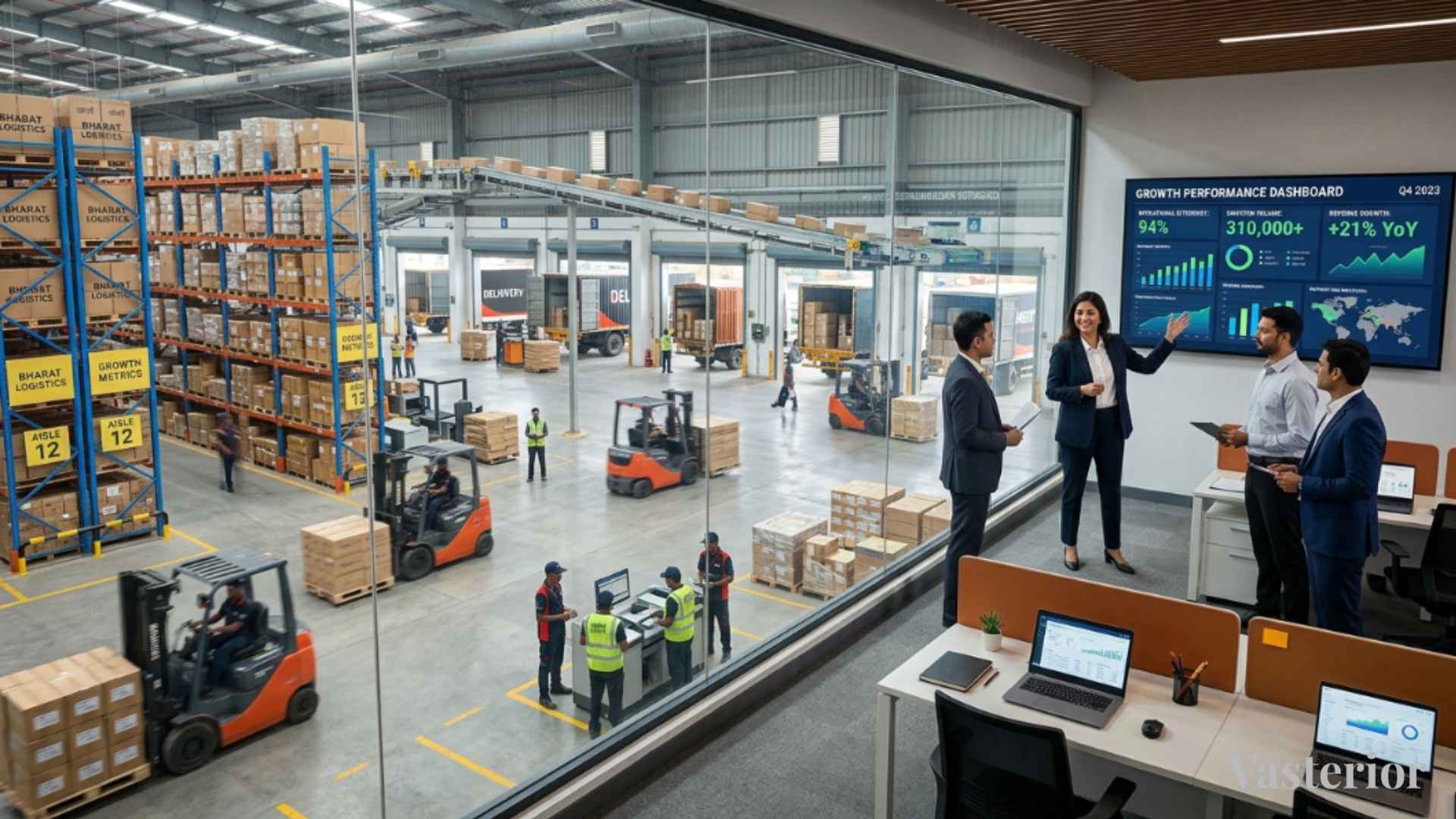
Certain directional defects are associated with conflict-driven energy patterns that may increase disputes, penalties, or compliance-related problems.
Lack of Business Scalability
Some businesses remain stuck at the same revenue level for years despite market opportunities. This often happens when the space itself lacks expansion-supportive energy alignment.
Importance of Shed Slope Direction in Warehouse & Factory Vastu
This is one of the most overlooked yet critically important aspects of industrial Vastu. The slope direction of factory sheds, warehouse roofs, and industrial flooring directly influences energetic movement and financial flow within the property.
Unfortunately, many industrial structures are designed purely from drainage or architectural convenience without considering directional energy balance. This creates long-term energetic imbalance.
Why Shed Slope Direction Matters
In Vastu, energy movement follows directional logic. The North and East zones are associated with openness, opportunities, movement, and incoming growth energy. The South and West zones symbolise stability, grounding, strength, and control.
Because of this:
- South and West should generally remain higher
- North and East should remain comparatively lighter and lower
This creates balanced energy movement across the industrial plot.
Ideal Factory Shed Slope Direction
The ideal industrial slope generally allows energy and water movement towards:
- North
- North East
- East
This supports smoother energetic circulation and operational expansion.
Problems Caused by Incorrect Shed Slopes
Improper slopes may contribute to:
- Financial instability
- Inventory stagnation
- Water accumulation
- Increased maintenance issues
- Business inconsistency
- Operational pressure
For example, if the South West becomes lower than the North East, the stability zone weakens significantly. Businesses may feel constantly unstable despite hard work.
Water Drainage Logic According to Vastu
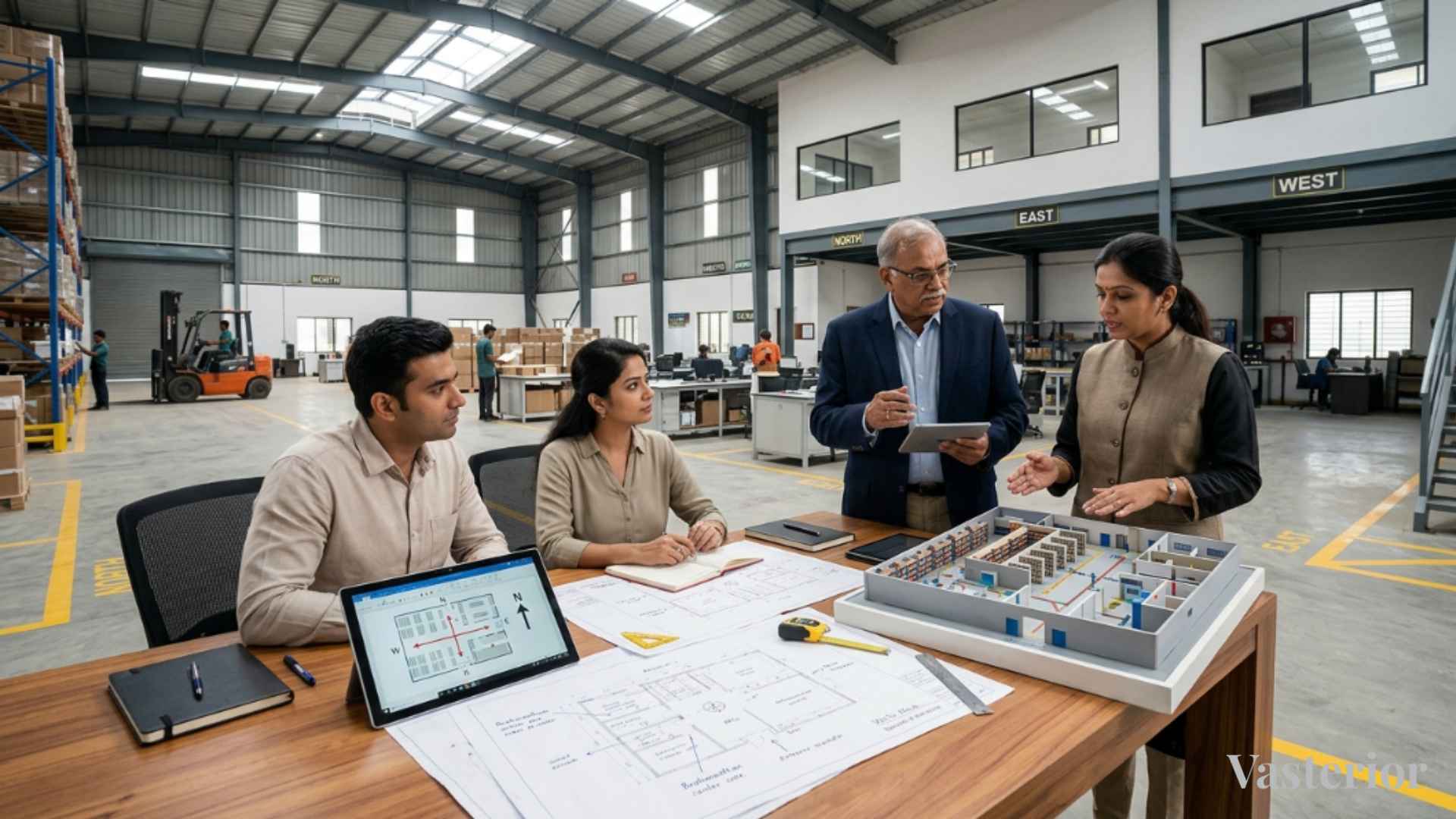
Water symbolises flow and circulation. When industrial drainage moves incorrectly towards South or South West directions, it symbolically represents draining away stability and financial grounding.
Balanced drainage planning becomes essential not only structurally but energetically as well.
Common Industrial Slope Mistakes
Many architects unknowingly create:
- Southward drainage
- Uneven flooring
- Lower South West zones
- Random roof angle structures
- Water collection in stability zones
Over time, these issues can affect both physical maintenance and energetic harmony.
Practical Example
Imagine two warehouses operating identical businesses. One has balanced slope directions, open North East zones, stable South West support, and efficient movement energy. The other has cluttered North East storage, improper roof slopes, poor lighting, and unstable structural zoning.
Even if both businesses invest equally, their operational experience may feel dramatically different over time.
Importance of Warehouse & Factory Colours for Better Energy Alignment
Colour psychology plays a surprisingly powerful role in industrial environments. Colours influence:
- Worker mood
- Mental alertness
- Emotional energy
- Operational atmosphere
- Productivity levels
When combined with Vastu principles, industrial colour planning becomes even more effective.
Ideal Colours for Different Directions
North
Light blue, silver, and soft grey tones often support movement, communication, and financial energy.
East
Light green and fresh earthy tones support growth and new opportunities.
South
Controlled use of red, maroon, or earthy warm shades can support activity and strength.
West
Cream, beige, earthy neutrals, and balanced metallic tones work well for stability.
Colours for Warehouse Zones
Storage Areas
Neutral and organised colour palettes help maintain calmness and clarity.
Dispatch Areas
Energetic yet controlled shades improve movement efficiency.
Administrative Offices
Soft sophisticated tones improve concentration and managerial clarity.
Machinery Zones
Grounded industrial shades help stabilise high-activity energy.
Colours to Avoid
- Excessively dark colours in already heavy zones may create psychological heaviness
- Overly aggressive reds in sensitive zones may increase workplace tension
- Improper colour contrast can also subconsciously increase fatigue
How Colours Affect Workers
Industrial design is no longer only functional. Modern businesses understand that environment impacts performance.
A visually balanced warehouse often creates:
- Better discipline
- Improved mood
- Higher productivity
- Cleaner operational culture
Subtle colour corrections sometimes create surprisingly noticeable shifts in workplace energy.
Effective Warehouse Vastu Solutions for Business Growth
The good news is that many warehouse Vastu issues can be improved without major demolition. Modern Vastu focuses on intelligent correction rather than fear-driven reconstruction.
Rebalance Storage Distribution
Keep heavier inventory towards South and West zones wherever possible. Allow North and East areas to remain lighter and more open.
Improve Entrance Energy
Corrective techniques, directional adjustments, and intelligent space activation methods can help improve entrance energy.
Optimise Lighting
Natural light in East and North zones improves energetic freshness and mental clarity.
Declutter Aggressively
Unused inventory, scrap material, broken furniture, and dead storage must be removed regularly. Clutter quietly drains operational energy.
Correct Colour Imbalance
Industrial colour correction is one of the easiest yet most effective modern Vastu tools.
Improve Administrative Placement
Leadership cabins and operational control zones should ideally occupy stronger directional zones to improve authority and decision-making.
Balance Fire and Water Elements
Electrical panels, generators, water tanks, and utility systems must be positioned carefully to avoid energetic conflict.
Use Non-Demolition Vastu Remedies
In many cases, subtle corrections through:
- Space planning
- Colour balancing
- Weight redistribution
- Directional activation
- Functional zoning
can significantly improve warehouse energy alignment.
Why Modern Businesses Are Taking Warehouse Vastu Seriously
Today's entrepreneurs are highly data-driven. But interestingly, they are also becoming more conscious of environmental psychology and spatial intelligence.
Businesses now understand that:
- Space affects behaviour
- Behaviour affects productivity
- Productivity affects profitability
Modern Vastu is no longer about superstition. It is about creating environments that support smoother operational flow and long-term stability.
Warehouses aligned with intelligent spatial planning often feel more efficient, calmer, and operationally balanced.
Why Professional Warehouse Vastu Consultation Matters
Every warehouse is unique. Its structure, orientation, operational flow, industry type, machinery placement, inventory movement, and architectural limitations all influence the final analysis.
Generic Vastu advice from random internet sources often creates confusion instead of clarity.
Professional consultation helps identify:
- Site-specific energy patterns
- Structural imbalances
- Directional defects
- Practical correction opportunities
- Business-specific optimisation strategies
A modern Vastu consultation should feel intelligent, customised, and architecturally practical.
This is where brands like Vasterior bring a more evolved perspective by combining MahaVastu principles with modern design understanding, spatial functionality, and realistic industrial planning.
Frequently Asked Questions
Common questions about Vastu principles for warehouse energy alignment and business growth:
1. Which direction is best for a warehouse entrance?
North, North East, and East-facing entrances are often considered beneficial depending on the warehouse layout and business type. These directions support smooth energy flow, client interactions, and operational momentum.
2. Can Warehouse Vastu really affect business growth?
Vastu primarily influences spatial harmony, operational psychology, and energy flow, which may indirectly impact productivity, decision-making, and business stability. The environment directly shapes how teams work and how efficiently operations function.
3. Is demolition necessary for warehouse Vastu correction?
Not always. Many issues can be improved through non-demolition corrections and intelligent planning adjustments. Colour rebalancing, storage reorganisation, machinery repositioning, and directional activation often create significant improvements without structural changes.
4. Which zone is best for heavy storage?
South, South West, and West zones generally support heavier storage placement. These directions hold grounding energy that stabilises weight and creates operational steadiness. North and East should remain lighter for better flow.
5. Why should North East remain light?
North East represents clarity, expansion, and incoming opportunities. Heavy blockage may create stagnation in business growth and financial circulation. Keeping this zone uncluttered supports natural expansion energy.
6. Which colours are best for factories and warehouses?
Balanced industrial shades, light neutrals, earthy tones, soft greens, and controlled metallic colours usually work effectively. Colour selection should match directional placement: light blues and greens for north, warm neutrals for east, terracotta for south, and greys for west.
7. Does shed slope direction really matter?
Yes. Improper slope direction may disturb energy balance and drainage movement inside industrial spaces. Slopes affect how energy circulates, water flows, and how the entire warehouse ecosystem functions over time.
8. What is the ideal slope direction in factory Vastu?
South and West should generally remain higher, while North and East should remain comparatively lower. This creates balanced energy movement, healthier drainage patterns, and supports operational expansion naturally.
9. How does clutter affect warehouse energy?
Clutter creates stagnant movement patterns that may affect operational efficiency and mental clarity. Unused inventory, broken materials, and disorganised spaces silently drain productive energy and create invisible operational friction.
10. Why should businesses consult professional Vastu experts?
Professional analysis provides customised solutions based on actual site conditions instead of generic assumptions. Every warehouse is unique, and expert consultation identifies site-specific patterns, structural imbalances, and practical correction opportunities tailored to your business needs.
Conclusion
A warehouse is not just a physical structure built for storage and dispatch. It is a living operational ecosystem that continuously influences movement, stability, team energy, and financial momentum.
When industrial spaces are energetically aligned, businesses often experience smoother workflow, improved clarity, stronger operational confidence, and better long-term stability.
Warehouse Vastu is ultimately about creating harmony between structure, movement, function, and growth.
As modern industries become increasingly competitive, aligned spaces may quietly become one of the biggest hidden advantages for forward-thinking businesses.
For businesses seeking a more personalised and sophisticated approach to warehouse energy alignment, Vasterior combines modern spatial intelligence with practical MahaVastu principles to create balanced industrial environments that support long-term growth. If your warehouse or factory space has been feeling operationally heavy, stagnant, or energetically misaligned, a tailored consultation with the Vasterior team could offer deeper clarity. You may connect discreetly through +91 9100883355 or write to info@vasterior.com to explore a more aligned future for your business space.