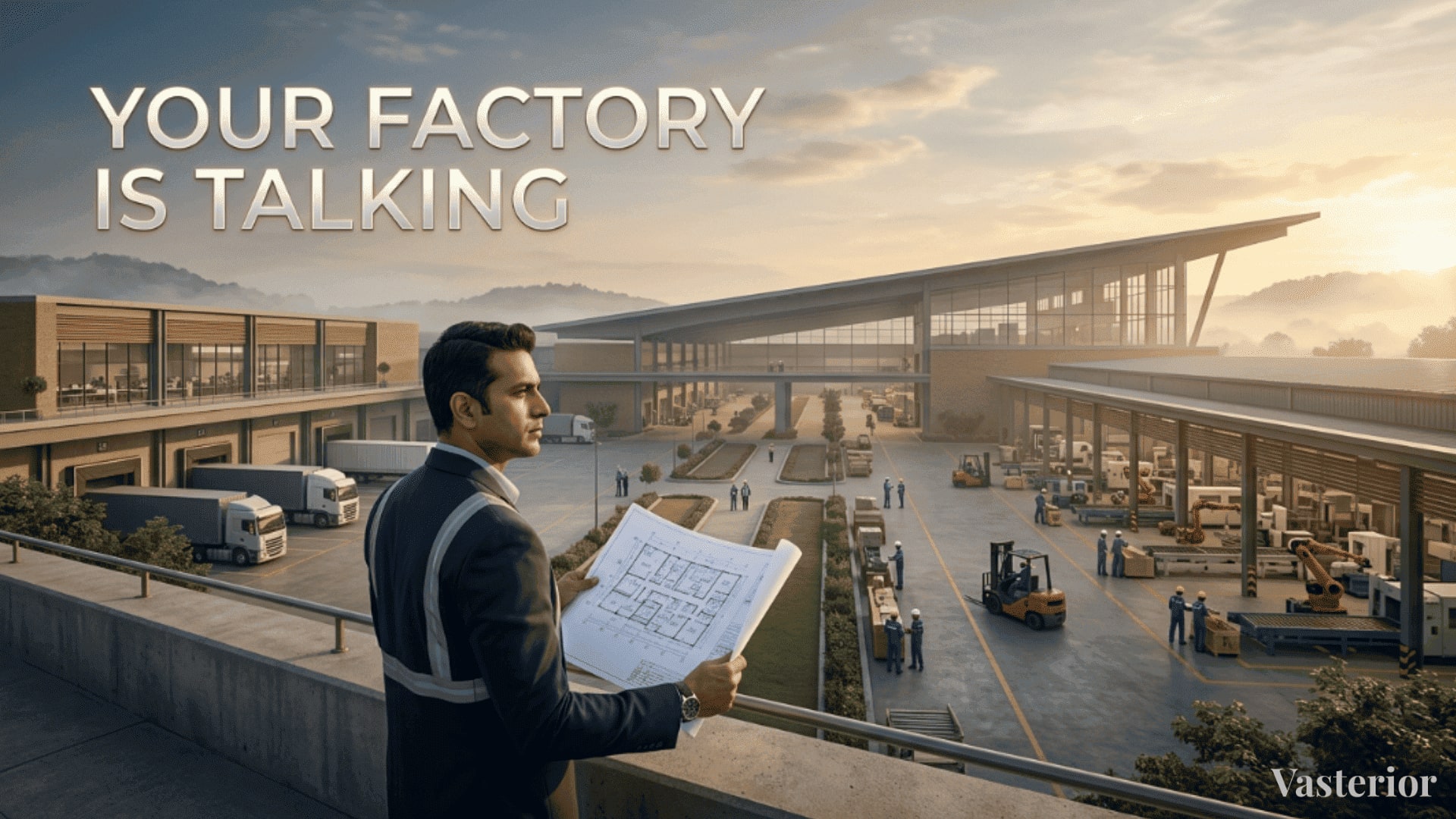
Most factory owners obsess over machinery, automation, manpower, production targets, and operational efficiency.
Very few stop to question whether the space itself is silently working against them.
That blind spot costs businesses far more than they realise.
A factory is not merely a structure filled with equipment. It is a living operational ecosystem where movement, pressure, heat, workflow, direction, light, weight distribution, colour psychology, and human behaviour continuously interact with each other.
Some industrial spaces naturally feel smoother. Teams perform better. Decision-making becomes clearer. Delays reduce. Financial consistency improves. Expansion feels organic.
Meanwhile, other factories remain trapped in cycles of chaos despite massive investments.
The difference often lies in something most business owners ignore entirely.
Spatial alignment.
This is where Factory Vastu enters the conversation, not as superstition, but as intelligent environmental engineering blended with energetic architecture.
Modern Industrial Vastu is less about blind rituals and more about understanding how directional balance, movement flow, environmental psychology, spatial weight distribution, and energy circulation influence industrial performance.
At Vasterior, Factory Vastu is approached through the lens of luxury spatial intelligence where design, architecture, energy alignment, and operational psychology coexist seamlessly.
And surprisingly, some of the most critical Vastu mistakes are hidden in places business owners rarely inspect.
The slope of the factory shed.
The colours of the walls.
The positioning of heavy machinery.
The clutter in forgotten corners.
The direction of expansion.
Tiny oversights. Massive consequences.
Why Industrial Vastu Matters More Than Ever Today
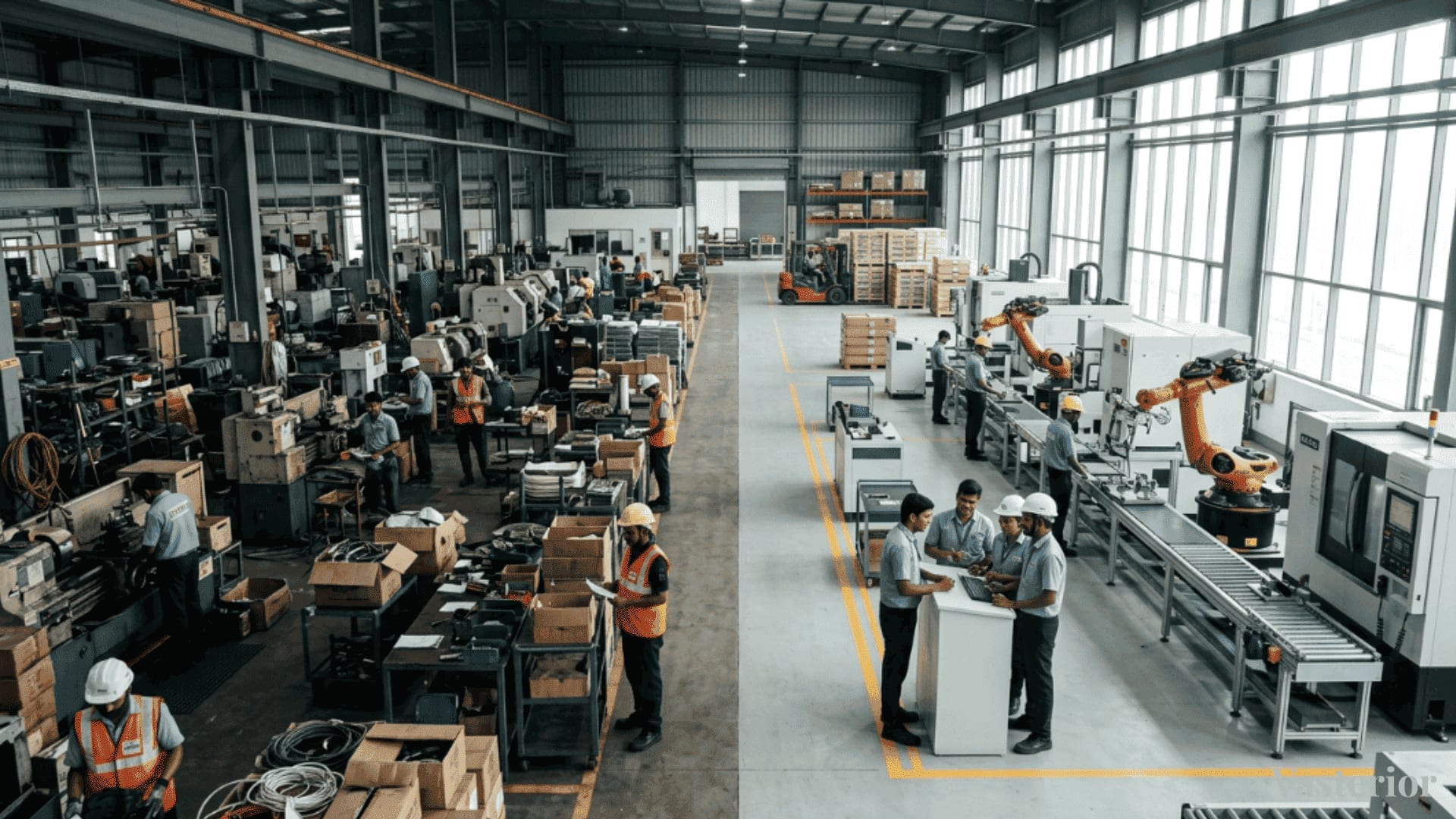
Modern factories are operating under relentless pressure.
- Higher competition
- Faster delivery expectations
- Workforce stress
- Rising operational costs
- Constant scaling demands
In such an environment, even subtle inefficiencies compound over time. A poorly aligned industrial space creates friction that owners often misdiagnose as operational failure.
Employees feel mentally exhausted faster. Machines require repeated maintenance. Communication gaps increase. Production flow becomes inconsistent. Cash flow becomes unpredictable. Leadership feels constantly burdened.
Factory Vastu focuses on reducing this invisible resistance. When industrial spaces are aligned correctly, movement feels smoother. Departments function more cohesively. Teams feel psychologically lighter. Operational systems begin supporting growth instead of resisting it.
This is precisely why major industrialists across India are quietly integrating Vastu into warehouse planning, factory architecture, manufacturing units, and industrial campuses.
Not out of blind belief. Out of observed results.
The Hidden Relationship Between Factory Layout and Business Growth
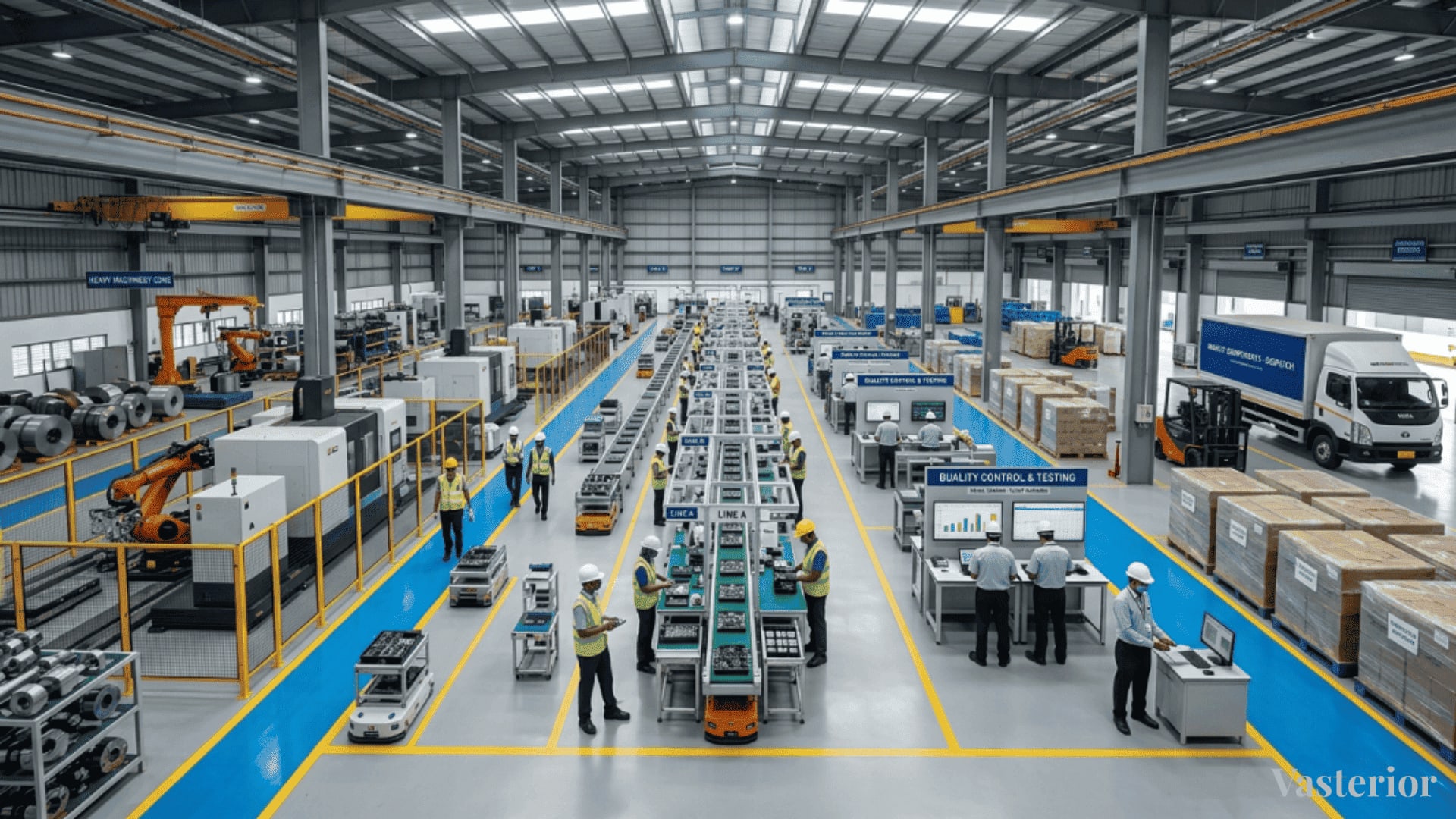
Every industrial structure carries an energetic blueprint. The moment one enters a factory, the space communicates something.
- Pressure
- Chaos
- Clarity
- Aggression
- Calmness
- Expansion
- Stagnation
This psychological communication directly affects the people operating inside it. Factory layout Vastu revolves around how energy circulates across different operational zones.
For instance: Heavy manufacturing activities function better in zones capable of holding stabilising energy. Administrative departments require mentally balanced zones. Dispatch areas need movement-oriented energy. Open spaces influence breathing capacity within the industrial environment.
Many factory owners unknowingly create energetic conflict by placing incompatible functions in conflicting directions. The result? Operational friction. Not dramatic overnight collapse, but slow, exhausting inefficiency.
The dangerous part is that businesses normalise this friction over time.
The Most Ignored Factory Vastu Mistakes
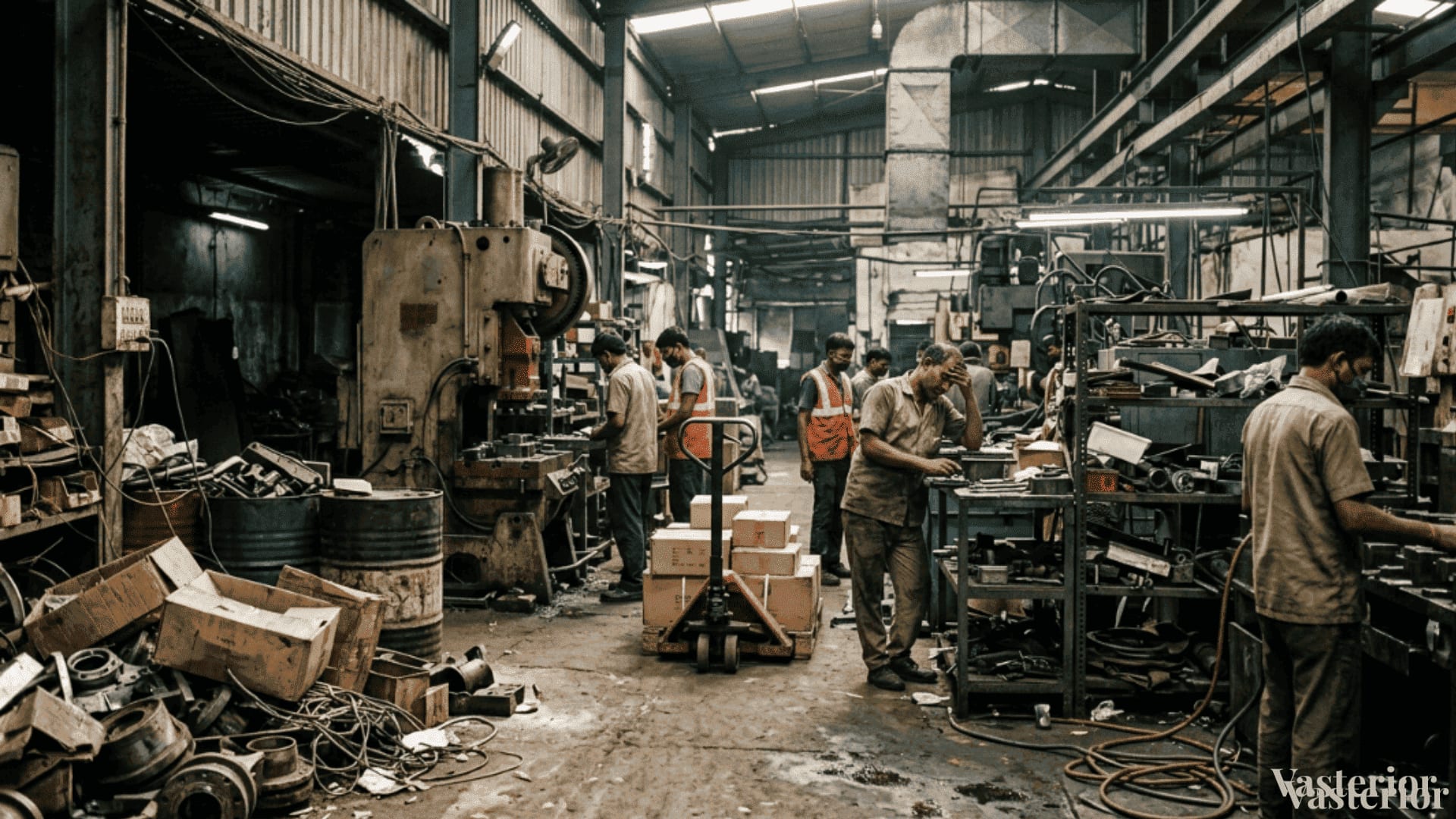
Some Vastu errors appear harmless architecturally but create long-term energetic imbalance.
Improper factory entrance placement: The entrance determines how movement, opportunities, and external energy enter the premises. A poorly positioned entrance often creates repeated delays, unstable growth patterns, and unnecessary stress within leadership.
Excessive clutter accumulation: Unused materials, broken equipment, scrap storage, and blocked pathways create energetic stagnation. Factories dealing with constant payment delays often reveal severe clutter patterns internally. Energy cannot circulate through blocked environments. Neither can opportunities.
Imbalanced weight distribution: Heavy machinery placed in lighter zones destabilises operational energy. This often manifests as repeated technical breakdowns, employee dissatisfaction, or management instability.
Dead corners and dark zones: Neglected corners psychologically suppress the environment. Spaces lacking natural light and movement subtly increase mental fatigue among workers.
Aggressive colour choices: Overuse of harsh reds, dull greys, and oppressive dark tones can unconsciously increase stress, irritability, and exhaustion levels within the workforce.
And then comes one of the most underestimated aspects of Factory Vastu. The slope of the industrial shed.
Why Factory Shed Slope Direction Matters Immensely
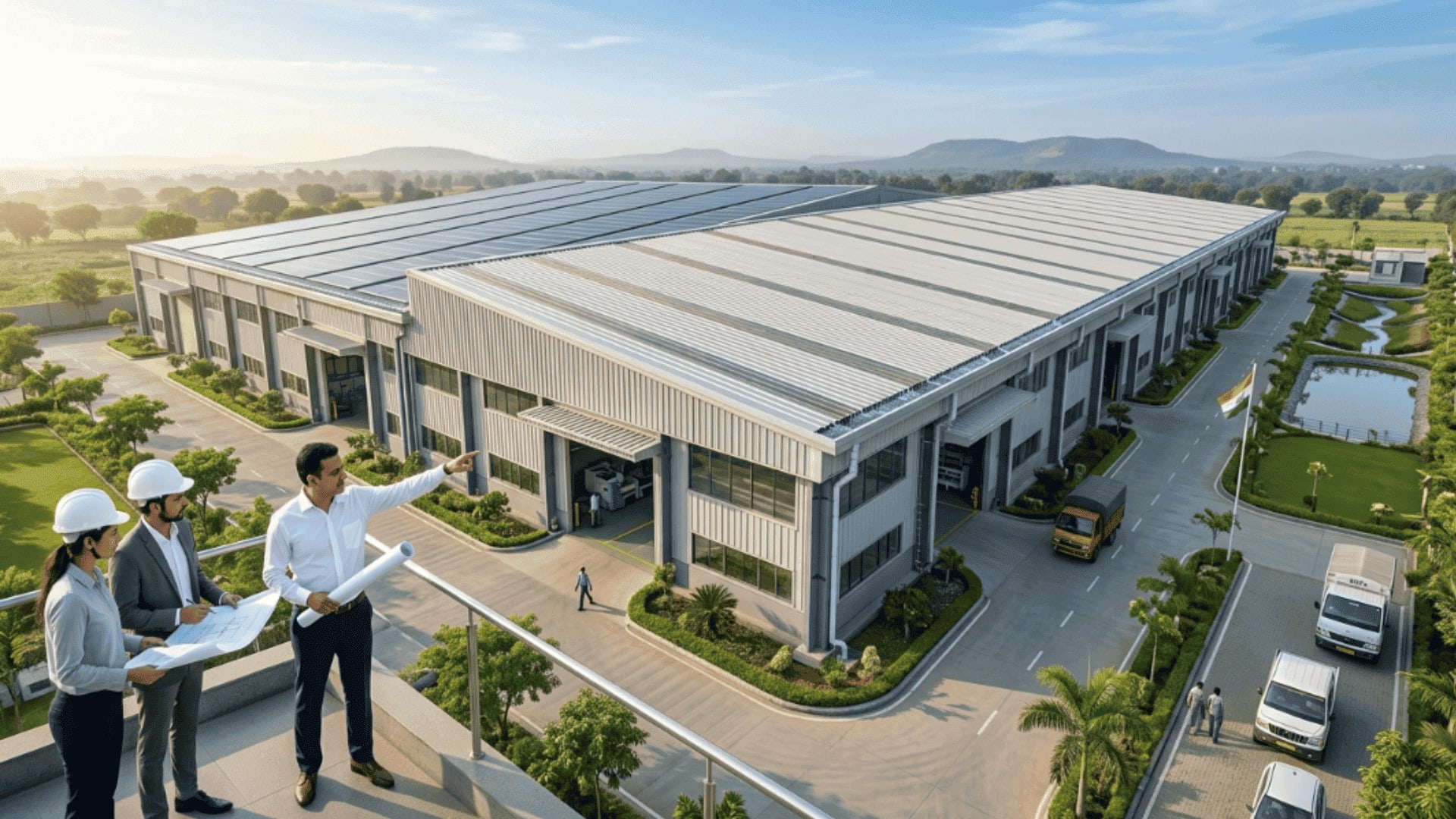
Most industrial shed slopes are designed purely for drainage and structural practicality. Very few architects or factory owners consider the energetic implications of directional slope movement.
But according to advanced Factory Vastu principles, the direction in which a roof slopes influences how energy moves, settles, exits, and circulates inside the premises.
Think about it practically. A slope naturally directs flow. Whether it is rainwater, heat, pressure, movement, or psychological perception, sloping structures create directional momentum.
That momentum affects the energetic behaviour of the factory.
Ideal Factory Shed Slope Directions
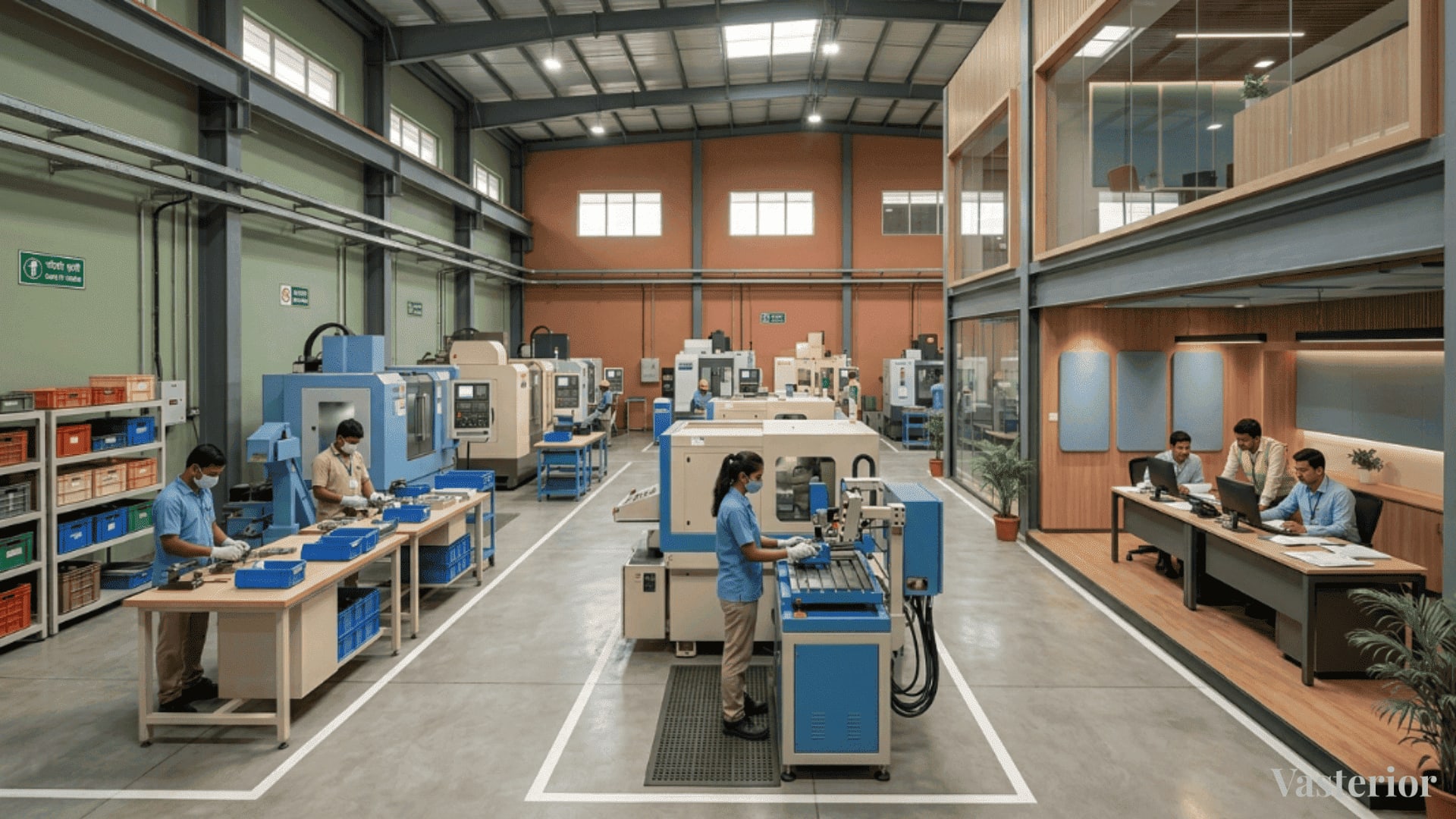
Factory sheds that slope toward the North or East are generally considered highly supportive.
- North-facing slopes are associated with financial consistency and smoother business opportunities
- East-facing slopes support vitality, clarity, innovation, and workforce positivity
- These directions symbolically and energetically support openness, movement, opportunity, clarity, and expansion
- From a practical perspective, they allow better light behaviour, environmental balance, and spatial breathing
Factories aligned this way often feel lighter, more organised, and psychologically open. The logic is not merely symbolic. It is functional too.
Problematic Shed Slope Directions
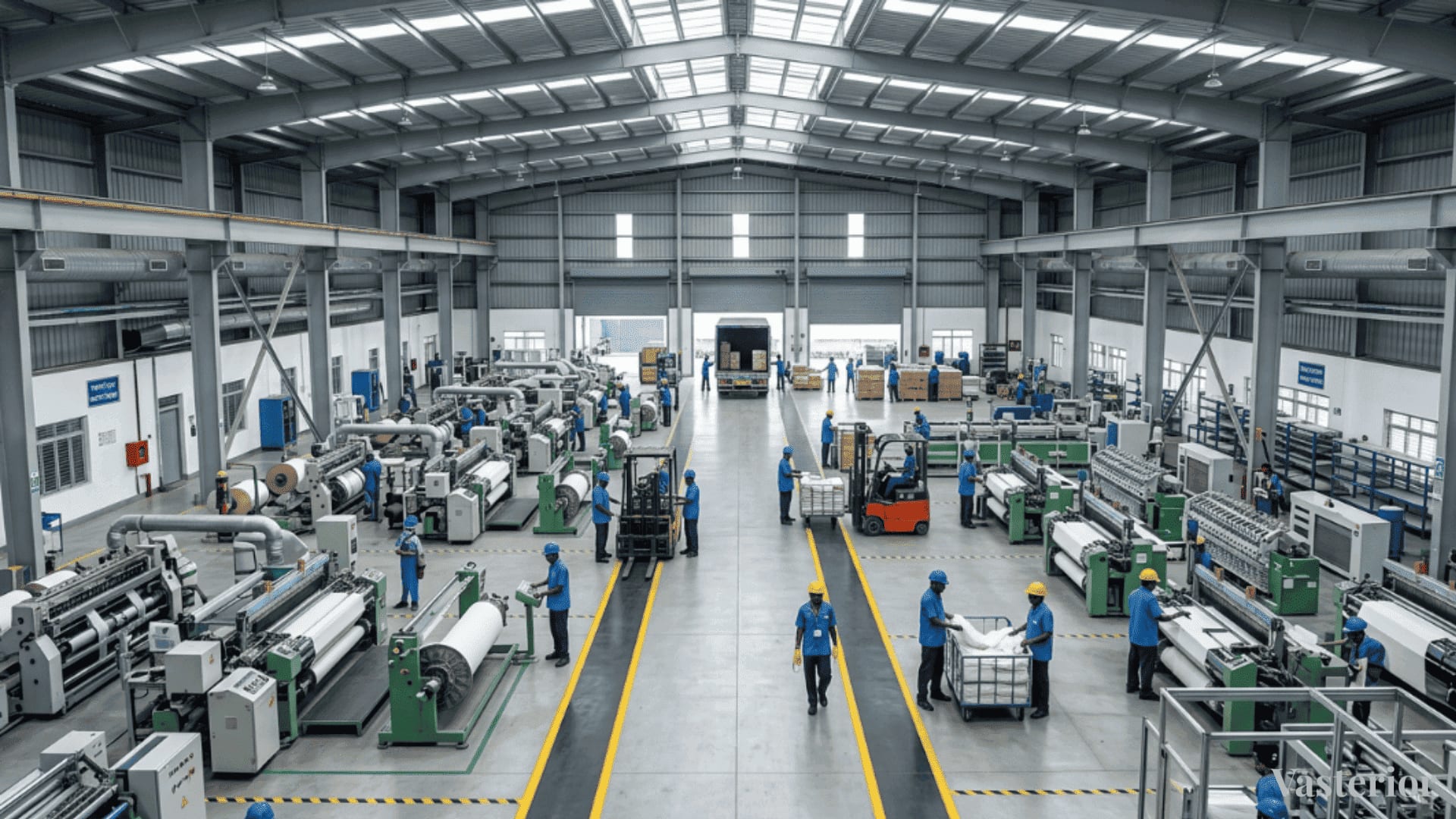
Southward or South-West downward slopes are generally considered energetically unstable for industrial environments.
- These directions are traditionally associated with stability and energetic containment
- When the structure slopes downward in these areas, the factory symbolically loses energetic grounding
- Financial leakage
- Operational instability
- Leadership stress
- Higher workforce turnover
- Repeated delays
- Constant fire-fighting situations
Interestingly, many business owners operating in such factories describe the same feeling: 'No matter how much effort we put in, things never fully stabilise.' That sentence alone reveals spatial imbalance more often than people realise.
The Architectural Psychology Behind Shed Slopes
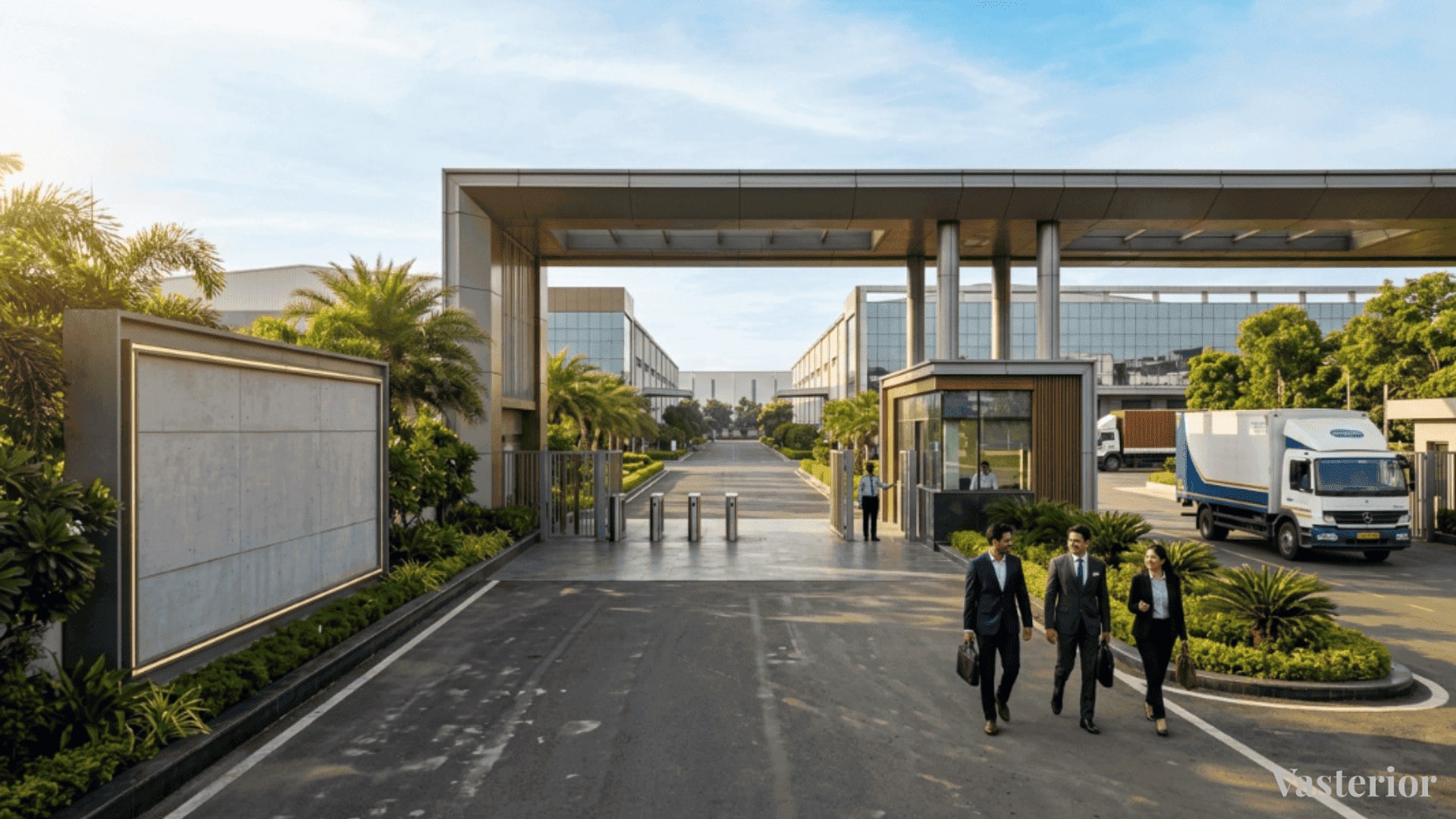
This is not merely symbolic philosophy. Spatial psychology plays a major role here. Downward pressure zones subconsciously influence environmental perception.
- Increase heat retention imbalance
- Affect internal light behaviour
- Create moisture stress
- Generate visual heaviness
- Influence environmental fatigue
Over time, workers subconsciously absorb these environmental cues. That impacts productivity and mental sharpness. Modern Industrial Vastu attempts to harmonise both energetic and architectural logic together.
The Science of Factory Colours Most Businesses Ignore
Colour is not decoration. Colour is behavioural programming. Every colour influences human psychology, emotional response, stress levels, focus capacity, and environmental perception.
In industrial environments where people spend long hours under operational pressure, colours silently shape mood and productivity every single day.
Yet most factories select colours randomly. Or worse, purely based on branding aesthetics. That becomes a costly mistake.
Factory Colour Vastu and Directional Intelligence
Different directions carry different energetic qualities. Aligning colours with those directional energies creates psychological harmony inside the workspace.
North Zone Colours
North zones are ideal for finance departments, dispatch, and business operations.
- Soft blues
- Metallic accents
- Light greys
- Subtle aqua tones
These colours encourage clarity, movement, communication, and calmness.
East Zone Colours
East zones are ideal for innovation areas, staff activity zones, and leadership interaction spaces.
- Soft greens
- Warm neutrals
- Light wooden textures
- Earth-infused creams
These support freshness, growth, mental alertness, and optimism.
South Zone Colours
South zones are ideal for controlled heavy operations and heat-generating machinery zones.
- Muted terracotta
- Controlled earthy tones
- Warm industrial textures
Overly aggressive reds should be avoided because they amplify pressure and emotional intensity.
South-West Zone Colours
This zone benefits from stability-oriented palettes.
- Beige
- Sandstone
- Muted earthy browns
- Warm taupes
These create grounding energy essential for leadership stability and long-term decision-making.
How Incorrect Colours Affect Industrial Productivity
Harsh industrial colour palettes increase subconscious fatigue. Excessively dark environments create psychological heaviness. Overstimulating tones increase agitation.
- Faster exhaustion
- Reduced concentration
- Higher irritability
- Increased communication friction
- Reduced emotional ownership of work
Workers may not consciously identify the cause, but their nervous systems continuously react to the environment.
Balanced industrial colour selection creates the opposite effect. Calmness. Precision. Mental clarity. Structured energy.
The best industrial spaces do not merely function efficiently. They feel efficient.
Open Spaces and Heavy Zones in Industrial Vastu
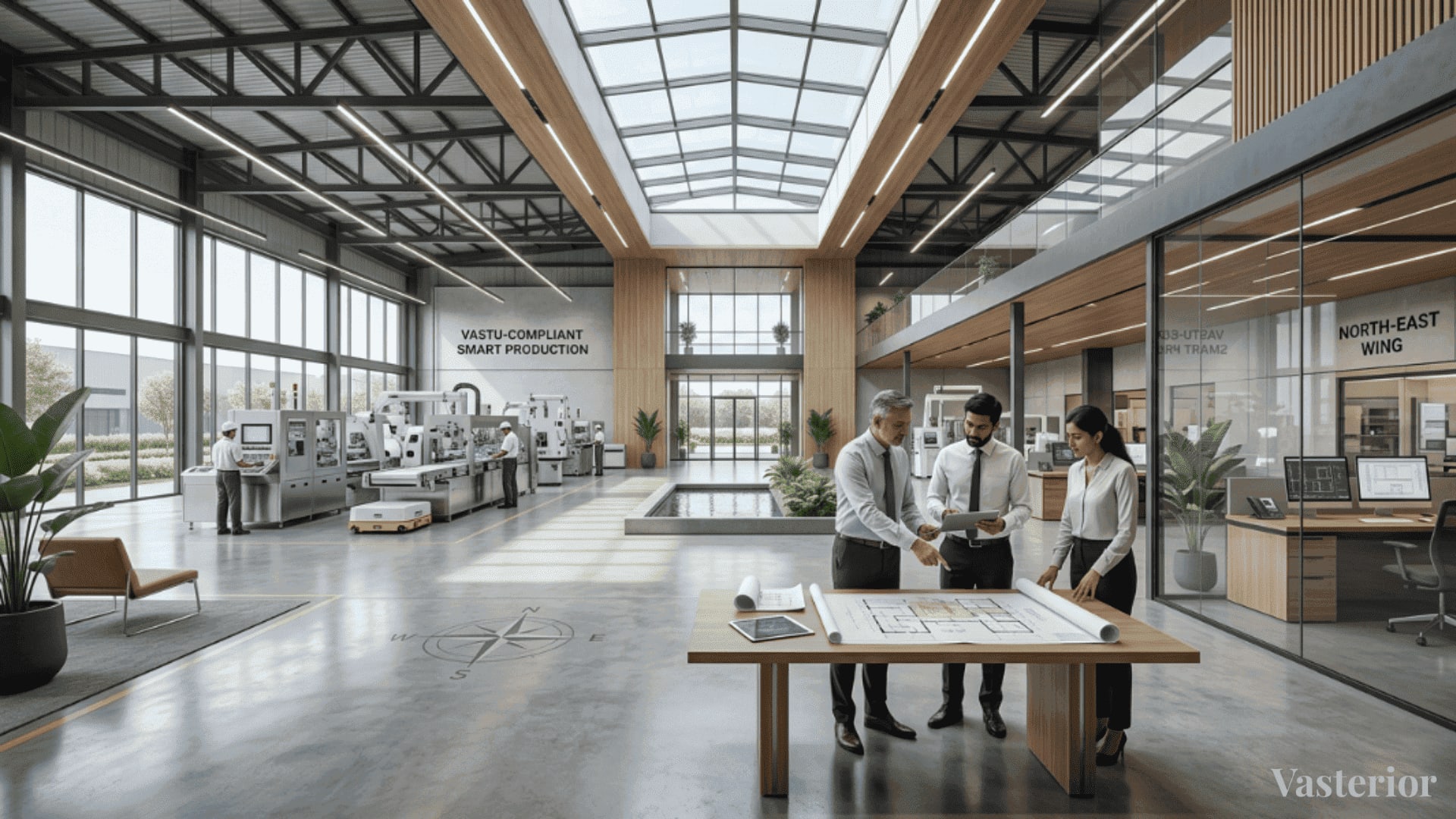
One of the most overlooked Factory Vastu principles is weight distribution. Every factory requires balance between different zones.
- Active zones
- Open zones
- Heavy zones
- Movement corridors
Overloading sensitive zones with excessive machinery creates energetic suffocation. Meanwhile, intelligently planned open spaces improve air circulation, light movement, workforce comfort, visual breathing capacity, and operational rhythm.
Factories with no spatial breathing room often feel constantly tense. Even meetings feel heavier inside them. That is not coincidence. That is environmental psychology interacting with energy flow.
Why Factory Entrances Influence Opportunity Flow
The main entrance is not just an access point. It is the energetic mouth of the factory. Every visitor, client, opportunity, shipment, employee, and transaction enters through this portal.
- Clutter near entry
- Broken signage
- Dark approach pathways
- Obstructed movement
- Aggressive visual elements
Poorly maintained entrances create immediate energetic suppression. A clean, well-balanced entrance psychologically communicates confidence, clarity, and stability before a single conversation even begins.
Industrial Vastu understands this deeply.
The Connection Between Clutter and Delayed Business Growth
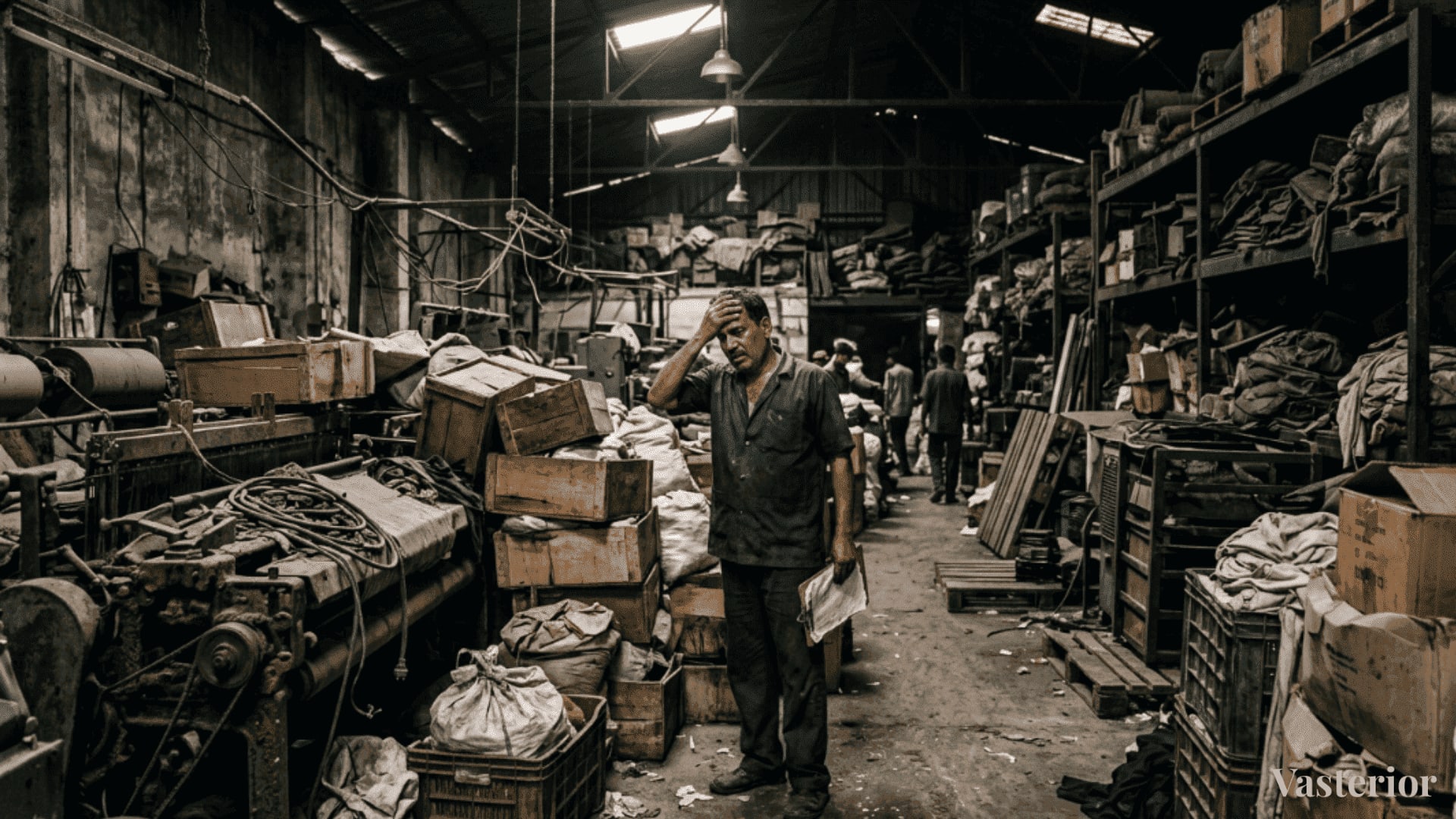
Many factories unknowingly store dead energy. Unused inventory. Broken machinery. Discarded furniture. Abandoned materials. Scrap accumulation. Old documentation.
Clutter is not merely physical congestion. It represents unresolved energetic backlog.
Factories drowning in clutter often experience delayed payments, decision paralysis, slow expansion, repeated operational confusion, and mental exhaustion among leadership.
Clean spaces create movement. Movement creates momentum. Momentum creates growth.
Modern Factory Vastu Without Compromising Design
One of the biggest misconceptions around Vastu is that it destroys modern aesthetics. That outdated perception no longer applies.
- Contemporary architecture
- Industrial minimalism
- Modern manufacturing systems
- Smart factory planning
- Luxury industrial design
- Efficient workflow engineering
At Vasterior, the focus remains on spatial optimisation without compromising sophistication. The objective is not to make factories look traditionally spiritual. The objective is to make them energetically intelligent, visually refined, operationally efficient, and psychologically aligned.
That is a massive difference.
Realistic Modern-Day Factory Vastu Corrections
Not every factory requires demolition or expensive reconstruction. In many cases, subtle corrections create major energetic shifts.
- Correcting directional imbalance through intelligent zoning
- Adjusting colour psychology
- Reorganising machinery distribution
- Enhancing entrance energy
- Managing slope corrections strategically
- Activating underutilised zones
- Removing energetic blockages through decluttering
- Improving lighting dynamics
- Rebalancing visual pressure points
The most effective Vastu interventions are often the least visually dramatic. But operationally, they create noticeable transformation.
Why Spatial Alignment Is Becoming a Competitive Advantage
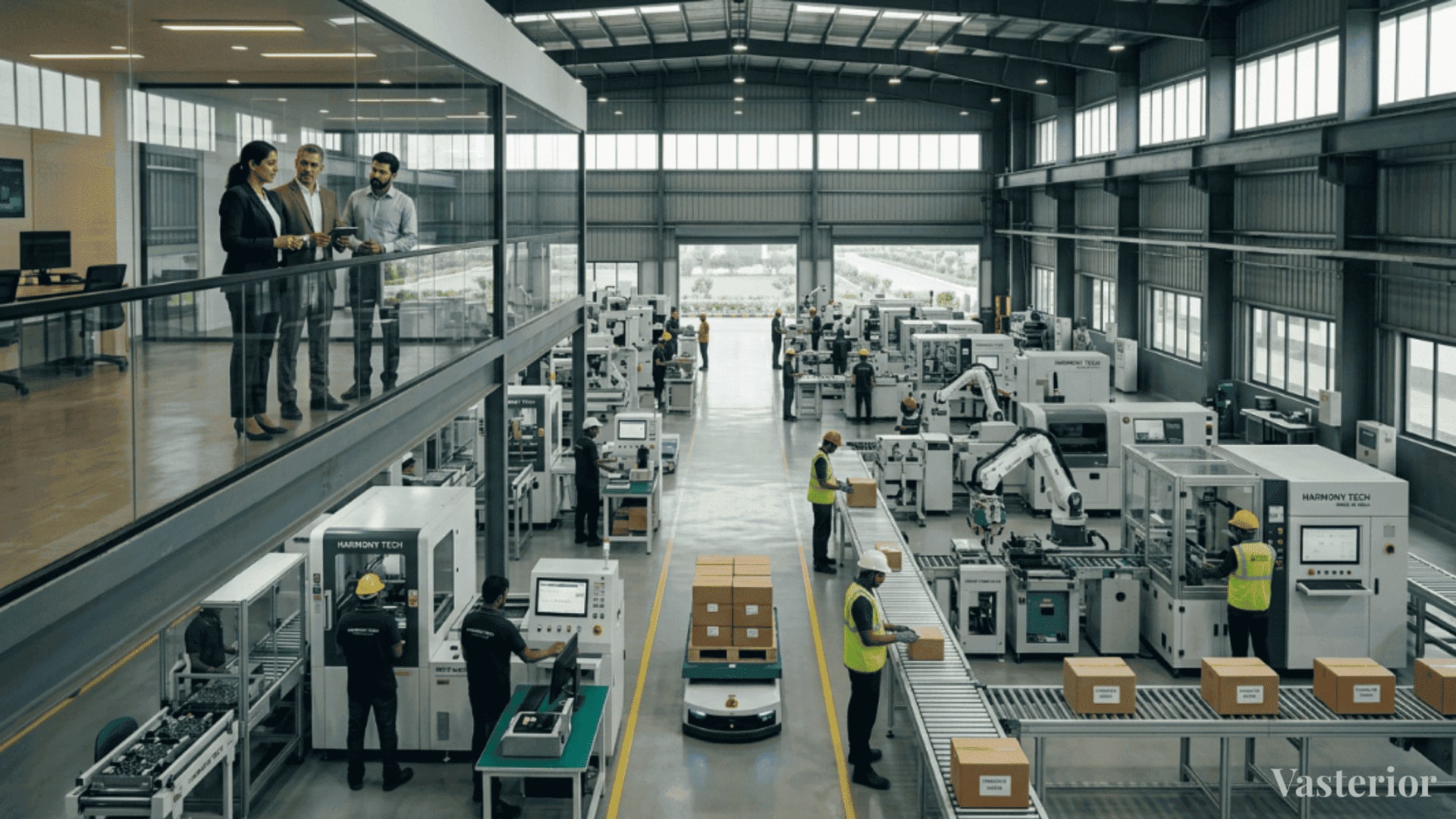
The future of industrial infrastructure is not just technological. It is psychological.
- Better workforce retention
- Sharper leadership
- Calmer decision-making
- Higher environmental harmony
- More sustainable operational energy
Factories that understand spatial intelligence gain invisible operational advantages. This is precisely why forward-thinking business owners are beginning to integrate Industrial Vastu at planning stages itself rather than treating it as an afterthought.
Because eventually, every business reaches a point where operational success depends not only on effort but on environmental alignment.
And spaces remember everything.
Conclusion
Most business owners invest heavily in external growth while ignoring the internal intelligence of the environment supporting that growth.
But factories are not emotionally neutral spaces. They absorb pressure. They influence behaviour. They shape productivity. They affect leadership energy. They either support momentum or silently resist it.
Factory Vastu is ultimately about creating industrial ecosystems that feel aligned, stable, productive, and energetically intelligent. Not through superstition. Through conscious spatial strategy.
Businesses that understand the intelligence of space often scale differently.
For industrial leaders seeking a more aligned, productive, and future-ready manufacturing environment, Vasterior offers personalised consultations rooted in advanced Vastu intelligence, modern design thinking, and spatial energy optimisation.
Meaningful conversations around industrial alignment can be initiated discreetly via +91 9100883355 or through info@vasterior.com.
Because sometimes, the biggest business breakthrough is not changing the strategy. It is changing the space from which the strategy operates.
FAQs
Frequently asked questions about Factory Vastu and industrial spatial alignment:
1. What is Factory Vastu?
Factory Vastu is the science of aligning industrial spaces according to directional energy principles to improve productivity, operational flow, financial stability, and workforce harmony.
2. Does Factory Vastu really affect business growth?
Many business owners observe improvements in operational consistency, employee morale, decision-making, and workflow after correcting major Vastu imbalances.
3. Which factory shed slope direction is considered best?
North and East-facing downward slopes are generally considered beneficial as they support openness, smoother energy movement, and financial growth.
4. Which shed slope directions should be avoided?
South and South-West downward slopes are typically considered unfavourable because they may create instability and energetic imbalance.
5. Can Factory Vastu be implemented without reconstruction?
Yes. Many Vastu corrections involve layout optimisation, colour balancing, zoning adjustments, lighting improvements, and decluttering rather than structural demolition.
6. Which colours are ideal for factories according to Vastu?
The ideal colours depend on directional placement and operational usage. Soft blues, earthy neutrals, muted greens, and balanced industrial tones generally work well.
7. Why is clutter harmful in Factory Vastu?
Clutter blocks movement flow, creates psychological heaviness, and contributes to stagnation in operations and decision-making.
8. Does Factory Vastu conflict with modern architecture?
No. Modern Industrial Vastu integrates seamlessly with contemporary industrial design and smart architectural planning.
9. Why is the factory entrance important in Vastu?
The entrance influences movement flow, opportunities, client perception, and overall energetic interaction with the industrial space.
10. How can Vasterior help with Industrial Vastu?
Vasterior combines modern interior intelligence, advanced Vastu principles, and luxury spatial planning to create aligned industrial environments that support long-term business growth.