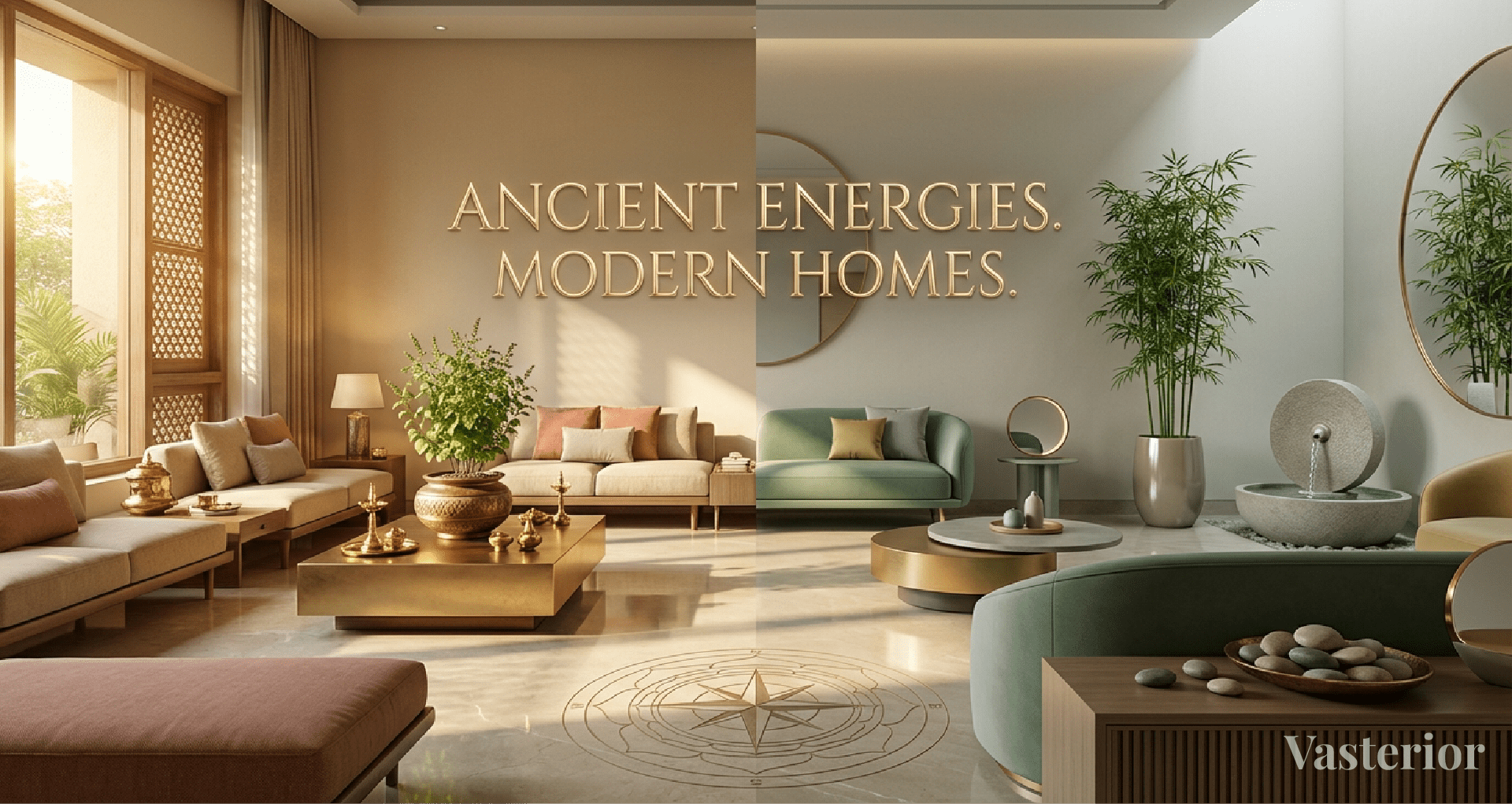
Imagine walking into a home that instantly feels calming, balanced, and welcoming. No cluttered energy, no subtle unease, just a space that feels right. While many people attribute this feeling to aesthetics or décor, ancient traditions suggest something deeper is at play: the alignment of energy within the space.
Across cultures, people have long believed that the layout and design of a home influence the flow of life energy. Two of the most widely discussed systems in this regard are Vastu Shastra and Feng Shui. Both aim to create harmony between humans and their environment, yet they originate from entirely different cultural and philosophical backgrounds.
In recent years, as Indian homeowners explore holistic living and mindful design, a common question arises: Vastu vs Feng Shui for Indian homes, which one truly works better?
To answer that, we need to understand how these systems function, what makes them unique, and how they interact with the realities of Indian architecture and lifestyles.
Let's break it down.
What is Vastu Shastra?
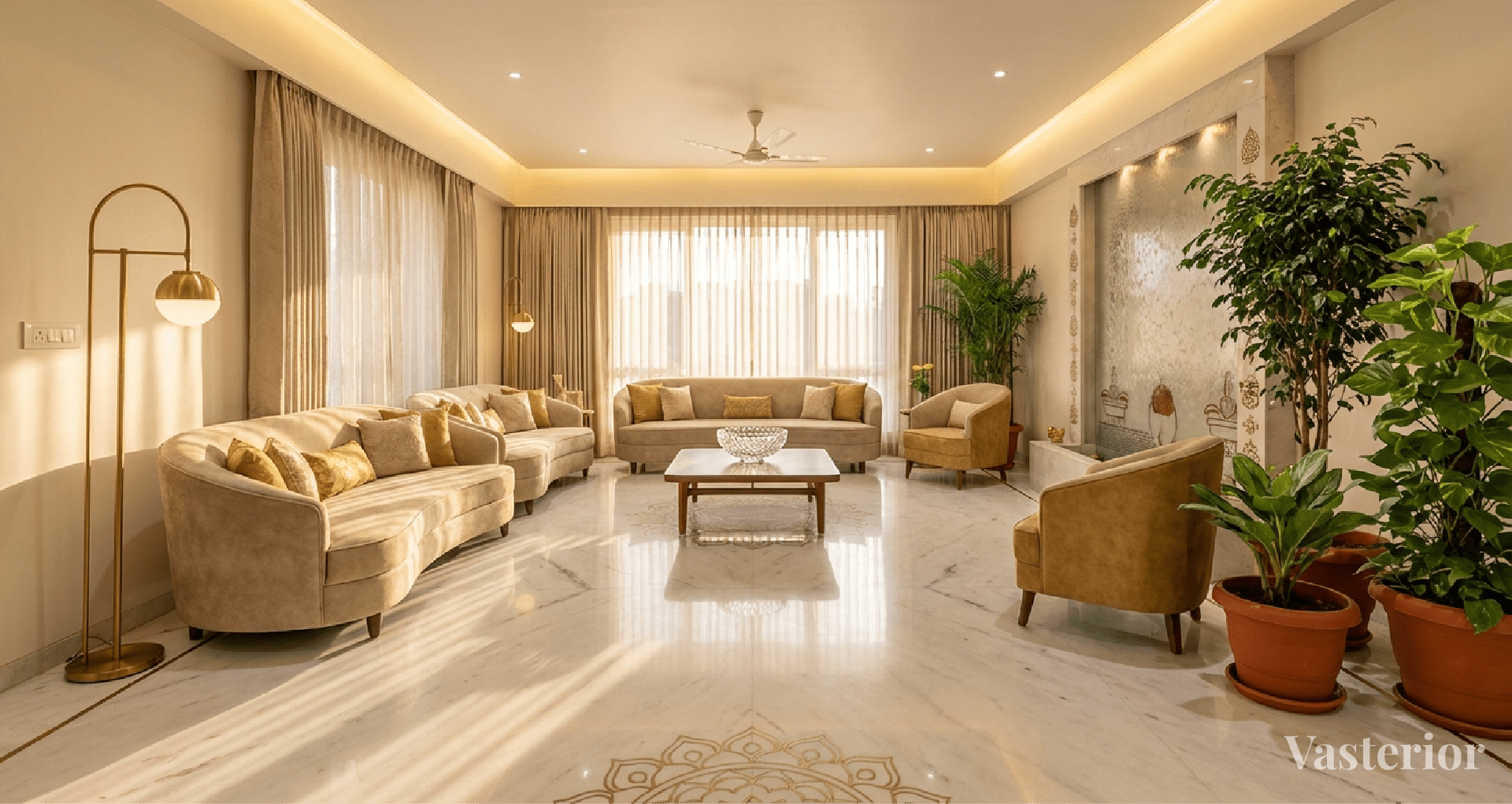
Vastu Shastra is an ancient Indian architectural science that dates back thousands of years. Rooted in Vedic philosophy, it focuses on designing spaces that align with natural energies, cosmic forces, and the five elements of nature.
At its core, Vastu Shastra treats a building as a living energy field. The goal is to ensure that this field remains balanced so that the people living within it experience harmony, prosperity, and well-being.
Key Principles of Vastu Shastra
1. The Five Elements (Pancha Mahabhutas)
Vastu is built upon the balance of five fundamental elements:
- Earth (Prithvi)
- Water (Jal)
- Fire (Agni)
- Air (Vayu)
- Space (Akash)
Each element governs specific areas of a home and must remain balanced for optimal energy flow.
2. Directional Energy
Every direction holds a particular energy frequency. For example:
- North-East – spiritual energy and clarity
- South-East – fire and kitchen energy
- South-West – stability and grounding
- North – prosperity and career growth
This directional logic heavily influences room placement and architectural layout.
3. Cosmic Alignment
Vastu connects architecture with planetary energies and Earth's magnetic fields, ensuring that a home resonates harmoniously with natural forces.
Because of this deep relationship with geography, climate, and traditional building styles, Vastu integrates naturally with Indian architectural practices.
What is Feng Shui?
Feng Shui originates from ancient China and is a philosophy focused on balancing the flow of Chi (life energy) within a space. Unlike Vastu, which is strongly architectural, Feng Shui is more flexible and often focuses on arrangement, symbolism, and spatial energy flow.
The term "Feng Shui" literally translates to wind and water, symbolising the movement of life energy in the environment.
Core Concepts of Feng Shui
1. Chi (Life Energy)
Chi represents the invisible energy flowing through every space. The aim of Feng Shui is to encourage smooth and uninterrupted movement of this energy.
2. Yin and Yang Balance
Feng Shui emphasises balance between opposing forces:
- Yin – calm, passive energy
- Yang – active, vibrant energy
A well-designed space should maintain harmony between these two.
3. The Bagua Map
A fundamental Feng Shui tool is the Bagua energy map, which divides a space into zones connected to different aspects of life, such as:
- Wealth
- Relationships
- Career
- Health
- Creativity
Designers use the Bagua map to position furniture, colours, and objects to influence these areas positively.
Vastu vs Feng Shui: Key Differences
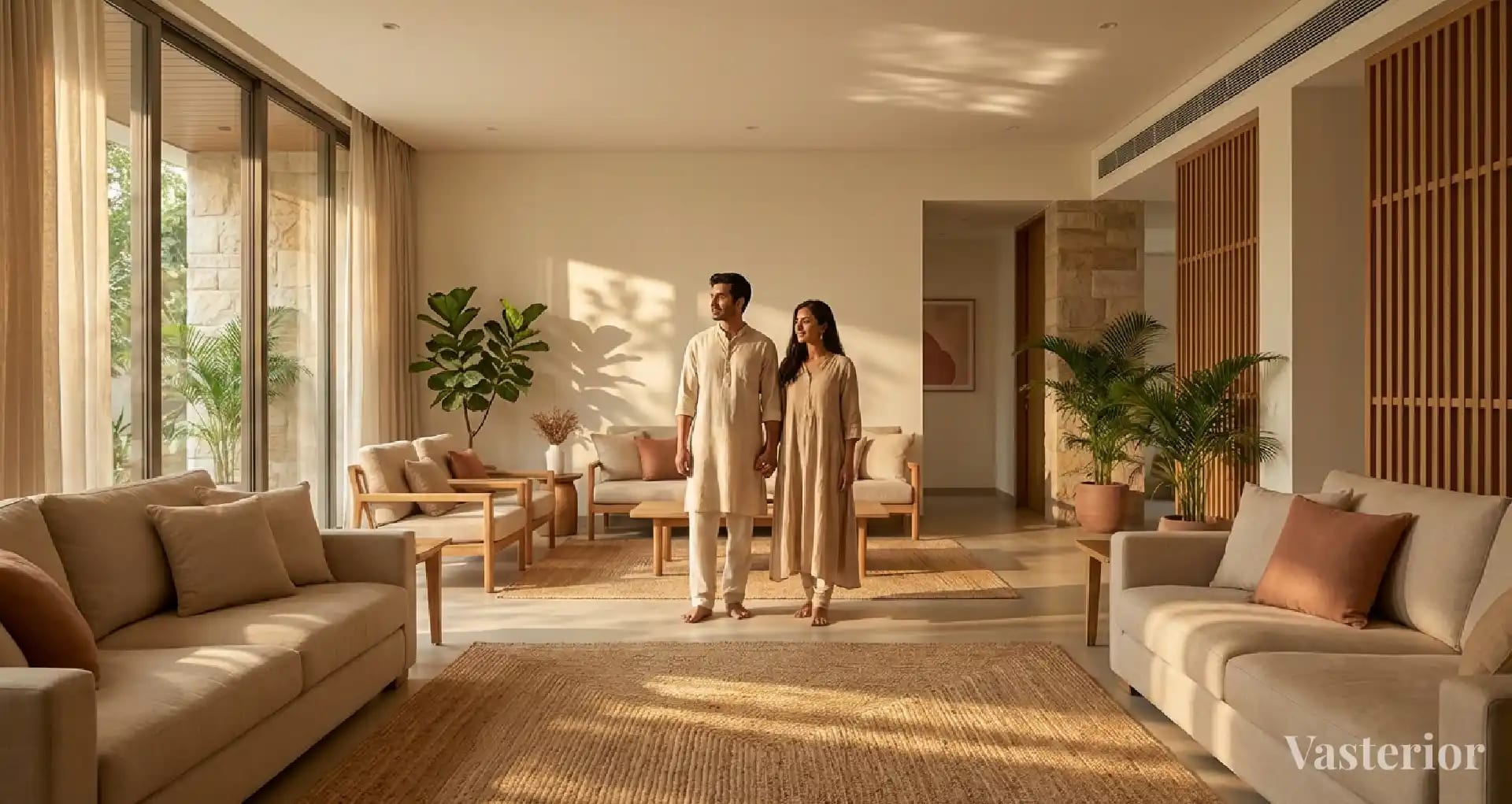
Although both systems aim to harmonise energy within a space, they differ significantly in philosophy and application.
1. Cultural Origin
- Vastu Shastra: Originates from ancient Indian Vedic traditions.
- Feng Shui: Developed in ancient Chinese culture.
2. Architectural Approach
- Vastu: Primarily focuses on structural planning and architectural orientation.
- Feng Shui: Often works through interior adjustments and object placement.
3. Directional Science
- Vastu: Uses precise cardinal directions and Earth's magnetic fields.
- Feng Shui: Uses directional energy combined with symbolic mapping systems like Bagua.
4. Elemental Framework
- Vastu: Based on the five natural elements (earth, water, fire, air, space).
- Feng Shui: Uses five elements as well, but in a different context; wood, fire, earth, metal, and water.
5. Adaptability
- Vastu: Works best when integrated during the architectural planning stage.
- Feng Shui: Can be applied more easily through decor and layout changes.
These differences explain why the two systems often feel similar on the surface but operate very differently in practice.
Which Works Better for Indian Homes?
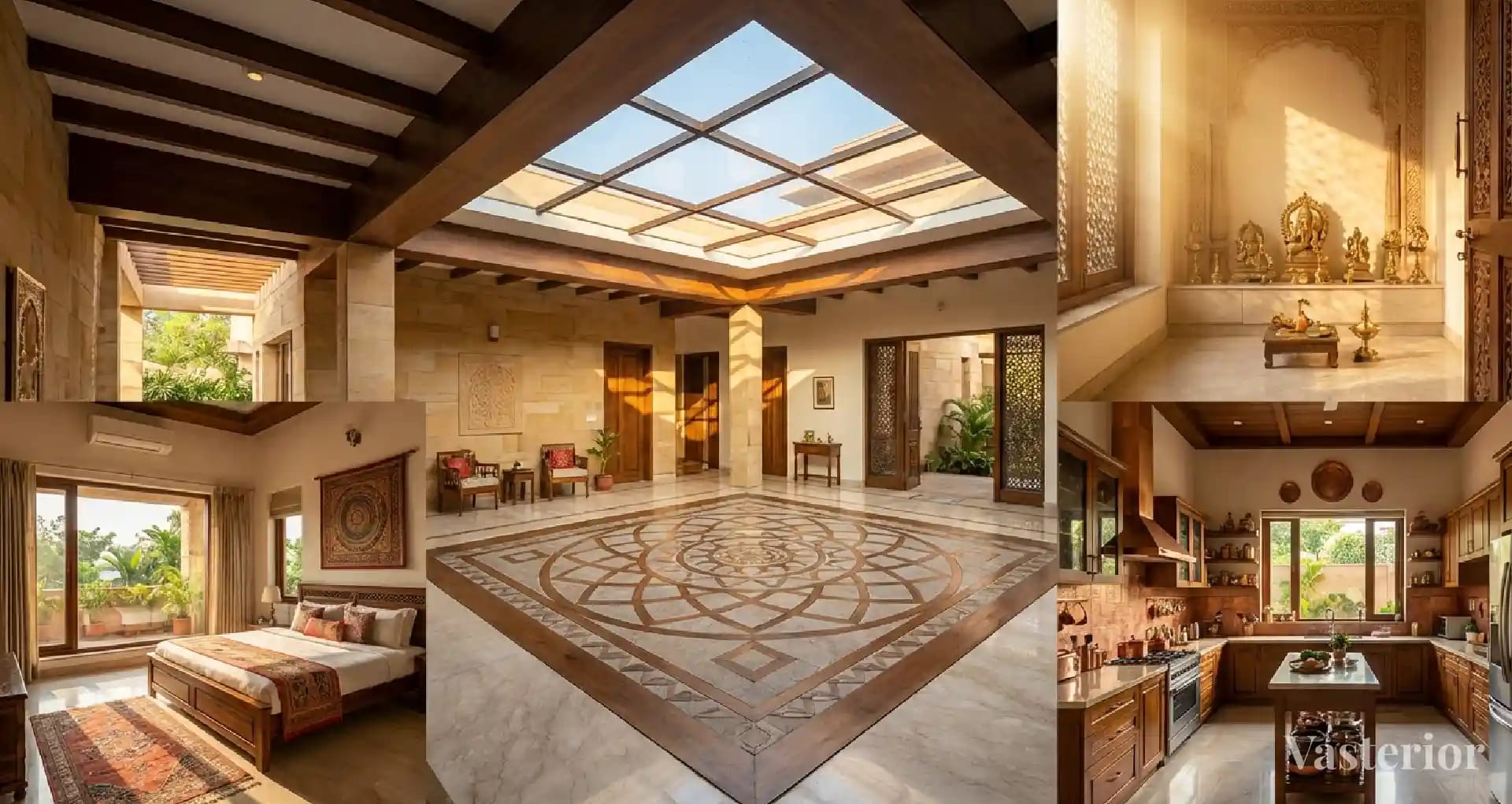
When considering Vastu vs Feng Shui for Indian homes, the answer largely depends on how closely the philosophy aligns with the region's architecture and environment.
Why Vastu Fits Naturally with Indian Homes
1. Cultural and Architectural Roots
Traditional Indian homes — from ancient temples to courtyard houses — were historically designed using Vastu principles. This means many aspects of Indian architecture already follow its directional logic.
2. Climatic Compatibility
Vastu principles take into account sun movement, airflow patterns, and geographical positioning, which are particularly relevant to the Indian subcontinent.
3. Spatial Planning
Vastu emphasises the correct placement of key areas such as:
- Kitchens in the South-East
- Bedrooms in the South-West
- Prayer spaces in the North-East
These placements naturally align with Indian lifestyle patterns.
Where Feng Shui May Require Adaptation
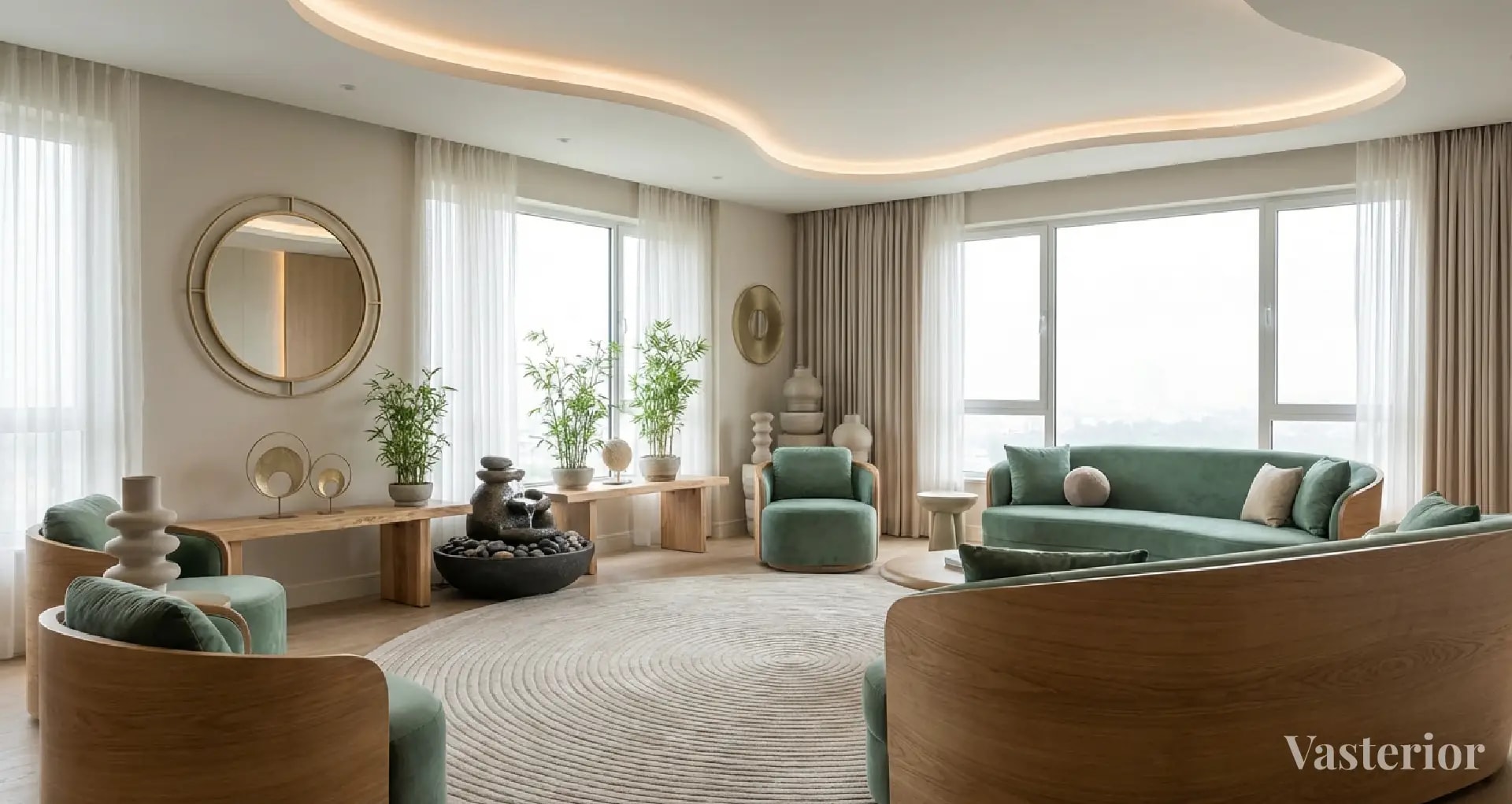
Feng Shui can still be helpful in improving energy flow within a home, but many of its guidelines are rooted in Chinese environmental conditions and architectural styles.
As a result, certain Feng Shui remedies may require adjustments when applied to Indian homes.
In short, Vastu tends to integrate more seamlessly with Indian architecture, while Feng Shui works better as a supplementary approach for interior harmony.
Can Vastu and Feng Shui Work Together?
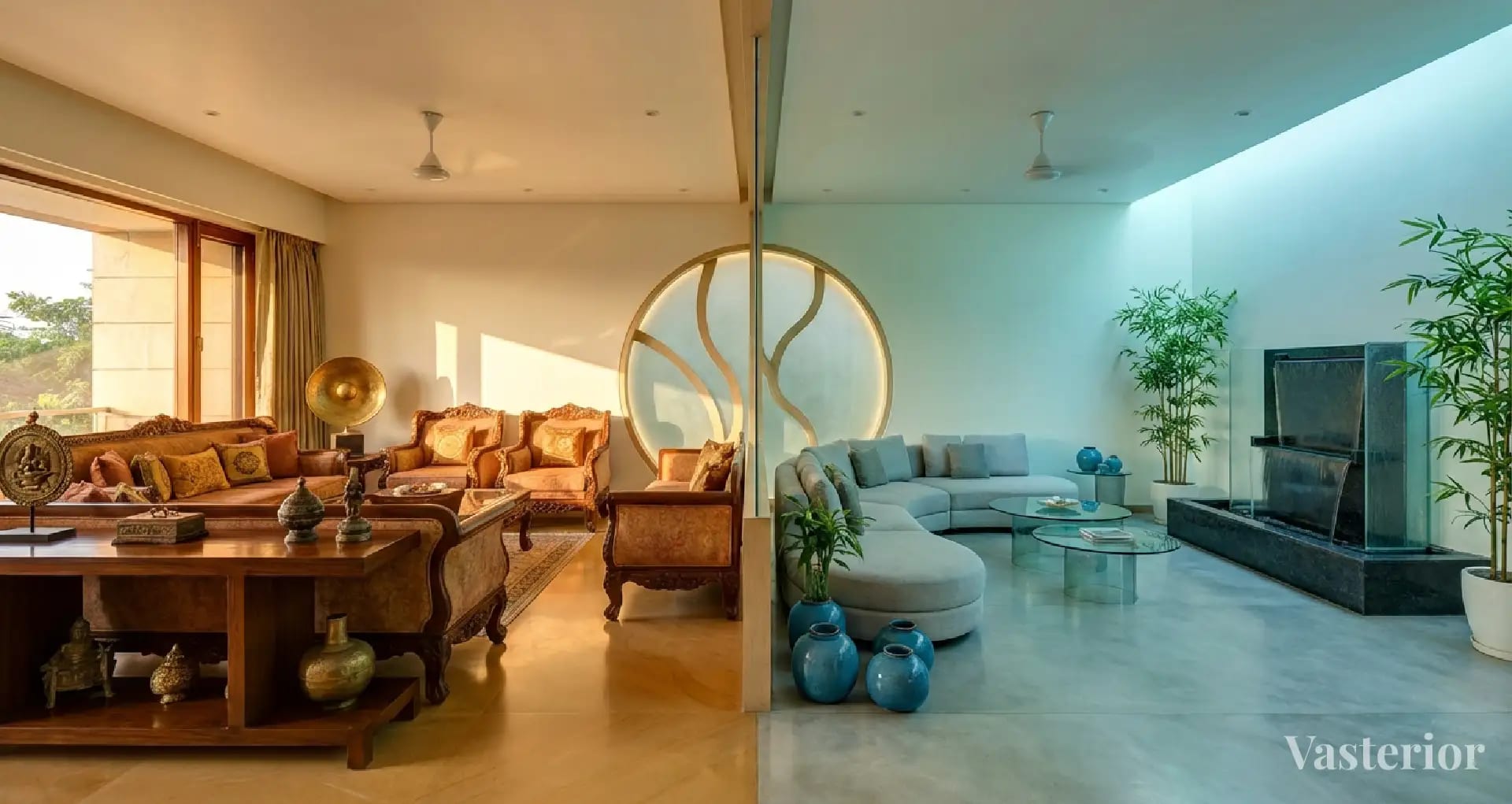
Interestingly, the two systems are not necessarily in conflict.
In modern interior design, many professionals explore ways to combine insights from both traditions to create balanced living spaces.
For example:
- Vastu may guide the architectural layout of the home.
- Feng Shui can help refine interior arrangement and energy flow.
By blending these approaches thoughtfully, designers can create environments that feel both harmonious and aesthetically pleasing.
Practical Tips to Improve Energy in Your Home
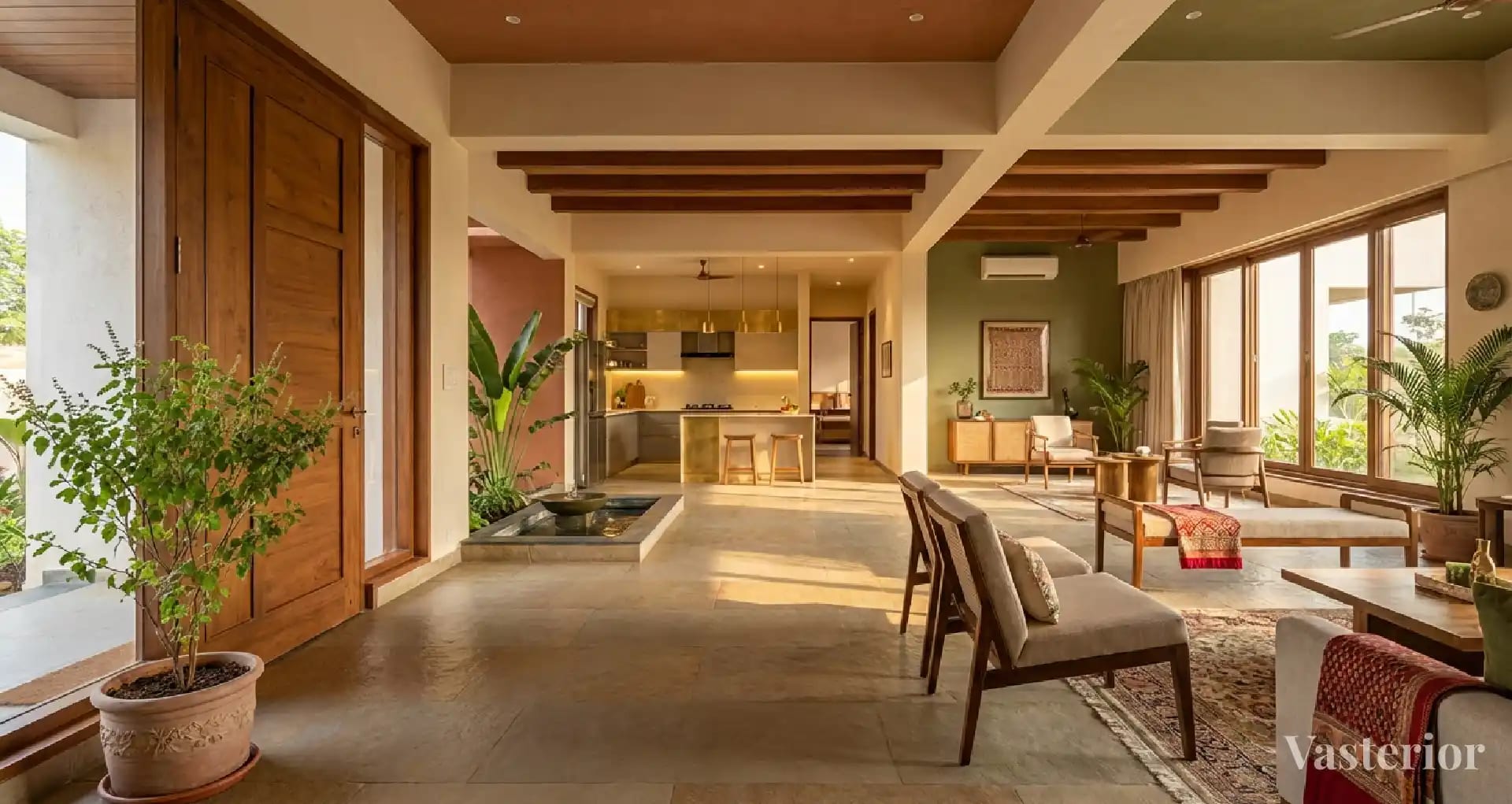
Whether you follow Vastu, Feng Shui, or a mix of both, a few universal practices can significantly improve the energy of your space.
1. Keep the Entrance Clear
The entrance is where energy enters the home. Ensure it is:
- Well-lit
- Clutter-free
- Inviting and organised
2. Align the Kitchen with Fire Energy
In Vastu, the kitchen symbolises fire and transformation. Ideally:
- Cooking should face East
- Avoid placing water elements directly beside the stove.
3. Position Bedrooms for Stability
Bedrooms work best when located in the South-West direction, promoting stability and grounding energy.
4. Maintain Natural Airflow
Fresh air circulation keeps energy moving smoothly. Open windows regularly and allow sunlight to enter the home.
5. Declutter Frequently
Clutter disrupts energy flow. A clean, organised space encourages calmness and clarity.
These small changes can subtly transform the atmosphere of a home.
How Professional Vastu-Aligned Interior Design Makes the Difference
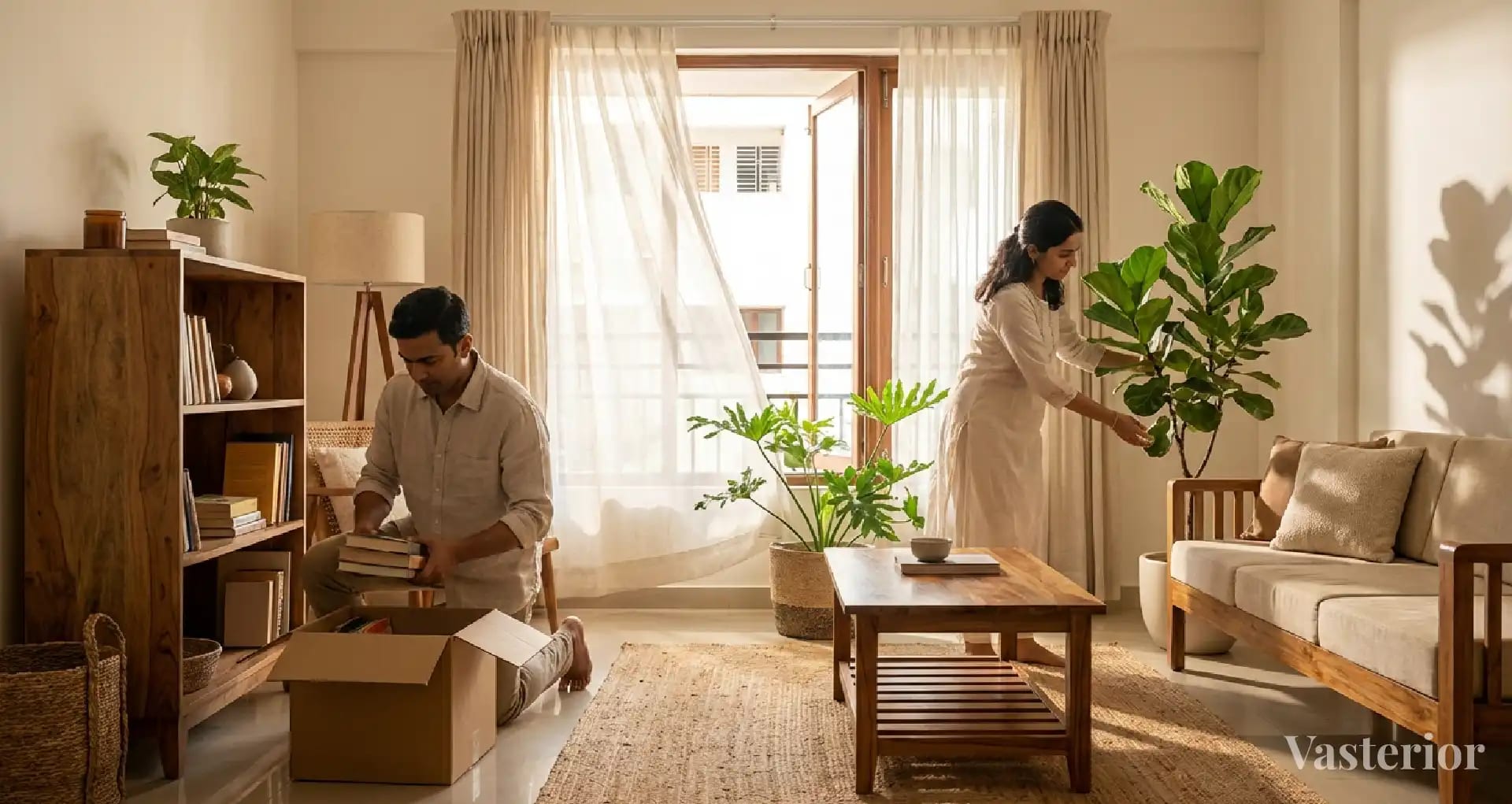
While general guidelines can help improve energy balance, achieving true alignment often requires a deeper understanding of spatial energy patterns.
This is where professional Vastu-aligned interior design becomes valuable.
A specialised approach combines:
- Architectural planning
- Interior design aesthetics
- MahaVastu principles
- Energy flow analysis
At Vasterior, the goal is not simply to design visually beautiful homes but to create spaces that resonate with positive energy and intentional living.
Through careful placement of rooms, thoughtful layout strategies, and refined design choices, it becomes possible to transform ordinary spaces into environments that support clarity, prosperity, and well-being.
Conclusion
The conversation around Vastu vs Feng Shui often frames the two systems as competitors, but the reality is far more nuanced.
Both traditions offer valuable insights into how our surroundings influence our lives. However, when it comes to Indian homes, Vastu Shastra tends to align more naturally with local architecture, climate, and cultural practices.
That said, the ultimate goal of either system is the same: creating spaces that support balance, comfort, and positive energy.
Designing such spaces requires more than just placing furniture or following directional rules. It involves understanding how architecture, energy, and human experience interact.
For homeowners interested in exploring this deeper alignment, thoughtful guidance can make all the difference. If you are considering designing or realigning your living space according to Vastu principles, the Vasterior team offers personalised insights that blend interior design with MahaVastu alignment. You may reach out for a consultation by connecting with the studio at +91 9100883355 or via email at info@vasterior.com to explore how your home can be transformed into a space that truly works in your favour.
After all, the right home design doesn't just look beautiful, it feels right too.