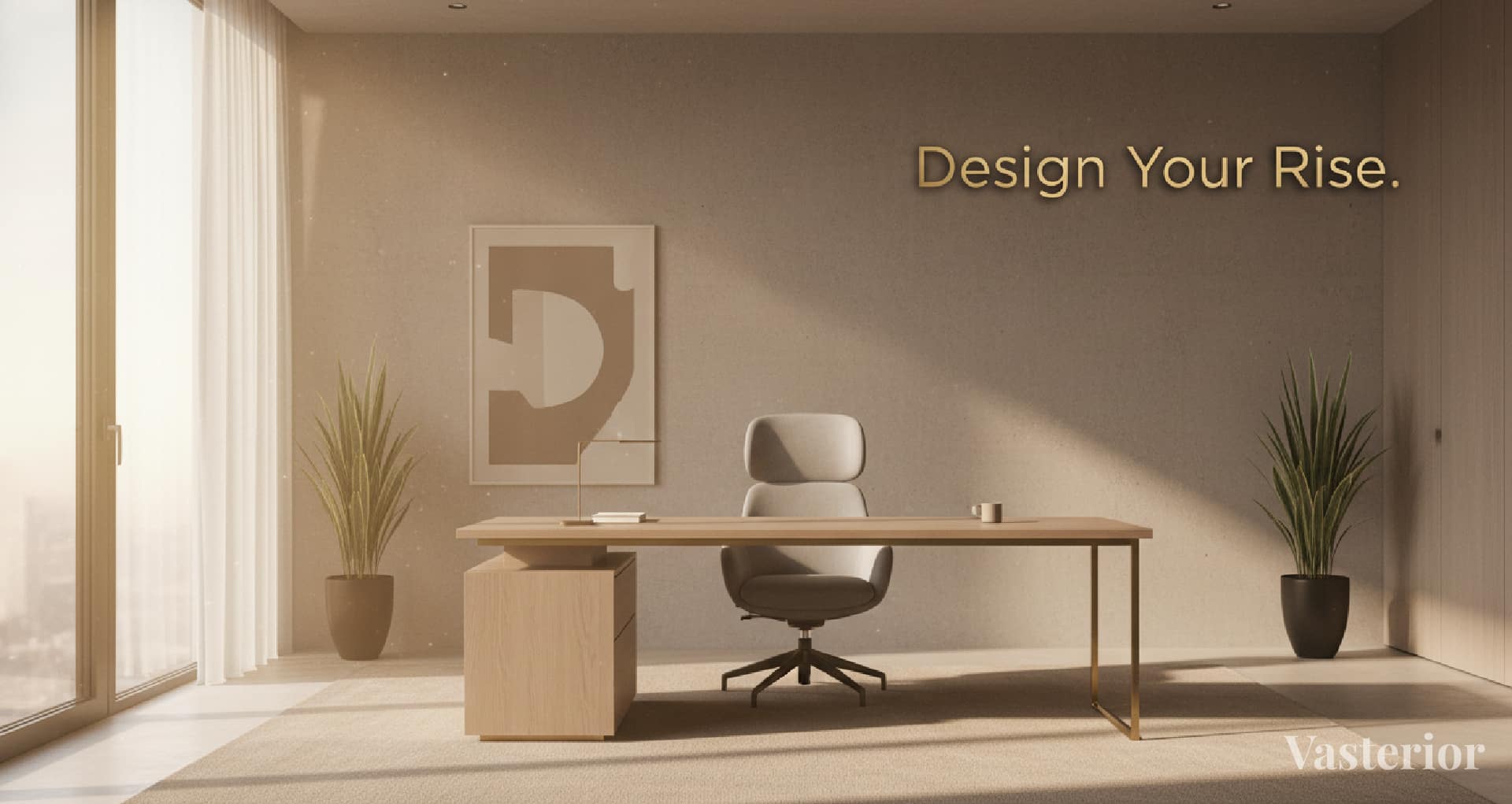
Most professionals blame market conditions, office politics, or timing when promotions stall. Rarely do they examine the environment in which they think, plan, negotiate, and execute every single day.
Here is the reality: your interior is not neutral.
It either sharpens your authority or dilutes it. It either supports clarity or feeds cognitive friction. It either positions you for momentum or quietly drains it.
This is where Career Vastu mistakes become relevant, not as superstition, but as spatial strategy. Vastu, when understood correctly, is an environmental intelligence system. It studies directional alignment, energy flow, psychological triggers, and structural balance.
At Vasterior, interiors are treated as performance ecosystems. The objective is not decoration. The objective is directional precision, structural coherence, and energy zoning that supports professional acceleration.
If career growth feels slower than your capability, the first audit should not be your résumé. It should be your room.
The Science Behind Career Energy and Interior Layout
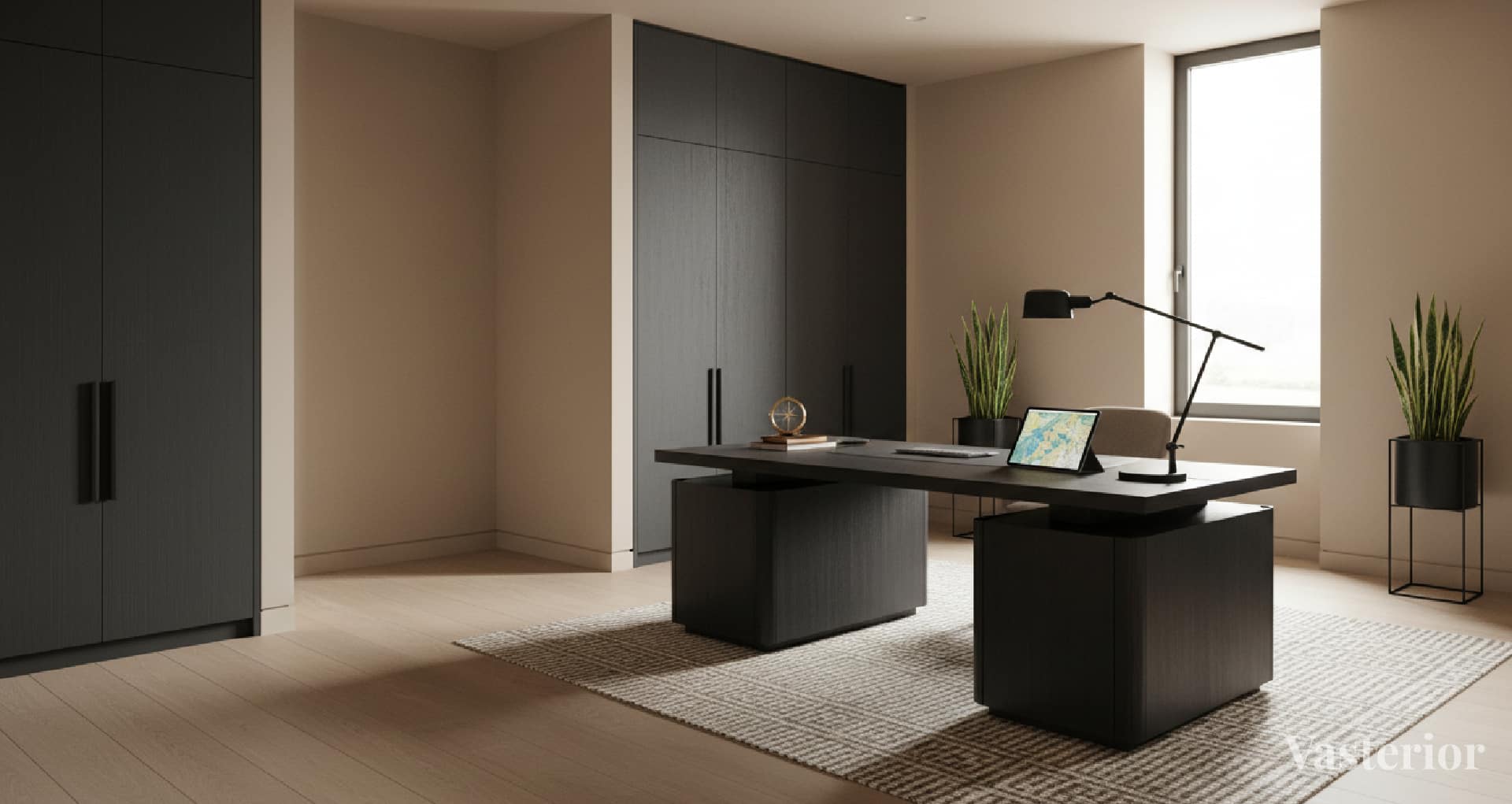
Before addressing specific Career Vastu mistakes, it is essential to understand why interiors influence professional outcomes.
Directional Influence
In Vastu principles:
- North is associated with opportunity flow and financial movement.
- East governs clarity and visibility.
- South-West represents stability and authority.
When these zones are blocked, cluttered, or misused, the symbolism translates subconsciously into hesitation, instability, or stagnation.
Environmental Psychology
Modern research in environmental psychology confirms:
- Poor lighting reduces alertness and decision quality.
- Clutter increases stress hormones and decision fatigue.
- Sitting in a vulnerable position (door behind you) elevates subconscious threat response.
- Visual chaos fragments focus.
This is not ritual. It is structure.
Interior design for productivity is not aesthetic preference, it is behavioural engineering.
Now let us examine the seven most common Career Vastu mistakes that quietly block professional progress.
7 Career Vastu Mistakes in Interiors That Quietly Block Progress
1. Facing the Wrong Direction While Working
What It Looks Like
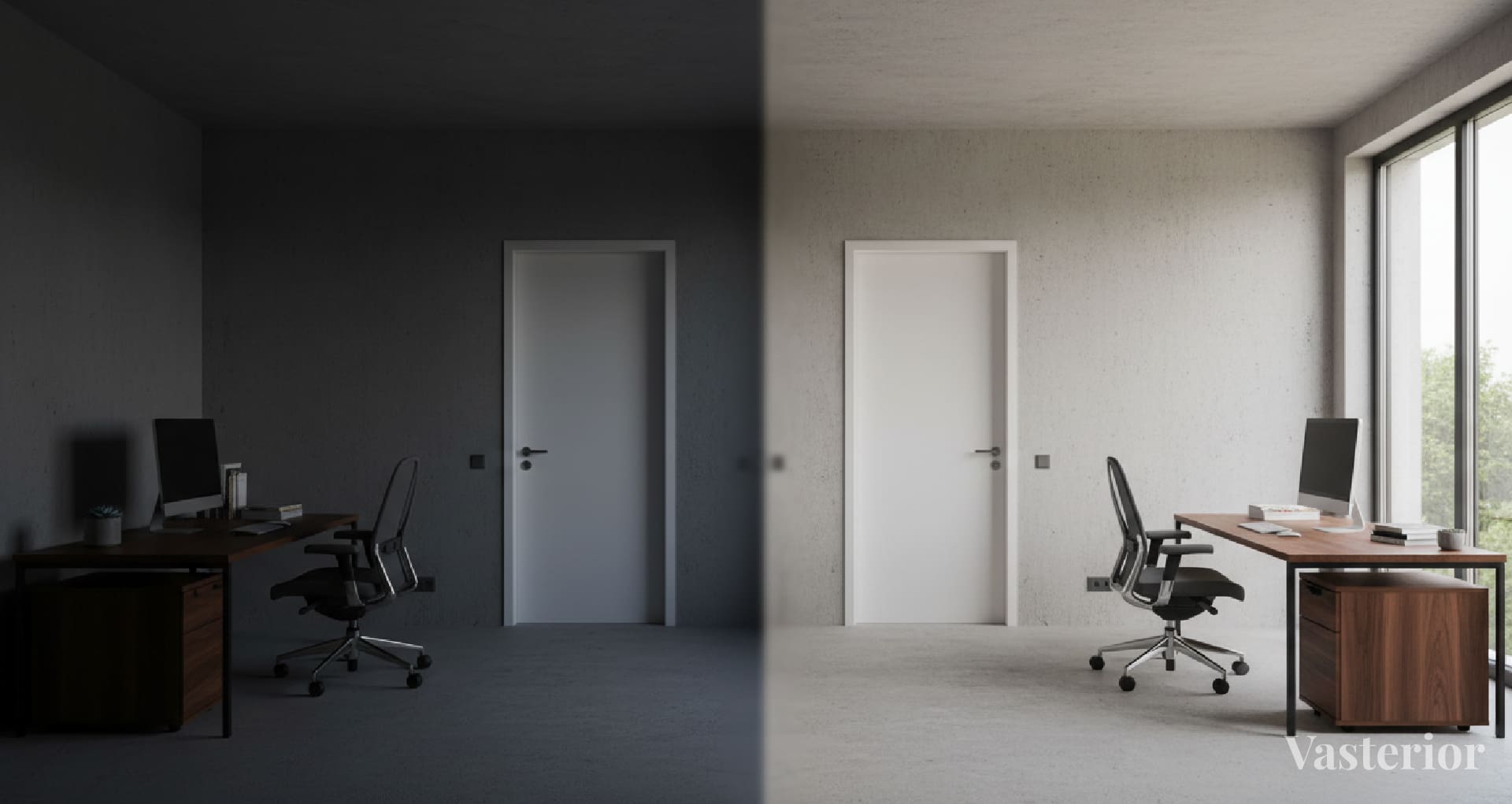
You sit facing a wall in the South-West or directly towards the South without strategic placement. Alternatively, you work with your back to the door.
Why It Affects Career Growth
Facing the wrong direction disrupts cognitive openness. In Vastu for career growth, North or East-facing desks are preferred for opportunity alignment and clarity.
From a psychological standpoint, facing a blank wall limits visual depth. Sitting with your back to entry points creates subconscious insecurity.
Strategic Correction
- Position your desk so you face North or East.
- Ensure the door is visible but not directly aligned in confrontation.
- Use solid backing behind your chair to reinforce authority positioning.
The best direction for a work desk is not arbitrary. It affects perception, posture, and confidence.
2. Sitting Under Structural Beams
What It Looks Like
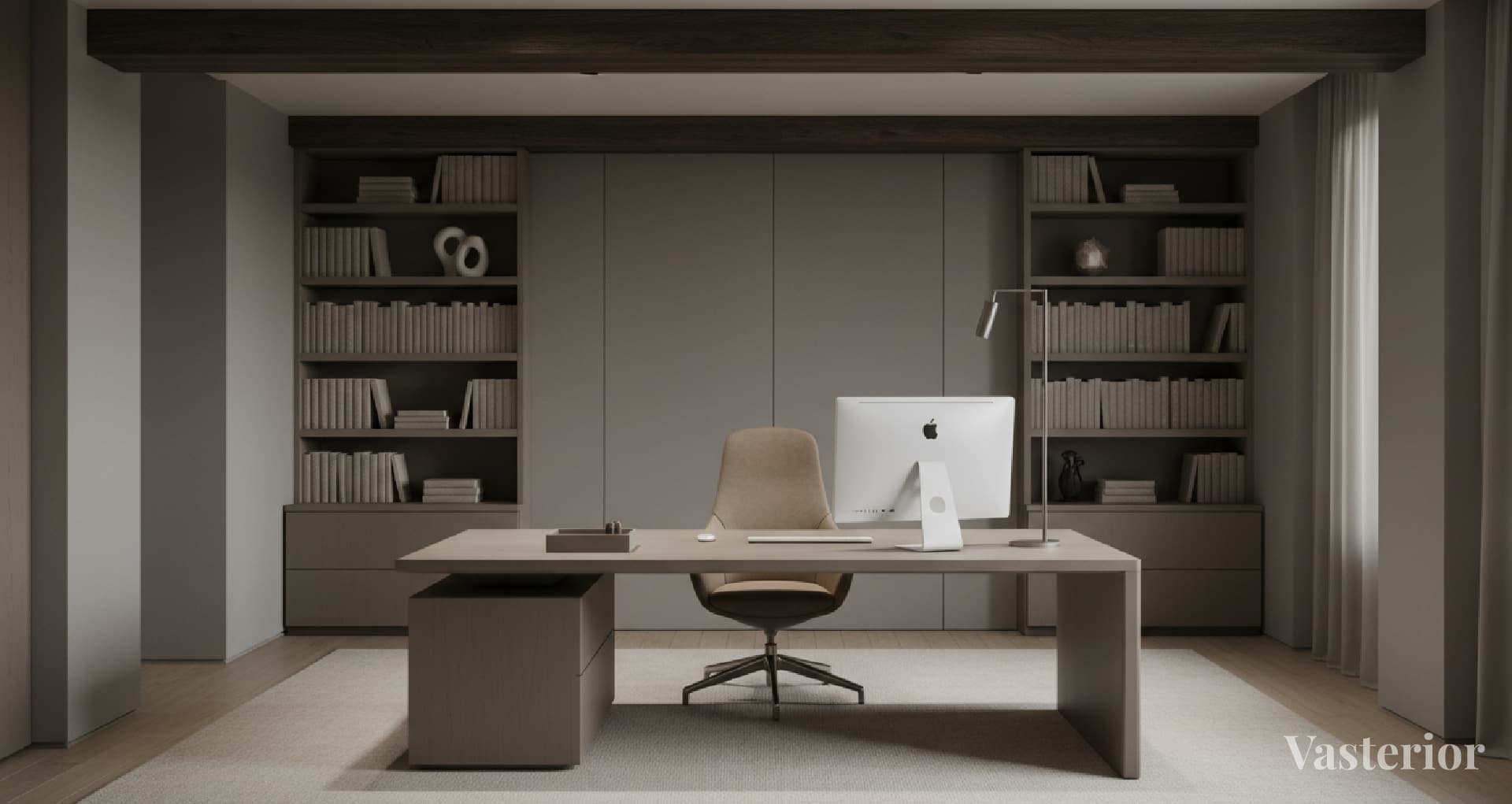
Your desk is placed directly beneath a visible ceiling beam.
Why It Affects Professional Growth
In Vastu, beams create pressure zones. Symbolically, they represent burden and restriction.
Architecturally, beams compress visual space. Subconsciously, this reduces expansiveness of thought and increases stress response.
Most professionals underestimate this.
Strategic Correction
- Shift the desk away from beam alignment.
- If relocation is impossible, soften the beam visually using ceiling design elements that distribute visual weight.
Vastu for professionals prioritises spatial breathing room.
3. Cluttered North or East Zones
What It Looks Like
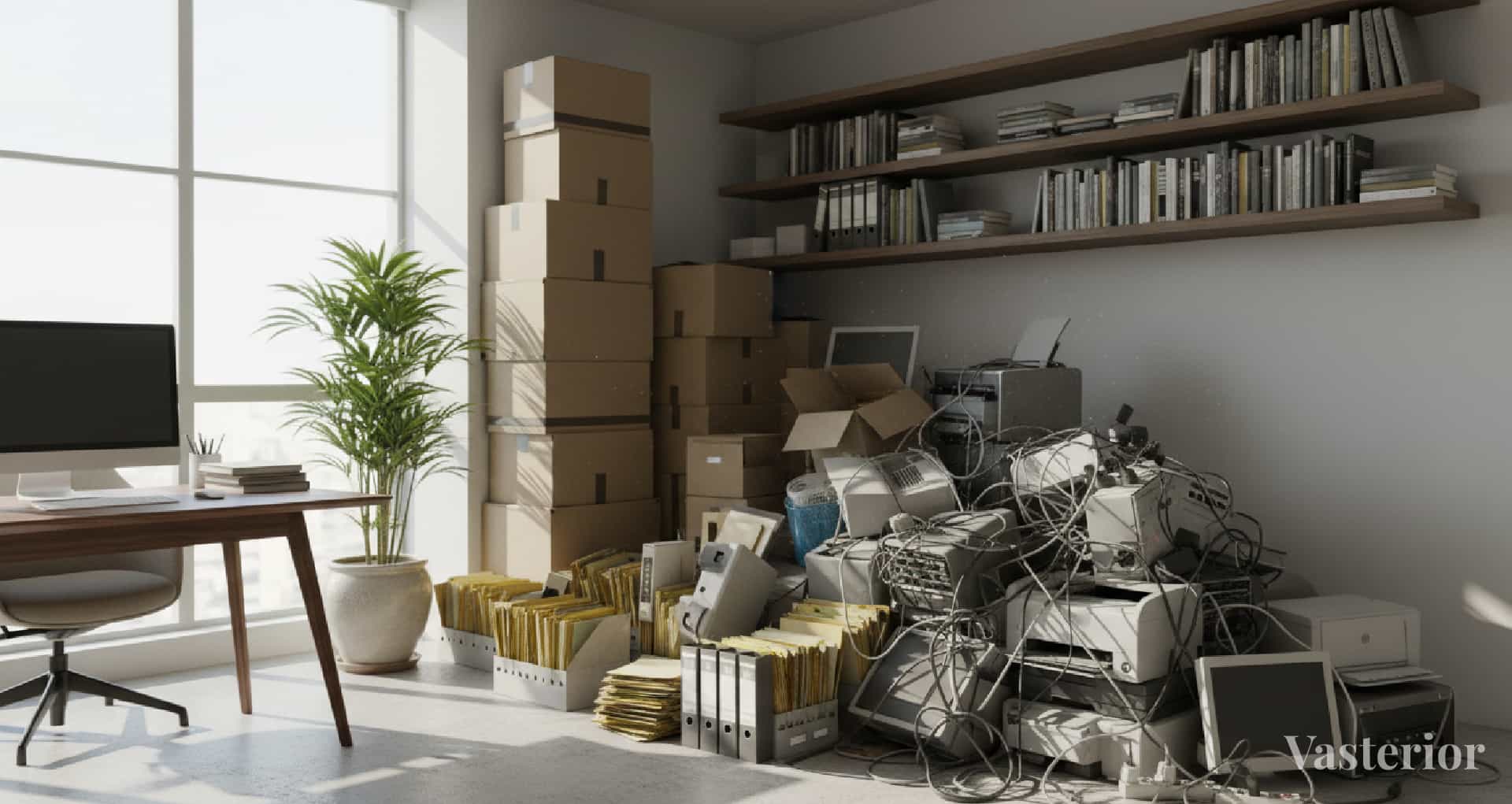
Storage boxes, unused furniture, or chaotic shelves dominate the North or East areas of your room.
Why It Blocks Progress
In Vastu for job promotion, North governs career opportunities and financial flow. East governs visibility and reputation.
Clutter in these zones symbolically blocks inflow.
From a cognitive perspective, clutter amplifies mental overload and reduces clarity.
This is one of the most common Vastu mistakes in home environments.
Strategic Correction
- Keep North and East light, open, and organised.
- Avoid heavy storage units in these directions.
- Prioritise clean surfaces and controlled visual hierarchy.
Interior design for productivity begins with elimination.
4. Poor Lighting in the Workspace
What It Looks Like
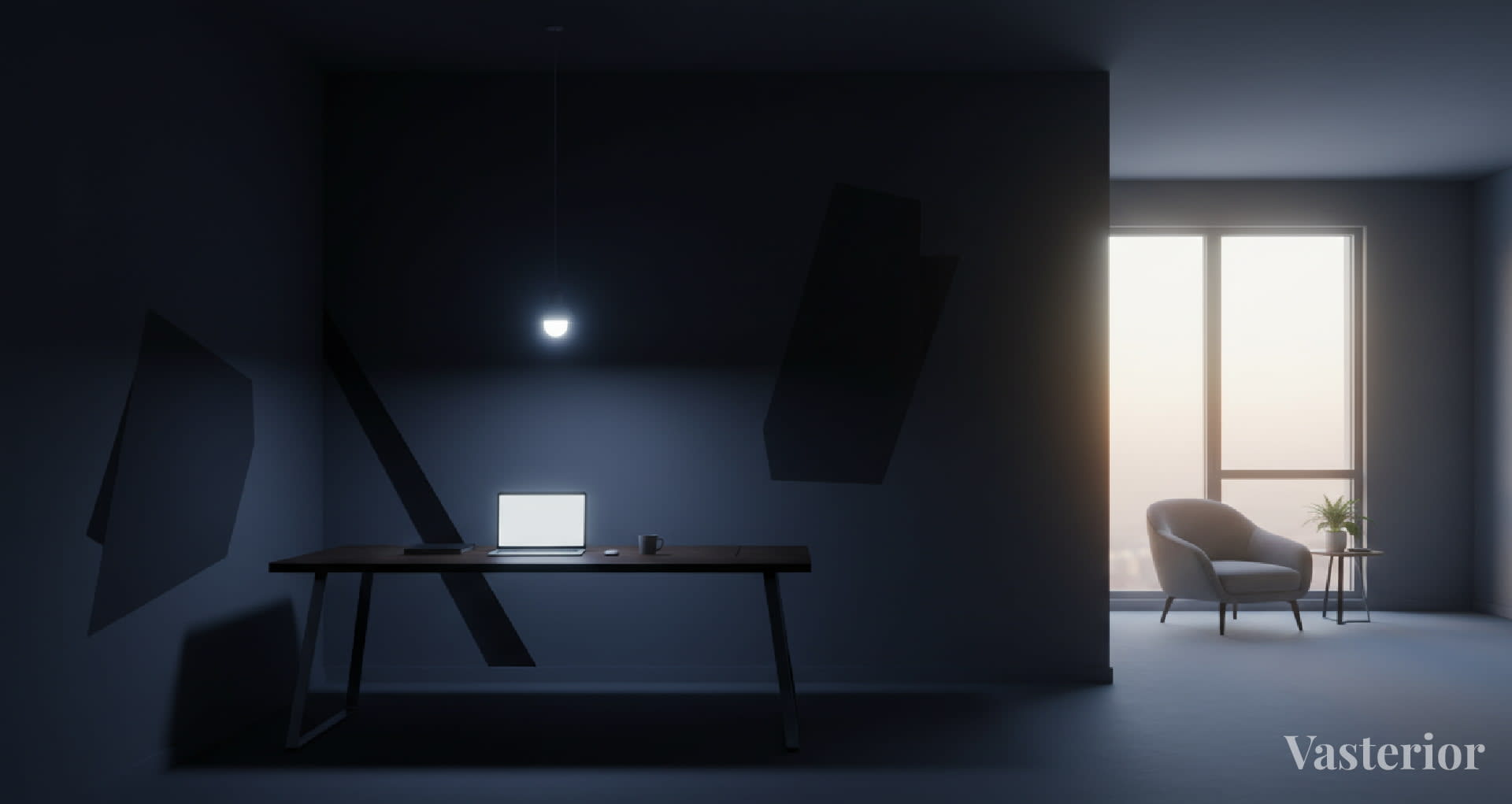
Dim corners, harsh overhead glare, or dependence solely on artificial lighting.
Why It Affects Career Energy
Light regulates circadian rhythm and cognitive sharpness. Poor lighting reduces alertness and mood stability.
In Vastu for career growth, natural light from the East is especially beneficial.
Work from home Vastu strategies heavily prioritise light optimisation.
Strategic Correction
- Position desk near natural light, ideally from the East or North.
- Use layered lighting: ambient, task, and accent.
- Avoid shadows directly falling on your workspace.
Clarity requires illumination.
5. Broken Electronics or Damaged Décor
What It Looks Like
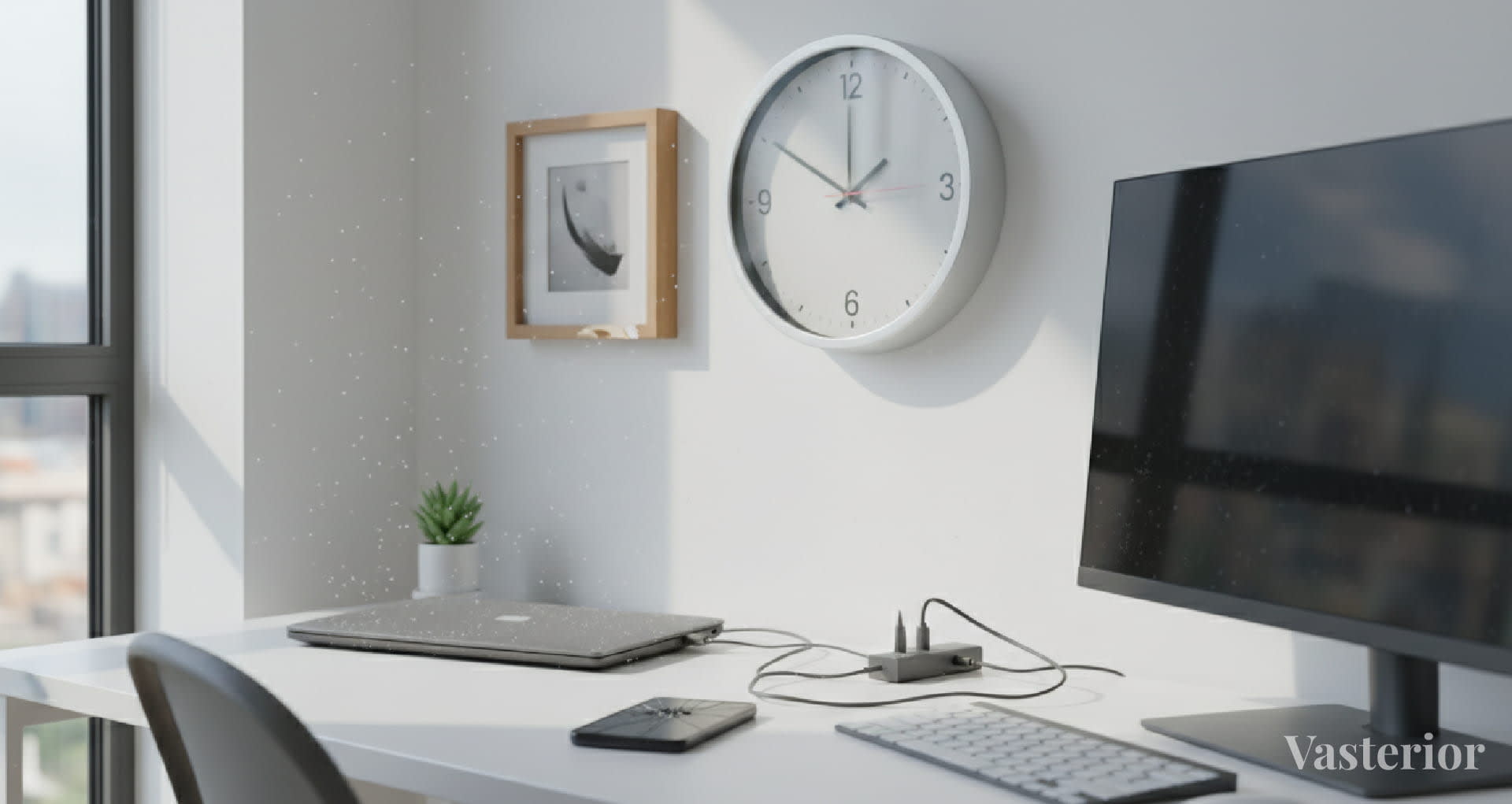
Non-functional clocks, cracked screens, chipped frames, or unused gadgets accumulating dust.
Why It Blocks Progress
Symbolically, broken objects represent stagnation and unfinished cycles.
Psychologically, they reinforce neglect patterns.
Career Vastu mistakes often hide in small details, and this is one of them.
Strategic Correction
- Repair or remove broken items immediately.
- Avoid storing obsolete electronics in visible areas.
- Maintain functional integrity in your workspace.
Professional momentum requires structural order.
6. Mirrors Reflecting Your Desk
What It Looks Like
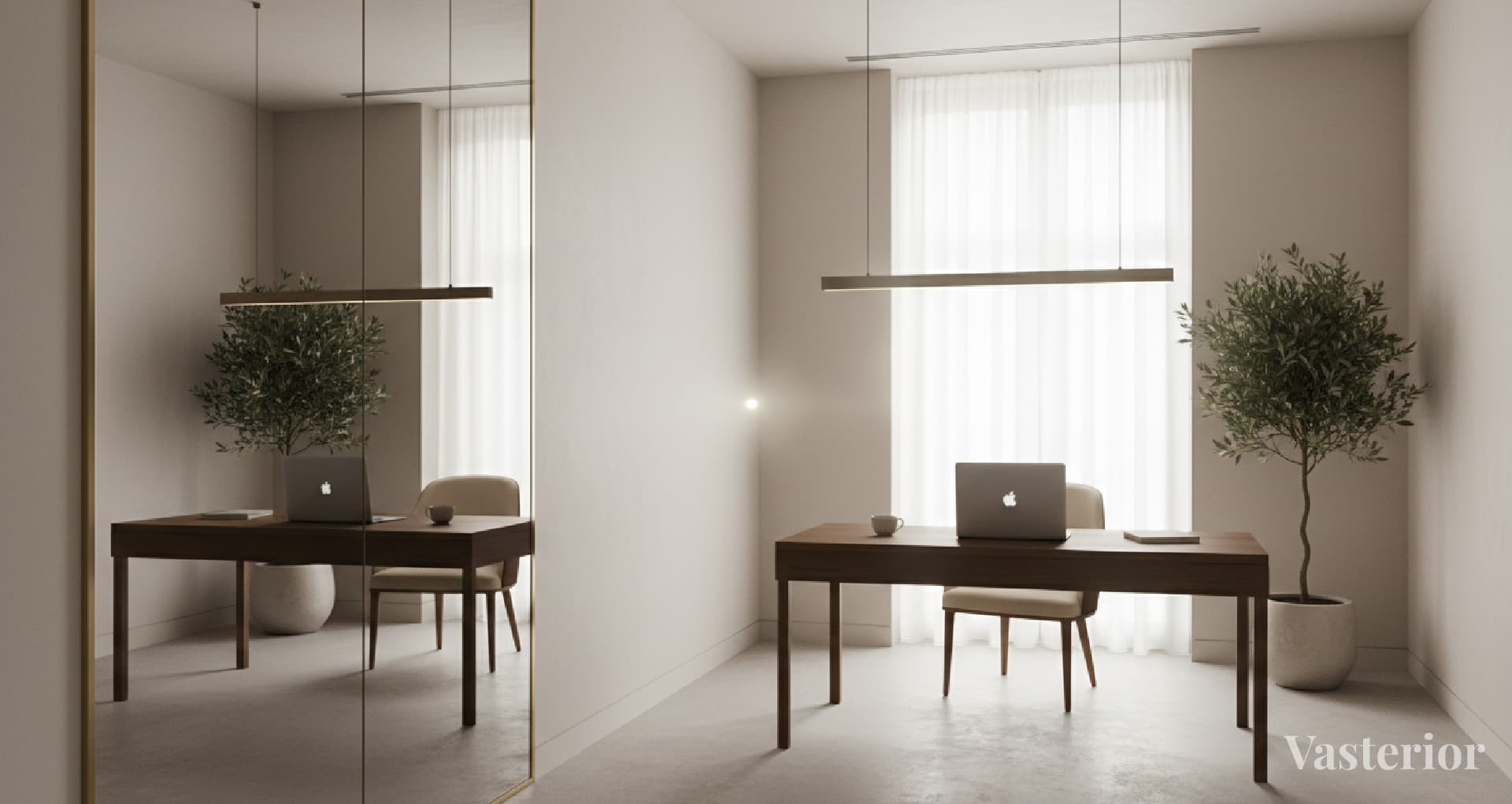
A mirror positioned such that it reflects you while you work.
Why It Affects Career Focus
In Vastu principles, mirrors double energy. When reflecting your workspace, they symbolically double workload and mental pressure.
Psychologically, constant peripheral reflection distracts attention and increases cognitive load.
This is particularly problematic in compact apartments.
Strategic Correction
- Reposition mirrors away from desk reflection.
- Use matte surfaces instead of reflective finishes near workspace.
- Maintain visual stability around your focal zone.
Subtle distractions compound over time.
7. Mixing Bedroom Rest Energy with Workspace Energy
What It Looks Like
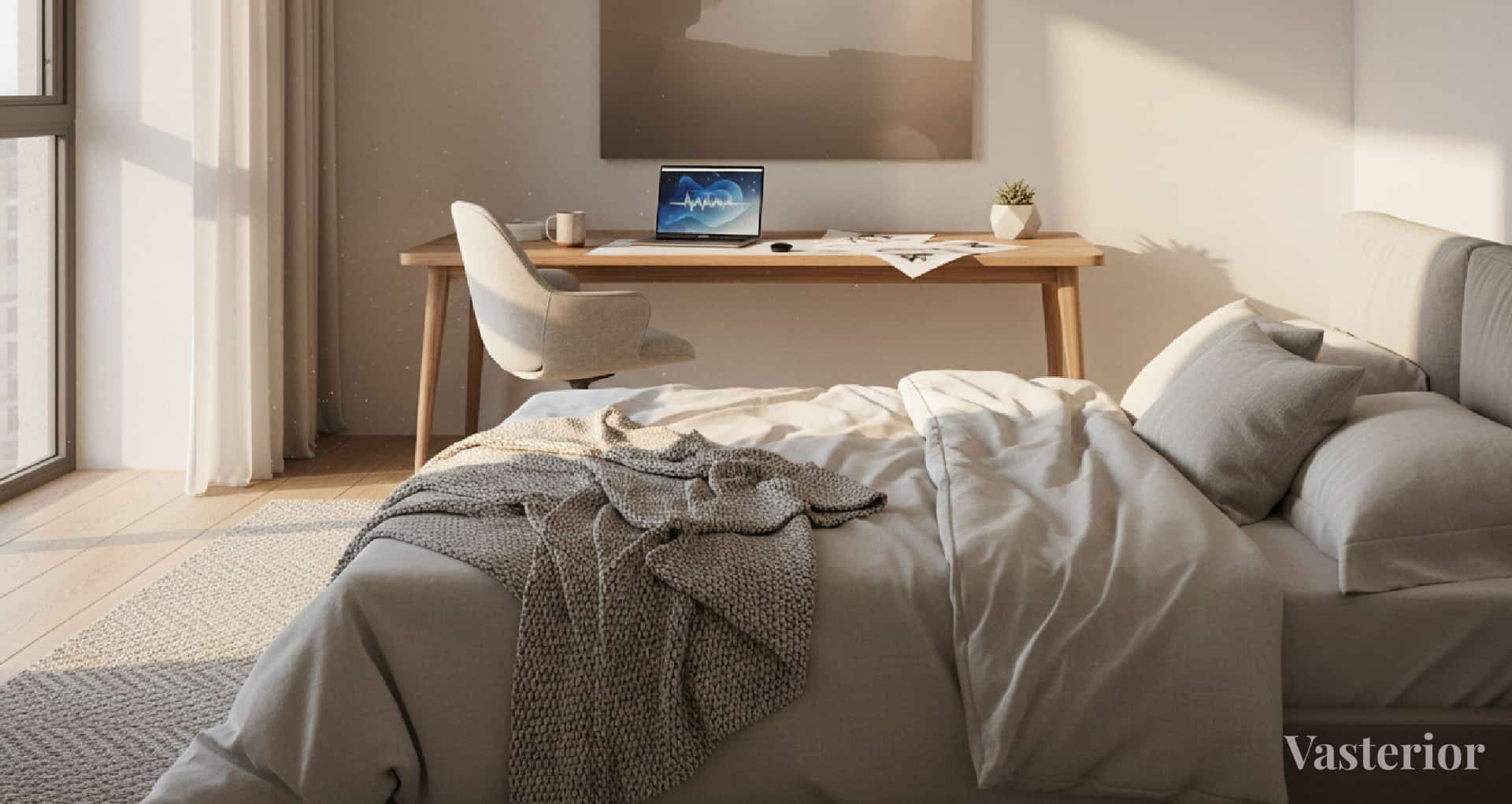
Working from your bed. Conducting meetings in a sleep-dominated space. Laptop permanently stationed beside pillows.
Why It Blocks Growth
Bedrooms are designed for restoration. Mixing work into this zone creates energetic conflict.
From a productivity standpoint, the brain associates beds with relaxation. Performance declines.
This is one of the most damaging work from home Vastu errors.
Strategic Correction
- Create a clearly defined work corner.
- Use partitions or rugs to demarcate zones.
- Avoid conducting serious professional calls while seated on a bed.
Authority requires energetic separation.
The Work-from-Home Illusion
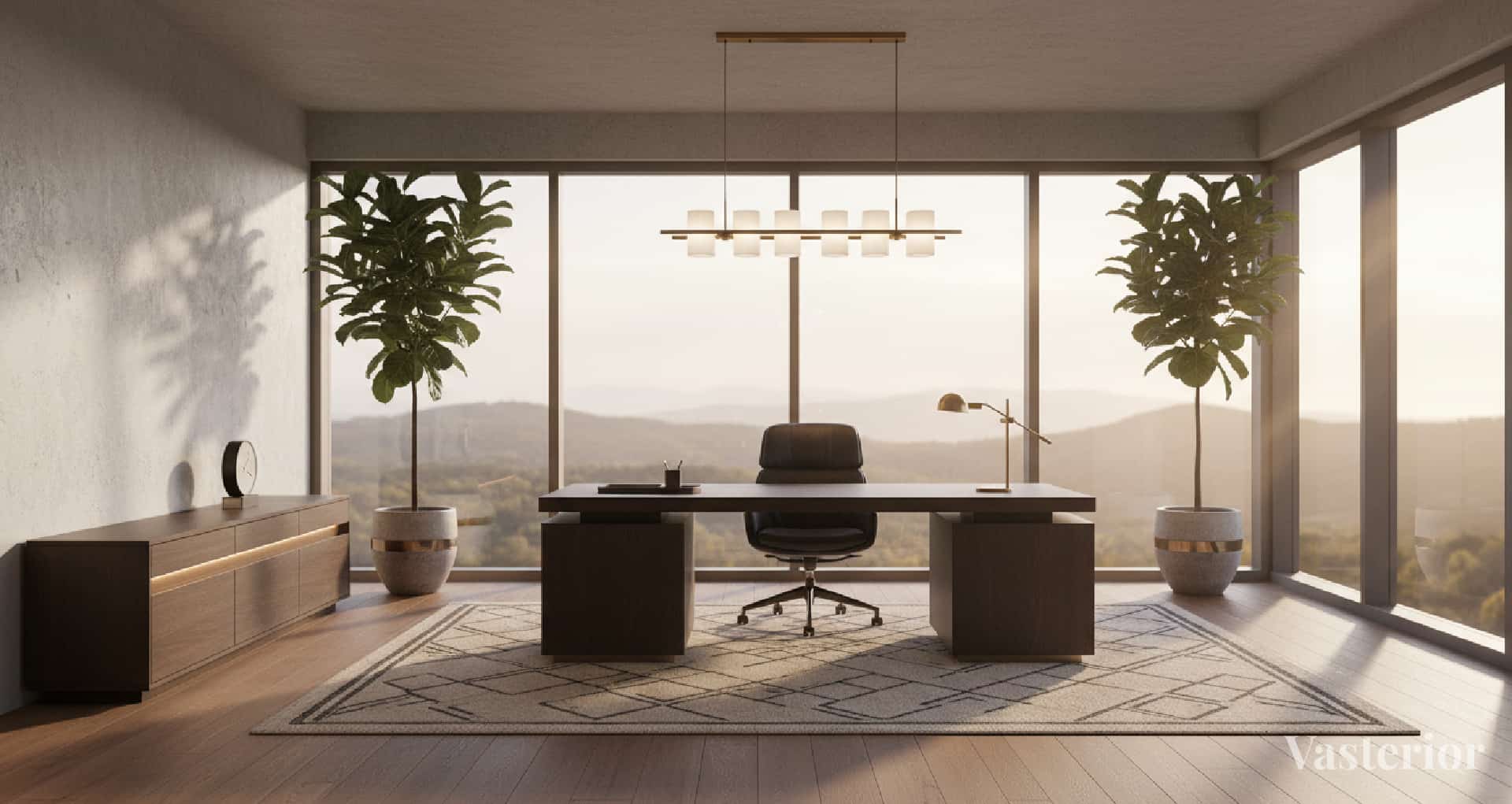
Many professionals assume working from home automatically improves productivity. In reality, hybrid spaces often dilute authority.
Entrepreneurs working from dining tables lack directional consistency. Professionals attending meetings from beds undermine subconscious confidence. Creators filming against cluttered backdrops weaken visual authority.
Vastu for professionals does not demand grand renovations. It demands spatial clarity.
If your workspace feels temporary, your results often mirror that instability.
Here is the truth: serious careers require serious spatial alignment.
What Strategic Career-Focused Interior Planning Looks Like
At Vasterior, career-aligned interiors are not styled randomly. They are mapped deliberately.
The process includes:
- Directional analysis of the property layout
- Identifying energy-heavy and energy-light zones
- Desk orientation precision
- Furniture hierarchy for authority
- Material selection based on psychological grounding
- Light mapping for cognitive enhancement
This is not about decorative symbolism. It is about creating environments that reinforce decisiveness, confidence, and opportunity receptivity.
Vastu for career growth becomes powerful when integrated with architectural intelligence.
Design is not cosmetic. It is behavioural infrastructure.
Conclusion: Career Acceleration Is Designed
Let us be direct.
Career stagnation is rarely accidental. Nor is career acceleration.
Your environment either amplifies your ambition or contradicts it.
Correcting Career Vastu mistakes is not about belief. It is about alignment. When directional flow, lighting, structure, and spatial hierarchy are synchronised, clarity improves. Confidence strengthens. Decisions sharpen.
And progress follows.
If you sense that your current interior does not reflect the scale of your ambition, a structured spatial consultation may offer the clarity you require. Vasterior provides personalised directional mapping and interior alignment strategies tailored to professionals seeking measurable momentum. Consultations can be scheduled discreetly via +91 9100883355 or by writing to info@vasterior.com for a detailed assessment.
Career acceleration is not accidental.
It is designed.
And design begins at home.