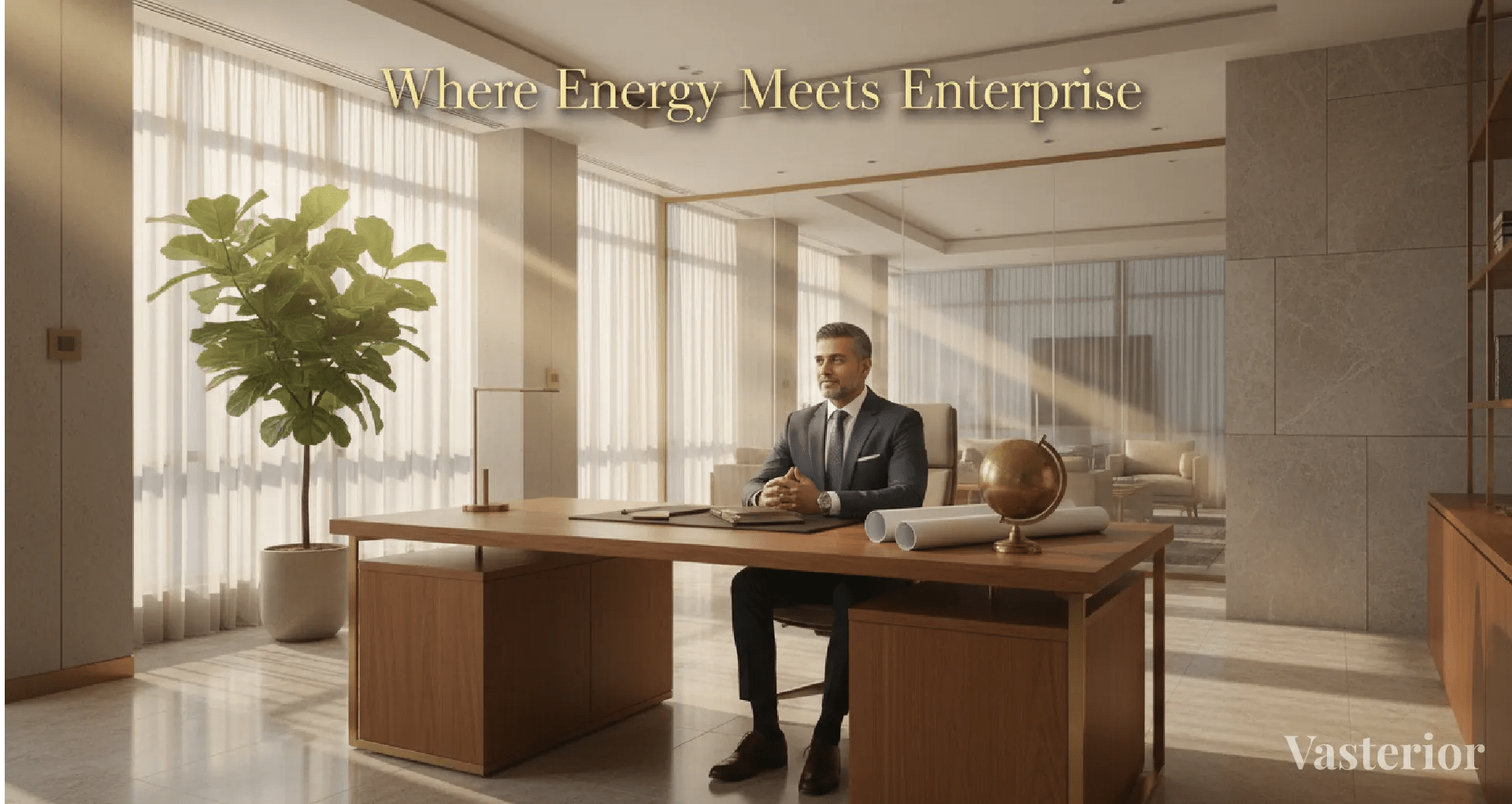
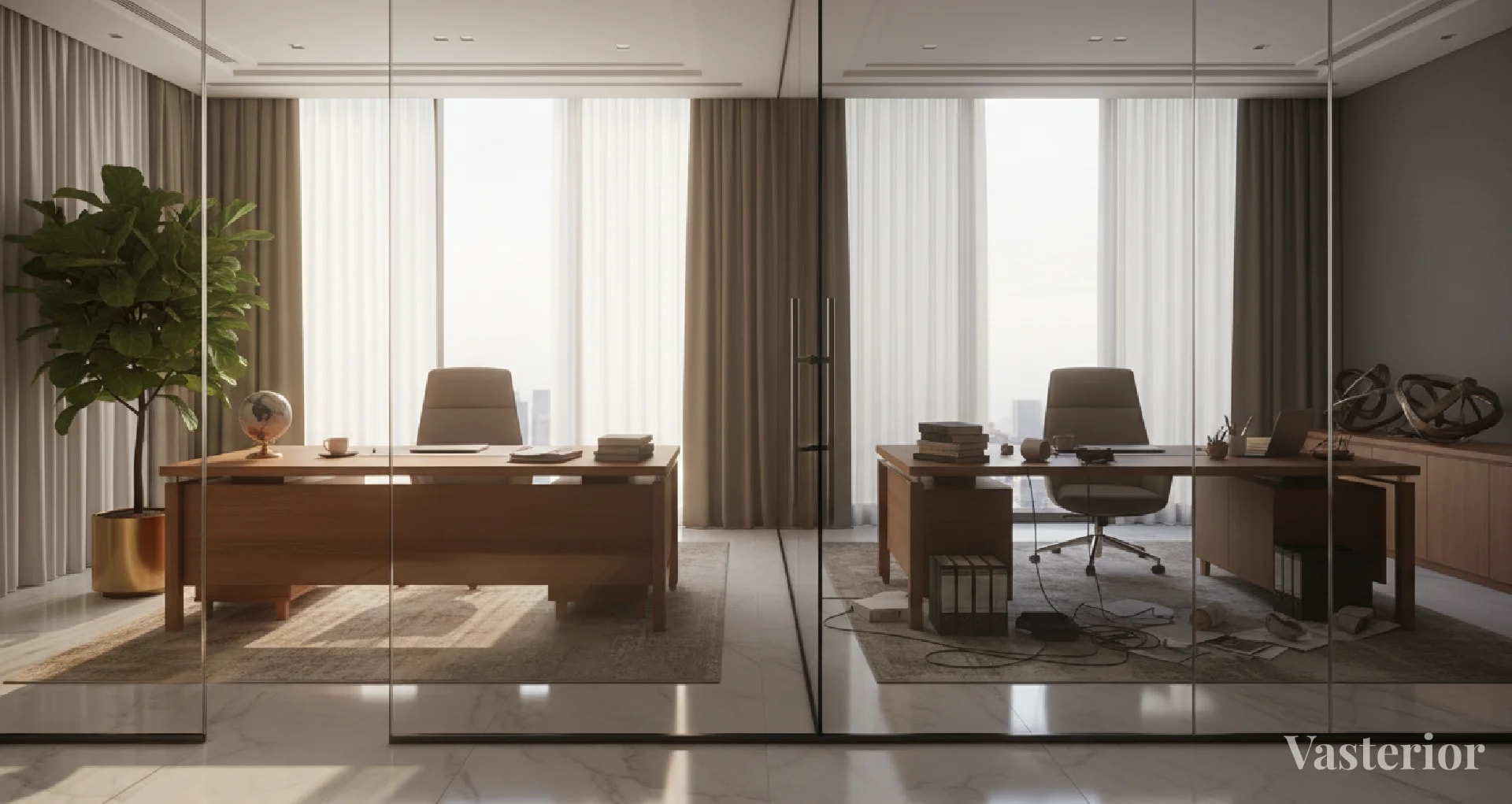
Have you ever walked into an office and instantly felt clarity, confidence and quiet power? Then stepped into another and sensed tension, clutter or subtle chaos?
That difference is rarely accidental.
While strategy, marketing and operations drive revenue, the physical environment silently shapes decision-making, financial flow and team performance. The placement of a desk, the direction of an entrance, the balance of light and materials — these are not aesthetic trivialities. They influence psychology, authority and energy.
This is where Vastu for business becomes less of a tradition and more of a strategic advantage.
For modern founders, retail owners and corporate leaders, aligning workspace design with Vastu principles is not about superstition. It is about creating spatial coherence that supports focus, stability and sustainable profit.
Why Vastu for Business Is Strategy, Not Sentiment
At its core, Vastu for business aligns spatial energy with functional intention. When the physical layout of a commercial space supports authority, financial control and clarity of thought, leaders make better decisions.
From a psychological standpoint, a correctly positioned entrance creates trust and authority. A well-placed owner's cabin strengthens leadership presence. Balanced elemental zones enhance stability and reduce internal friction.
MahaVastu principles, when applied scientifically, treat the workspace as a living ecosystem. Each direction corresponds to specific energies — growth, finance, stability, networking, creativity. When these zones are disturbed, performance suffers subtly yet consistently.
In contrast, when office interior Vastu is aligned, businesses often experience improved financial discipline, stronger employee morale, better client conversion rates and reduced operational stress.
This is not mysticism. It is environmental optimisation.
Entrance and First Impressions
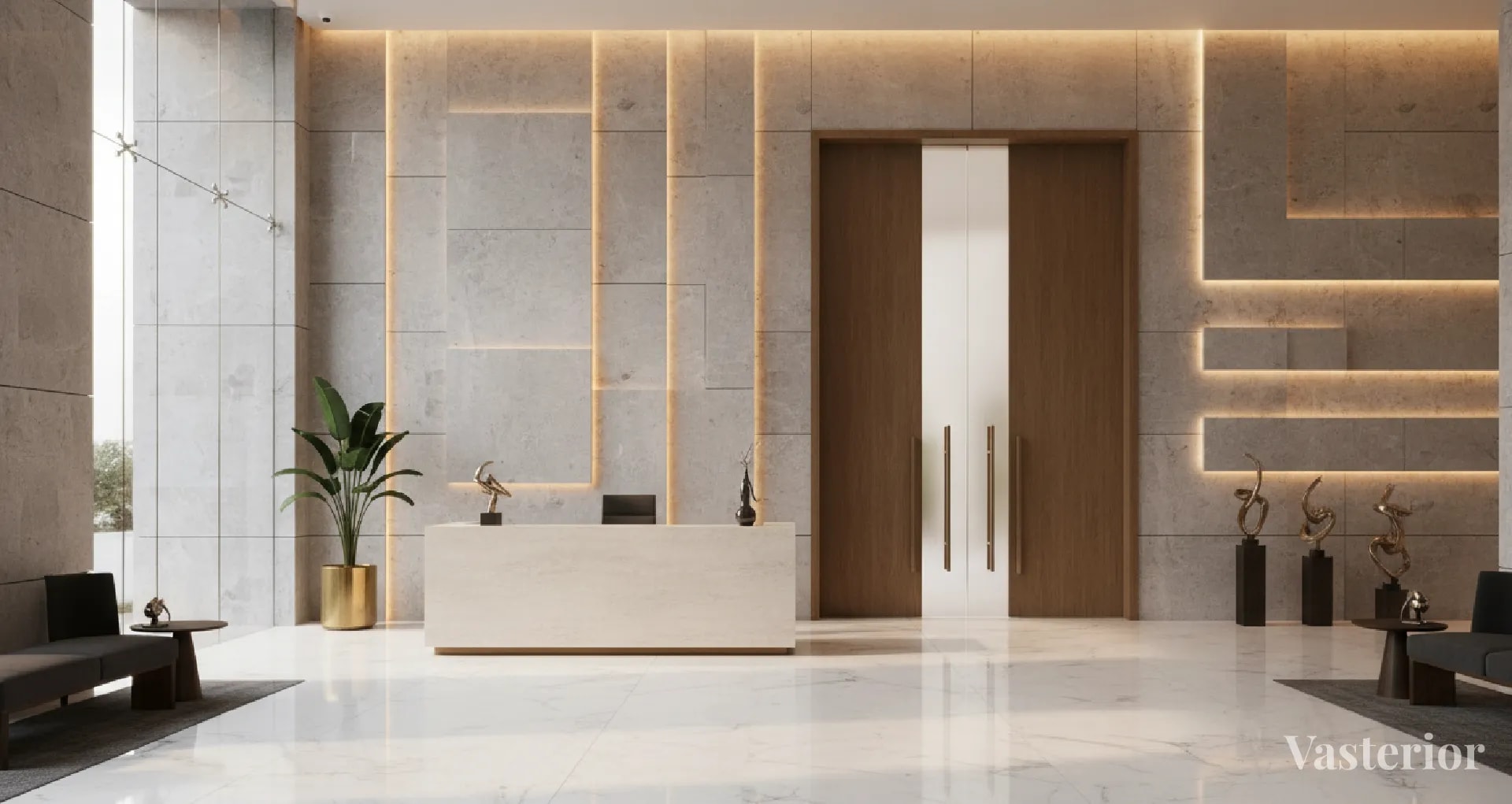
The entrance is the mouth of opportunity. In Vastu for office success, the main door should ideally be positioned in energetically supportive zones that invite expansion and credibility. A cluttered, dim or obstructed entrance subconsciously signals instability.
Ensure the entrance is well-lit and welcoming. Avoid placing dustbins or heavy storage near the door. Keep branding visible yet elegant.
For retail stores applying Vastu for shop layouts, entrance positioning directly impacts footfall and purchasing behaviour. The first impression your space creates is the energetic promise your business makes to every visitor who crosses the threshold.
Owner's Cabin Positioning
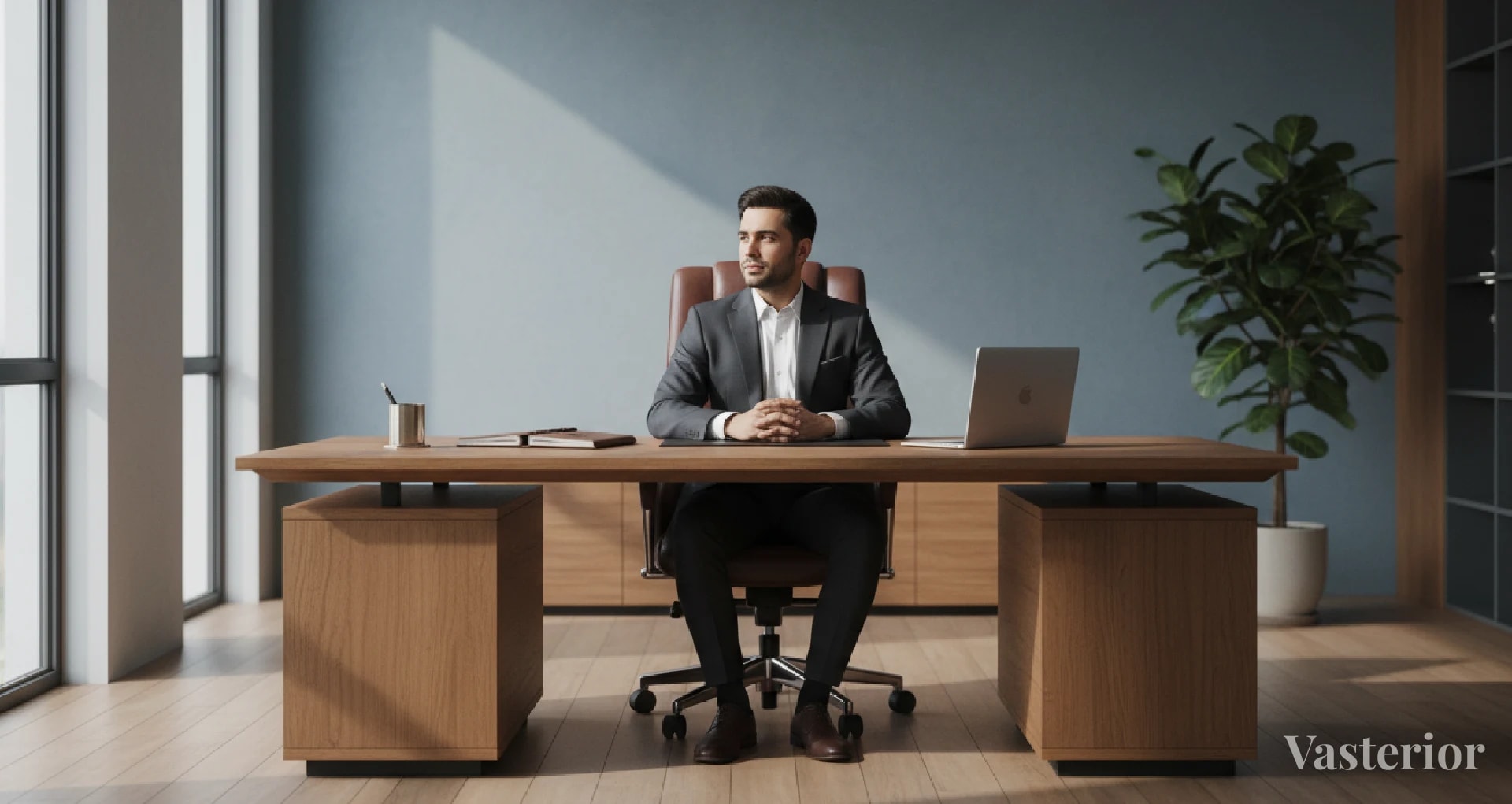
Leadership energy determines organisational stability. According to office layout Vastu principles, the business owner should ideally sit in the south-west zone, facing north or east while working. This position symbolises control, authority and grounded decision-making.
A common and costly mistake is placing the owner in the north-east or centre of the space. This weakens command over finances and operations, creating subtle but consistent instability in leadership presence.
When the cabin is correctly positioned, decision-making feels sharper, negotiations carry greater authority and the owner's energy becomes the anchor that the entire organisation draws upon.
Cash Flow and the Financial Zone
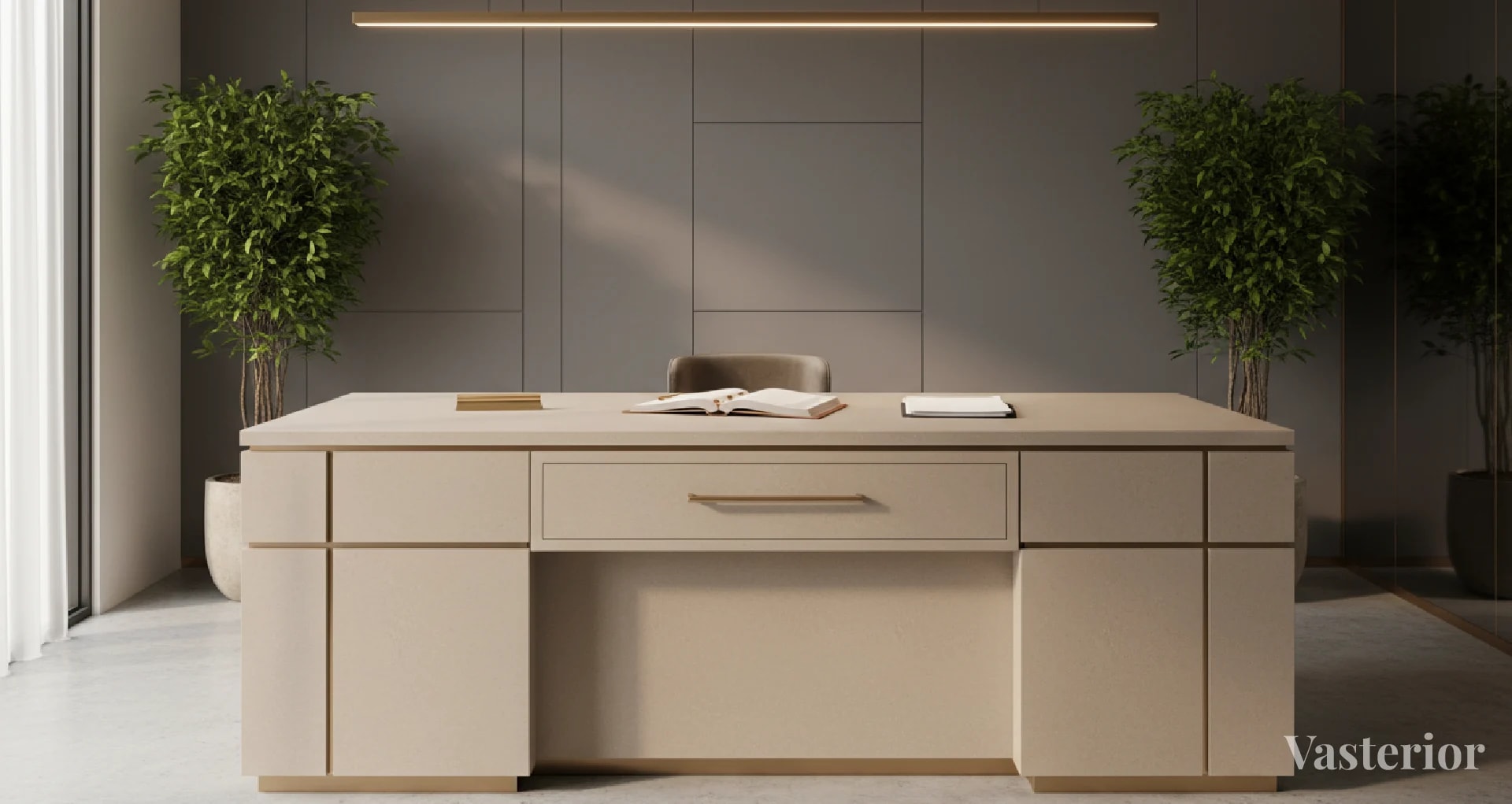
The north zone is strongly associated with financial growth. In Vastu for financial growth, cash counters should ideally face north, safes and financial documents should be placed strategically in stable zones, and toilets or heavy storage must be avoided in financial directions.
Even in small offices or boutiques, minor corrections in the financial zone can significantly stabilise revenue patterns.
Financial energy, much like capital, requires the right channels to flow. When the spatial layout obstructs these channels, revenue becomes inconsistent regardless of sales effort. Restoring directional clarity often produces measurable results within months.
Seating Direction and Authority
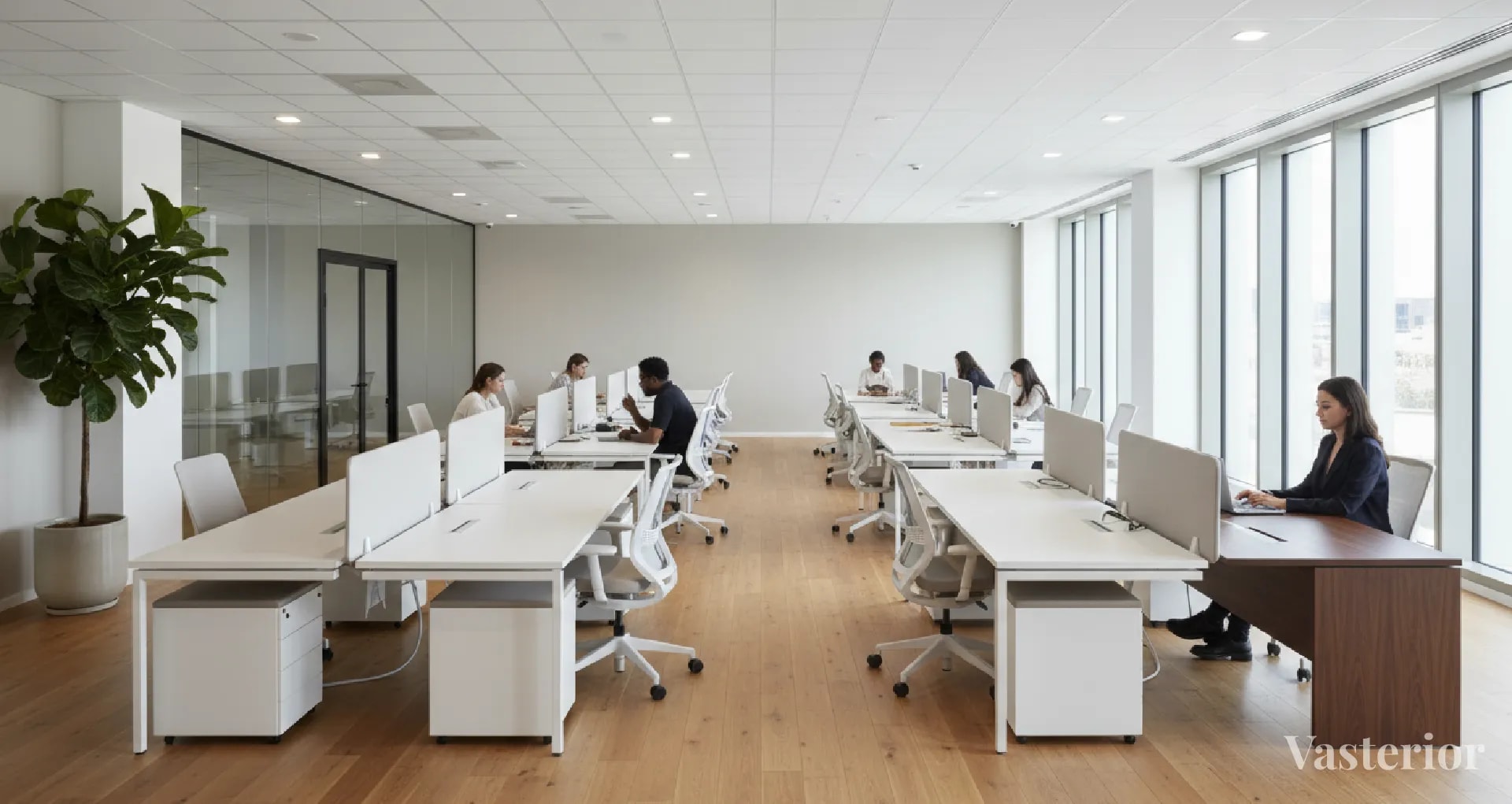
Seating direction influences confidence and communication across the entire organisation. Business Vastu tips recommend employees facing east for creativity and focus, sales teams positioned in active zones, and no seating with backs to the entrance, which creates psychological insecurity.
For entrepreneurs managing digital teams, even home offices benefit from directional alignment. The direction you face while working is not merely spatial — it subtly determines your mental posture throughout every decision you make.
Teams seated in misaligned positions often experience low energy, reduced initiative and poor inter-departmental communication, symptoms that are rarely traced back to their spatial origin.
Colours, Materials and Elemental Balance
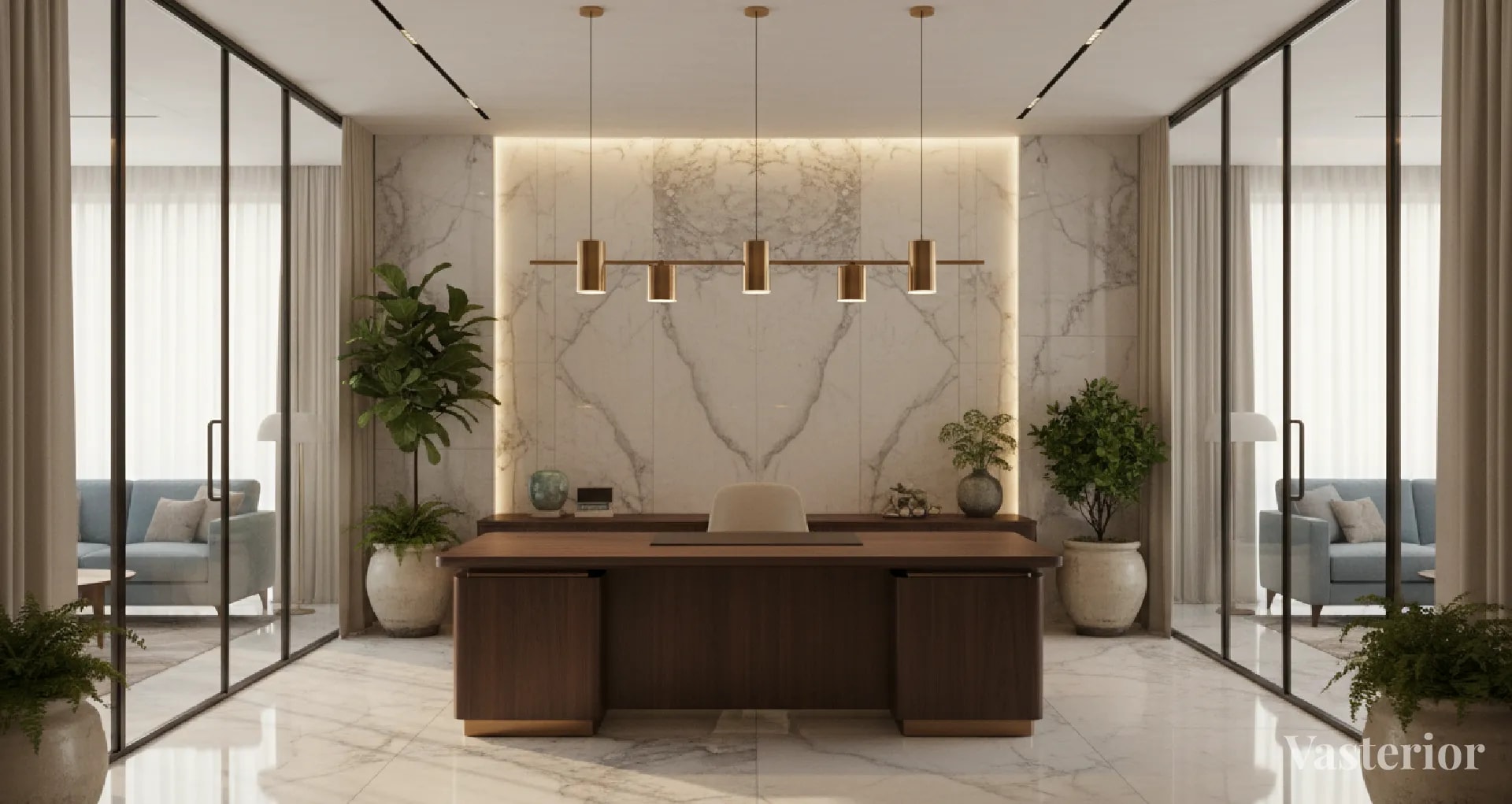
Colour psychology intersects strongly with commercial Vastu consultation. Excessive red can increase aggression. Overuse of black may dampen clarity. Balanced earthy tones stabilise decision-making. Greens and blues enhance growth and communication.
Materials also carry energetic weight. Glass brings transparency and openness. Wood introduces stability and warmth. Metal adds precision and edge. Interior design must harmonise these elements without overwhelming the space.
A commercially successful space is one that feels purposeful from the moment you enter. Colour and material choices are the silent language through which that purpose is communicated to every client, partner and employee who inhabits it.
Clutter, Storage and Mental Clarity
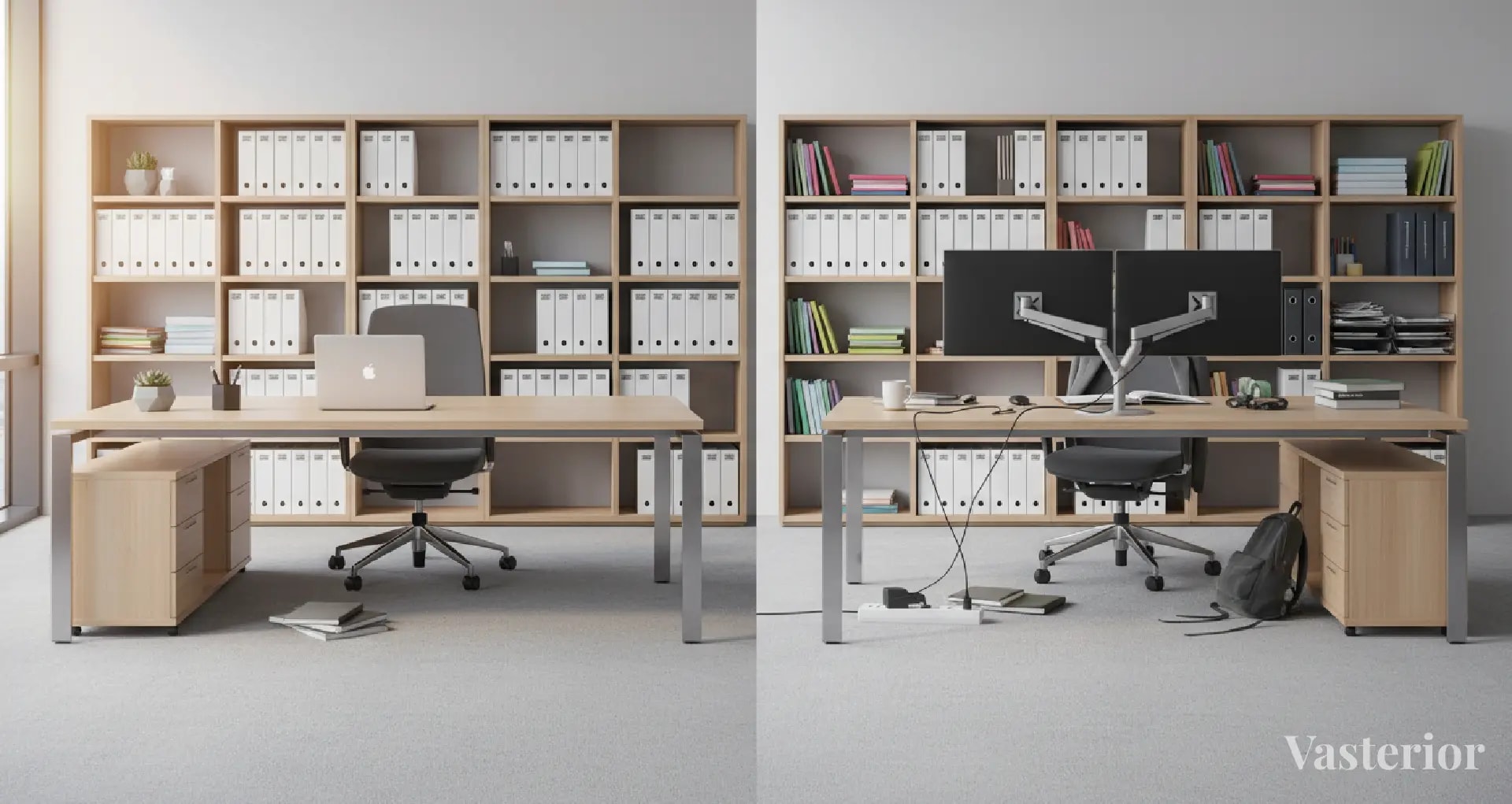
Clutter is stagnant energy. In Vastu for entrepreneurs, blocked pathways and overloaded storage symbolise delayed decisions and financial congestion.
Maintain clear walkways, organised documentation and minimal unused furniture. A clean environment fosters a disciplined mind.
The state of a business's physical environment is often a direct reflection of the clarity of its leadership. Decluttering is not merely an aesthetic exercise — it is a statement of intent, a commitment to precision that the space will then return to those who inhabit it.
Common Business Mistakes That Block Growth
Even thriving businesses unknowingly make structural errors that quietly drain momentum.
- Owner's cabin placed in unstable or weakening zones.
- Toilets positioned in financial directions.
- Heavy inventory stored in growth corners.
- Aggressive colour palettes disrupting spatial harmony.
- Poor or inconsistent lighting reducing productivity.
- Entrance obstructed by furniture or signage.
- Back-facing seating arrangements across key roles.
These may seem minor individually. However, when compounded over months, they influence profitability and team dynamics in ways that no operational fix can address.
Vastu for business is often about correcting subtle misalignments rather than rebuilding from scratch. Precision adjustments, not wholesale renovations, are frequently all that stands between stagnation and measurable forward momentum.
How Interior Design and Vastu Work Together
Aesthetic beauty alone does not guarantee success. Similarly, Vastu corrections without refined design may feel impractical or visually dated. This is where integration matters.
Strategic office interior Vastu combines elegant layouts, functional ergonomics, directional alignment and elemental balance into a single coherent design language.
Vasterior approaches each commercial space as a transformation project, not merely a design assignment. By merging premium interior design with MahaVastu principles, spaces are crafted to be visually sophisticated and energetically aligned.
The result is not decorative change. It is structural empowerment.
Vastu for Modern Entrepreneurs
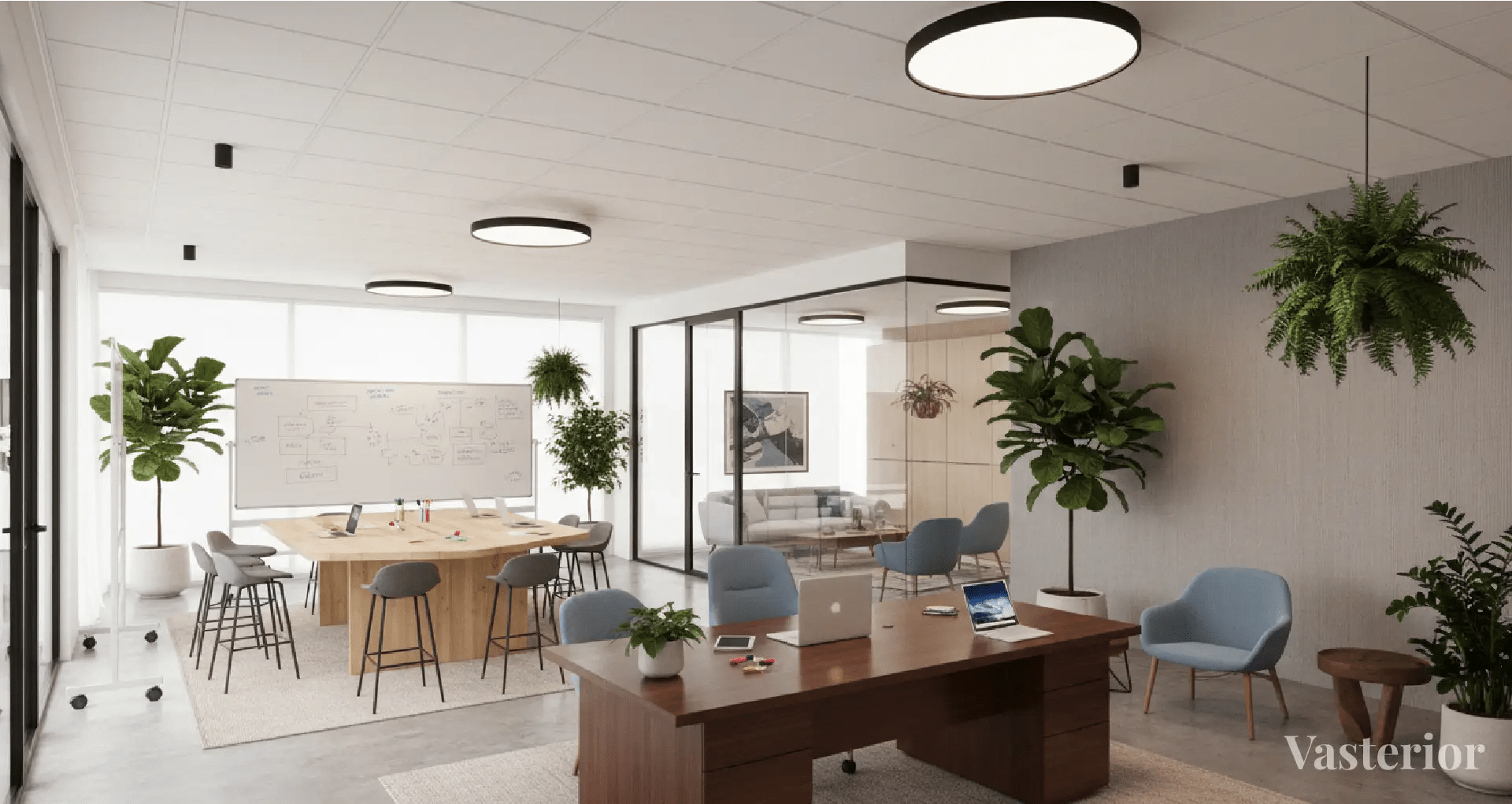
Today's founders operate differently. Startups, co-working spaces, creative studios and digital businesses require flexibility. Fortunately, Vastu for business adapts to modern formats.
For startups: Founder seating must anchor authority. Brainstorming areas should be positioned in creative zones.
For co-working spaces: Shared desks should not weaken leadership presence. Reception zones must project credibility.
For online businesses: Even a home office benefits from office layout Vastu alignment. Financial documentation should be placed strategically.
Modern entrepreneurs often underestimate environmental influence. Yet high-performance leaders recognise that success is engineered, not accidental.
When Should You Consider a Commercial Vastu Consultation?
You should seriously evaluate Vastu for business if any of the following patterns are present.
- Revenue fluctuates unpredictably despite consistent effort.
- Team conflicts are increasing without clear cause.
- Decision-making feels consistently clouded or delayed.
- Expansion plans repeatedly stall at the same stage.
- Client retention is inconsistent across service quality.
Often, structural adjustments — not operational changes — unlock progress. The answers are sometimes embedded in the environment, not the spreadsheet.
Conclusion: Success Is Aligned, Not Accidental
Profit is rarely random. Behind sustainable growth lies strategic alignment — operationally, financially and spatially. Vastu for business does not replace hard work, innovation or marketing. It supports them. It removes invisible resistance. It strengthens authority. It enhances clarity.
When interior design and directional alignment work together, businesses feel stable, grounded and prepared for expansion. In a competitive landscape where margins are tight and attention spans shorter than ever, environment becomes your silent advantage.
For a personalised commercial Vastu consultation, business owners may connect discreetly with the Vasterior team at +91 9100883355 or write to info@vasterior.com to explore how strategic design alignment can support stability and profit.
Success, after all, is not merely built. It is aligned.