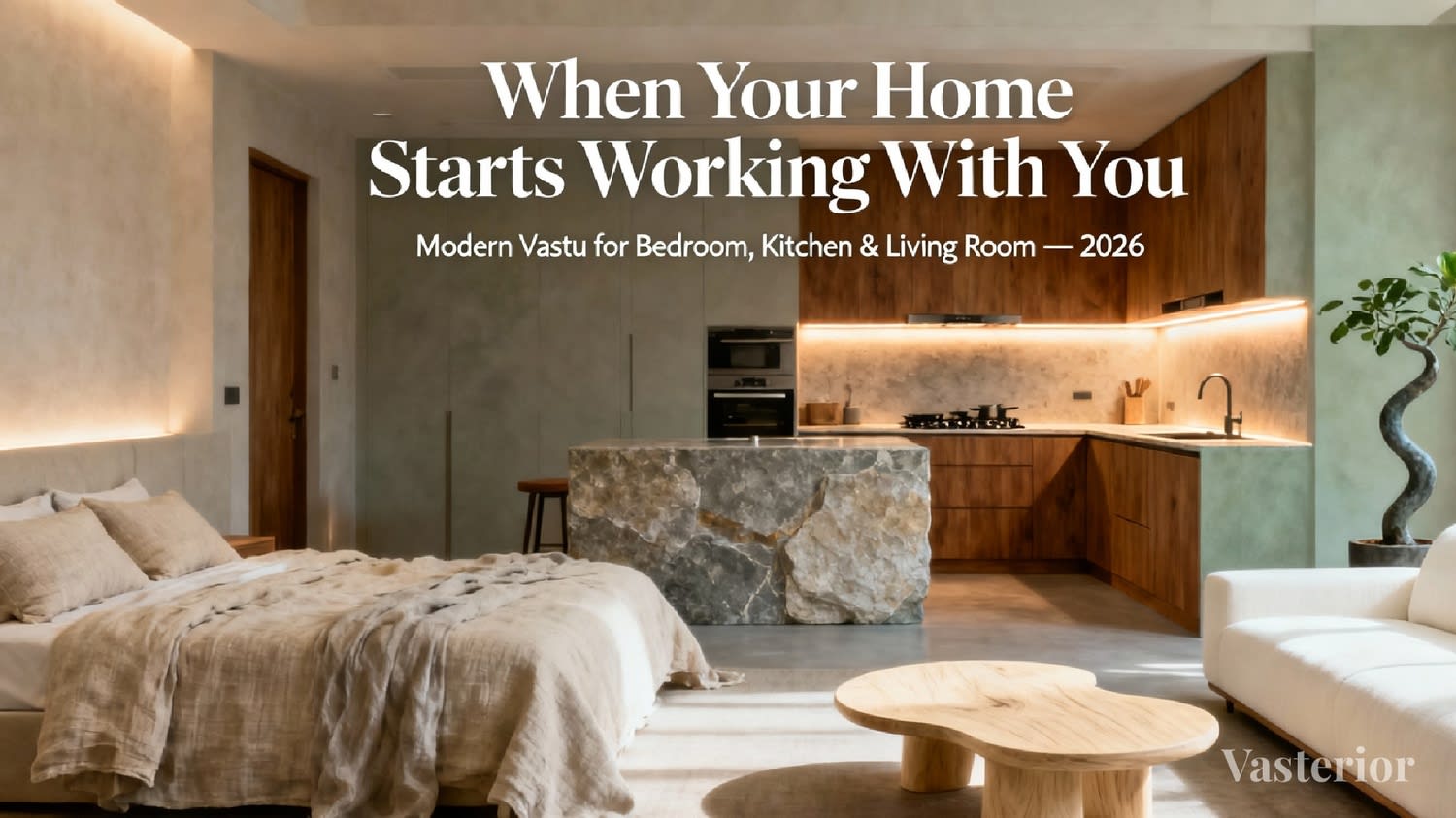
As our lifestyles evolve, so do our homes.
By 2026, most homes are no longer just places to sleep and eat. They are offices, recovery zones, social hubs, and sometimes even quiet sanctuaries from a fast-moving world. Yet many people still wonder why, despite beautiful interiors, something feels off, rest feels incomplete, focus feels scattered, or the home doesn't fully support their energy.
This is where Vastu, when understood correctly, becomes deeply relevant.
Not as belief. Not as fear-based rules. But as spatial intelligence, the art of aligning how we live with how a space behaves.
At Vasterior, we approach Vastu as a scientific and psychological framework, integrated seamlessly with interior design. In this guide, we'll walk you through modern, practical Vastu tips for 2026, specifically for the bedroom, kitchen, and living room, the three spaces that quietly shape your daily rhythm the most.
Vastu in 2026: What's Changed?
Traditional Vastu often spoke in absolutes, fixed directions, rigid layouts, and one-size-fits-all advice. But modern homes rarely fit those assumptions anymore.
Apartments are compact. Bedrooms double as workspaces. Kitchens are open and social. Living rooms serve multiple purposes throughout the day.
Modern MahaVastu adapts to this reality.
Instead of focusing only on the facing of a house, we study how activities and objects occupy space, using a refined understanding of zones. A home isn't just divided into four directions, it operates across sixteen functional zones, each influencing behaviour, comfort, and outcomes.
In 2026, good Vastu is no longer about perfection. It's about intelligent alignment, working with what exists and enhancing how it supports you.
Let's explore how this applies to your most important spaces.
Bedroom Vastu Tips for 2026: Designing for Deep Rest & Emotional Safety
The bedroom is no longer just a place to sleep. For many, it's also where decisions are made, screens are checked, and stress quietly settles. In 2026, bedroom Vastu is less about rituals and more about restorative design.
1. Bed Placement: Support Over Direction
While sleeping direction matters, what matters more today is support.
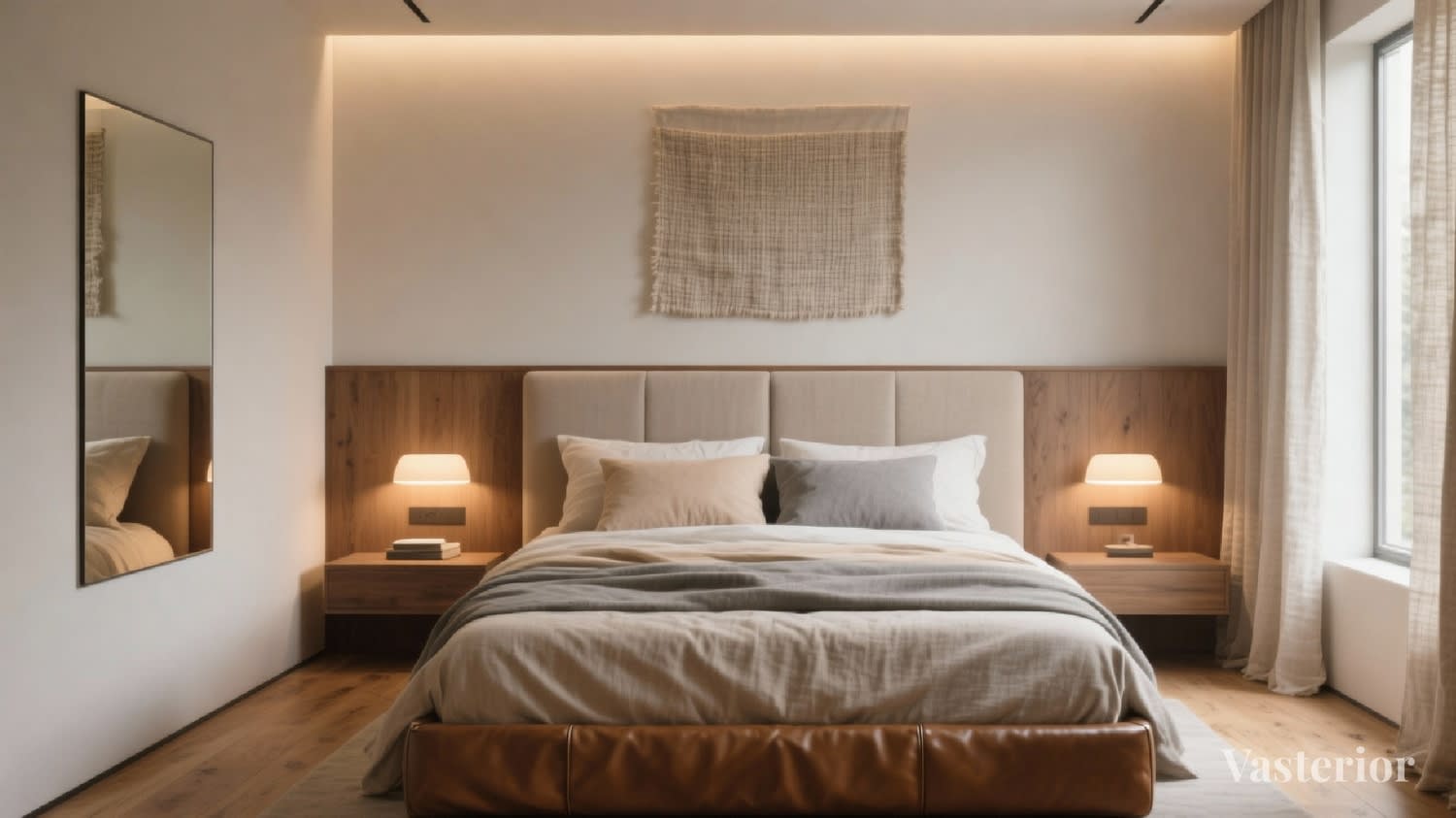
- Your headboard should rest against a solid wall, offering psychological stability.
- Avoid placing the bed directly under beams or heavy overhead storage.
- Ensure the bed is not floating awkwardly between doors or pathways.
Why this matters in 2026: With heightened mental fatigue and screen exposure, the nervous system seeks grounding. A well-supported bed subconsciously signals safety and rest.
2. Electronics & Sleep Quality
Phones, laptops, and TVs have quietly invaded bedrooms.
- Avoid placing active electronics close to the head.
- If a TV is necessary, ensure it doesn't dominate the bed's visual axis.
- Charging stations should ideally be placed away from the sleeping zone.
This isn't superstition, it's about sensory load. The brain associates visual dominance with alertness, not rest.
3. Mirrors: Reflection vs. Rest
Mirrors reflecting the bed can subtly disrupt sleep.
- If unavoidable, ensure mirrors are angled away from direct bed reflection.
- Sliding wardrobe mirrors are better than fixed ones.
In modern Vastu, mirrors are treated as stimulus amplifiers, they energize a space. Bedrooms, however, require calm.
4. Colours & Materials
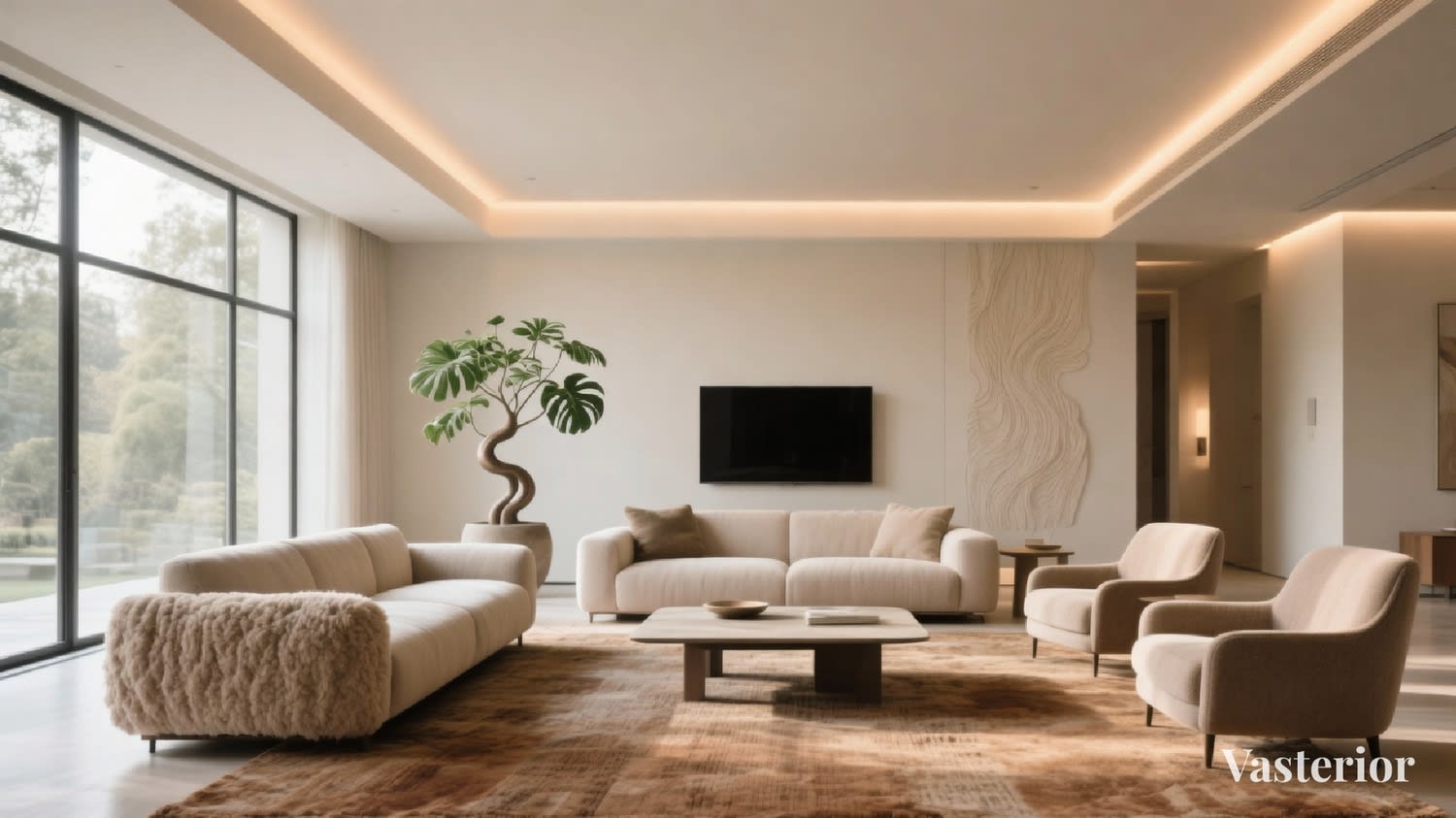
In 2026, bedrooms benefit from muted, tactile palettes.
- Earthy neutrals, soft beiges, warm greys, dusty pastels
- Natural fabrics, linen, cotton, leather accents, wood
Glossy finishes and sharp contrasts may look striking but often reduce emotional softness.
5. Storage & Clutter
Under-bed storage, overcrowded wardrobes, and unused items create subconscious weight.
- Keep storage intentional.
- Avoid storing emotionally heavy items near the bed.
A cluttered bedroom doesn't just look busy, it keeps the mind subtly active.
Kitchen Vastu Tips for 2026: Balancing Energy, Health & Consistency
The kitchen represents energy transformation, raw to cooked, potential to nourishment. In modern homes, kitchens are open, shared, and constantly in use, making Vastu alignment even more critical.
1. Fire & Water Balance
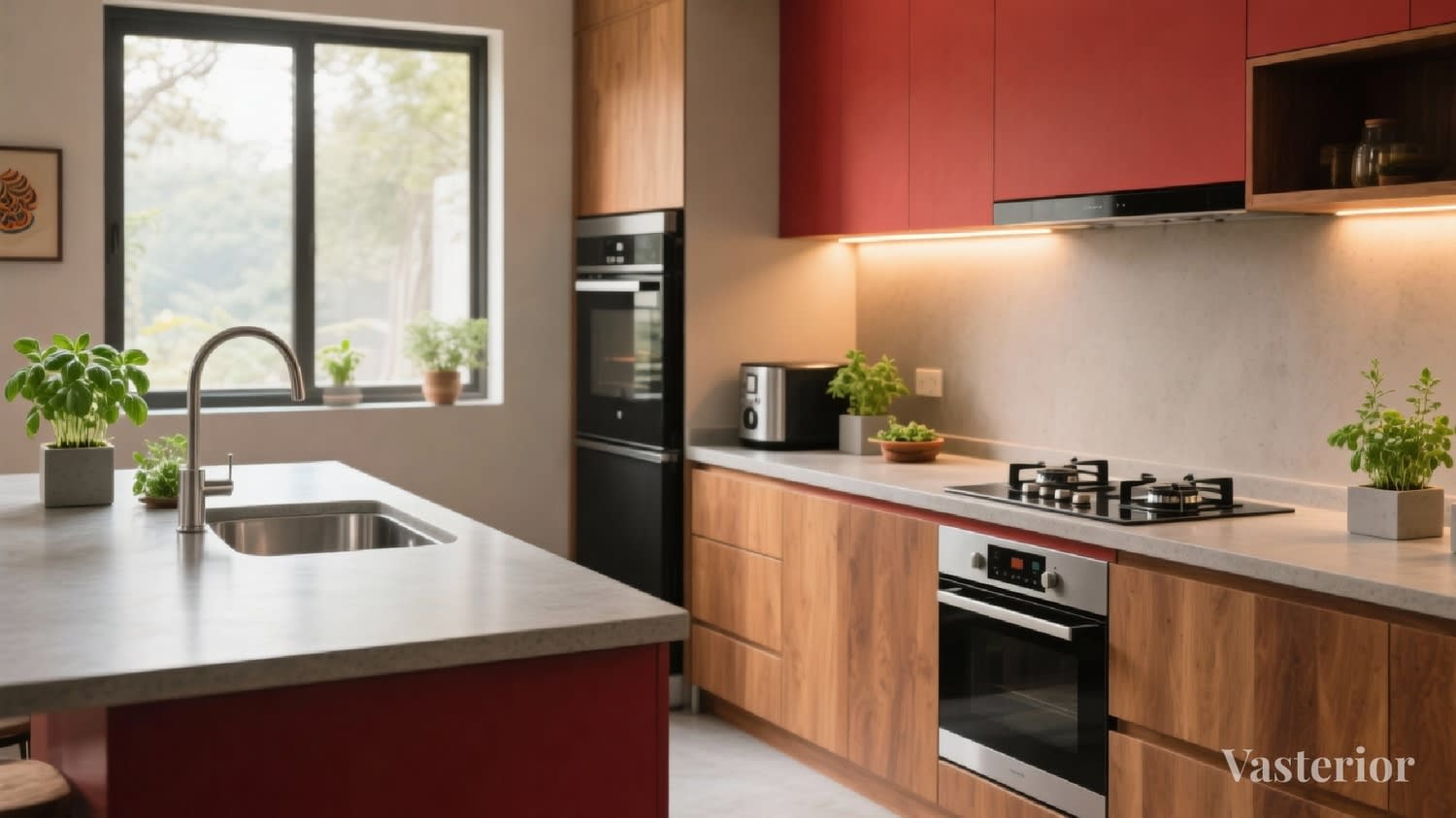
The stove (fire) and sink/RO (water) represent opposing forces.
- Avoid placing them directly next to each other.
- If unavoidable, introduce a buffer, counter space, wood, or a neutral surface.
This balance supports digestion, routine, and long-term health, not through belief, but through spatial logic.
2. Stove Placement & Usage
- The person cooking should ideally feel anchored, not rushed or cornered.
- Avoid placing the stove directly opposite the sink or fridge.
- Good ventilation and lighting are essential.
Why this matters in 2026: Cooking is no longer daily for everyone, but when it happens, it should feel energising, not draining.
3. Open Kitchens: Modern Challenges
Open kitchens blur boundaries between activity and rest.
Solutions:
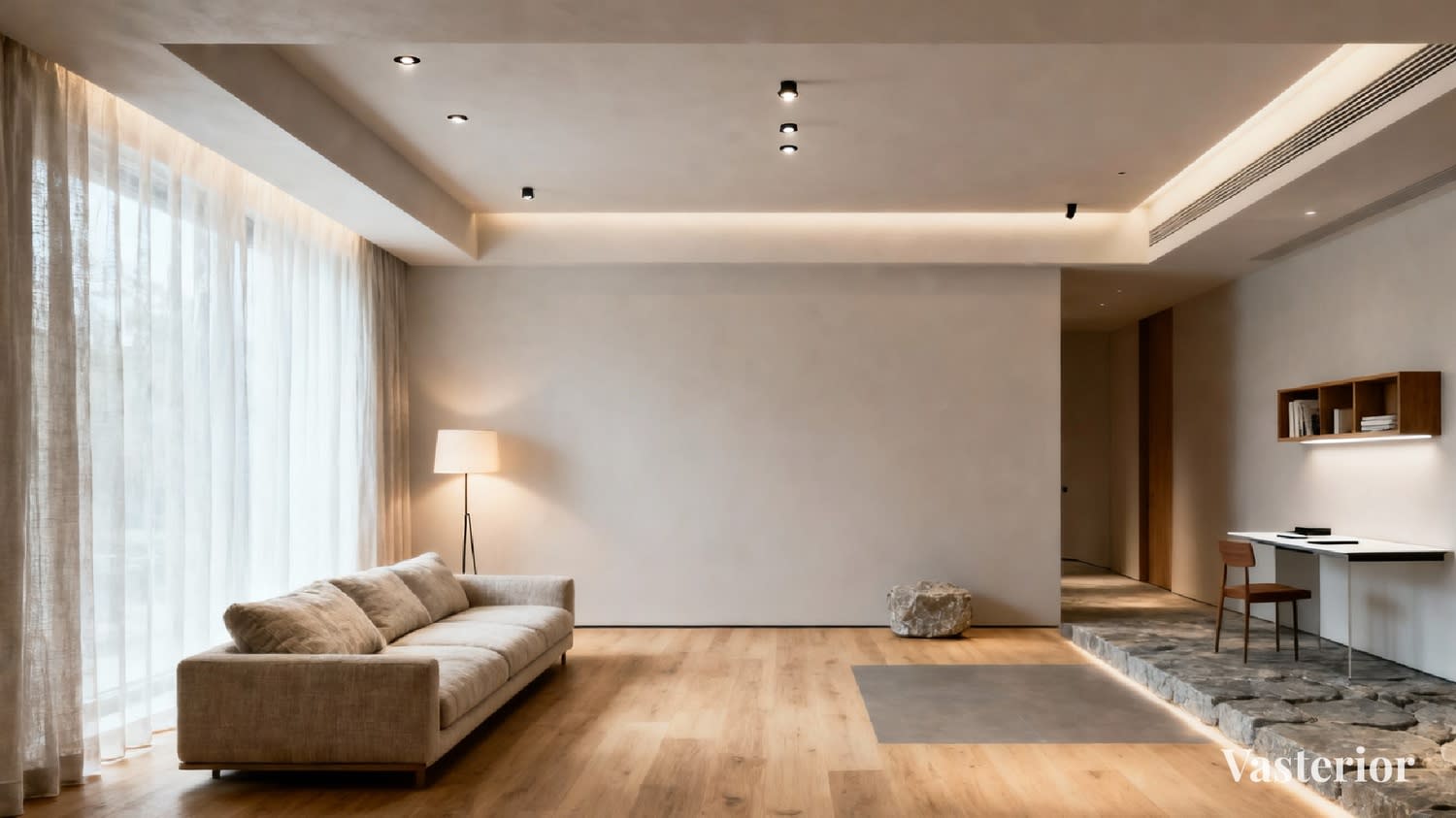
• Use lighting layers to visually separate zones.
• Materials can subtly define kitchen energy, stone, matte finishes, warm woods.
• Avoid placing the stove directly facing the living seating.
4. Colours & Lighting
- Warm whites, soft yellows, earthy greens work well.
- Avoid overly dark or aggressive reds unless balanced thoughtfully.
A kitchen should feel alive, but not overwhelming.
Living Room Vastu Tips for 2026: The Energy Distributor of the Home
The living room sets the tone for how energy enters, moves, and settles within a home. It influences social comfort, first impressions, and even daily motivation.
1. Seating & Social Dynamics
- Seating should encourage conversation, not isolation.
- Avoid placing heavy furniture in ways that block natural flow.
- Ensure key seating feels supported, not exposed.
In Vastu, seating placement affects how welcomed people feel, including yourself.
2. Entry Flow
The moment you enter a living room, your eyes should find calm, not clutter.
- Avoid immediate visual overload.
- Entry-facing walls benefit from warmth, art, or balanced lighting.
This is where design and Vastu work hand-in-hand.
3. Electronics & Mental Noise
Televisions and speakers dominate many living rooms.
- Avoid making the TV the sole focal point.
- Balance screens with plants, textures, or artwork.
In 2026, reducing constant stimulation is a form of luxury.
4. Light, Air & Nature
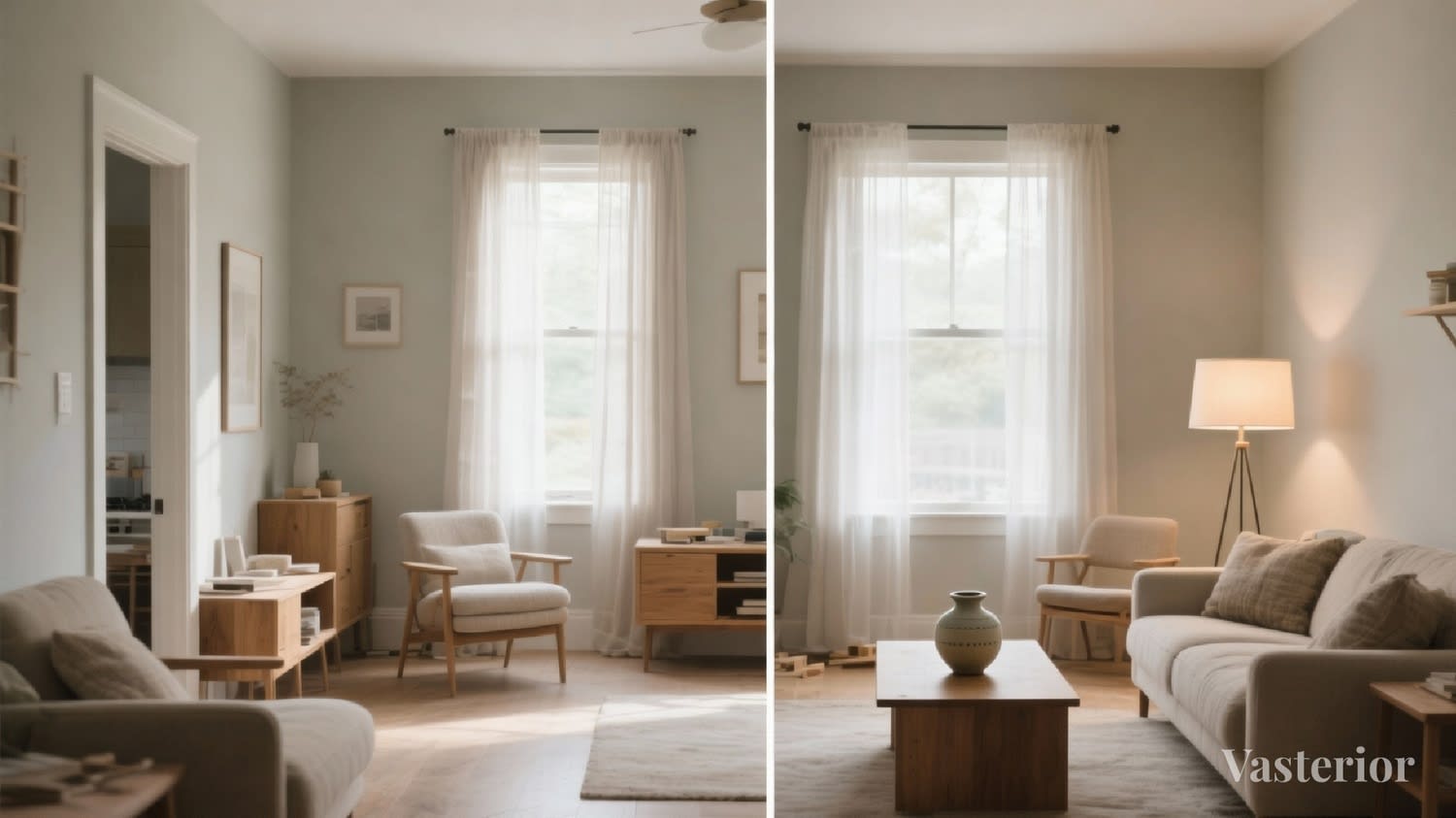
- Natural light should flow freely.
- Indoor plants help regulate both air quality and emotional comfort.
- Avoid blocking windows with heavy furniture.
A living room should feel open, breathable, and grounding.
What NOT to Do: Modern Vastu Myths
Let's clear a few misconceptions.
- "Facing alone decides everything" - Facing is one layer, not the full story.
- "Vastu requires demolition" - Most issues can be addressed through layout, materials, lighting, and usage changes.
- "One rule fits all homes" - Every home responds differently based on layout, lifestyle, and usage.
Modern Vastu is adaptive, not rigid.
The Vasterior Philosophy: Designing for How Life Unfolds
At Vasterior, we believe Vastu is not about correction, it's about conscious alignment.
When interior design, spatial psychology, and MahaVastu come together, homes begin to:
• Support better rest
• Improve focus and consistency
• Feel emotionally safer
• Reflect the lives lived within them
Whether you're renovating, redesigning, or simply seeking clarity, understanding how your bedroom, kitchen, and living room behave as energetic systems can change how your home supports you in 2026 and beyond.
If you're curious to explore this gently, without fear, demolition, or dogma, we also offer Yogdan, our free guidance sessions, alongside deeper consultations for those seeking long-term alignment. Get in touch with our experts today at +91 9100883355 or info@vasterior.com.
Because a well-designed home doesn't just look good. It works quietly in your favour.