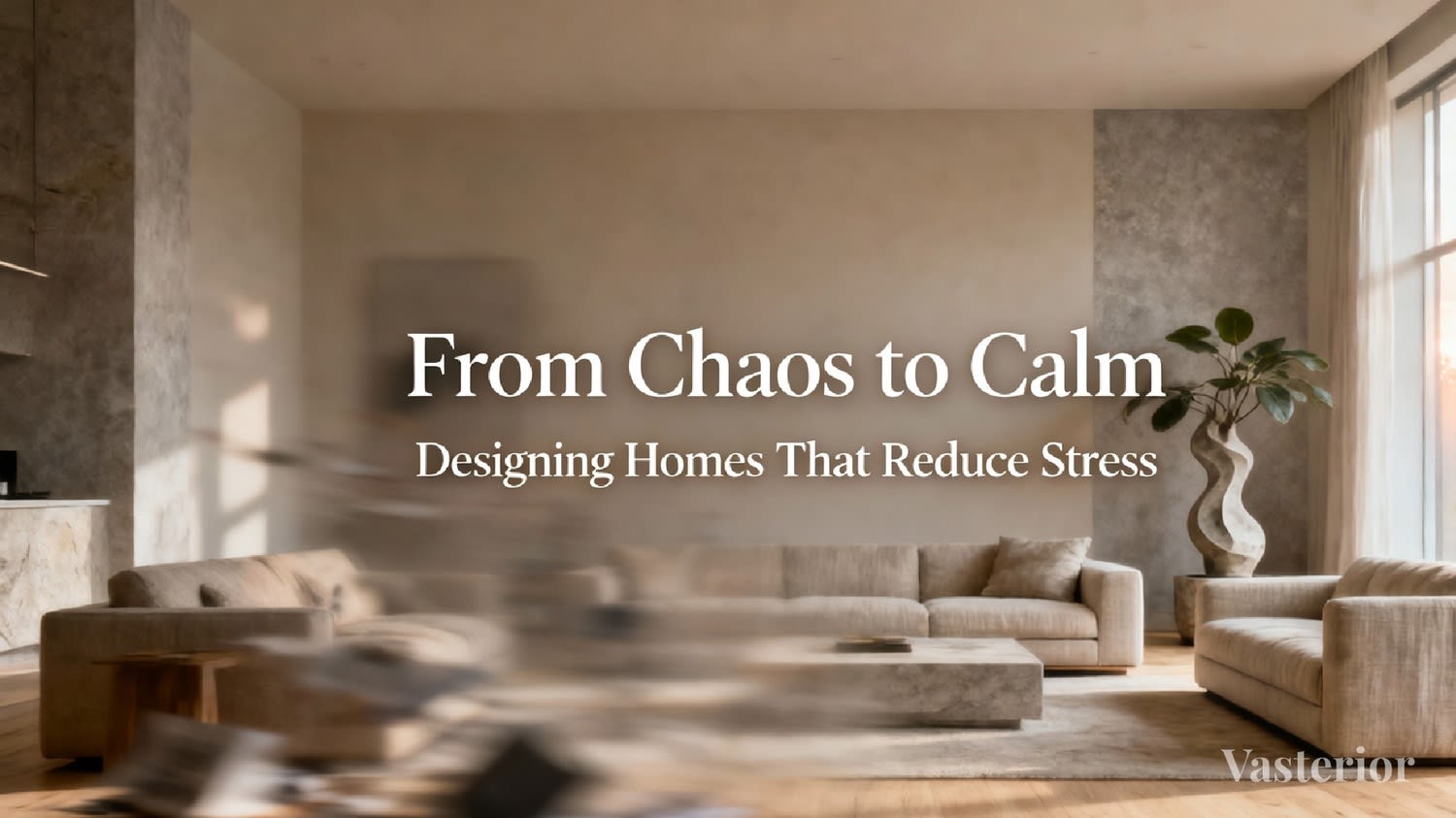
Most of us don't realise how much our homes are speaking to us, until they start exhausting us.
It shows up quietly. In the way mornings feel rushed even when you wake up on time. In the background heaviness you can't quite name. In the constant sense that something is "off," even though everything looks fine on the surface.
We often blame stress on work, traffic, screens, or schedules. But there's another contributor we rarely question, the space we return to every day.
Your home isn't just where you rest. It's where your nervous system resets. Or... stays activated.
At Vasterior, we've learned that calm isn't about doing less. It's about designing better. And when a home is thoughtfully designed, it doesn't demand energy from you, it quietly gives it back.
When Homes Add to the Noise
Modern homes are filled with good intentions.
We add furniture to make spaces functional. Décor to make them beautiful. Technology to make life easier.
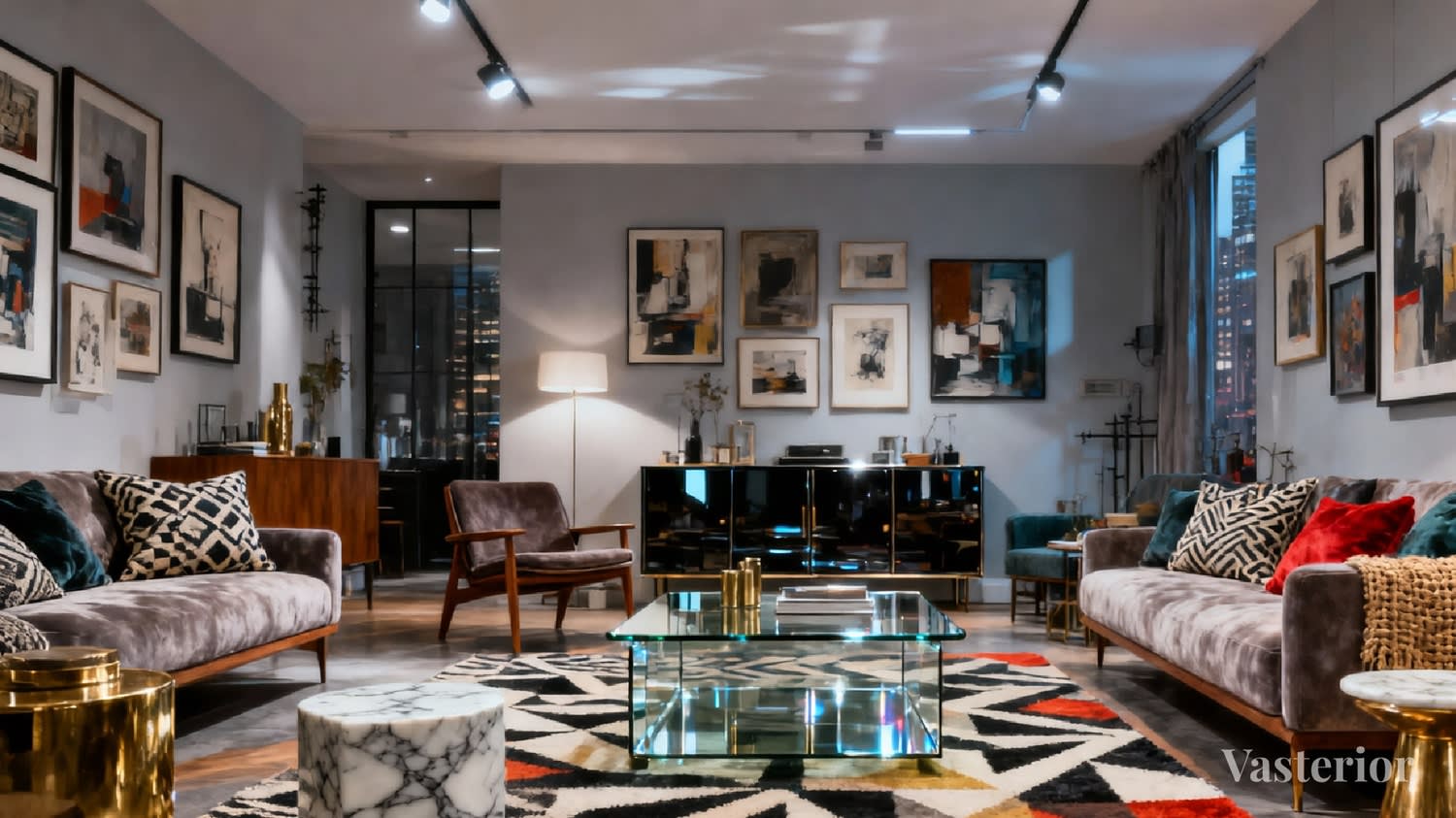
But somewhere along the way, many homes become overstimulating.
Too many visual elements competing for attention. Furniture that interrupts movement instead of supporting it. Rooms that try to do everything, and end up doing nothing well.
This doesn't always look chaotic. In fact, many of these homes photograph beautifully.
But living in them feels different.
There's a subtle mental fatigue that comes from:
- Visual clutter, even if it's well styled
- Poor layout flow
- Harsh lighting
- Constant sensory stimulation
Over time, your body stays slightly alert. Slightly tense. Slightly tired.
And that's not because you're doing something wrong, it's because your space hasn't been designed to support calm.
Calm Is Not a Personality Trait. It's a Design Outcome.
There's a common myth that calm homes are only for minimalists.
White walls. Empty rooms. Bare surfaces.
But calm doesn't mean empty. And it certainly doesn't mean boring.
Calm is not about removing life from a space. It's about aligning the space with how you actually live.
Some people feel calm in warm, layered environments. Others need visual simplicity to think clearly. Some thrive in colour. Some need neutrality.
The point isn't to follow a formula. The point is to design a home that doesn't constantly ask your mind to process, adjust, or defend itself.
Calm is what happens when your home feels predictable, supportive, and intuitively organised.
Designing for the Nervous System
We rarely talk about homes in terms of the nervous system, but we should.
Your body is constantly scanning your environment for signals:
• Is this space safe?
• Is it loud or quiet?
• Is it cluttered or clear?
• Can I move freely here?
Good design answers these questions gently.
Here are some core principles that consistently reduce stress in homes, regardless of style.
1. Visual Clarity Over Visual Drama
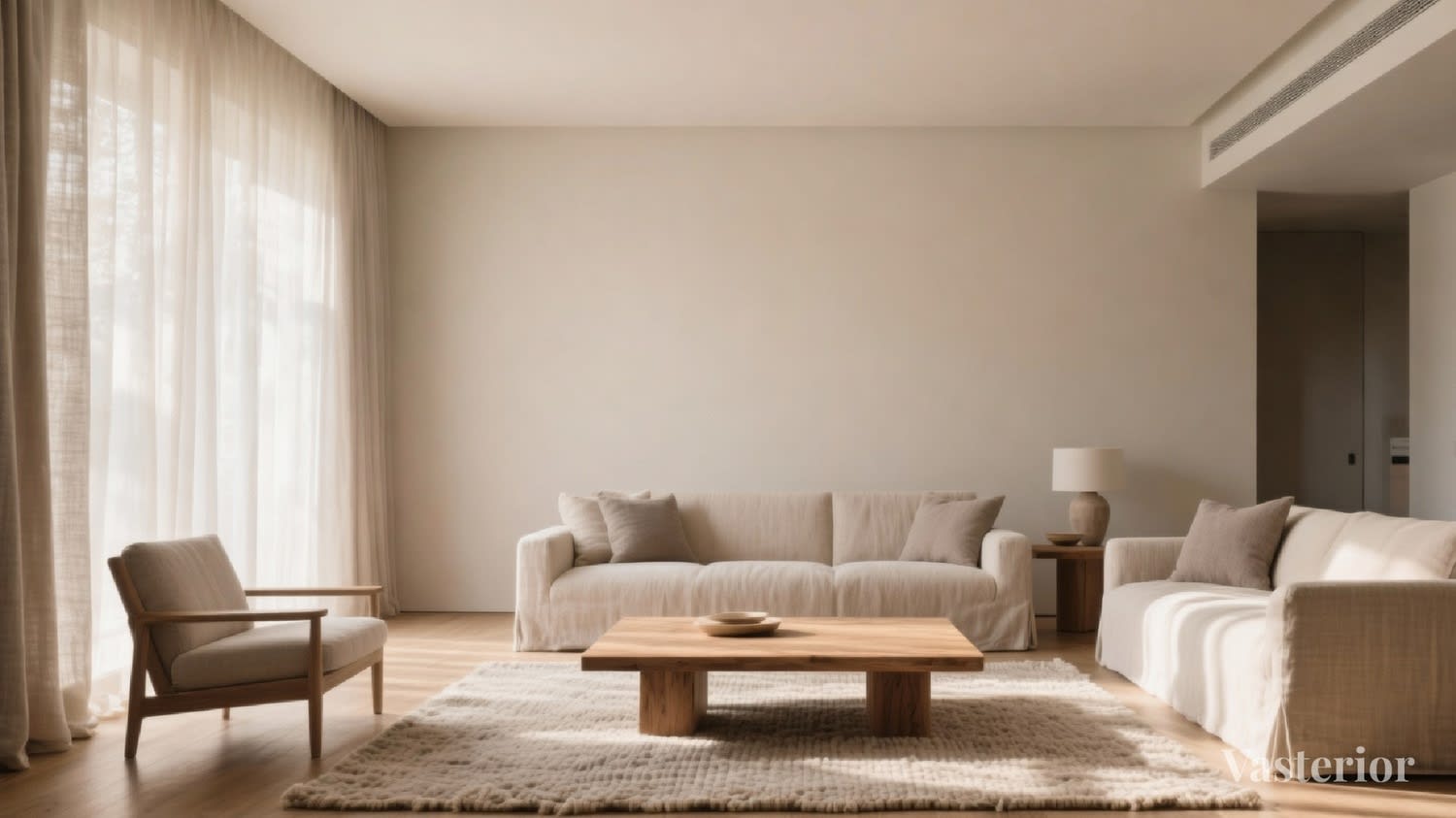
A calm home doesn't overwhelm the eyes.
This doesn't mean you can't have art, colour, or texture. It means the eye knows where to rest.
When every wall, corner, and surface is demanding attention, your brain never switches off. Thoughtful design creates hierarchy:
• One focal point instead of many
• Clean sightlines
• Balanced compositions
Your mind relaxes when it doesn't have to constantly decide where to look.
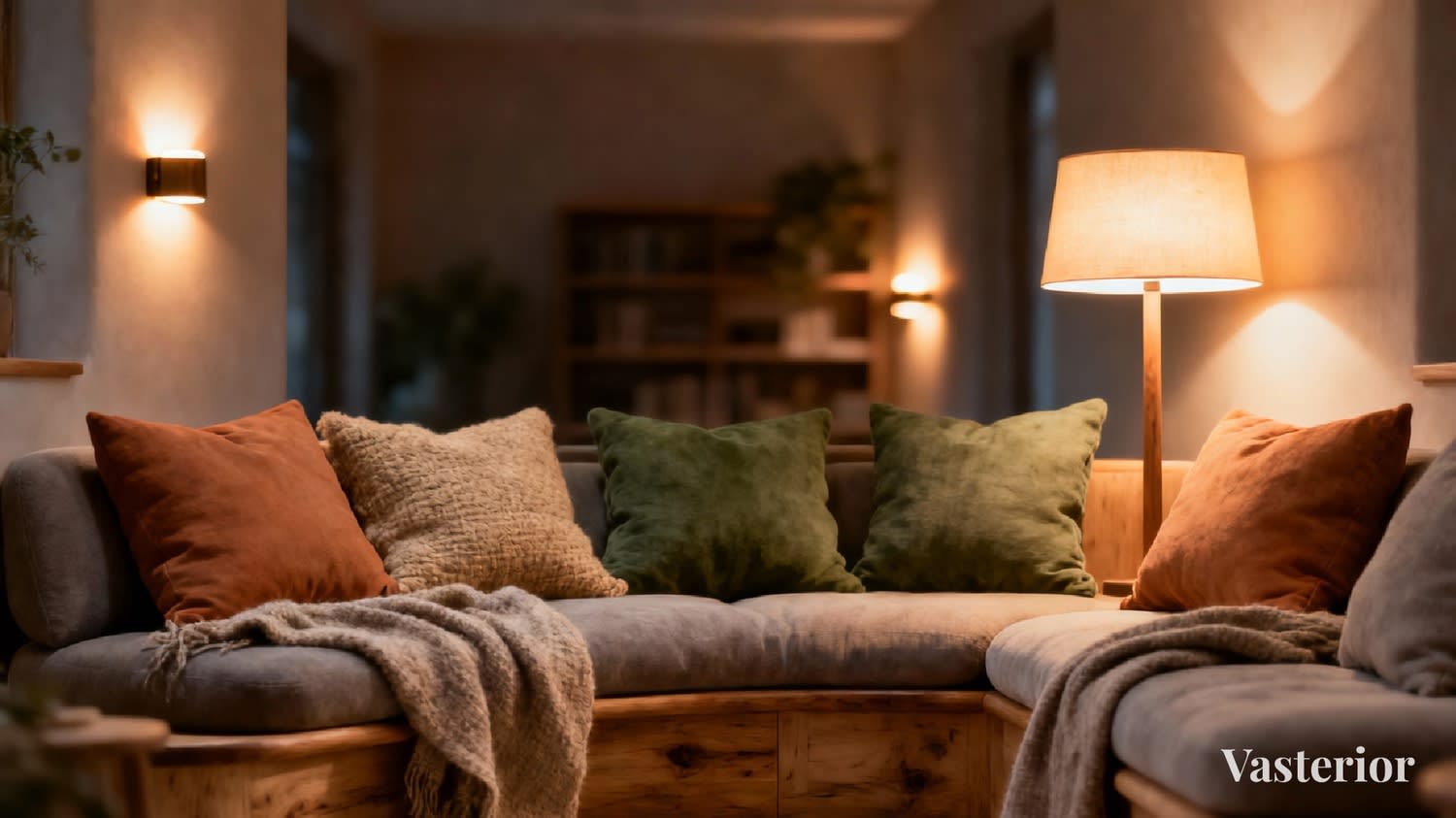
2. Gentle Colour Rhythms
Colour deeply affects mood, but not in obvious ways.
Bright or high-contrast colours can energise, but too much of them can also agitate. Extremely muted palettes can soothe, but may feel dull if they don't reflect your personality.
Stress-reducing homes often use:
• Soft, grounded base colours
• Gradual transitions between tones
• Accent colours used intentionally, not everywhere
The goal is not neutrality, it's emotional continuity as you move through the home.
3. Materials That Feel Kind
Your body registers texture before your mind does.
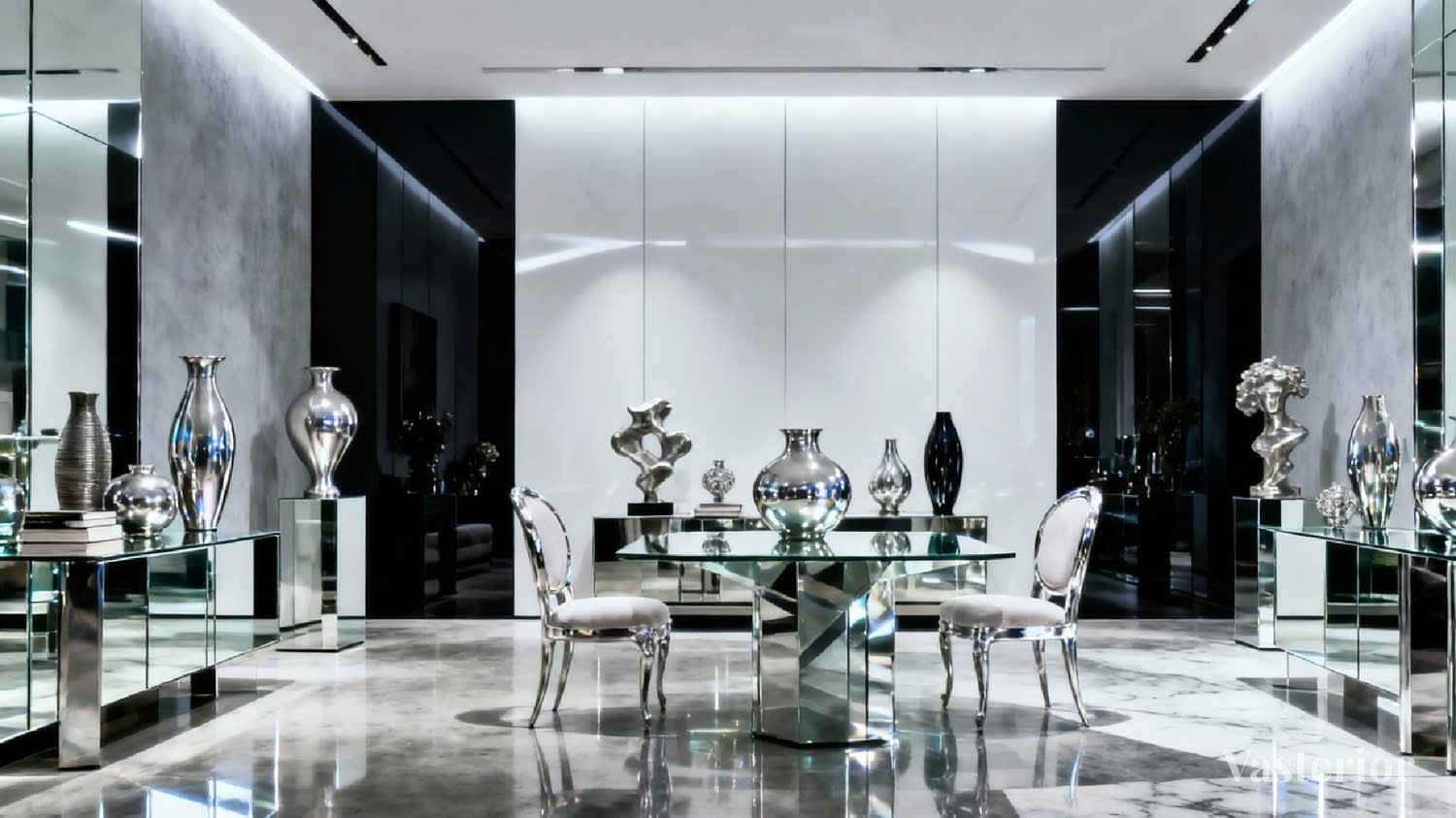
Hard, glossy, reflective surfaces bounce sound and light. Soft, natural materials absorb them.
This is why homes that use:
• Wood
• Fabrics
• Natural stone
• Matte finishes
often feel quieter and warmer, even without silence.
Comfort isn't just about how something looks, it's about how it feels under your hand, under your feet, and around your body.
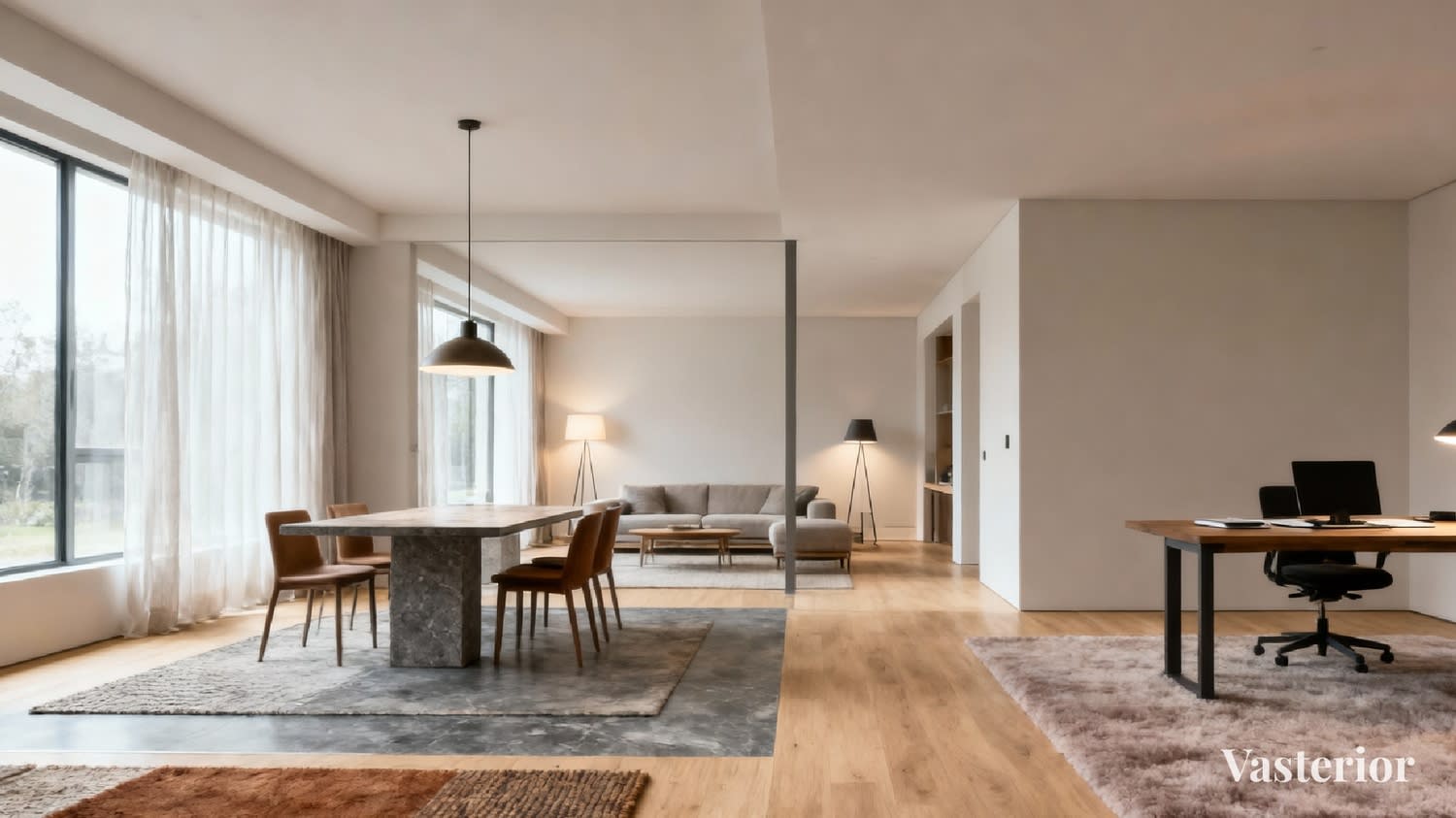
4. Predictable Layouts, Not Constant Adjustment
One of the biggest sources of spatial stress is confusion.
When furniture blocks movement. When circulation paths aren't clear. When rooms don't clearly support the activities happening inside them.
Your body feels this as friction.
Calm homes allow you to move without thinking. To sit without adjusting. To function without negotiating the space.
Good layout design reduces decision fatigue, something we're already carrying too much of.
5. Light as a Regulator, Not a Spotlight
Lighting is often treated as a visual feature. But its real power is emotional.
Harsh overhead lighting keeps the body alert. Poorly planned lighting creates shadows, glare, and discomfort.
Stress-reducing homes use:
• Layered lighting (ambient, task, accent)
• Warmer temperatures in resting zones
• Softer transitions between bright and dim areas
Light should follow your daily rhythm, not fight it.
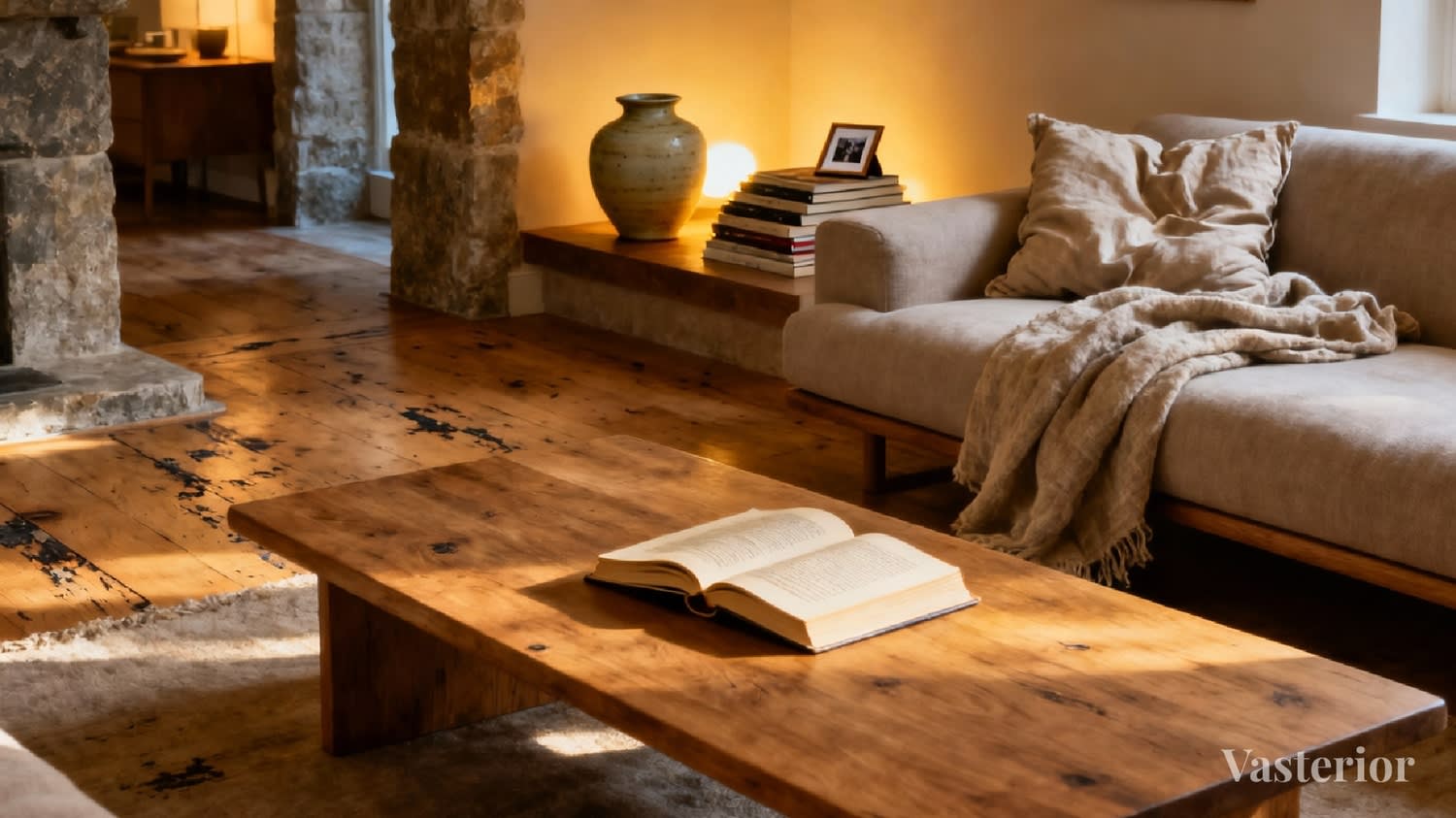
6. Silence Through Softness
Silence doesn't always mean absence of sound. It often means controlled sound.
Echoes, hard surfaces, and open layouts without acoustic planning create invisible noise. Over time, this contributes to irritability and fatigue.
Soft furnishings, rugs, curtains, and upholstered elements don't just add comfort, they add calm.
Why Zoning Matters More Than We Think
One of the most overlooked stressors in homes is activity overlap.
Working where you sleep. Relaxing where you eat. Storing everything everywhere.
When activities don't have clear spatial identities, your mind never fully switches modes.
Thoughtful zoning doesn't require walls everywhere. It requires intention.
When spaces clearly support specific functions:
• Rest becomes deeper
• Focus becomes easier
• Transitions feel natural
Your home starts working with you instead of constantly asking you to adapt.
The Pinterest Problem
Pinterest is inspiring. But it's also misleading.
Most online interiors are:
• Styled for photographs
• Designed without context
• Not meant for daily life
They don't show clutter on weekdays. They don't show movement, noise, routines, or people.
When homes are designed to look calm rather than feel calm, stress creeps in through maintenance, impracticality, and unrealistic expectations.
A truly calm home still feels supportive on messy days. That's the difference between decoration and design.
The Vasterior Approach: Calm Comes First
At Vasterior, we don't start with trends, themes, or templates.
We start with listening.
How you live. How you move through your day. What drains you. What restores you.
Designing calm isn't about imposing a style. It's about removing friction, visually, spatially, and emotionally.
We believe:
• Homes should support the nervous system
• Spaces should age gracefully with life
• Design should feel intuitive, not impressive
Calm is not something you add at the end. It's something you build into the foundation of every decision.
A calm home doesn't shout for attention.
In a world that constantly asks for more, your home should ask for less. Because calm isn't a luxury. It's a necessity, and it can be designed. Get in touch with our experts today at +91 9100883355 or info@vasterior.com.