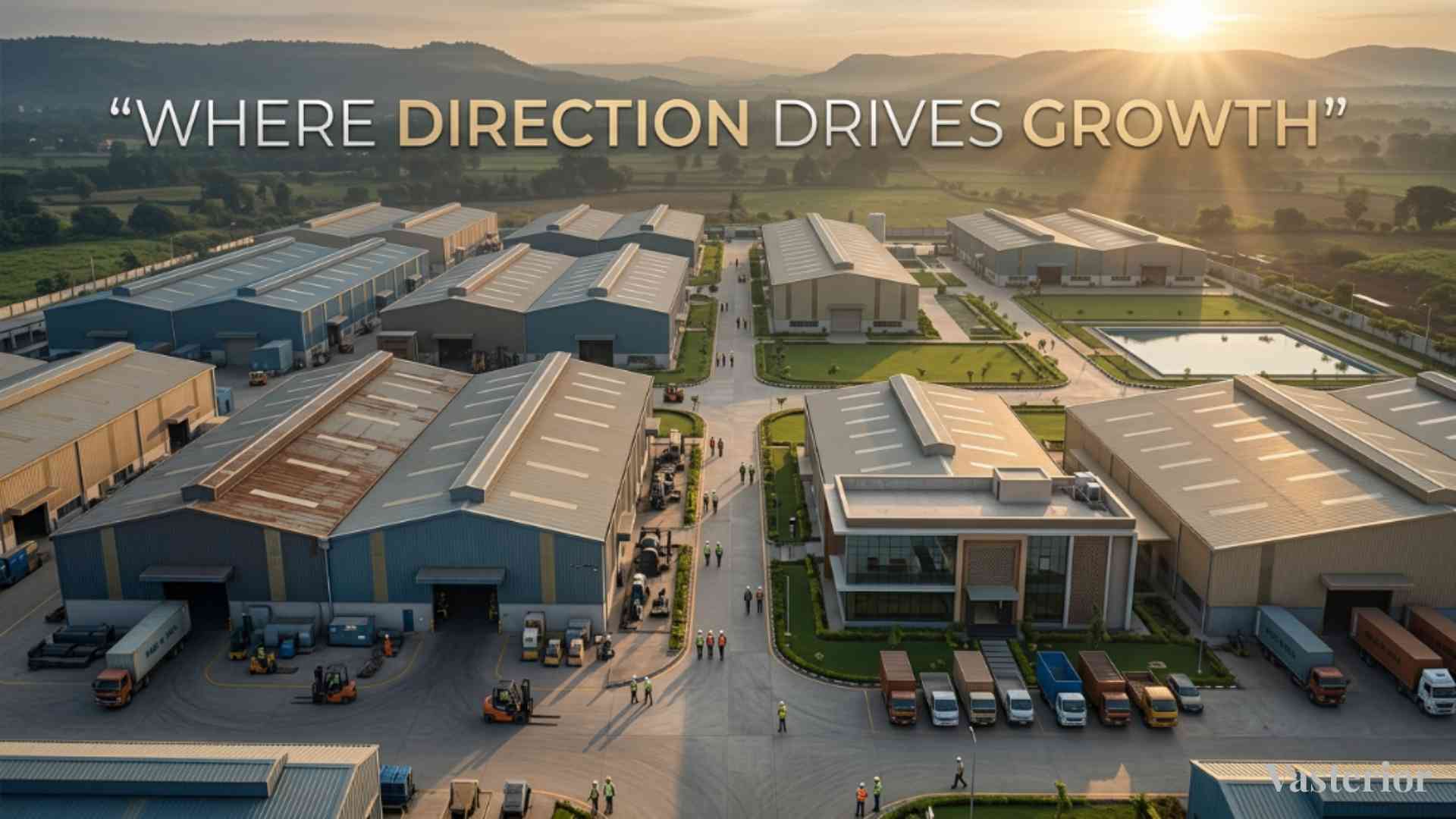
Factories are not merely industrial structures filled with machinery, raw materials, and production targets. They are energetic ecosystems. Every wall, slope, colour, direction, and spatial arrangement silently influences the rhythm of operations within the premises.
Some factories expand effortlessly. Orders increase, teams remain stable, production flows smoothly, and financial growth feels consistent. Others struggle despite investments, technology upgrades, and operational expertise. Delayed payments, machinery breakdowns, workforce conflicts, and stagnation begin surfacing repeatedly.
While market dynamics and management strategies play a role, spatial alignment often becomes the invisible factor that businesses overlook. Industrial Vastu is not superstition wrapped in tradition. It is a strategic science of directional balance, elemental harmony, and energy movement within a built environment. When properly applied, it creates spaces that support momentum, efficiency, mental clarity, and long-term growth.
Why Factory Direction Matters in Vastu
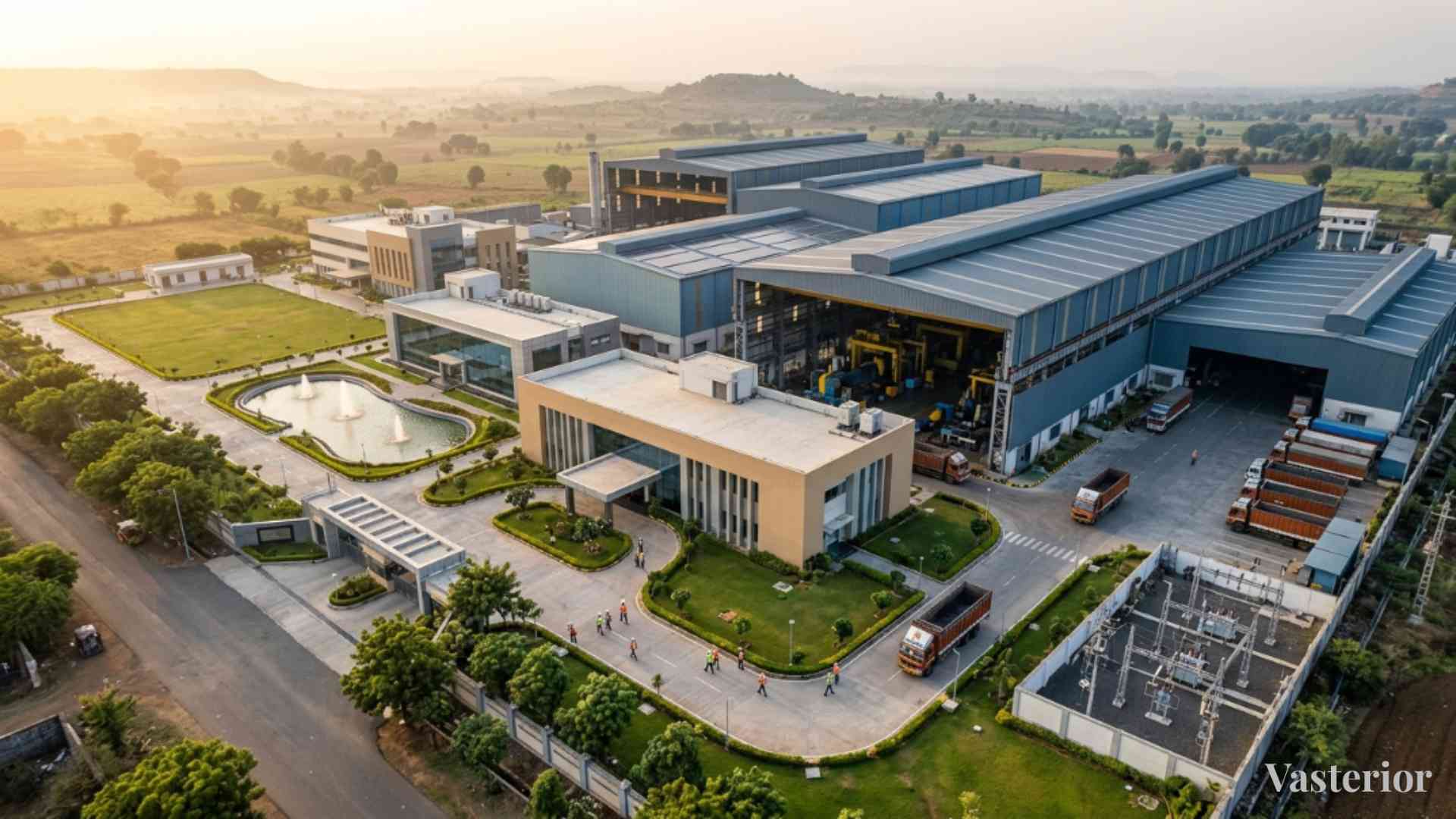
Every direction carries a distinct energetic quality. In industrial spaces where heavy activity, machinery, human movement, and financial transactions occur continuously, directional imbalance can amplify stress and inefficiency. A well-aligned factory creates smoother circulation of energy, allowing productivity and business growth to operate with less resistance.
- North is associated with financial opportunities and movement
- East governs vitality, visibility, and expansion
- South East represents fire energy and machinery
- South West signifies stability and authority
- North East governs clarity, planning, and intelligence
When these zones are improperly utilised, the imbalance often manifests through operational disruptions. A factory with heavy machinery in the North East may experience decision-making confusion and repeated delays. Excessive weight in the East can suppress growth opportunities. Water imbalance in the South can affect financial stability and create recurring pressure.
The structure begins influencing behaviour long before people consciously notice it.
Ideal Plot Selection for Factories
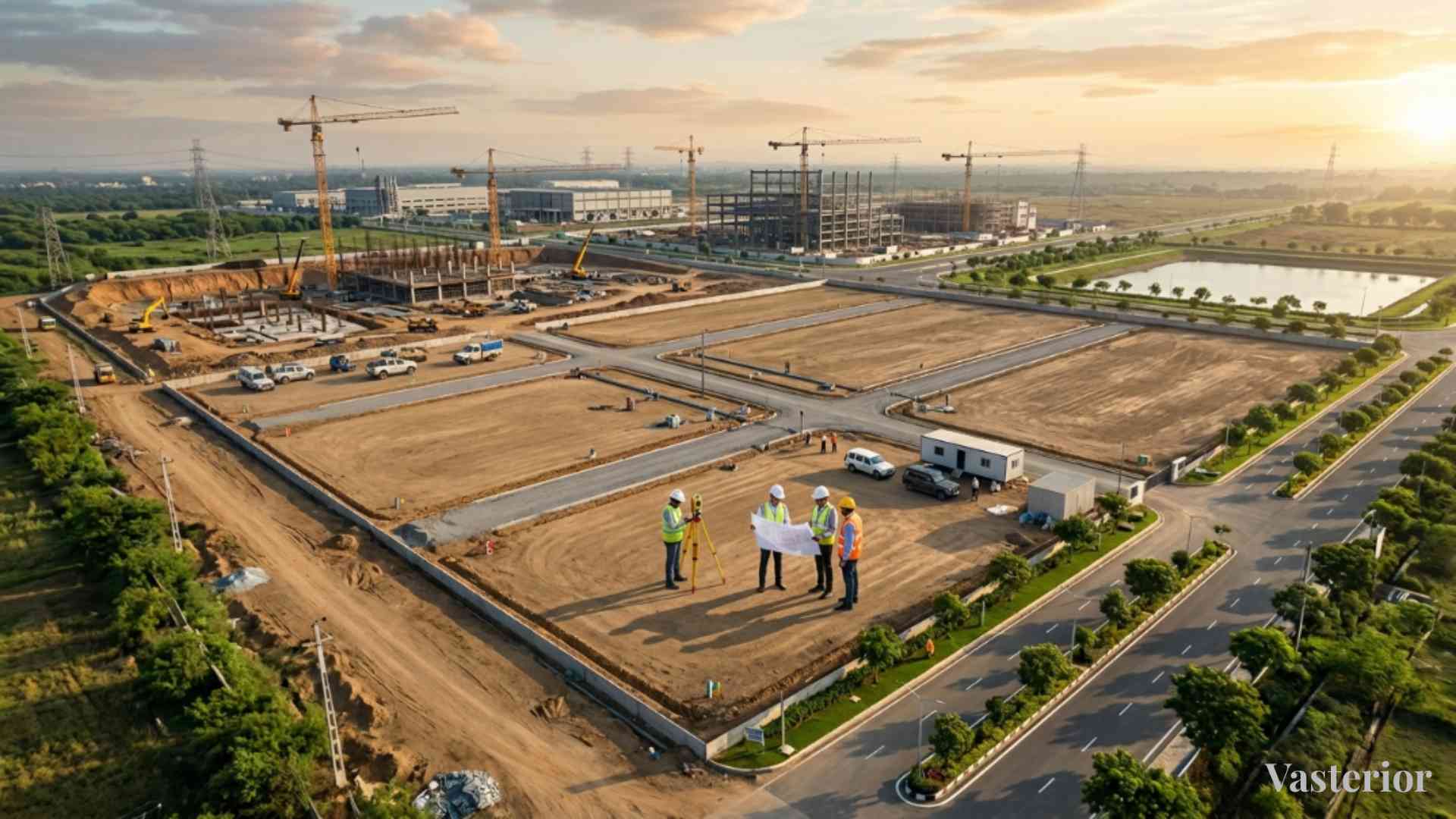
The energy of a factory begins with the land itself. Plots with balanced geometry and proportion tend to support better operational harmony. Square and rectangular plots are considered ideal because they allow even distribution of spatial energy. Irregular cuts, extensions, or distorted shapes may create imbalance in workflow and directional strength.
- Square plots for balanced energy
- Rectangular plots with longer North or East sides
- Avoid triangular or heavily cut plots
- Roads towards North or East are generally considered favourable
- Multiple road access points improve movement and logistics when planned correctly
- Lower levels towards North or East support positive flow
- Higher South West creates energetic stability
Even before construction begins, the land itself influences the future rhythm of the business.
Best Directions for Different Factory Zones
Industrial Vastu becomes significantly more effective when every functional department is aligned with its elemental direction. Strategic zoning ensures each zone operates with optimal energetic support and functional efficiency.
Main Entrance
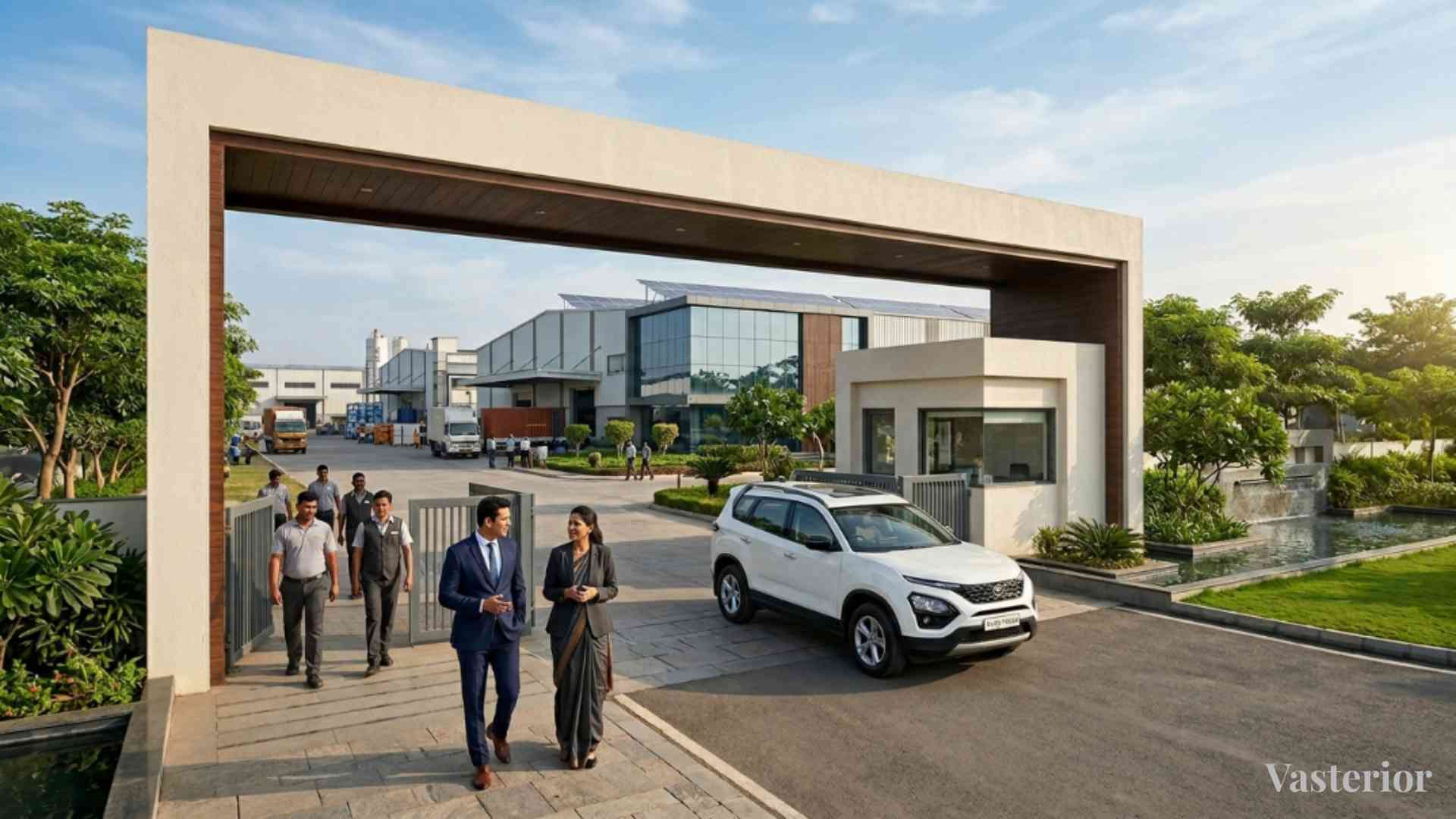
The entrance acts as the mouth of energy. A cluttered or poorly positioned entrance can restrict opportunities and delay growth.
- Best directions: North, North East, East
- Ensure clear, unobstructed entry pathways
- Proper entrance positioning improves inflow of business opportunities
Production Unit
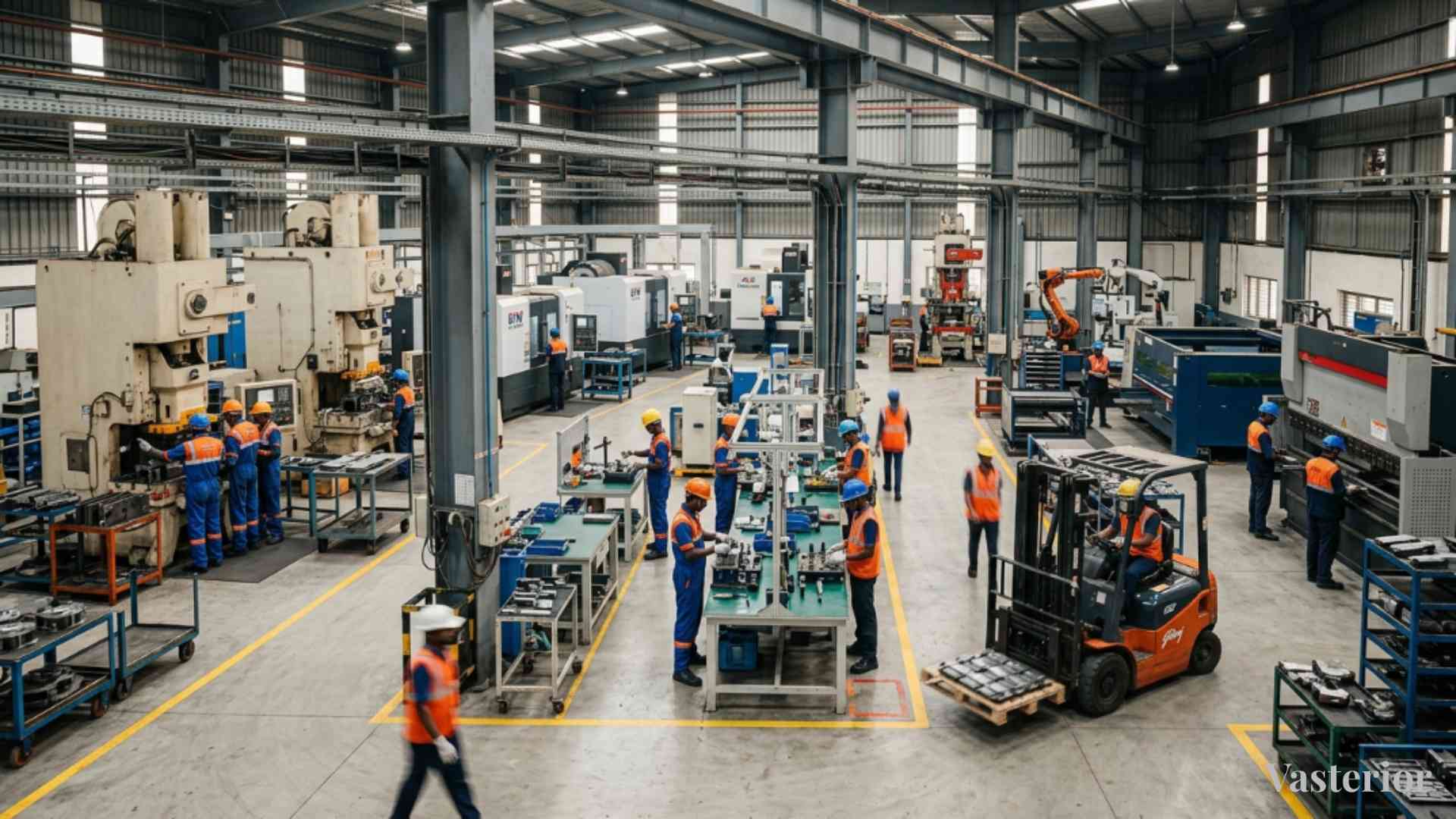
The production zone should carry strong fire and activity energy. This placement supports operational intensity, machinery performance, and production continuity.
- Ideal direction: South East
- Alternative: South
- Production areas require active, dynamic energy zones
Raw Material Storage
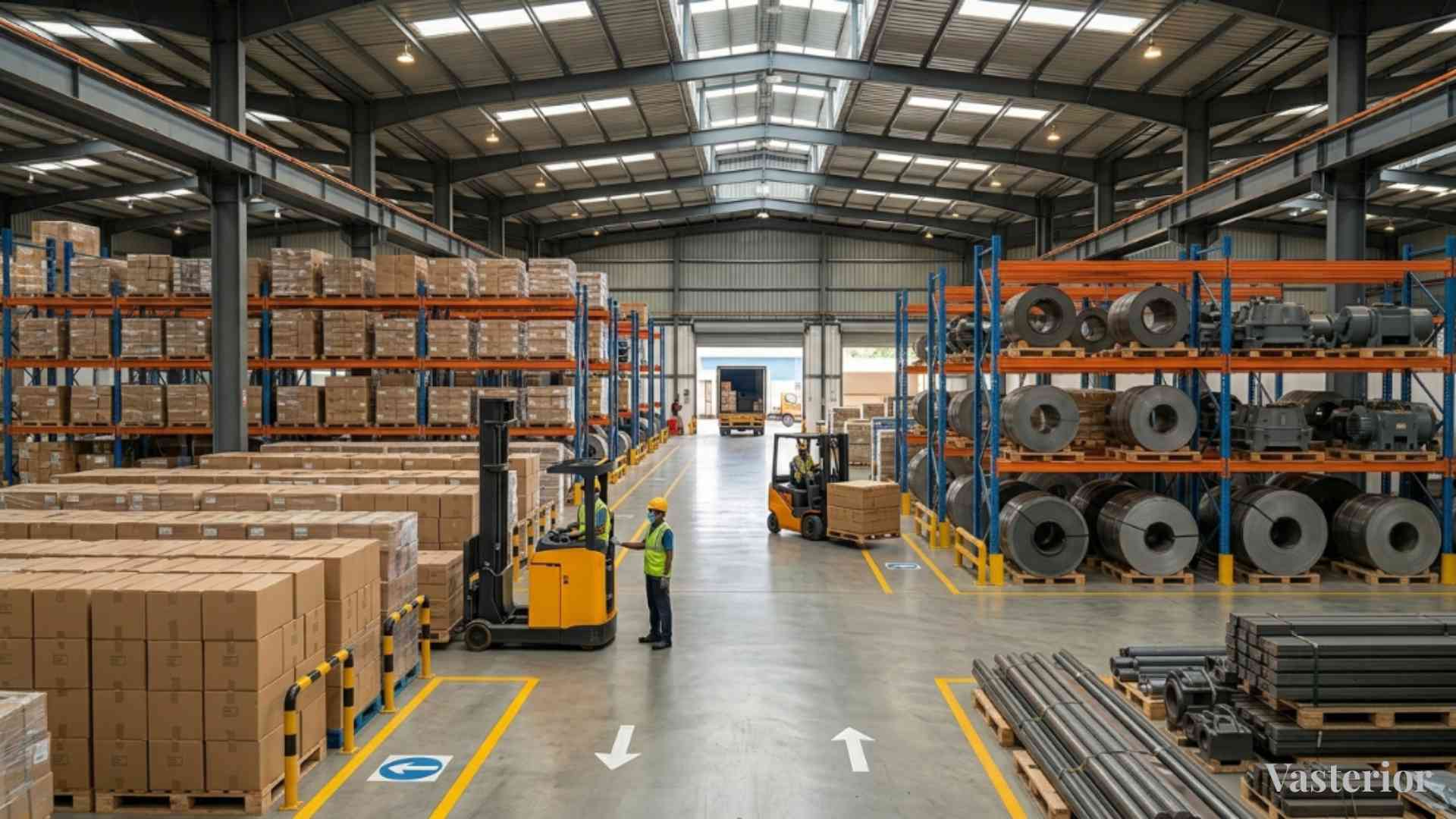
Heavy storage zones require grounding stability. Improper placement of raw material storage in lighter zones may create inventory imbalance and unnecessary wastage.
- Best directions: South West, West
- Storage requires stable, anchored positions
- Creates foundational support for production flow
Finished Goods Storage
Finished products should ideally move smoothly toward dispatch and financial circulation. This positioning enhances movement and timely distribution.
- Best directions: North West, West
- Supports outflow and delivery momentum
- Facilitates smoother customer transactions
Office Cabin
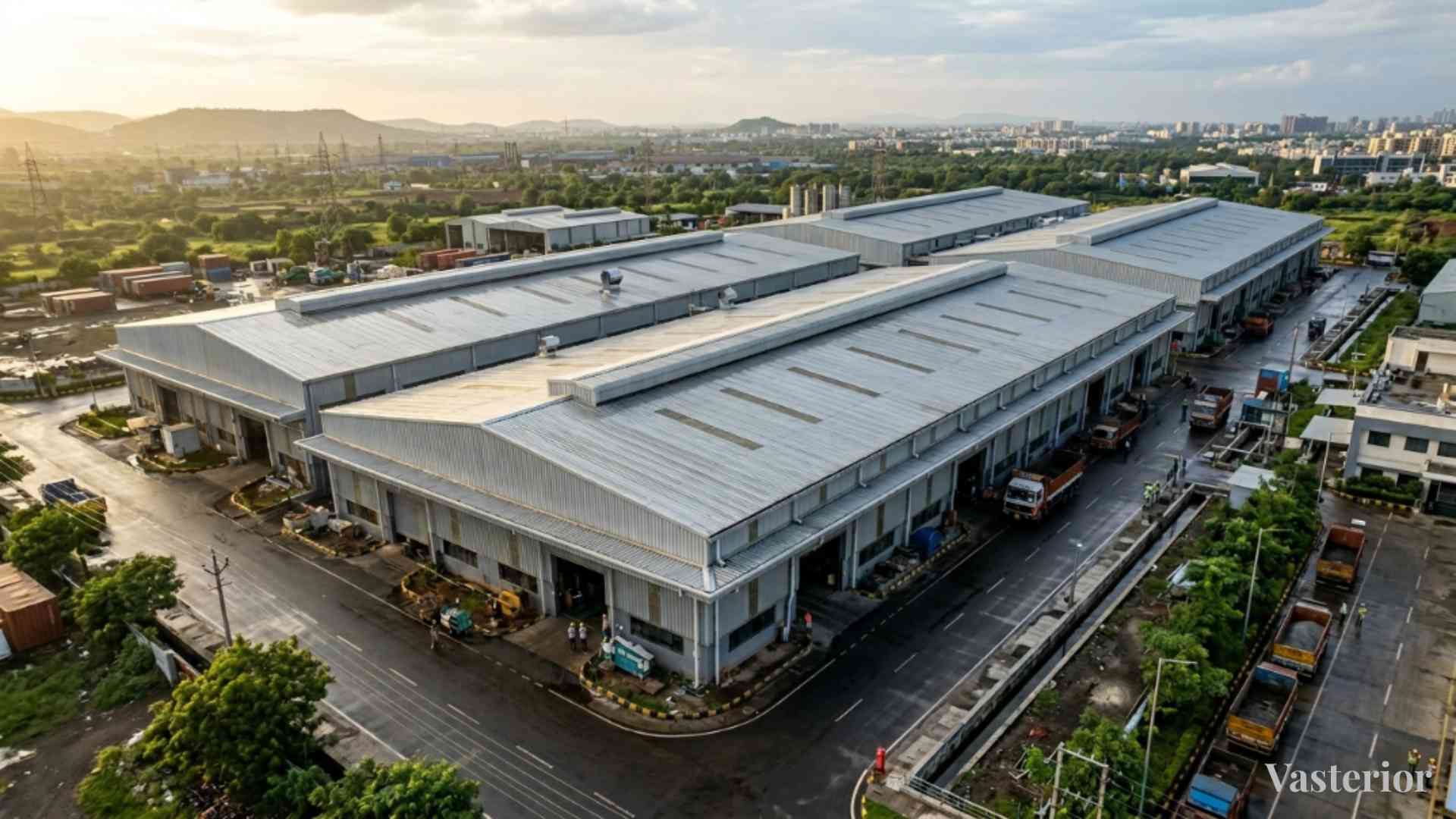
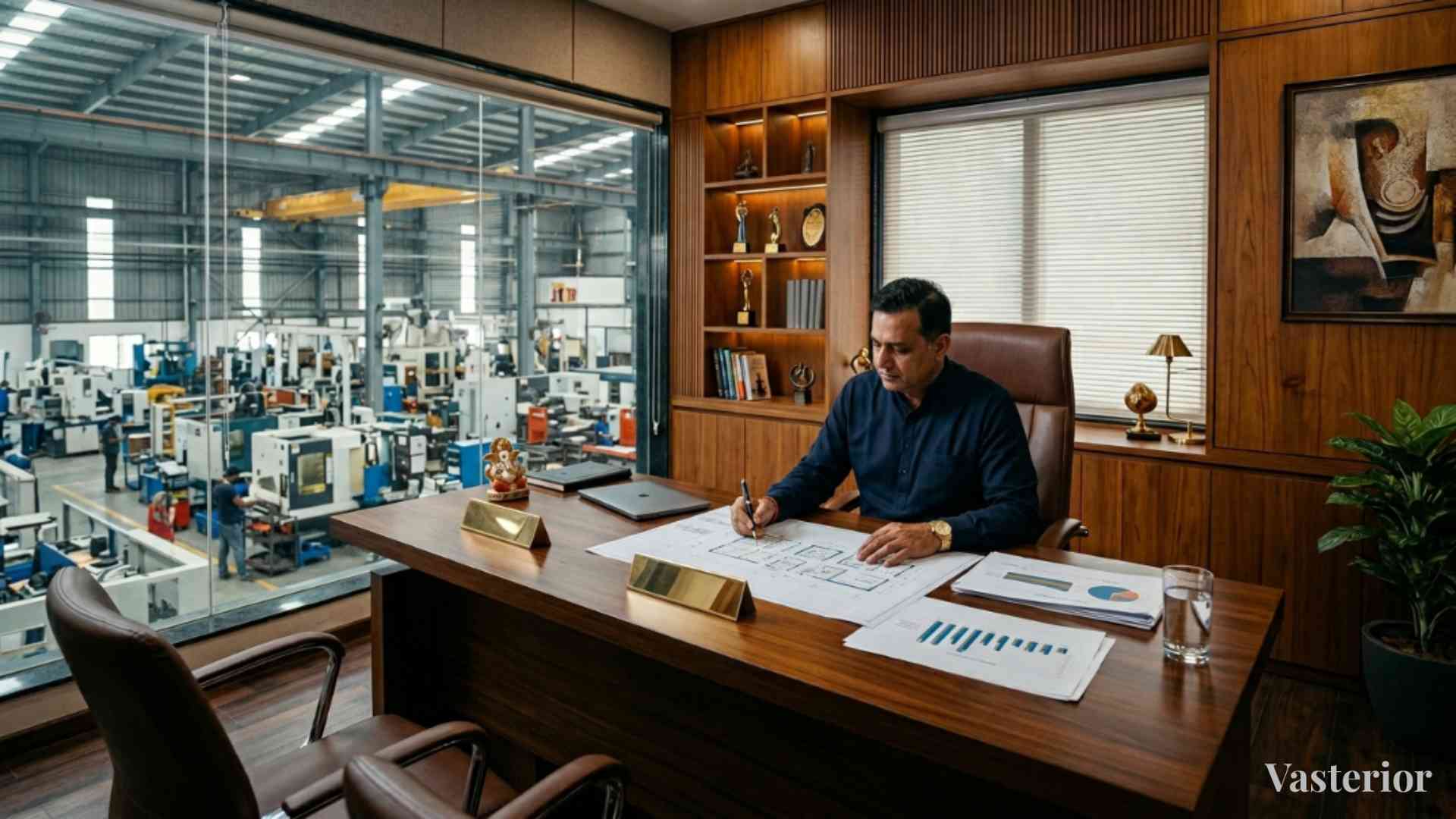
Leadership zones influence strategic thinking and authority. The business owner or senior management should ideally sit facing North or East while working.
- Ideal direction: South West
- Provides stability for decision-making
- Enhances leadership presence and clarity
Accounts Department
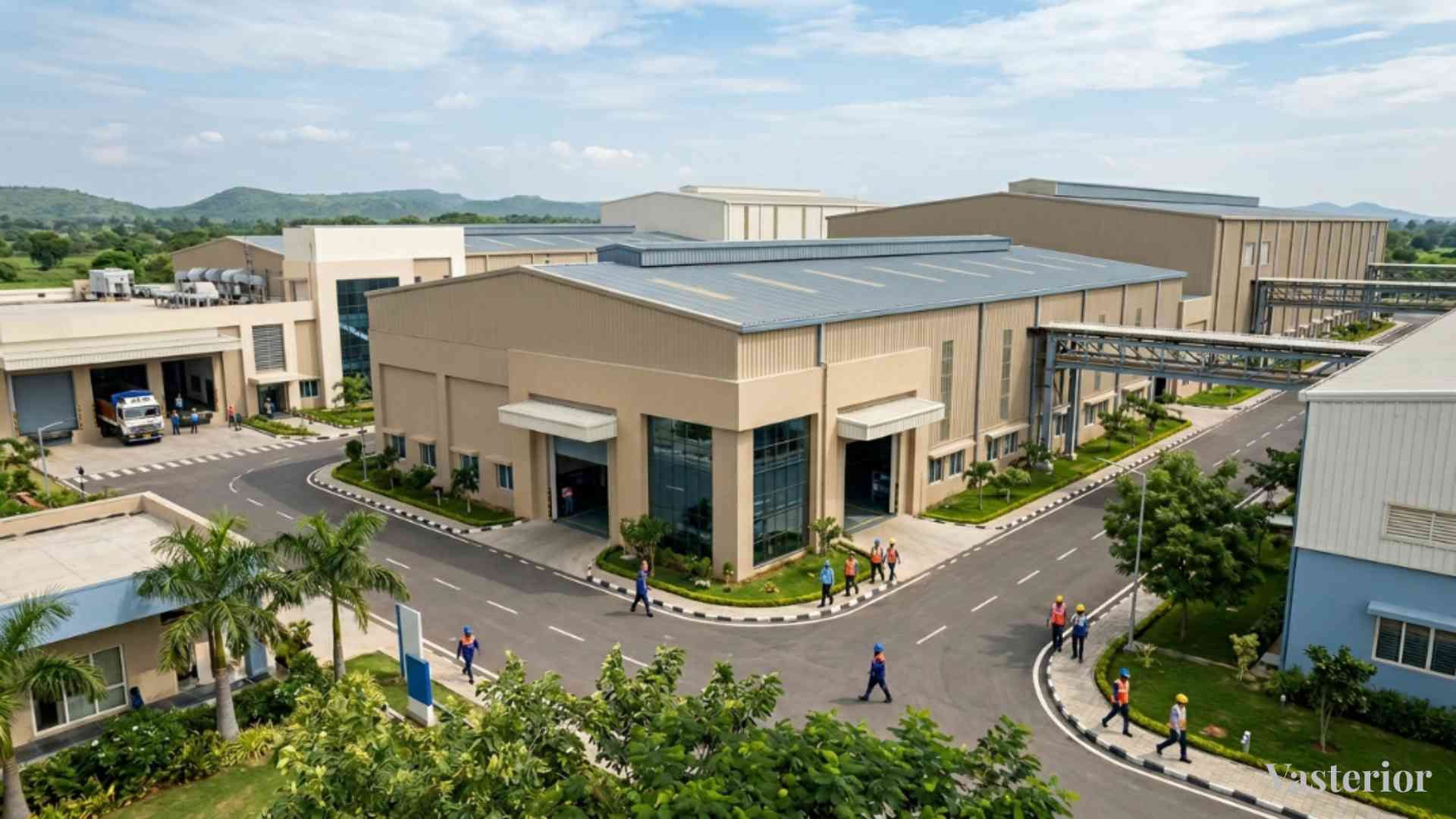
Financial clarity and transactional flow benefit from stronger North energy. Proper placement supports healthy cash cycles and financial stability.
- Best directions: North, North East
- Enhances financial tracking and accuracy
- Supports transparent transaction flow
Machinery Placement
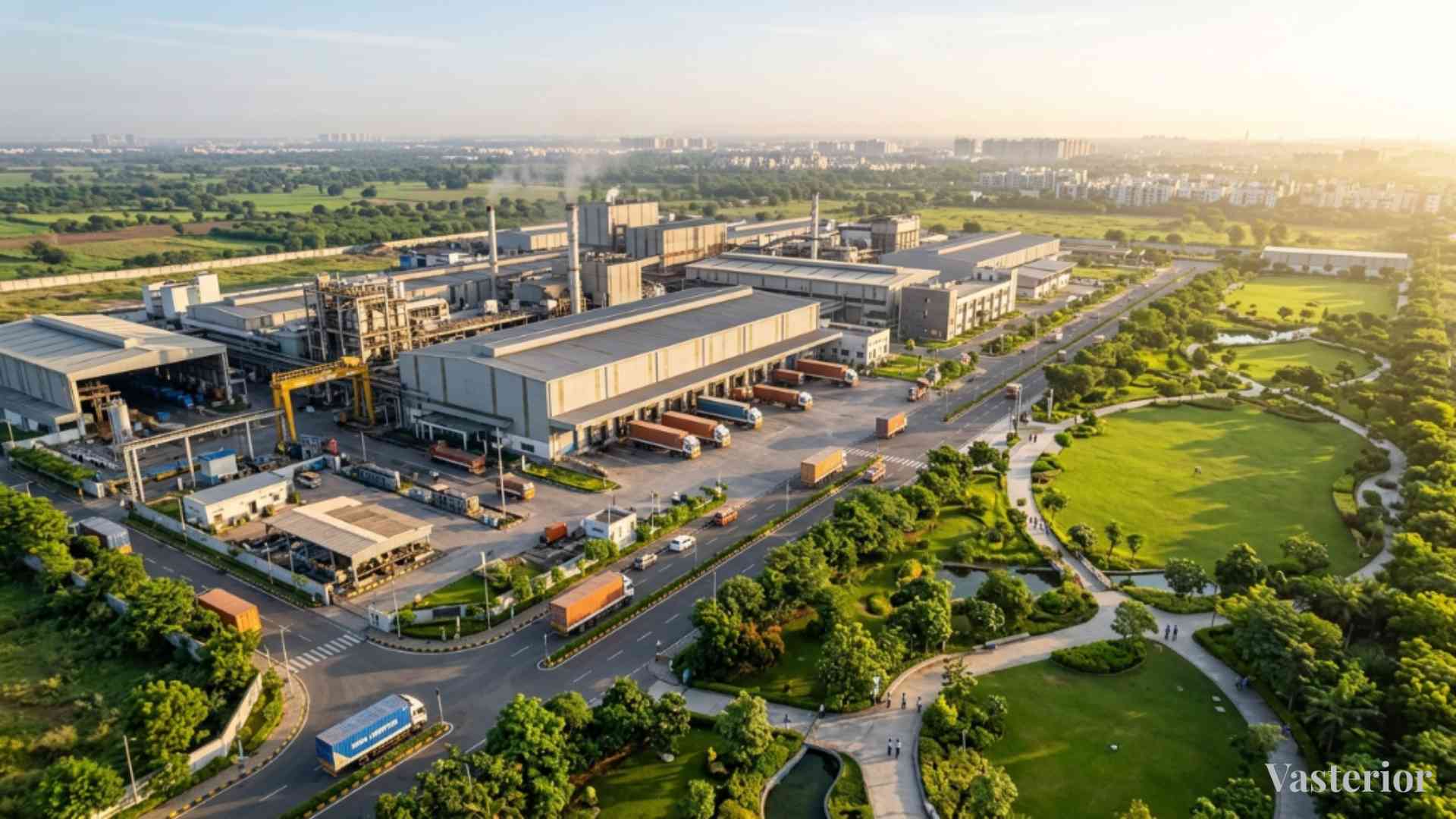
Heavy industrial machinery should preferably remain in grounding zones that provide stability and reduce operational disruptions.
- Ideal directions: South, South West, South East
- Avoid placing heavy machines in the North East
- Proper placement reduces breakdowns and maintenance issues
Labour Zones & Support Areas
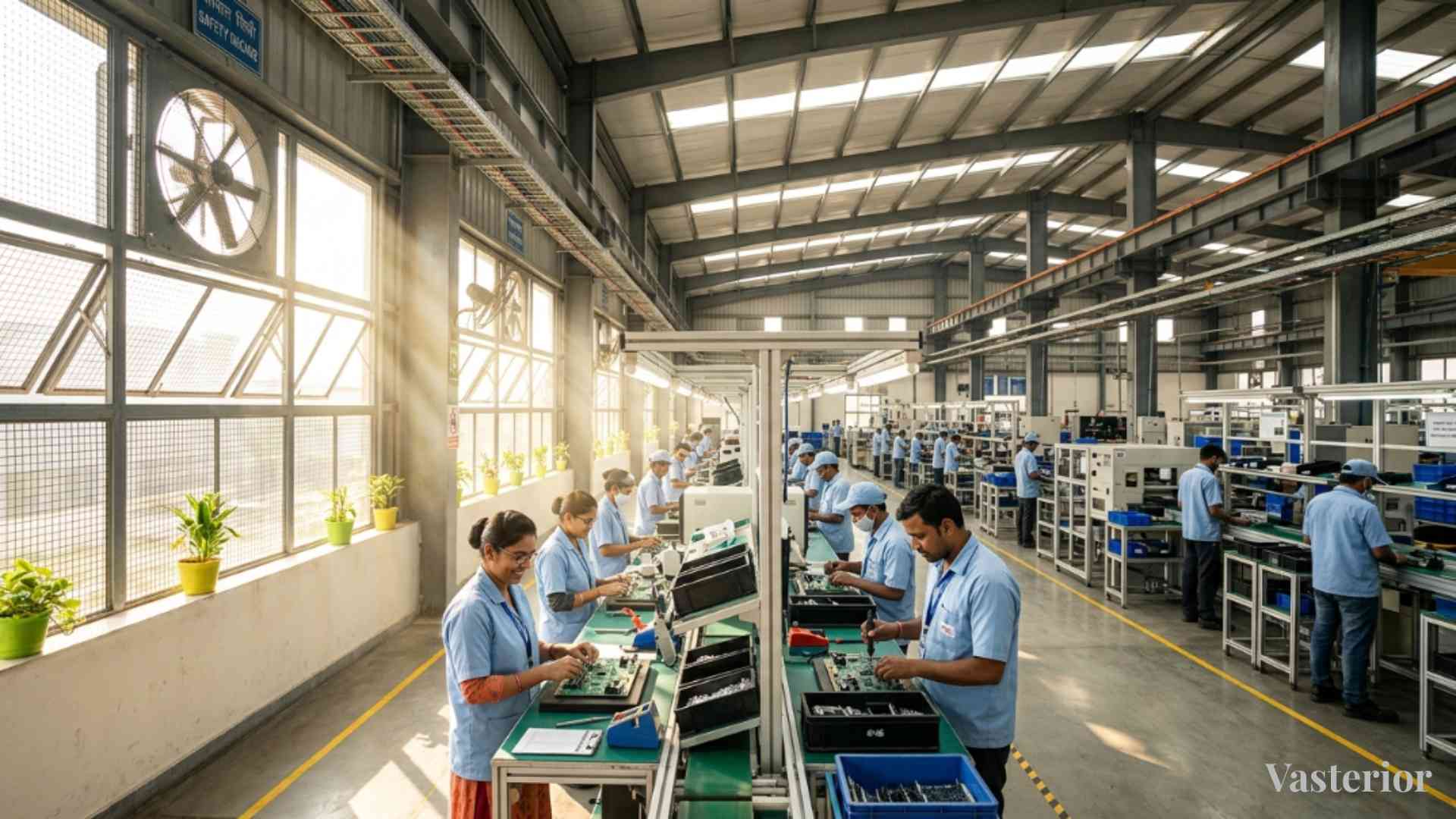
Worker resting and operational support zones work best in lighter, more accessible directional zones that promote wellbeing and coordination.
- Worker zones: West, North West
- Pantry and Washrooms: West, North West, South of South West
- Underground water tanks: North East
- Overhead tanks: South West
- Transformer and Electrical Panels: South East
Importance of Open Spaces Around the Factory
Open spaces are not wasted spaces. They determine how energy breathes around the structure. Factories should ideally maintain more open space in North and East, with lesser open space in South and West.
- More open space in North and East creates balanced directional pull
- Lesser open space in South and West provides stability
- Excessive blockage in North correlates with financial stagnation
- Heavy obstruction in East suppresses visibility and growth opportunities
- Overly compressed layouts create energetic suffocation
A factory must feel operationally alive, not spatially trapped.
Role of Sunlight and Airflow in Industrial Vastu
Natural light dramatically influences worker psychology and productivity. Factories receiving balanced sunlight from East and North directions generally feel more energised and active.
- Dark, poorly ventilated environments increase fatigue and irritability
- Balanced sunlight improves concentration and alertness
- Air circulation affects operational momentum significantly
- Stagnant airflow correlates with reduced efficiency
- Poor ventilation leads to slow business movement and internal conflicts
Modern industrial Vastu increasingly aligns with environmental psychology and workspace wellness studies. People perform differently in balanced spaces.
Effects of Wrong Factory Direction on Business Growth
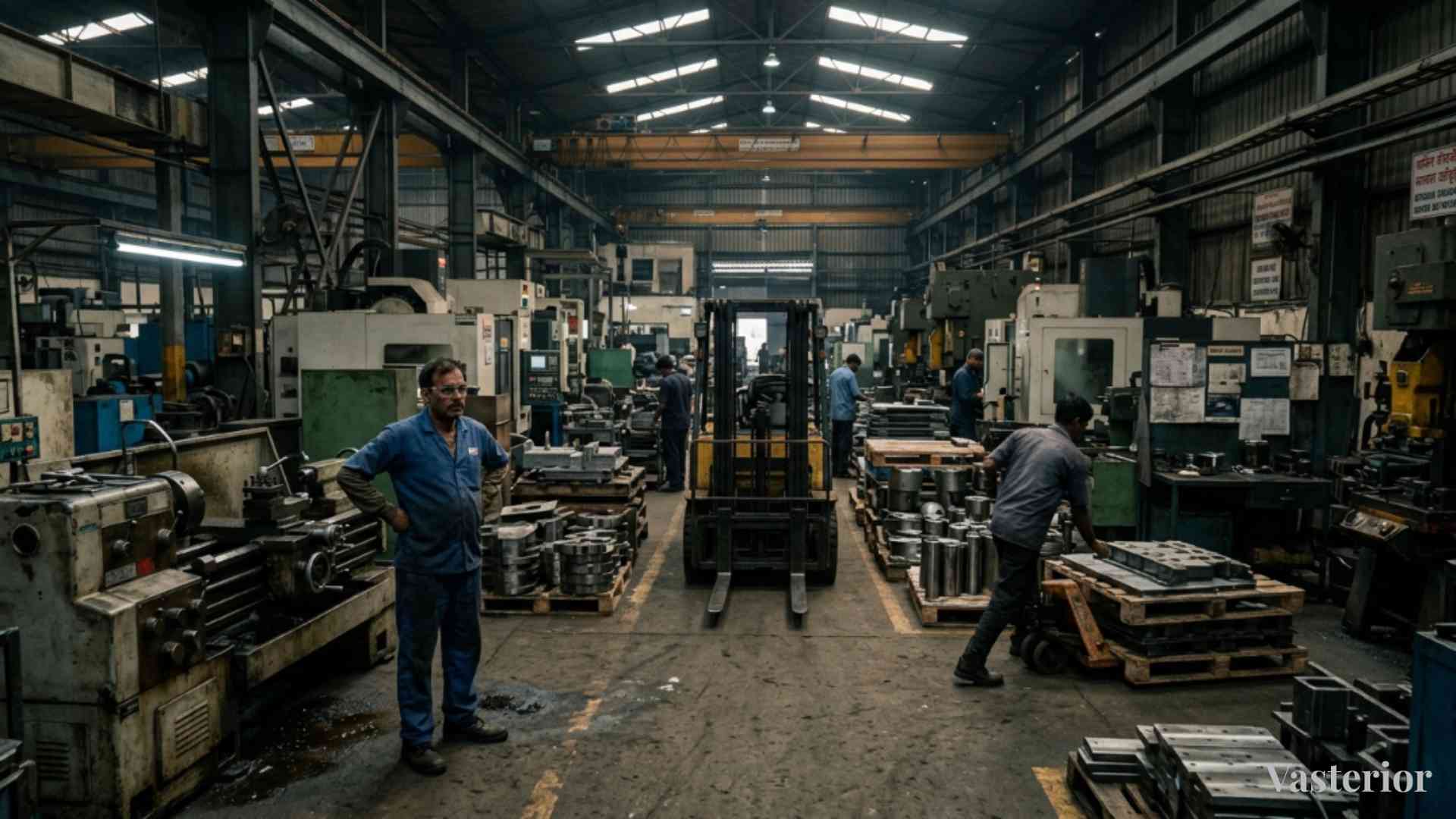
A factory may appear structurally impressive while still carrying deep energetic imbalance. These directional disturbances often manifest through operational and financial challenges.
- Repeated machinery breakdowns
- Workforce instability and high turnover
- Delayed orders and deliveries
- Financial leakage and cash flow issues
- Frequent accidents and safety concerns
- Management stress and decision-making confusion
- Production inconsistency
- Client retention issues
- Legal complications
Businesses often attempt to solve these issues externally while the root imbalance quietly remains embedded in the spatial structure itself. Vastu does not replace operational excellence. It strengthens the environment in which operational excellence functions.
The Importance of Factory Shed Slopes in Industrial Vastu
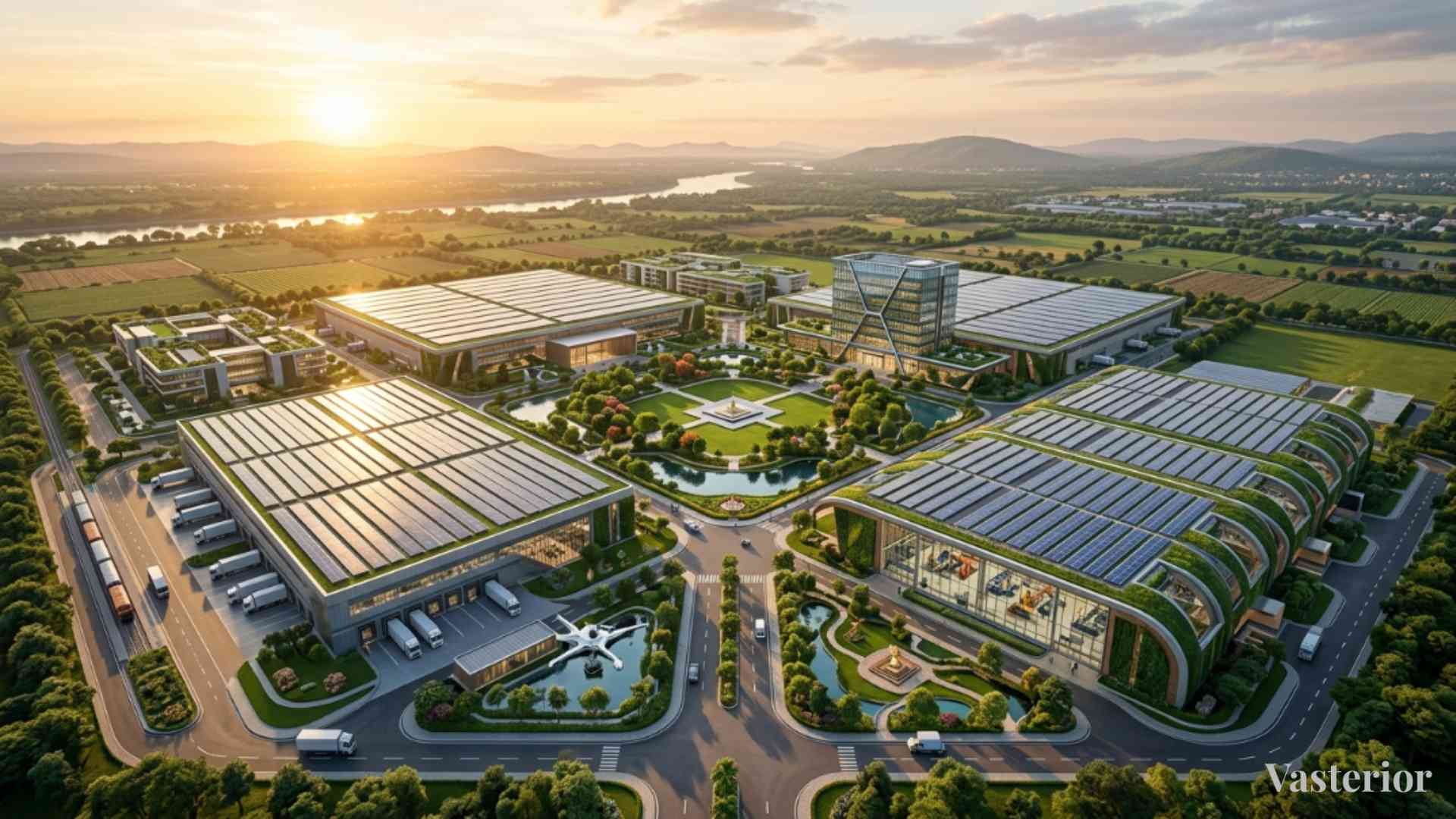
One of the most ignored yet highly influential aspects of industrial Vastu is the slope direction of factory sheds and roofing structures. Roof slopes influence water drainage, heat circulation, light distribution, energy movement, structural psychology, and directional balance.
- Correctly aligned slopes support expansion and momentum
- Incorrect slopes create energetic pressure and instability
- South and West should remain higher
- North and East should remain comparatively lower
- This directional hierarchy supports balanced energy flow
Factories with lower North East often experience better clarity, improved business opportunities, faster movement, and enhanced communication flow.
Problems Caused by Incorrect Shed Slopes
Improper roofing slopes can subtly influence industrial performance in multiple ways, creating cascading operational and financial challenges.
- Financial instability and uncertain cash flows
- Excessive operational stress on management
- Repeated leakage and maintenance issues
- Workforce friction and communication breakdown
- Mental pressure affecting decision-making
- Delayed execution of projects
- Growth stagnation despite investments
A heavy downward slope towards South may symbolically drain stability. Excessive downward slope in South West can weaken authority and financial grounding. The structure begins communicating imbalance psychologically and energetically.
Best Colours for Factory Sheds According to Vastu
Colour is not merely aesthetic. It directly influences mood, energy perception, focus, and behavioural response. Industrial colour planning should combine directional energy, functional utility, psychological impact, and visual balance.
- North facing areas: Light blue, silver, white for movement and financial fluidity
- East facing areas: Soft green, light wooden tones, off-white for vitality
- South East zones: Soft orange, peach, light red accents, warm neutrals
- South West zones: Beige, earthy brown, sandstone tones, muted mustard
Colours directly affect workforce behaviour. Excessive red may increase aggression and stress. Dark grey environments create emotional heaviness. Balanced neutrals improve concentration. Light reflective tones enhance alertness. Factories with thoughtfully planned colours often feel cleaner, calmer, and more efficient.
Best Colour Combinations for Different Industries
Different industrial sectors benefit from specialized colour strategies tailored to their operational energy and functional requirements.
- Manufacturing Factories: Beige with muted blue accents, white with industrial grey balance
- Textile Units: Soft cream, light green, pastel neutrals
- Warehouses: Earth tones, light grey, sand colours
- Engineering Plants: Metallic neutrals, white and steel grey, controlled orange accents
- Chemical Industries: Light yellow, soft beige, white with caution zones marked
- Office Spaces Inside Factories: Warm white, sage green, soft wooden textures
The objective is not visual decoration alone. It is energetic calibration that supports both worker psychology and operational flow.
Balancing the Five Elements in Industrial Spaces
Every industrial environment must maintain balance among Earth, Water, Fire, Air, and Space. Imbalance among these elements often reflects in operational instability and workforce challenges.
- Excessive fire energy creates aggression and burnout
- Weak water zones affect financial flow and liquidity
- Imbalanced air circulation creates confusion and instability
- Excessive heaviness suppresses innovation
- Space imbalance creates operational suffocation
Industrial Vastu creates equilibrium between these elemental forces, allowing the factory to operate harmoniously and efficiently.
Practical Vastu Corrections for Existing Factories
Not every business can reconstruct its premises entirely. Fortunately, several strategic corrections may improve alignment without major demolition or extensive restructuring.
- Directional colour balancing across zones
- Machinery repositioning and reorientation
- Corrective lighting strategies
- Spatial zoning adjustments
- Weight redistribution in structural areas
- Entrance activation and improvement
- Element balancing through design interventions
Even small corrections can significantly shift the feel and functioning of a factory, often yielding measurable improvements in productivity and morale.
How Industrial Vastu Influences Employee Psychology
Employees unconsciously absorb spatial energy every day. The environment they work in directly shapes their emotional state, productivity, and commitment.
- Poorly aligned factories create irritability and mental fatigue
- Reduced motivation and communication friction emerge
- Increased absenteeism and tardiness
- Balanced environments support better concentration
- Emotional stability and operational discipline improve
- Team coordination becomes more natural
- Productivity consistency strengthens
Modern workplace psychology increasingly validates the connection between space and human performance.
Common Factory Vastu Mistakes
Many factories unintentionally create energetic conflict through poor spatial planning. These recurring mistakes often go unnoticed while quietly undermining operational efficiency.
- Heavy structures in North East
- Incorrect water placement and drainage
- Improper shed slopes and roofing angles
- Cluttered or poorly positioned entrances
- Overloaded East zones with excessive weight
- Dark interiors with poor ventilation
- Random and misaligned colour usage
- Uneven weight distribution across zones
- Fire zones placed incorrectly
The Rise of Modern Industrial Vastu
Industrial Vastu today is evolving beyond traditional perception. Forward-thinking businesses are now integrating ancient spatial wisdom with contemporary design and sustainability principles.
- Sustainable architecture aligned with directional principles
- Smart layouts combining functionality and energetic balance
- Wellness-focused workspaces for employee satisfaction
- Energy-efficient planning reducing operational costs
- MahaVastu principles for enhanced spatial intelligence
- Luxury industrial aesthetics maintaining cultural respect
The future factory is not merely functional. It is intelligent, aligned, psychologically balanced, and operationally fluid.
Why Businesses Are Turning Towards Spatial Intelligence
Entrepreneurs today understand that performance is not driven by numbers alone. The environment itself shapes decision making, team morale, operational rhythm, mental clarity, and strategic execution.
- Environment shapes decision-making processes
- Team morale directly correlates with spatial design
- Operational rhythm emerges from structural alignment
- Mental clarity improves in balanced spaces
- Strategic execution flows more smoothly
Spatial intelligence allows businesses to create environments that support expansion instead of resisting it. This shift is precisely why industrial Vastu is gaining attention among modern business leaders.
How Vasterior Approaches Industrial Vastu Differently
Vasterior approaches industrial spaces through a fusion of luxury design thinking, MahaVastu principles, and spatial intelligence. Instead of treating Vastu as rigid superstition, the approach focuses on creating highly functional, visually elevated, and energetically aligned industrial environments.
- Factory direction planning tailored to business goals
- Shed slope analysis for optimal energy flow
- Colour strategy aligned with directional principles
- Industrial zoning for maximum efficiency
- Integration of modern design with ancient wisdom
From factory direction planning and shed slope analysis to colour strategy and industrial zoning, every recommendation is tailored to support practical business growth alongside energetic balance. The result is not merely a compliant factory. It becomes a high-performance ecosystem designed for clarity, movement, and long-term expansion.
FAQs
Common questions about industrial Vastu and factory direction planning answered for practical implementation.
1. Which direction is best for a factory according to Vastu?
North, East, and South East aligned factories are generally considered beneficial depending on the industry type and operational structure.
2. Why is shed slope important in factory Vastu?
Factory shed slopes influence directional energy flow, water movement, structural balance, and operational momentum.
3. Which direction should a factory shed slope towards?
Ideally, factory sheds should slope from South to North or West to East.
4. Can wrong factory Vastu affect business growth?
Improper industrial alignment may contribute to instability, delays, workforce issues, and financial imbalance.
5. Which colour is best for factory sheds?
The ideal colour depends on the factory direction and industrial activity. Neutral earthy tones, soft blues, whites, and balanced warm shades generally work well.
6. Where should machinery be placed in a factory?
Heavy machinery is best placed in South, South West, or South East zones.
7. Can existing factories be corrected without reconstruction?
Yes. Strategic Vastu corrections through layout adjustments, colour balancing, lighting, and zoning can improve alignment significantly.
8. Which direction is best for factory entrances?
North, East, and North East entrances are often considered favourable for industrial spaces.
9. How does Vastu influence employee productivity?
Balanced spaces support emotional stability, concentration, smoother communication, and reduced stress among employees.
10. What is the role of colours in industrial Vastu?
Colours affect mood, behavioural response, focus, and directional energy balance within industrial environments.
Conclusion
Industrial Vastu is not a luxury addition to factory planning. It is a strategic framework that directly impacts operational efficiency, team morale, financial stability, and long-term growth potential.
Businesses aiming to create industrial spaces that combine operational efficiency with energetic intelligence are increasingly exploring strategic Vastu alignment as part of modern factory planning.
When spatial design, directional alignment, and business purpose converge, factories transcend being mere production units. They become high-performance ecosystems that naturally support growth, stability, and success.
For personalised guidance on factory direction, industrial layouts, shed slope alignment, colour planning, and MahaVastu-based spatial optimisation, the team at Vasterior may be reached at +91 9100883355 or via info@vasterior.com for a more tailored consultation experience.