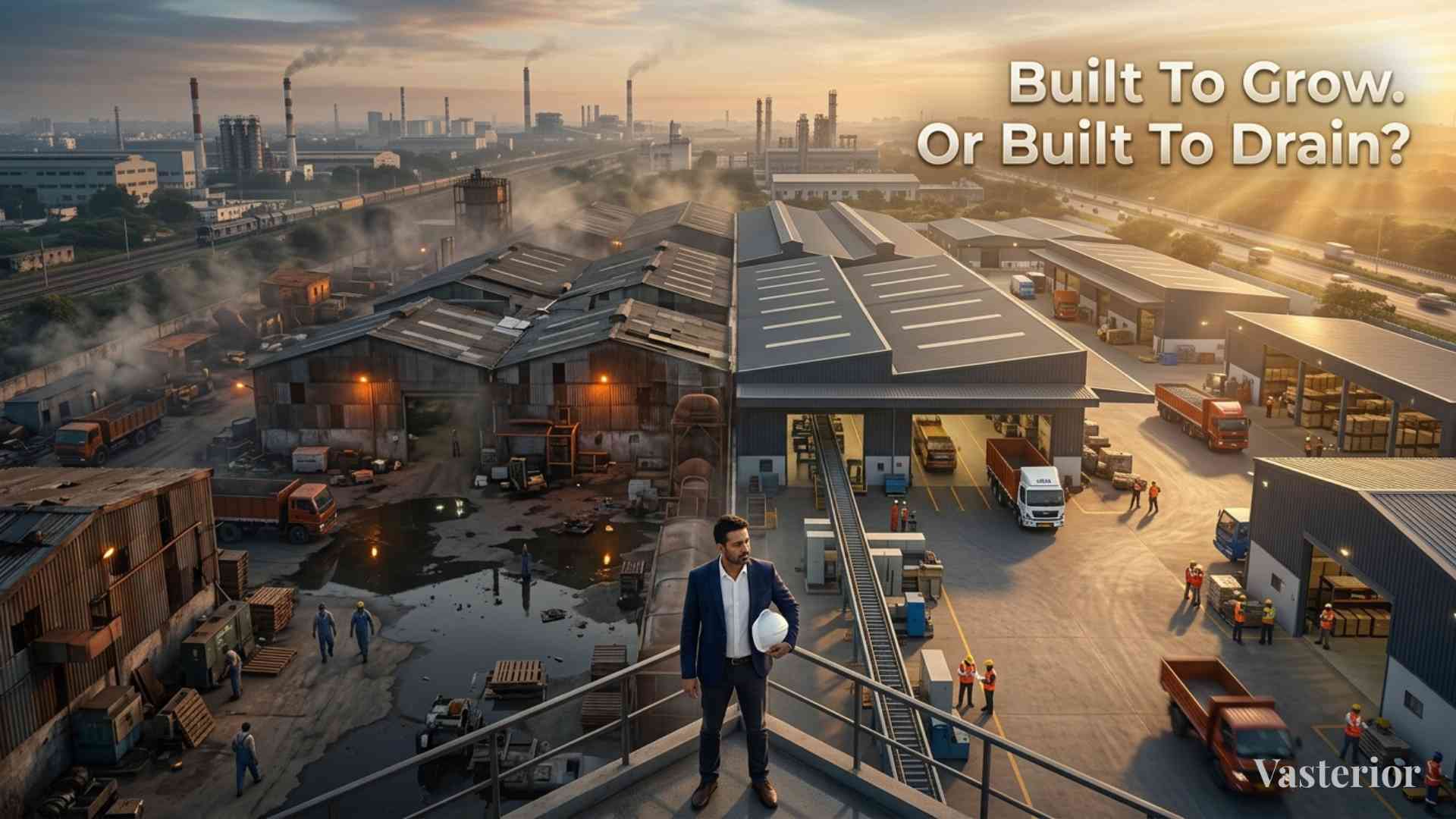
A factory rarely collapses overnight.
Losses usually begin quietly.
First, it is delayed payments. Then machinery starts demanding repairs more often. Key employees begin leaving unexpectedly. Orders get delayed despite everyone working overtime. Teams lose motivation. Inventory starts piling up. Production feels heavier than it should.
And somewhere in the middle of all this chaos, business owners often keep asking the same question.
"What exactly changed?"
Sometimes, the answer is not in the market.
Sometimes, it is in the space itself.
Modern industrialists spend crores on machinery, operations, workforce optimisation, and technology integration. Yet very few pause to study whether the factory itself is supporting growth or silently resisting it.
This is where Industrial Vastu and spatial energy alignment become deeply relevant.
At Vasterior, we have observed a recurring pattern across manufacturing units, warehouses, and industrial plots. Many businesses facing stagnation are operating from spaces where directional imbalance, incorrect shed slopes, and poorly aligned colour planning create subtle yet powerful disruptions in workflow, decision-making, productivity, and financial retention.
This is not superstition.
It is spatial intelligence.
And in 2026, smart businesses are beginning to treat it exactly that way.
The Direction of a Factory Is More Important Than Most Owners Realise
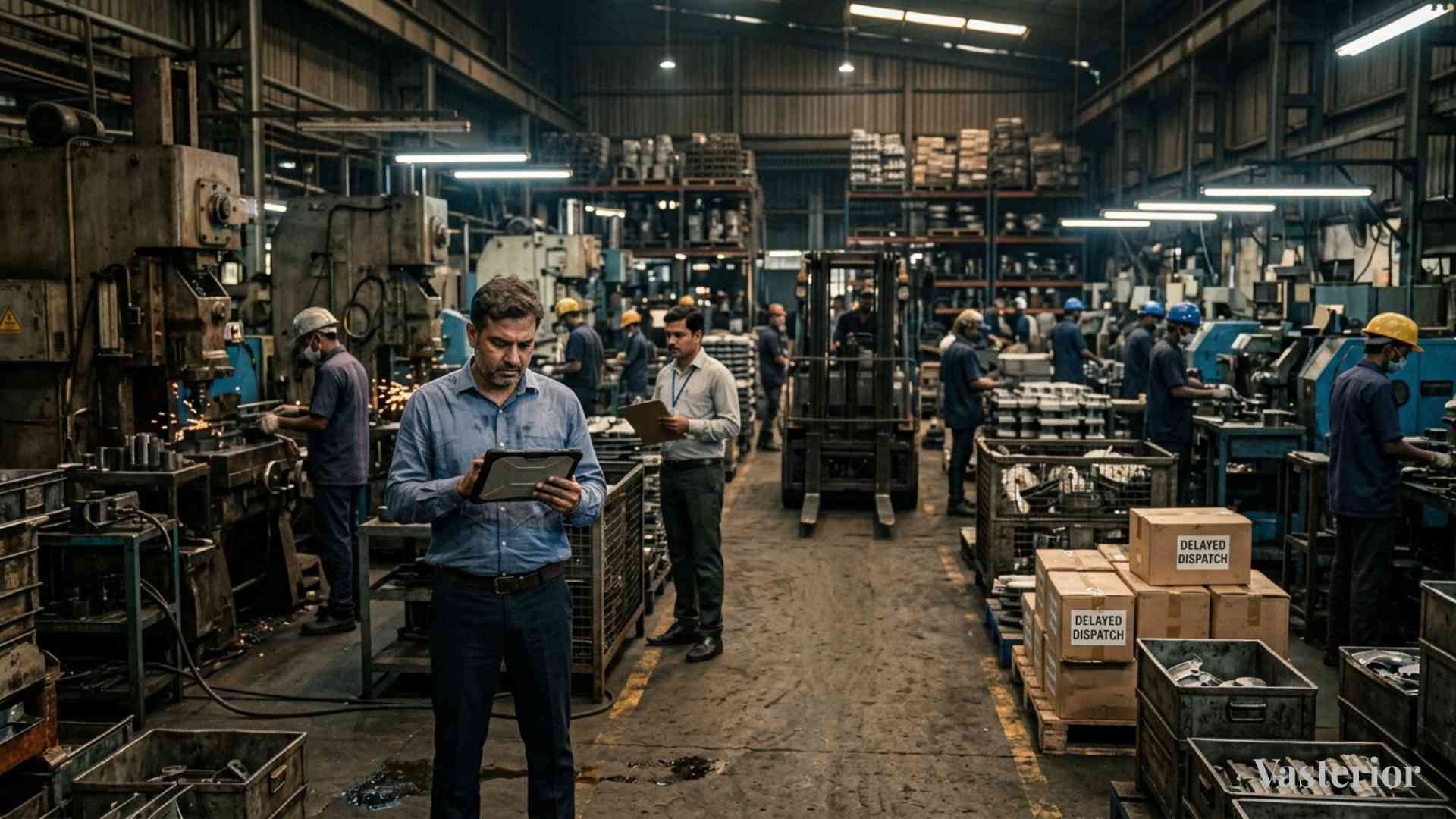
Every industrial space operates like an energy ecosystem. The moment you enter a factory, you can sense whether the environment feels sharp, active, and progressive or heavy, chaotic, and draining. Direction influences movement. Movement influences energy. And energy influences outcomes.
- A wrongly positioned heavy machinery zone may increase operational stress
- Incorrect placement of administrative functions may weaken decision-making clarity
- Improper directional balance can contribute to workforce instability
- Blocked energy zones may create stagnation in payments and client acquisition
According to MahaVastu principles, every direction carries a distinct energetic quality. When critical factory functions are placed against these natural directional energies, businesses often experience friction that appears operational on the surface but is actually spatial at its core.
Many factory owners focus only on efficiency metrics while completely overlooking energetic efficiency. That oversight can become expensive over time.
When a Factory Starts Absorbing More Than It Produces
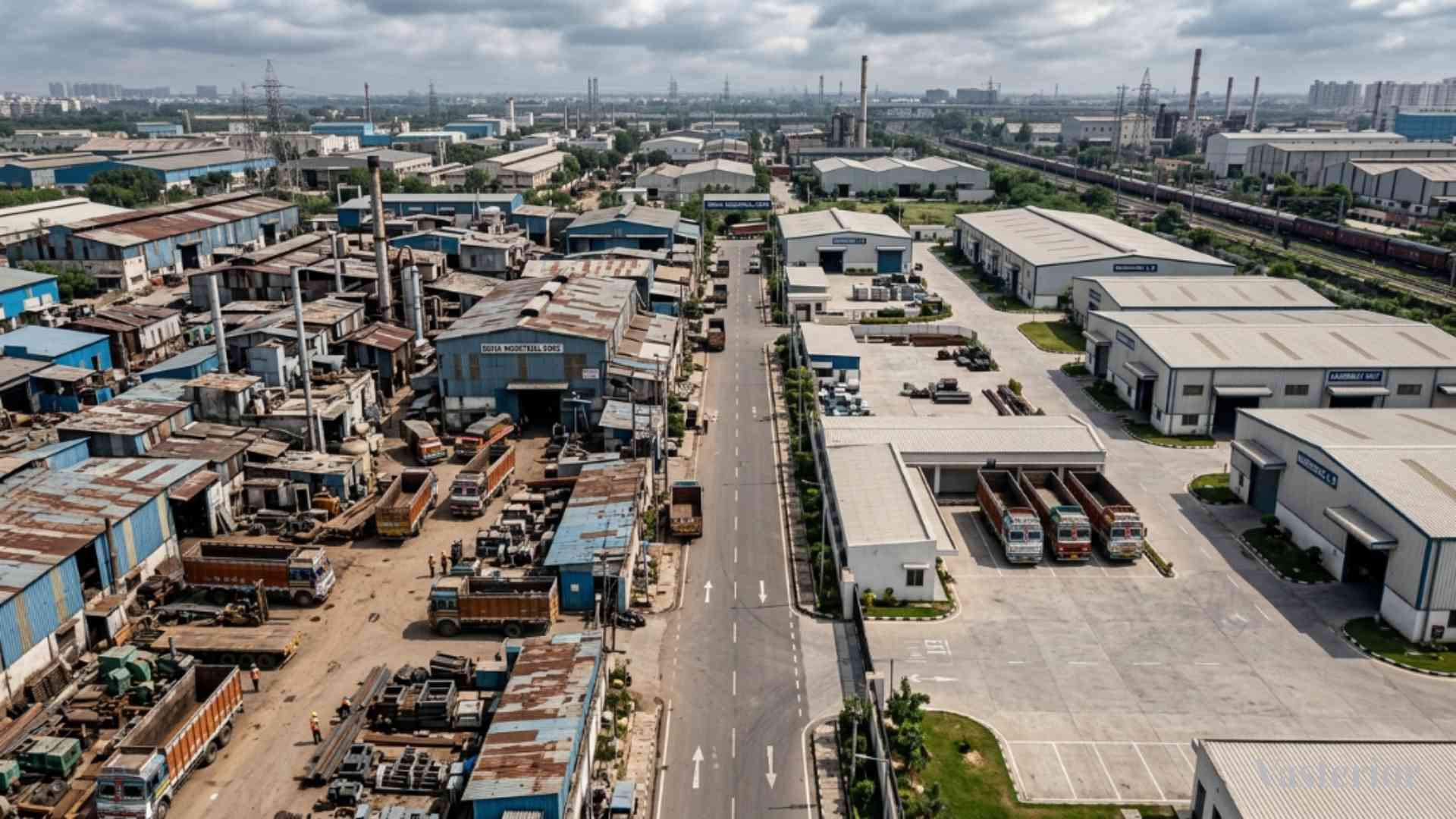
One of the biggest signs of directional imbalance is when a factory continuously consumes resources but struggles to generate proportional returns. The business survives. But it does not expand. The effort keeps increasing while the outcomes remain inconsistent.
- Frequent equipment breakdowns
- Employee conflicts
- High operational leakage
- Delayed order completion
- Poor inventory movement
- Weak leadership clarity
- Financial pressure despite good sales
- Reduced focus and morale within teams
A factory should feel like a momentum-generating engine. If the space constantly feels exhausting, the layout may be fighting the business instead of supporting it.
The Silent Impact of Wrong Directional Planning
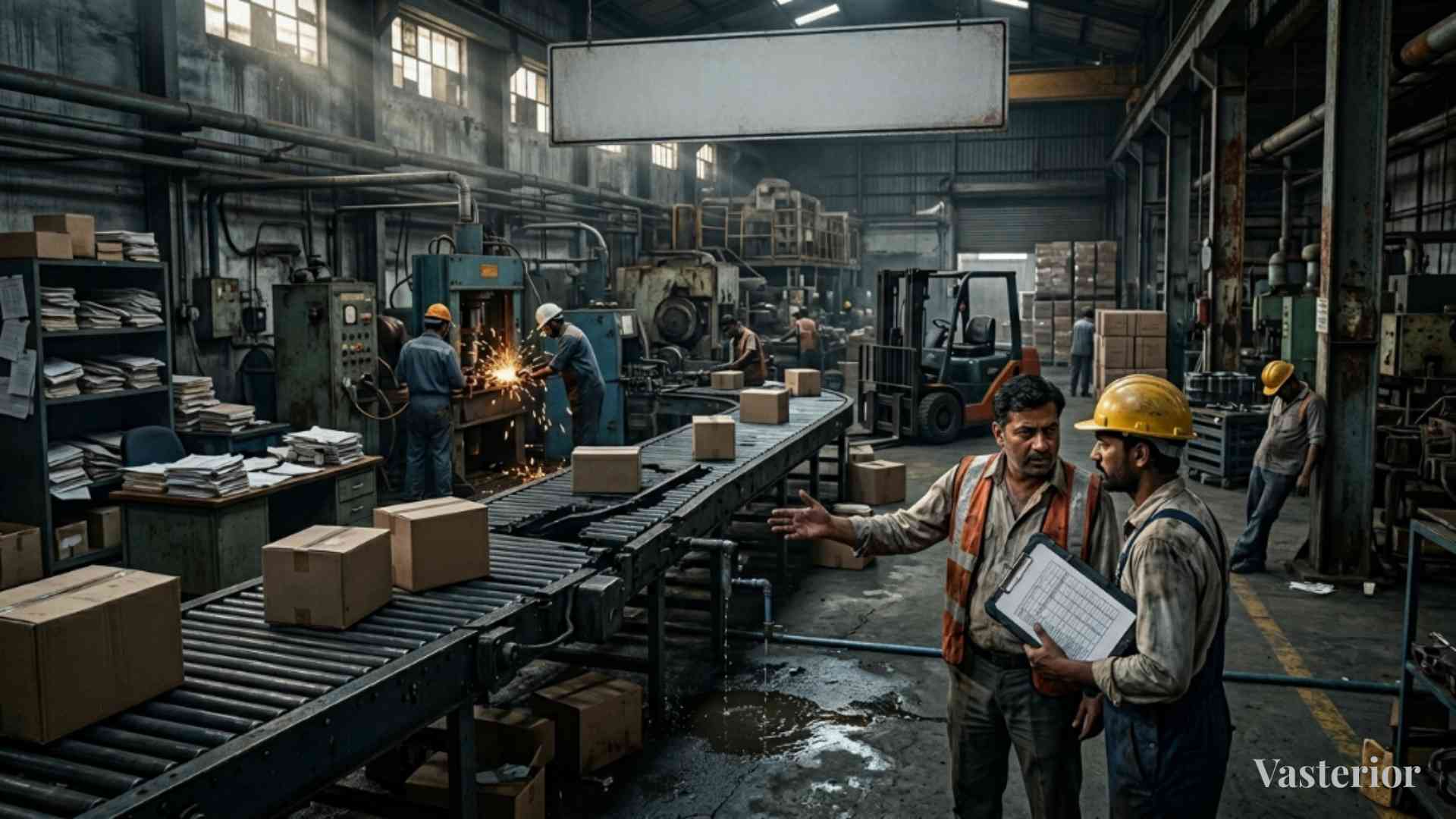
Imagine a manufacturing unit where the South-West zone is weak, cut, or energetically disturbed. In MahaVastu, this direction is strongly associated with stability, leadership strength, long-term control, and financial grounding.
- Staff retention challenges
- Decision fatigue
- Financial unpredictability
- Partnership instability
- Lack of control over operations
When the same patterns repeat across hundreds of industrial layouts, it becomes difficult to ignore the relationship between space and business behaviour. Similarly, factories with excessive imbalance in the North-East may experience confusion, planning delays, and weak strategic direction despite having strong infrastructure.
Spatial imbalance often shows up first as operational imbalance.
Factory Shed Slopes Can Influence Wealth Retention
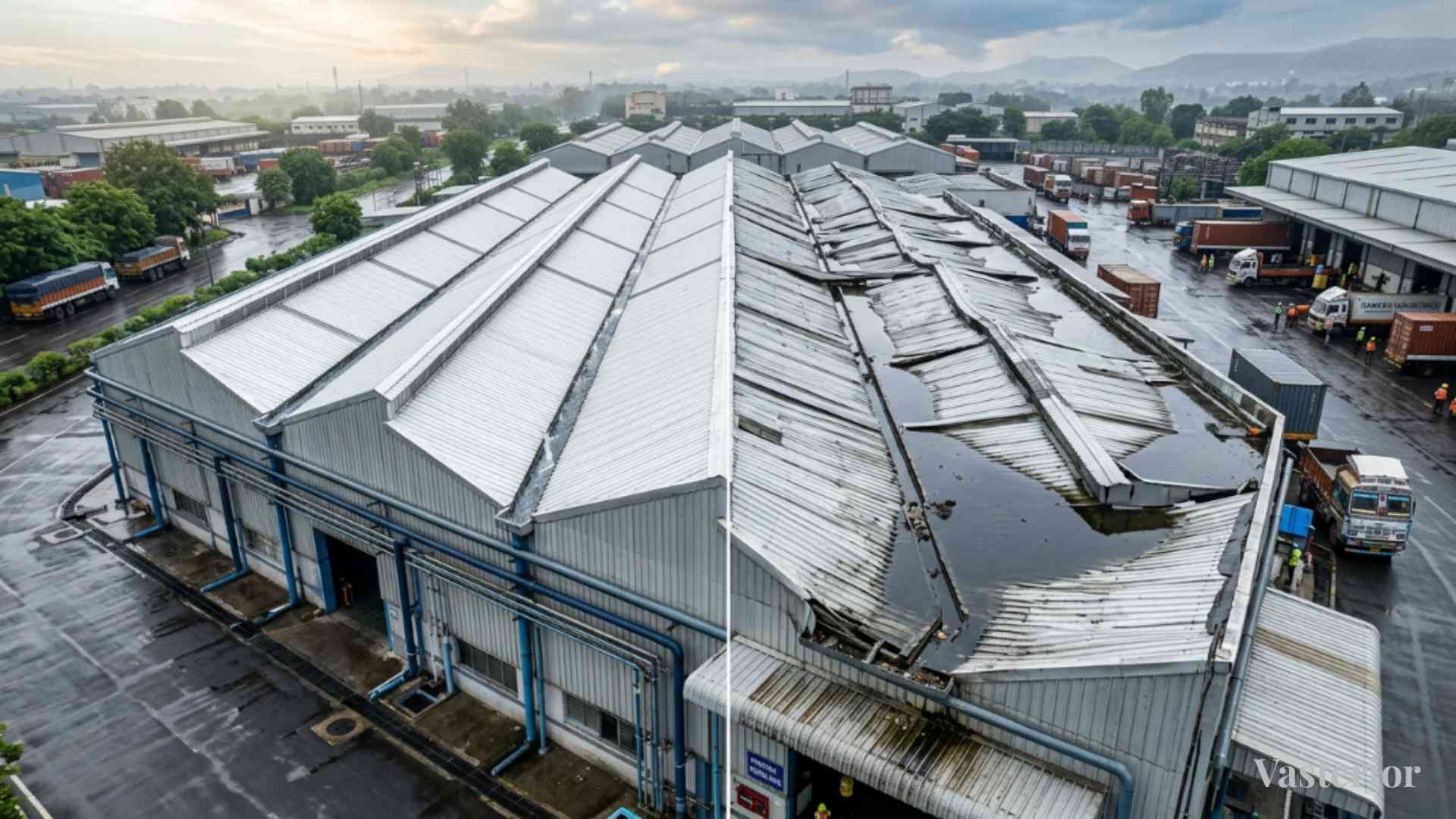
This is one of the most overlooked aspects of Industrial Vastu. And ironically, it is also one of the most powerful. Most factory owners focus on structural durability when designing industrial sheds. Very few consider how slope direction affects energy movement within the plot.
- Difficulty retaining profits
- Rising unnecessary expenses
- Weak financial stability
- Cash flow irregularities
- Frequent resource wastage
According to MahaVastu principles, slope direction directly influences the movement of both water and symbolic financial energy. In industrial architecture, water flow represents movement of opportunity, liquidity, cash flow, and retention capability.
If the factory shed slope encourages energetic drainage from unfavourable directions, businesses may experience persistent financial friction.
Ideal Shed Slope Direction According to MahaVastu
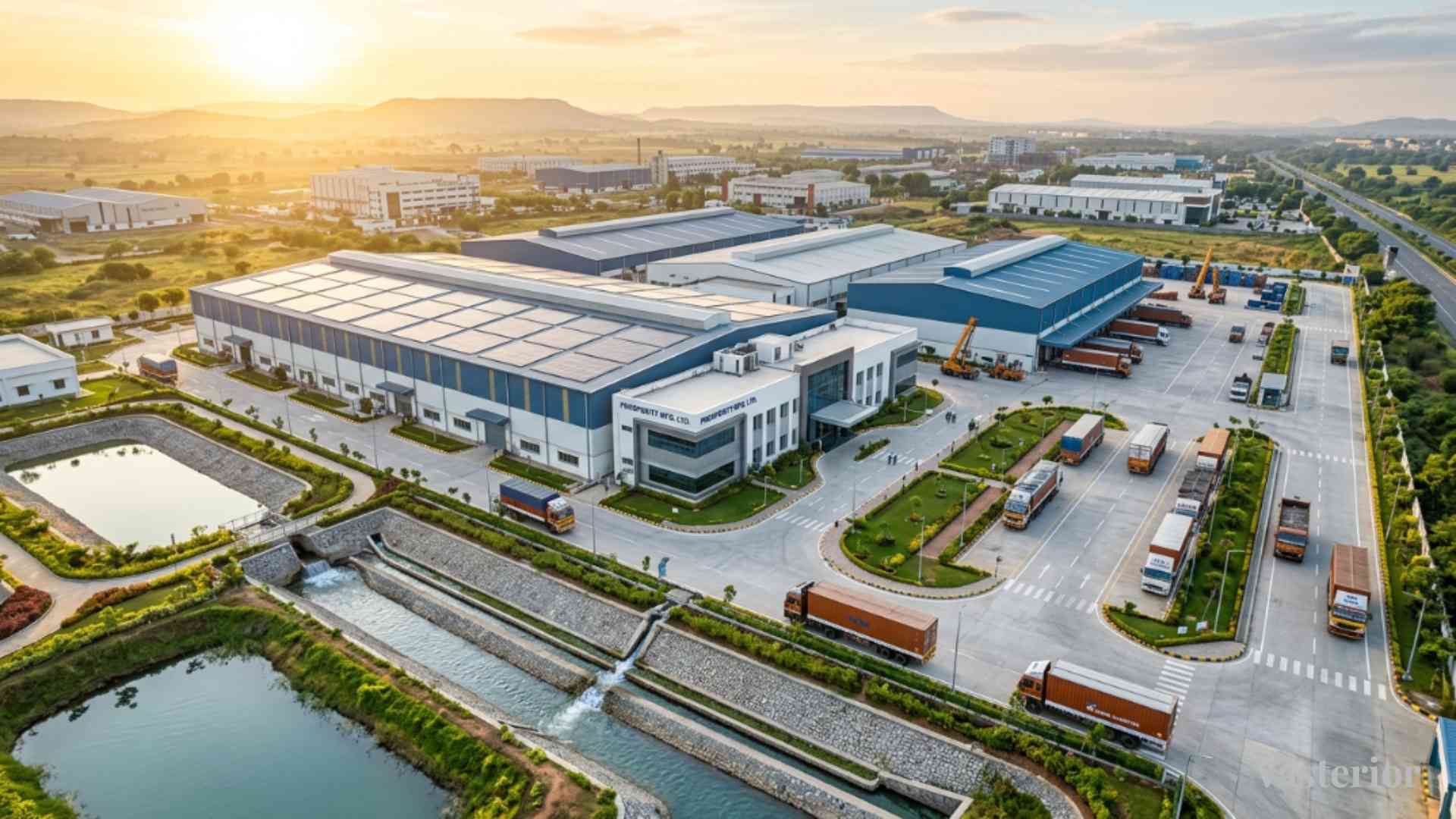
In many industrial layouts, a slope towards the North or East is considered energetically beneficial because these directions are associated with growth, expansion, opportunity, and incoming movement. A factory that allows lighter energy movement in these zones often feels more progressive and operationally fluid.
- Water accumulation in the South-West may symbolically weaken stability
- Incorrect roof drainage may amplify energetic heaviness
- Uneven industrial elevations may disrupt workflow harmony
- North and East slopes support expansion energy and financial movement
- South and West elevations provide structural grounding and stability
From an architectural perspective, slope planning also impacts natural light distribution, heat movement, water management, and environmental comfort. So the logic is not merely symbolic. It is functional too.
A Realistic Industrial Scenario
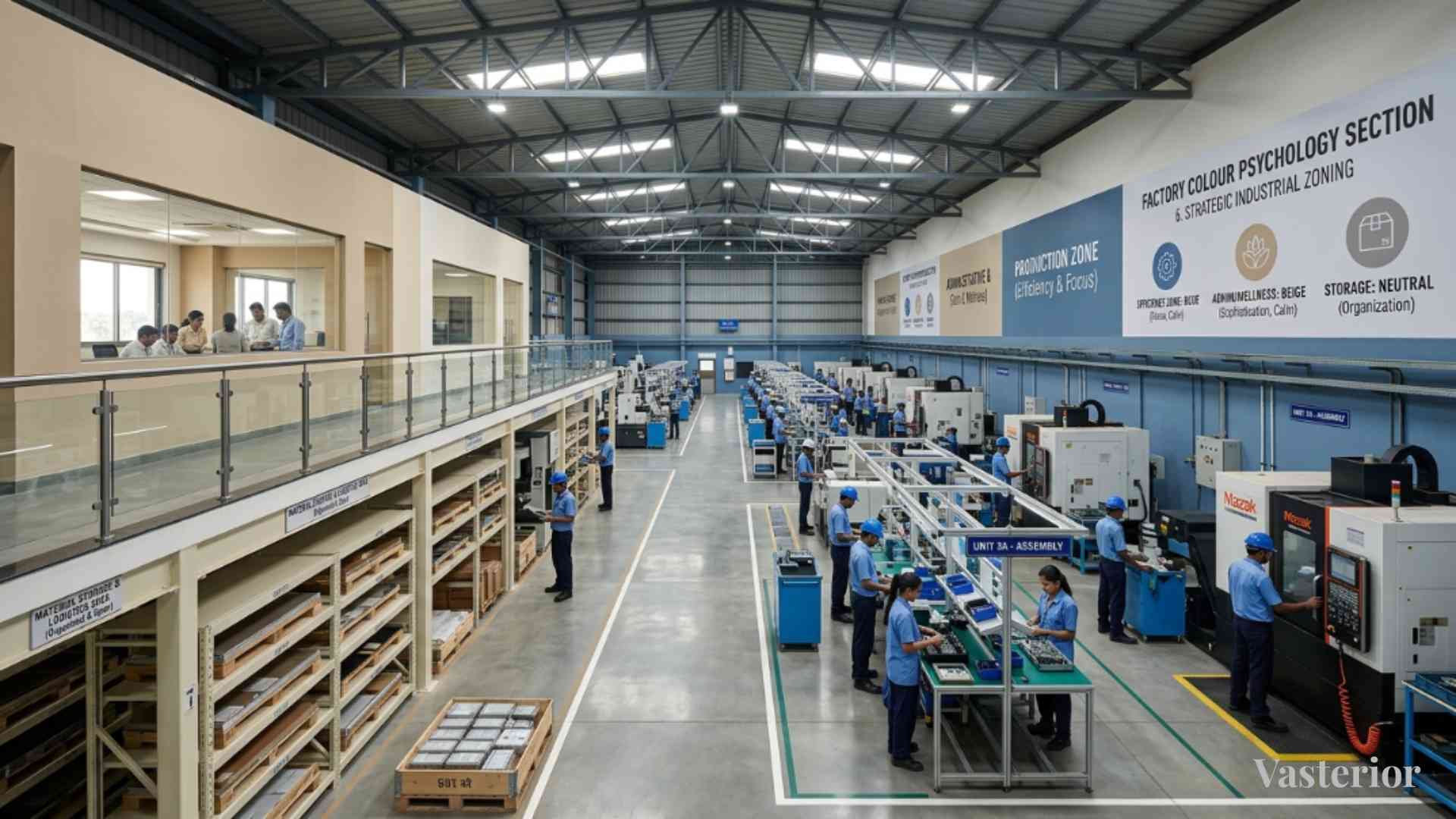
Consider two factories manufacturing similar products.
Factory A has better directional planning, proper zoning, correct drainage slope, balanced colour psychology, strong North-East openness, and stable South-West structure. Factory B ignores these aspects entirely.
Over time, Factory A experiences smoother workflow, stronger employee retention, and greater operational consistency. Factory B constantly faces internal friction despite investing heavily in systems and manpower.
This is where spatial alignment becomes a competitive advantage. Not because Vastu is magical. But because environments shape human behaviour more than most businesses realise.
Why Factory Colours Matter More Than Aesthetics
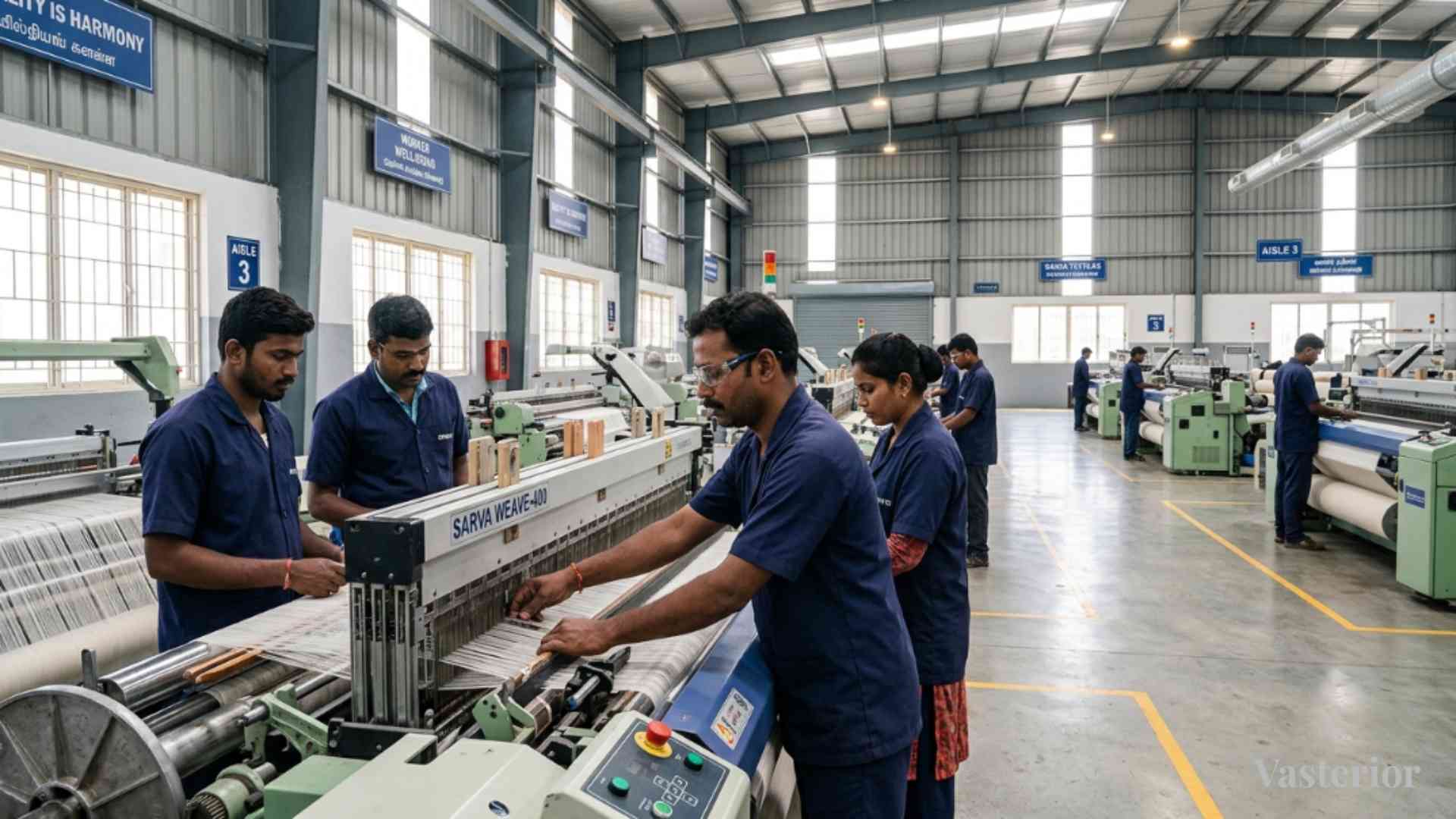
Most industrial colour decisions are made based on trends, branding, or maintenance convenience. But colours influence psychology, concentration, energy levels, emotional response, and even perceived temperature within a workspace. In Industrial Vastu, colours are also connected to directional energies.
When selected strategically, colours can support productivity, alertness, coordination, and emotional stability. When selected poorly, they may subconsciously create agitation, lethargy, confusion, or energetic imbalance.
Best Colour Strategies for Factory Spaces
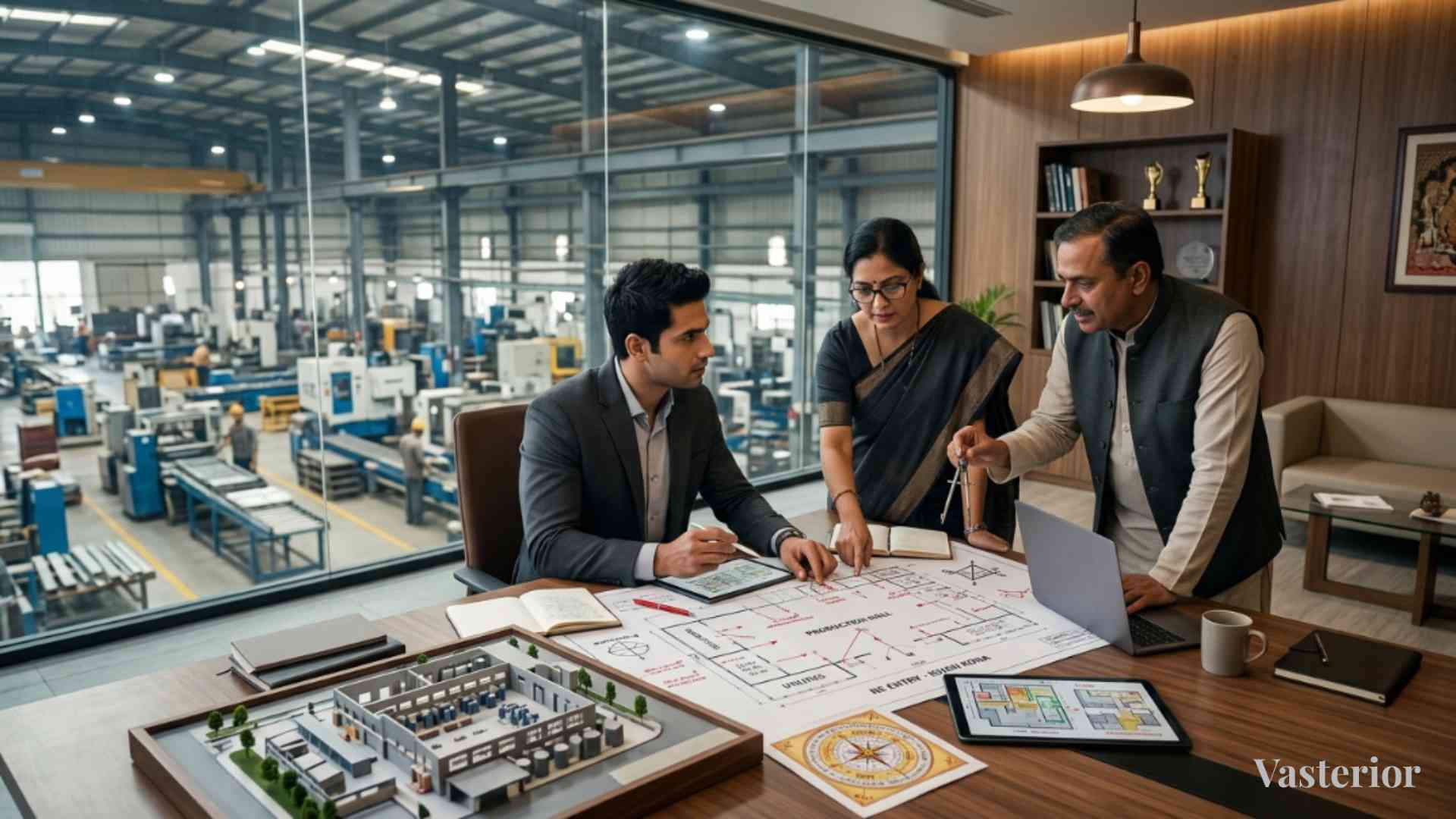
Each functional zone within a factory carries a distinct energetic purpose. Colour selection should support that purpose, not contradict it.
Production Areas
Production zones require alertness, consistency, and focused movement. Soft industrial greens, muted off-whites, balanced earthy neutrals, and controlled light tones often work effectively here. These colours reduce visual fatigue and improve psychological stability during repetitive operational tasks. Overly dark colours may create heaviness and reduce energetic movement. Excessively bright shades may overstimulate workers and increase mental fatigue.
Machinery Zones
Machinery spaces naturally carry heavy energy. These areas benefit from controlled tones that create visual structure without increasing psychological pressure. Industrial greys combined with balanced directional accents can help maintain spatial discipline and reduce visual chaos.
Administrative Offices
Leadership spaces should encourage strategic clarity and grounded decision-making. Warm neutrals, sophisticated beige palettes, subtle wood textures, and balanced directional colours often create stronger cognitive environments. A stressed leadership cabin frequently reflects spatial imbalance before it reflects business imbalance.
Storage and Inventory Areas
Improperly designed storage spaces often lead to stagnant movement. Dark, cluttered, visually compressed zones can subconsciously reinforce inventory blockage and operational delays. Lighter balanced tones with proper directional planning improve movement psychology and visual openness.
Reception and Client Interaction Areas
The entrance experience of a factory shapes perception instantly. Clients may not understand Vastu principles, but they absolutely sense energy. A well-balanced reception area communicates professionalism, confidence, order, and growth.
Direction-Based Colour Alignment
- Eastern zones often benefit from lighter energising tones that support clarity and fresh momentum
- Northern zones may respond well to fresh balanced palettes aligned with financial movement
- Southern zones require controlled grounding energies for structural stability
- Western zones may need stabilising visual balance to prevent energetic scattering
The goal is not to blindly apply colours based on superstition. The goal is energetic harmony through intelligent environmental design.
Industrial Spaces Are Psychological Systems
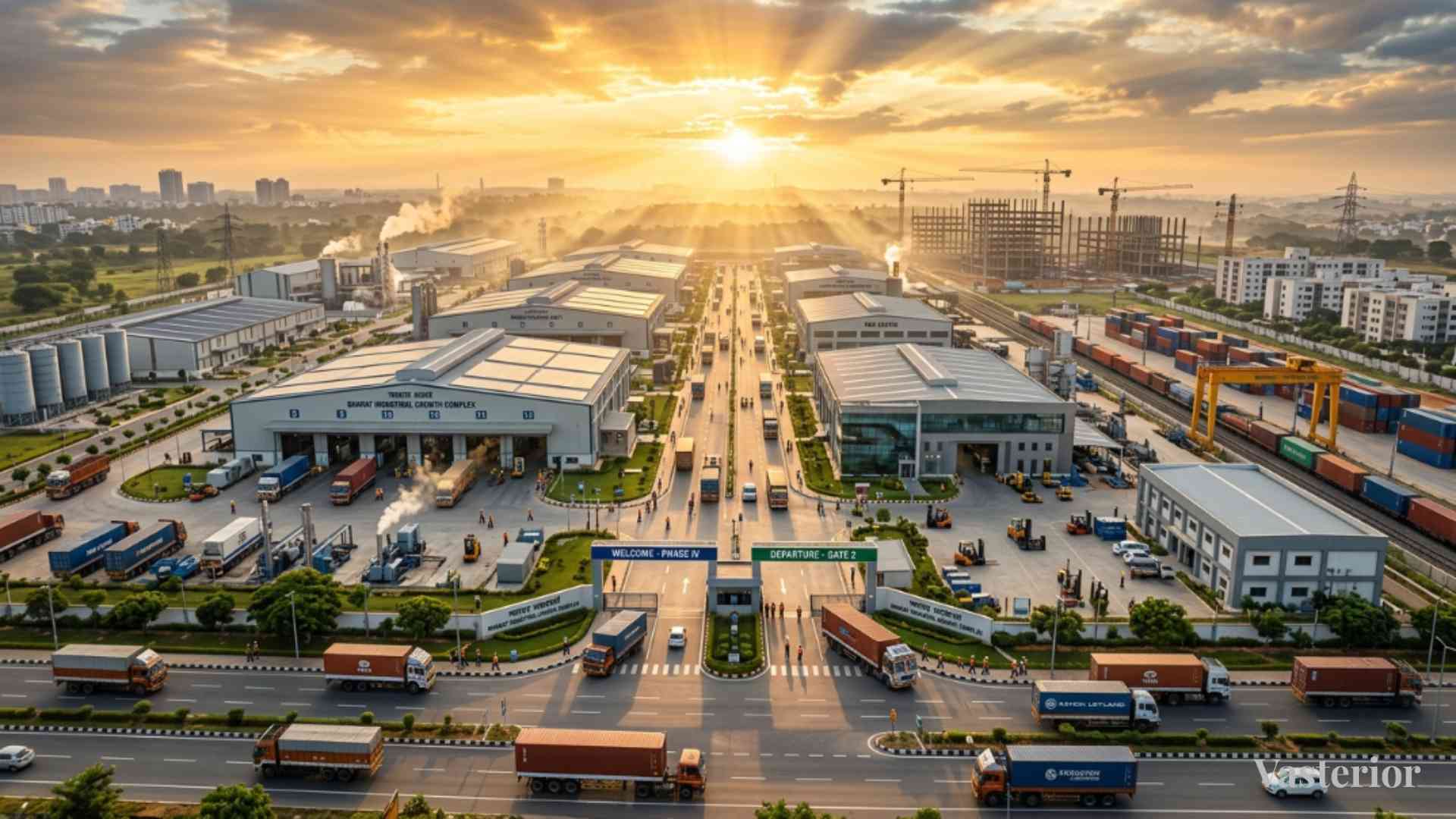
One uncomfortable truth many business owners avoid is this: People do not merely work inside spaces. Spaces work on people.
- Employee behaviour
- Mental clarity
- Leadership confidence
- Team coordination
- Motivation levels
- Stress tolerance
- Decision speed
This is why spatial planning matters. When energy movement feels chaotic, businesses often experience emotional and operational chaos simultaneously. When spaces feel aligned, businesses tend to function with greater consistency and confidence.
Modern Entrepreneurs Are Thinking Differently About Vastu
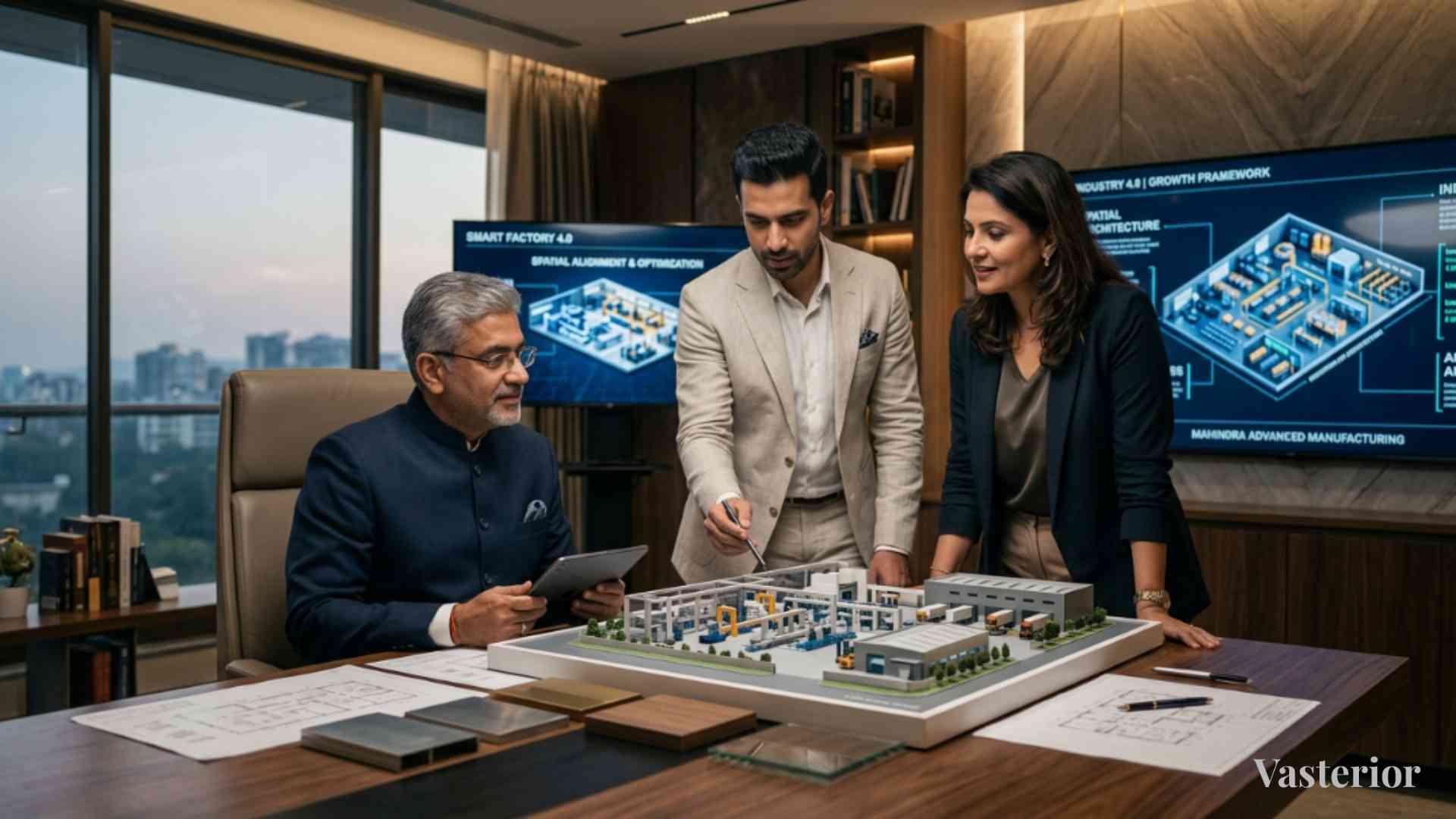
A new generation of industrialists no longer sees Vastu as blind ritualism. They see it as environmental optimisation. Just as companies now invest in ergonomics, biophilic architecture, workplace psychology, and wellness-driven design, MahaVastu introduces another layer of intelligent spatial calibration.
The modern entrepreneur understands one thing clearly. If environment affects performance, then environment deserves strategic attention. That mindset is changing the way factories are being designed across India.
Why Industrial Vastu Is Becoming A Business Strategy
Businesses today compete in extremely high-pressure ecosystems. Margins are tighter. Competition is sharper. Operational stress is higher. In such an environment, even small improvements in clarity, productivity, employee retention, and energy flow can create measurable business impact.
- Spatial optimisation
- Workflow enhancement
- Environmental psychology
- Leadership stability
- Energetic coherence
- Long-term scalability
Industrial Vastu is no longer only about good luck. It is increasingly becoming a structured business strategy. The smartest factory owners are not waiting for complete breakdown before reassessing their spaces. They are proactively aligning their environments for sustainable growth.
The Biggest Mistake Factory Owners Make
Most businesses only focus on expansion externally. Bigger machines. Bigger teams. Bigger targets. But very few ask: Is my existing space even supporting the growth I am chasing?
A factory can either amplify momentum or quietly resist it. And often, the signs appear long before the numbers do. The fatigue. The delays. The recurring conflicts. The constant feeling of resistance.
Sometimes, the issue is not effort. Sometimes, the issue is alignment.
Final Thoughts
Factories are not just production units. They are energetic ecosystems where people, machinery, decisions, movement, ambition, and pressure interact every single day.
When these ecosystems are directionally aligned, businesses often experience greater stability, smoother operations, stronger morale, and improved financial consistency. When they are not, the effects may quietly accumulate over years.
At Vasterior, Industrial Vastu is approached through the lens of intelligent design, modern architecture, luxury spatial planning, and practical business understanding. The focus is not fear. The focus is alignment.
For factory owners, industrial developers, and manufacturing leaders exploring how spatial energy may be affecting operational performance, Vasterior offers deeply customised guidance rooted in MahaVastu principles and modern design intelligence.
A thoughtful conversation can often reveal what years of operational stress could not. You may connect discreetly with the Vasterior team on +91 9100883355 or write to info@vasterior.com to explore how your industrial space can evolve into a more aligned, efficient, and growth-oriented environment.