
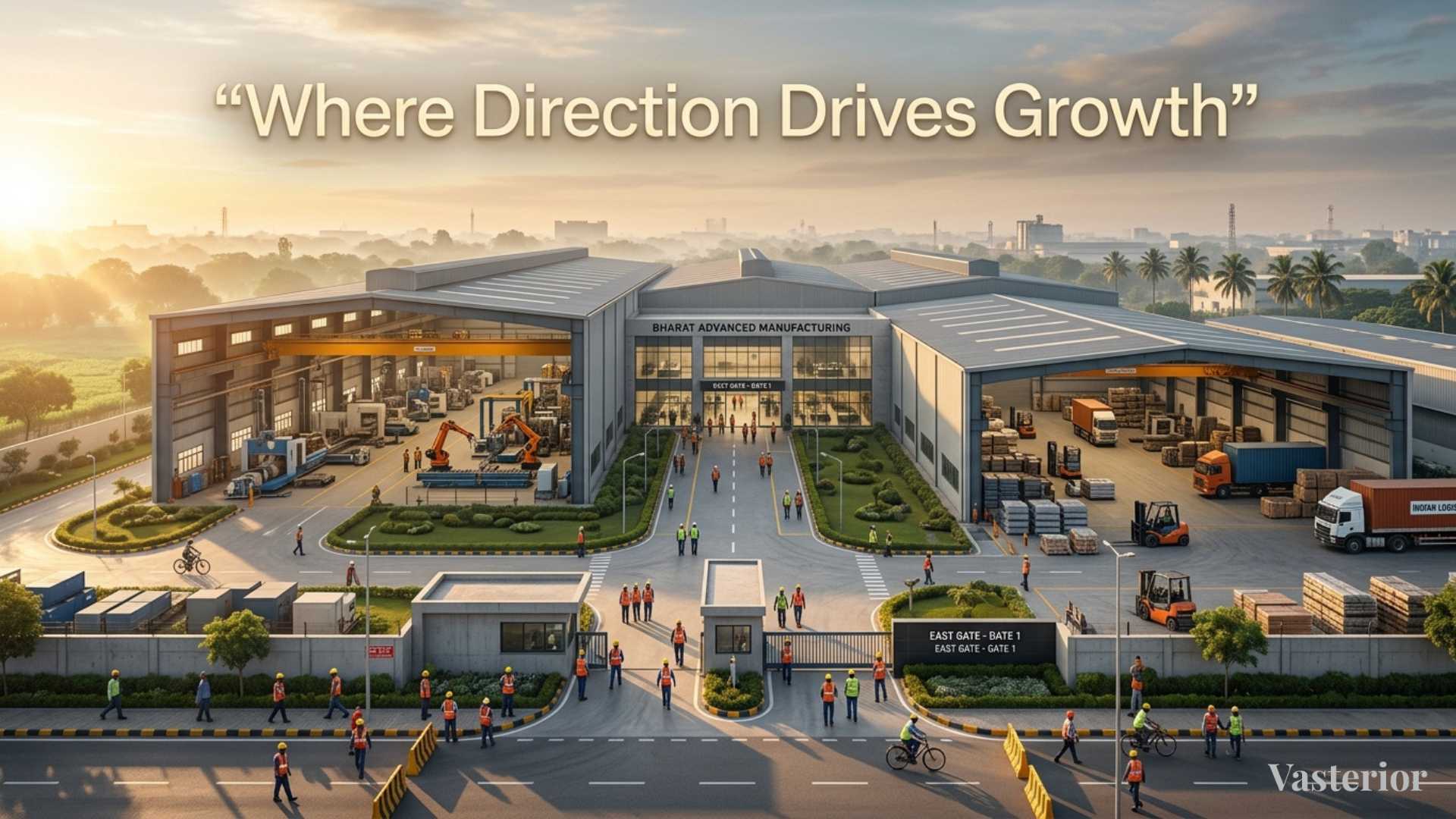
In 2026, building a successful factory is no longer just about machinery, manpower, and margins. There is a quieter force shaping outcomes behind the scenes, one that seasoned industrialists are increasingly paying attention to. That force is spatial energy. The way a factory is positioned, oriented, and internally structured can directly influence workflow efficiency, financial stability, and even team morale.
This is where Factory Vastu Directions 2026 becomes more than a traditional concept. It evolves into a strategic advantage.
At Vasterior, the approach to Vastu is not rigid or outdated. It is refined, design-led, and aligned with how modern industrial spaces actually function. The goal is not just compliance, but optimisation. When direction meets design intelligence, businesses do not just operate. They expand with intent.
Why Factory Direction Matters More in 2026
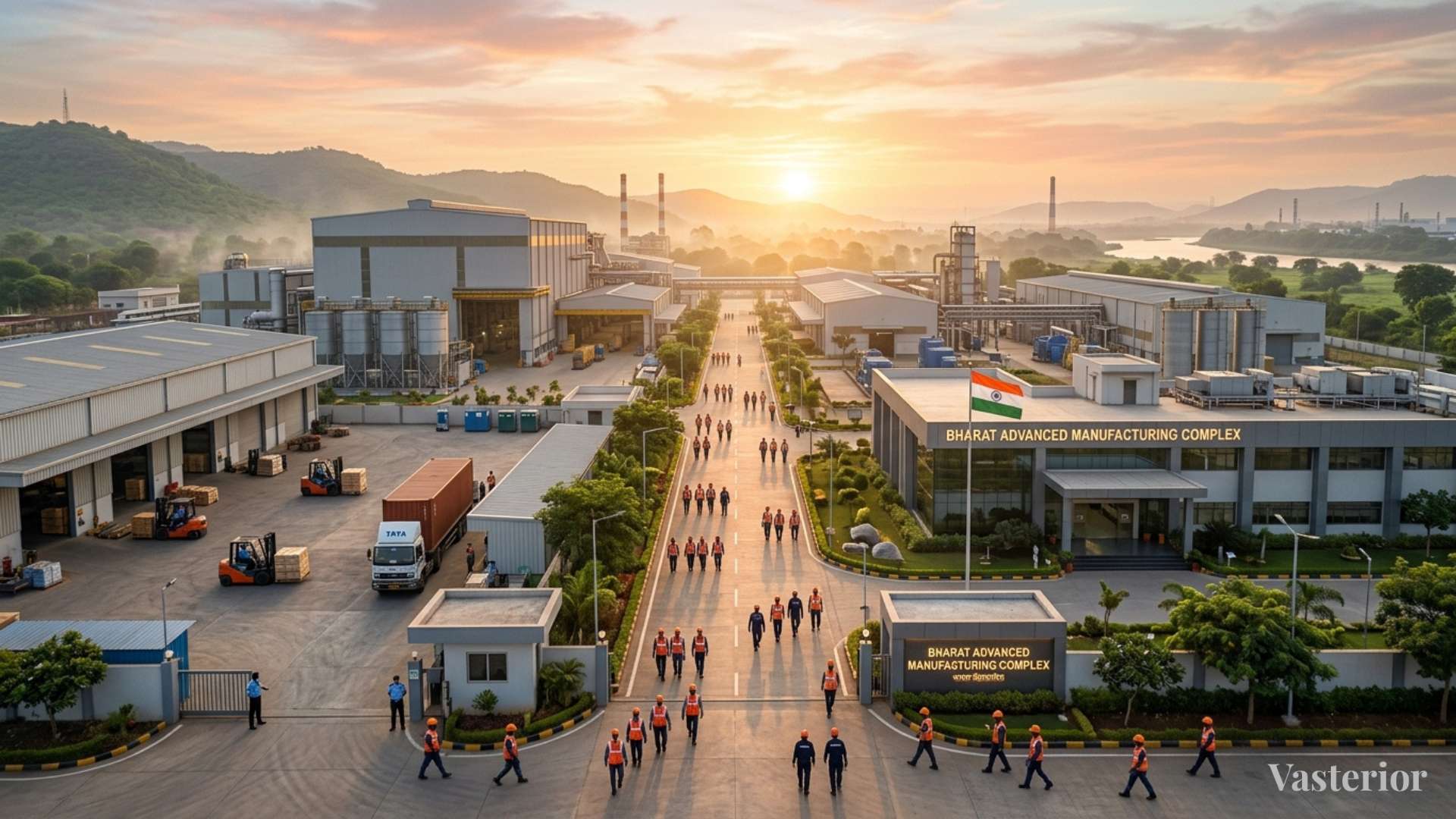
Industrial ecosystems have changed. Automation, high-speed production cycles, and energy-intensive operations demand environments that support precision and consistency. What many overlook is that spatial alignment plays a subtle but powerful role in this equation.
In Vastu, every direction is associated with a specific type of energy. In a factory setting, these energies influence how smoothly operations run, how efficiently resources are utilised, and how stable financial inflow remains.
In 2026, when competition is tighter and margins are smarter, even minor inefficiencies compound over time. A poorly aligned entrance, an incorrectly placed heavy machinery zone, or mismanaged storage direction can quietly disrupt flow. Not in an obvious way, but through delays, recurring issues, and inconsistent output.
Industrial Vastu bridges this gap. It aligns traditional directional wisdom with modern factory layouts, ensuring that the space supports performance instead of resisting it.
Core Vastu Principles for Factories
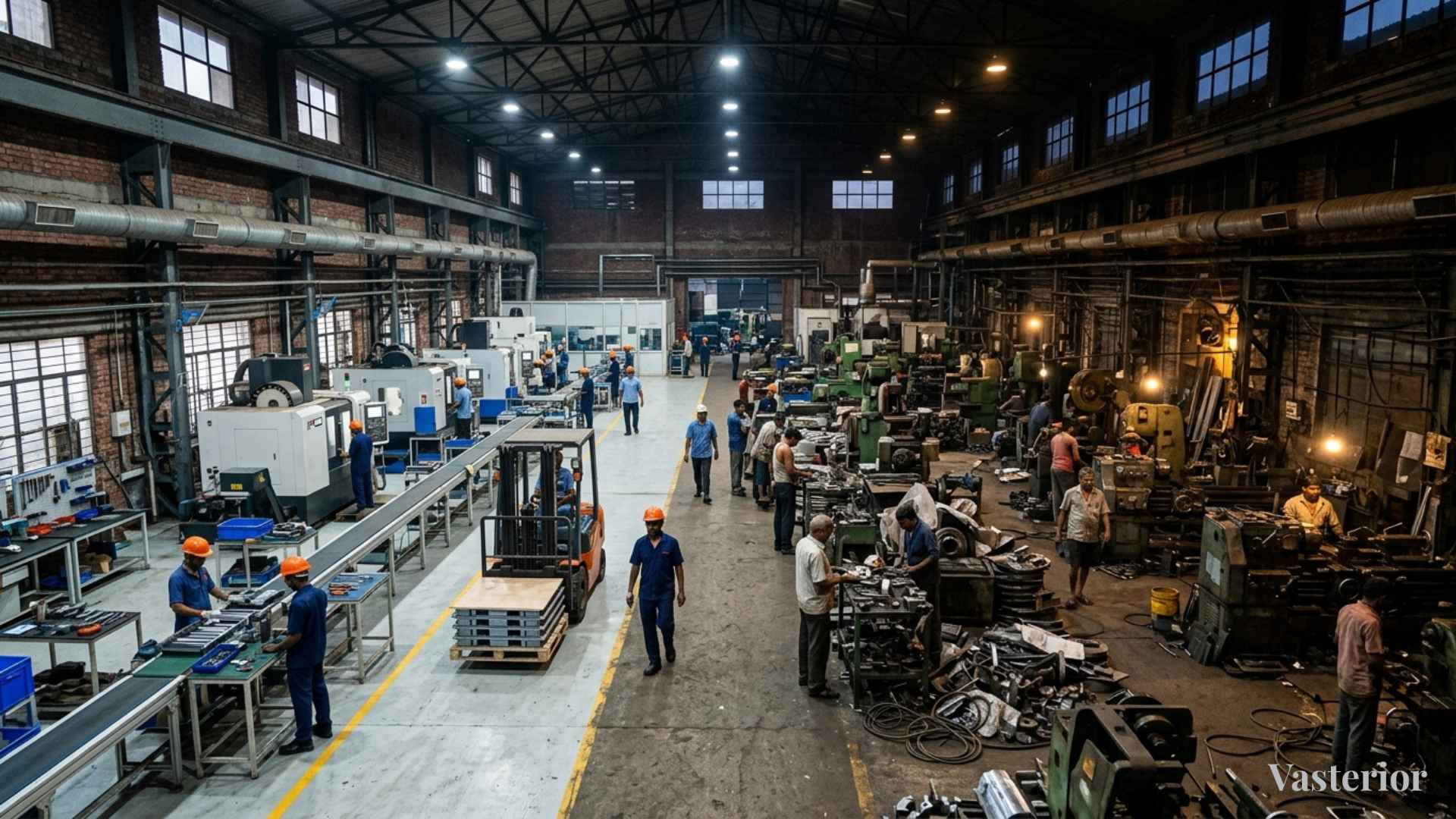
Before diving into specific zones, it is important to understand the foundational logic. Vastu is based on the balance of five elements: earth, water, fire, air, and space. Each direction governs a combination of these elements. When a factory aligns its functions with the natural strengths of each direction, operations become smoother and more predictable.
- North and East are associated with growth, opportunities, and inflow
- South and West provide stability and strength
- South East governs fire and energy, making it critical for machinery and power systems
- North East is sensitive and must remain light and uncluttered
In a factory context, this translates into placing the right function in the right direction rather than forcing convenience-based layouts.
Ideal Directions for Key Factory Zones
Every functional zone in a factory has an optimal directional placement that supports its purpose and performance.
Entrance and Exit
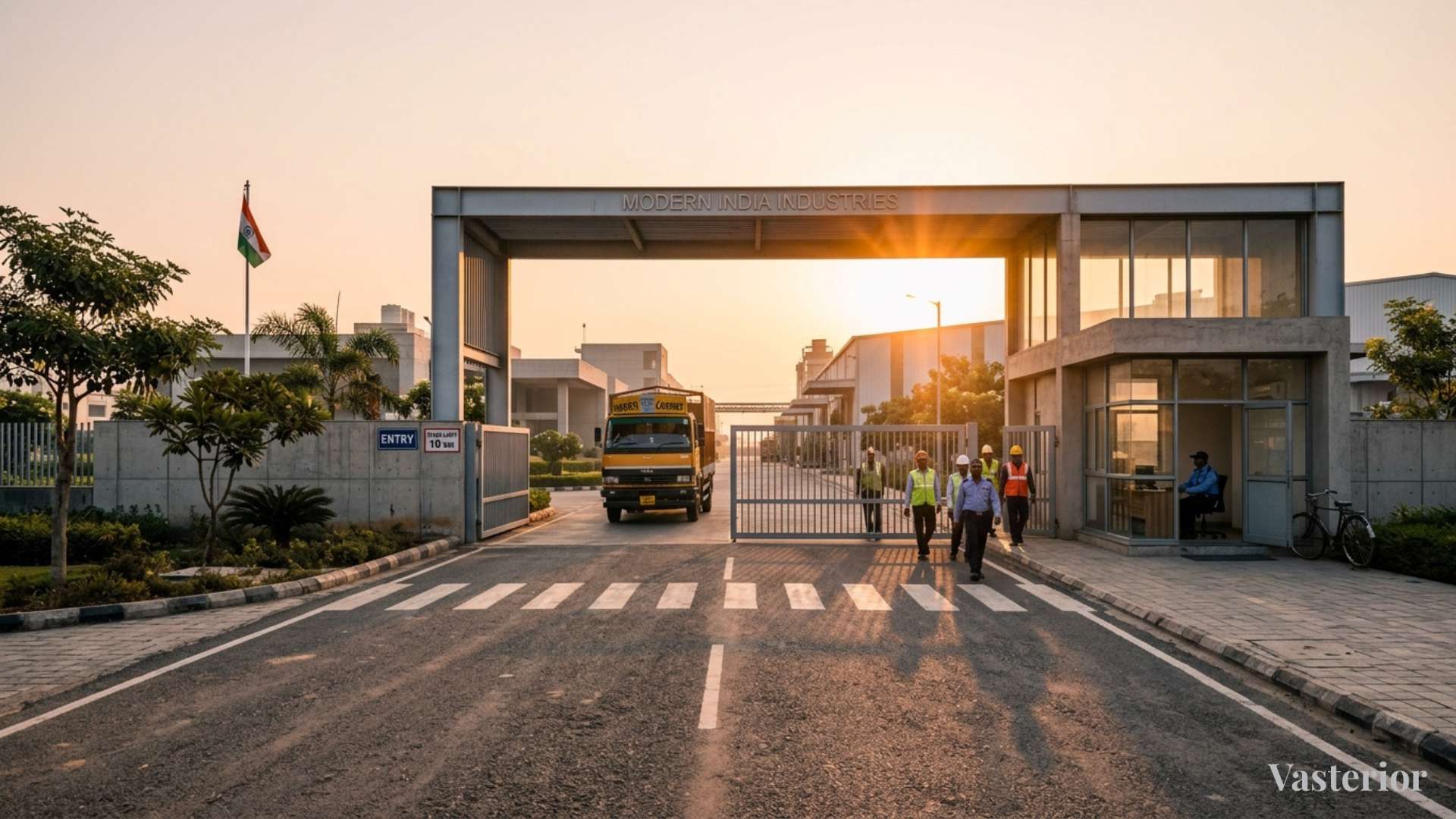
The entrance is where energy enters the premises, both literally and symbolically.
- Ideal directions: North, North East, or East
- Avoid: South West
These directions attract growth-oriented energy and opportunities. A well-designed entrance in these zones encourages smoother business inflow, better client engagement, and stronger market presence.
Avoid placing the main gate in the South West as it may create resistance in growth and decision-making.
In modern factories, even if structural constraints exist, the entrance design can be enhanced through spatial corrections, signage alignment, and movement planning.
Raw Material Storage
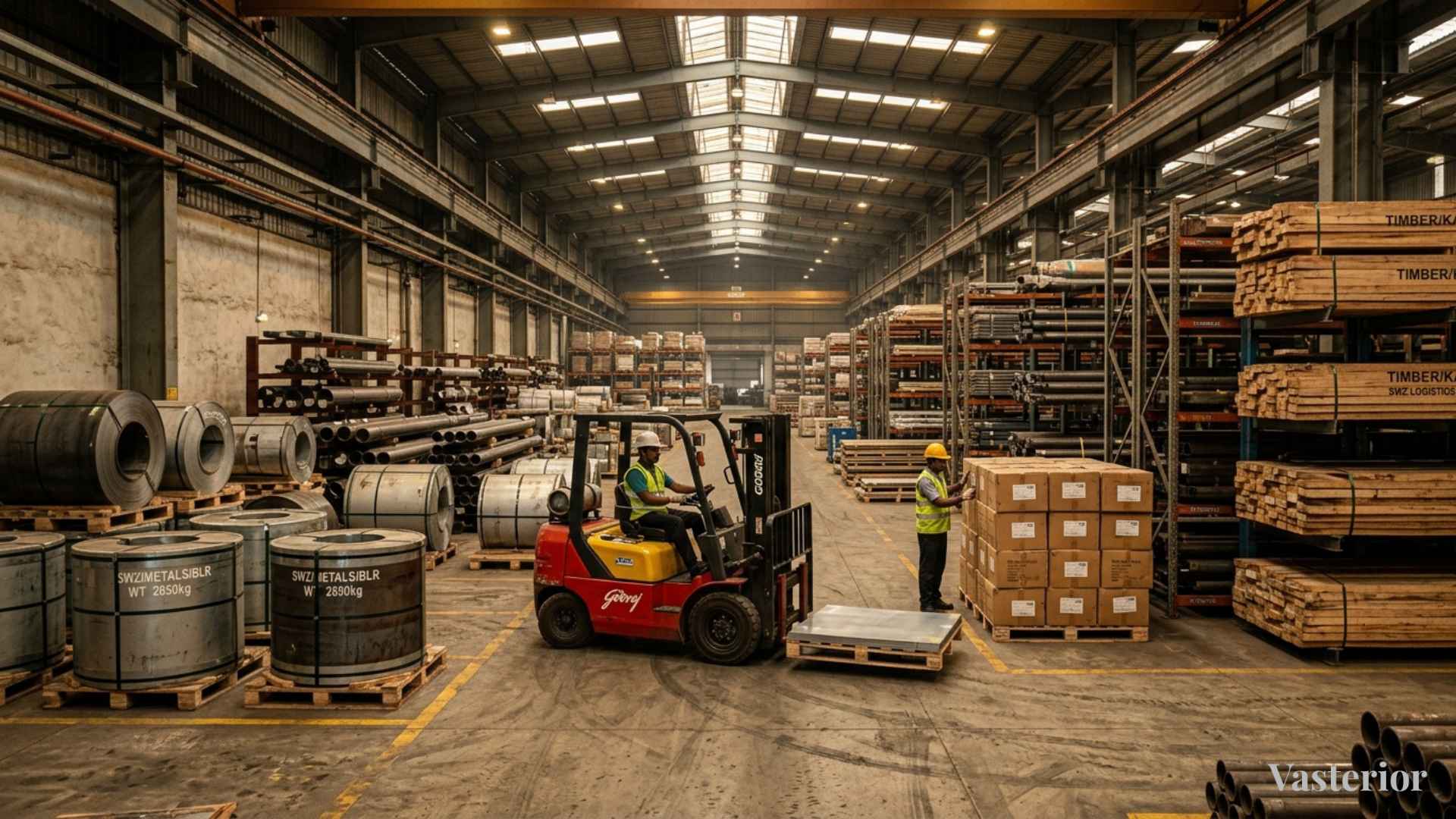
Raw materials represent potential. Their placement should support accumulation without stagnation.
- Ideal directions: South West and West
- Reason: These zones provide grounding energy that ensures stability in supply chains
- Avoid: North East — stacking materials here disrupts natural inflow of opportunities
These zones provide grounding energy, which ensures stability in supply chains and prevents unnecessary wastage or mismanagement.
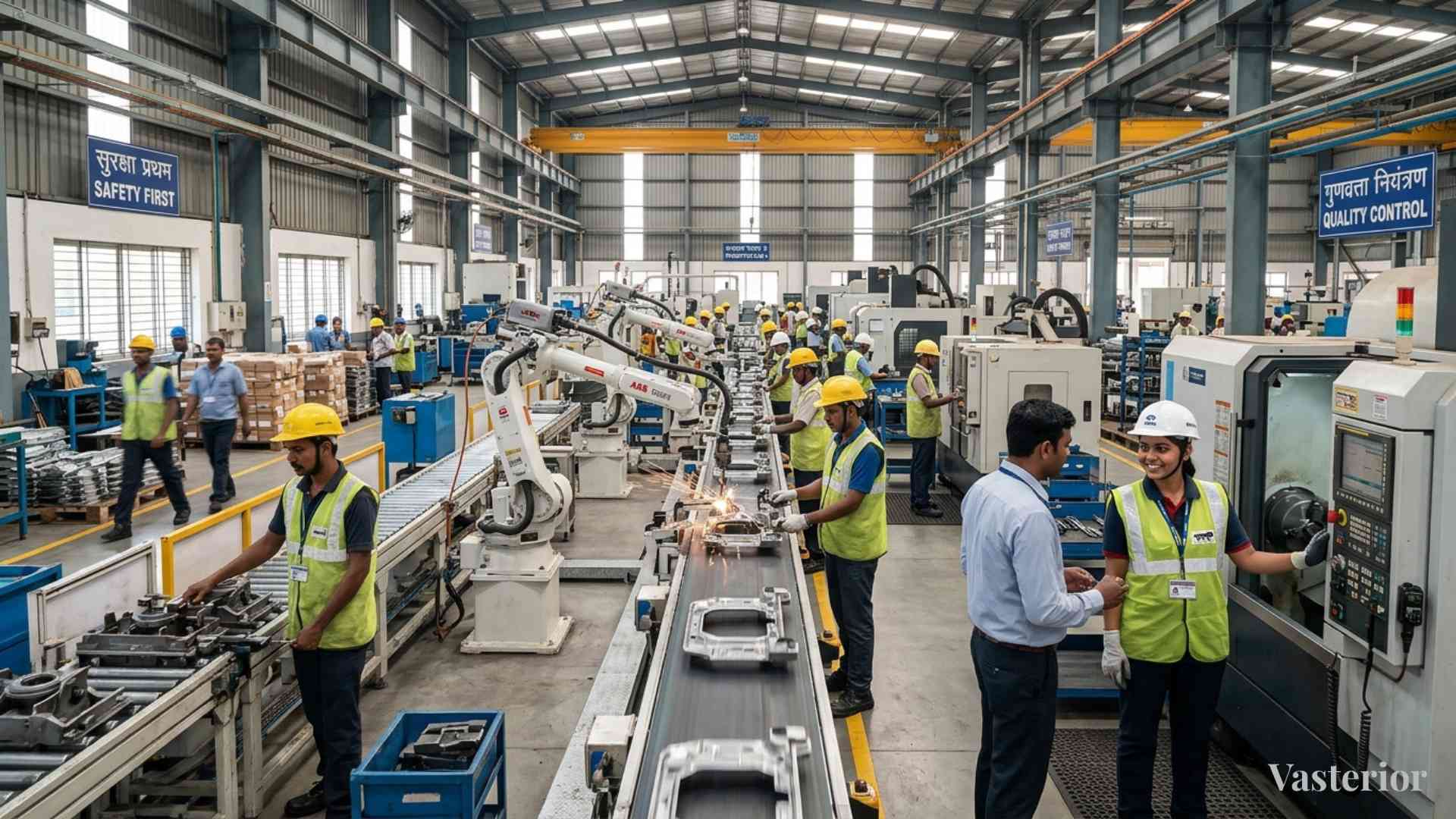
Manufacturing Area
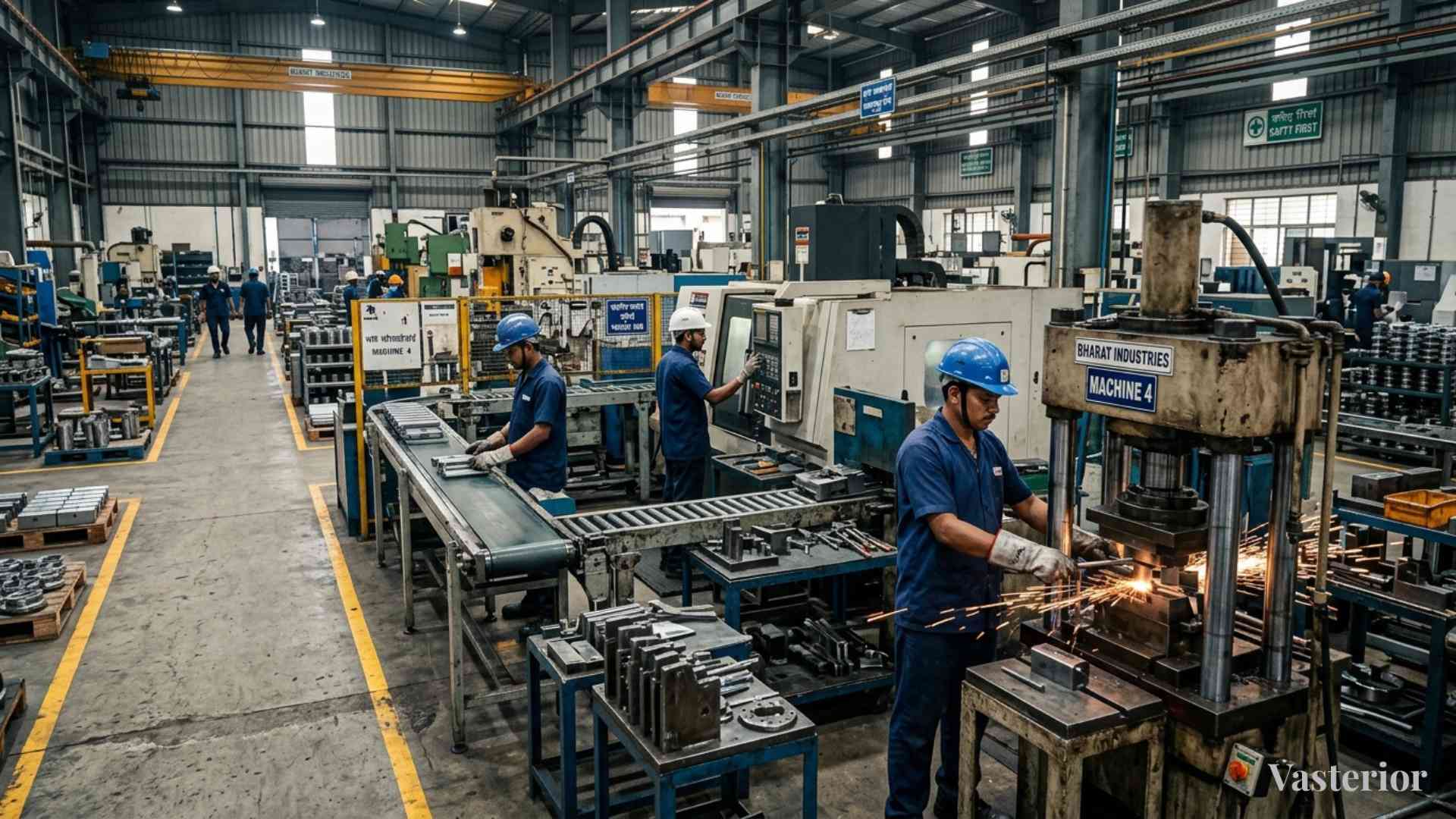
The manufacturing zone is where transformation happens. This area must balance energy flow with operational intensity.
- Ideal placement: South, South West, or West
- Reason: These directions support sustained activity and provide the strength required for continuous production cycles
In 2026, with semi-automated and fully automated lines, ensuring directional alignment in this zone enhances consistency and reduces unexpected breakdown patterns.
Machinery Placement
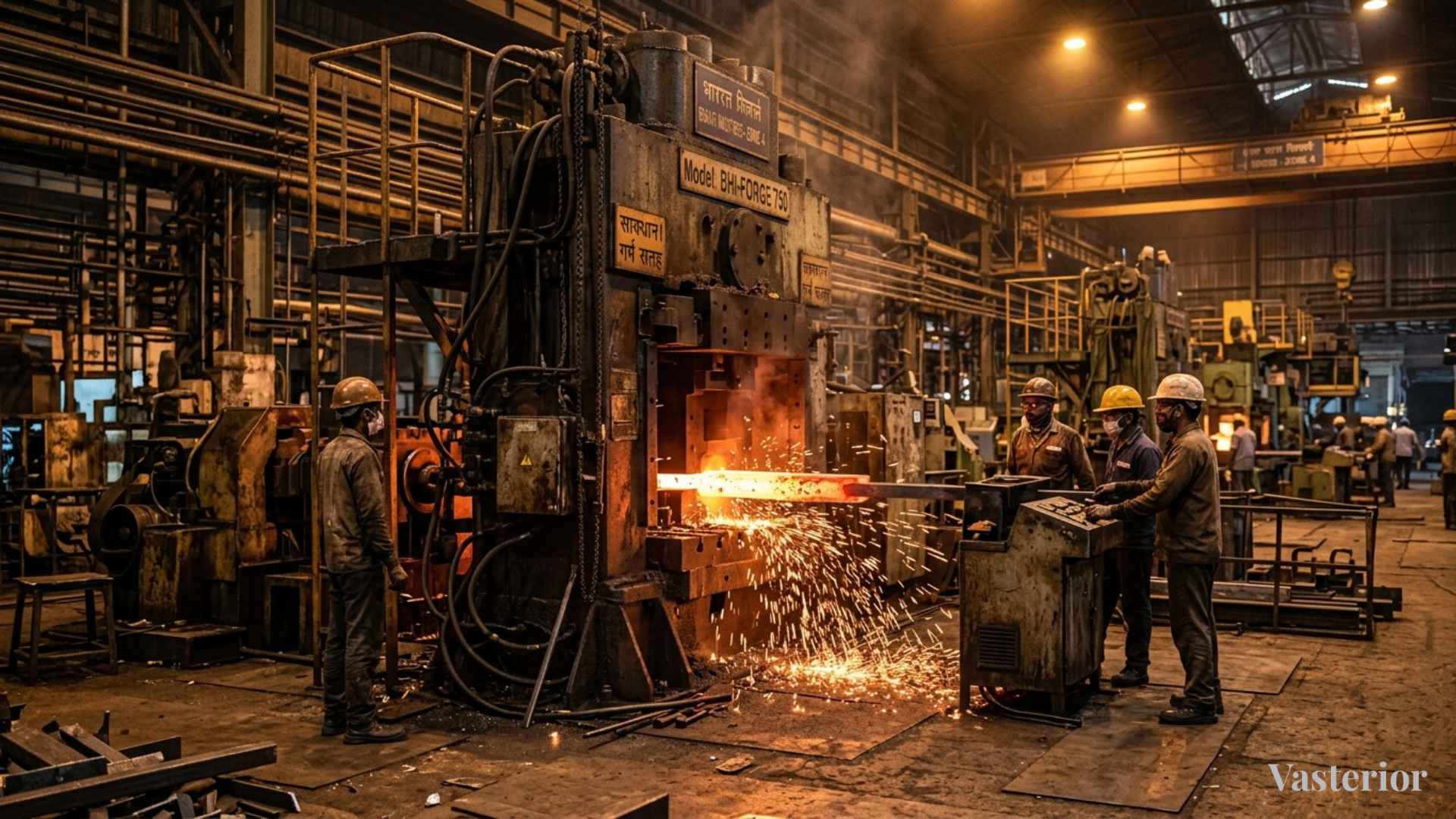
Heavy machinery is closely linked with the fire and earth elements.
- Heat-generating and electrical equipment: South East — governs fire energy
- Large, weight-bearing machines: South West — anchors the structure energetically
- Avoid: North East — creates energetic imbalance and may lead to operational inefficiencies
Improper placement of machinery often leads to recurring maintenance issues, reduced equipment lifespan, and inconsistent operational output.
Finished Goods Storage
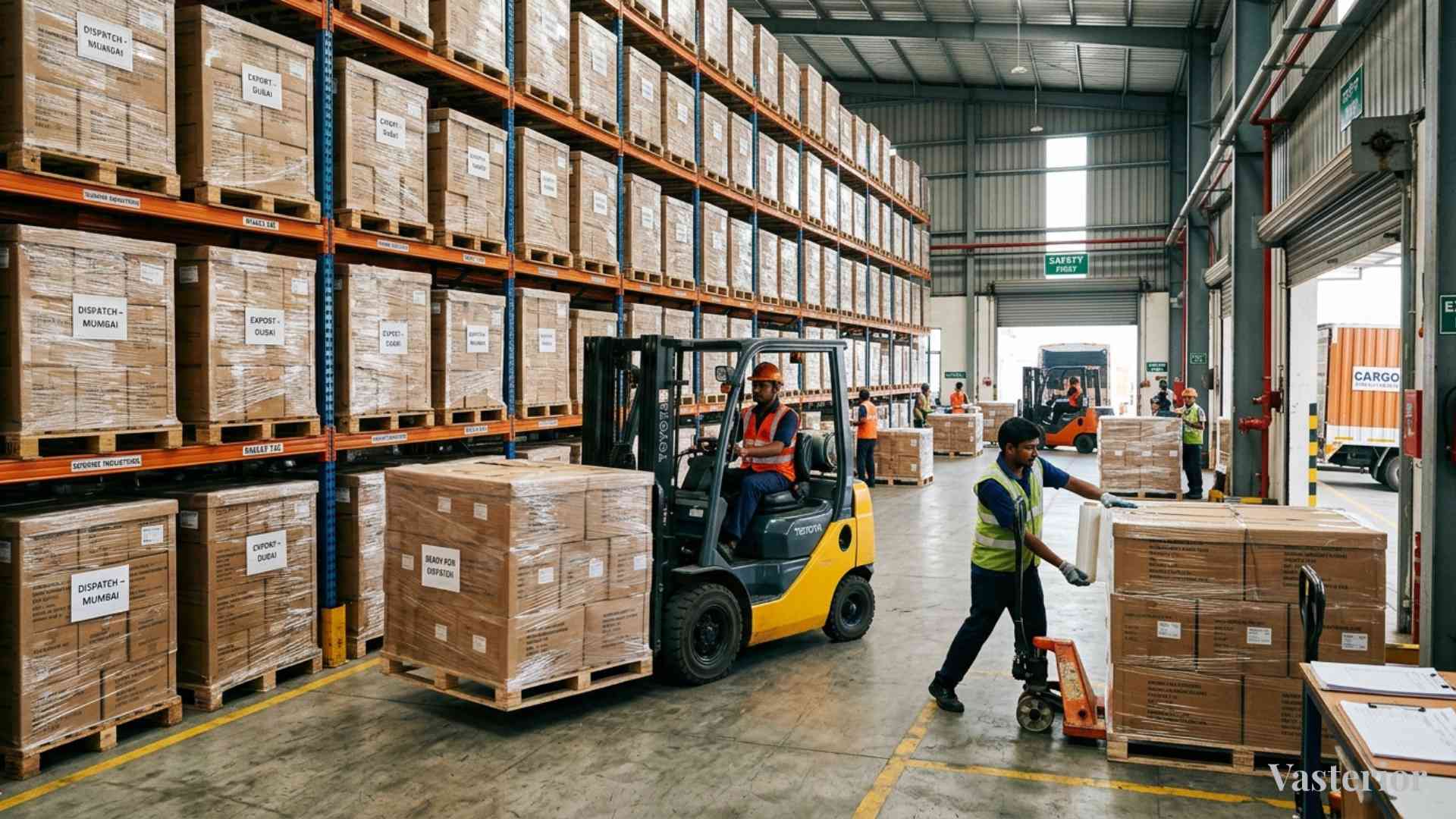
Finished goods symbolise outcomes and revenue.
- Ideal directions: North West or West
- Reason: These zones facilitate movement and dispatch
- North West in particular supports circulation and logistics, making it ideal for dispatch-ready inventory
Keeping finished goods in stagnant zones delays delivery and cash flow.
Office and Administration
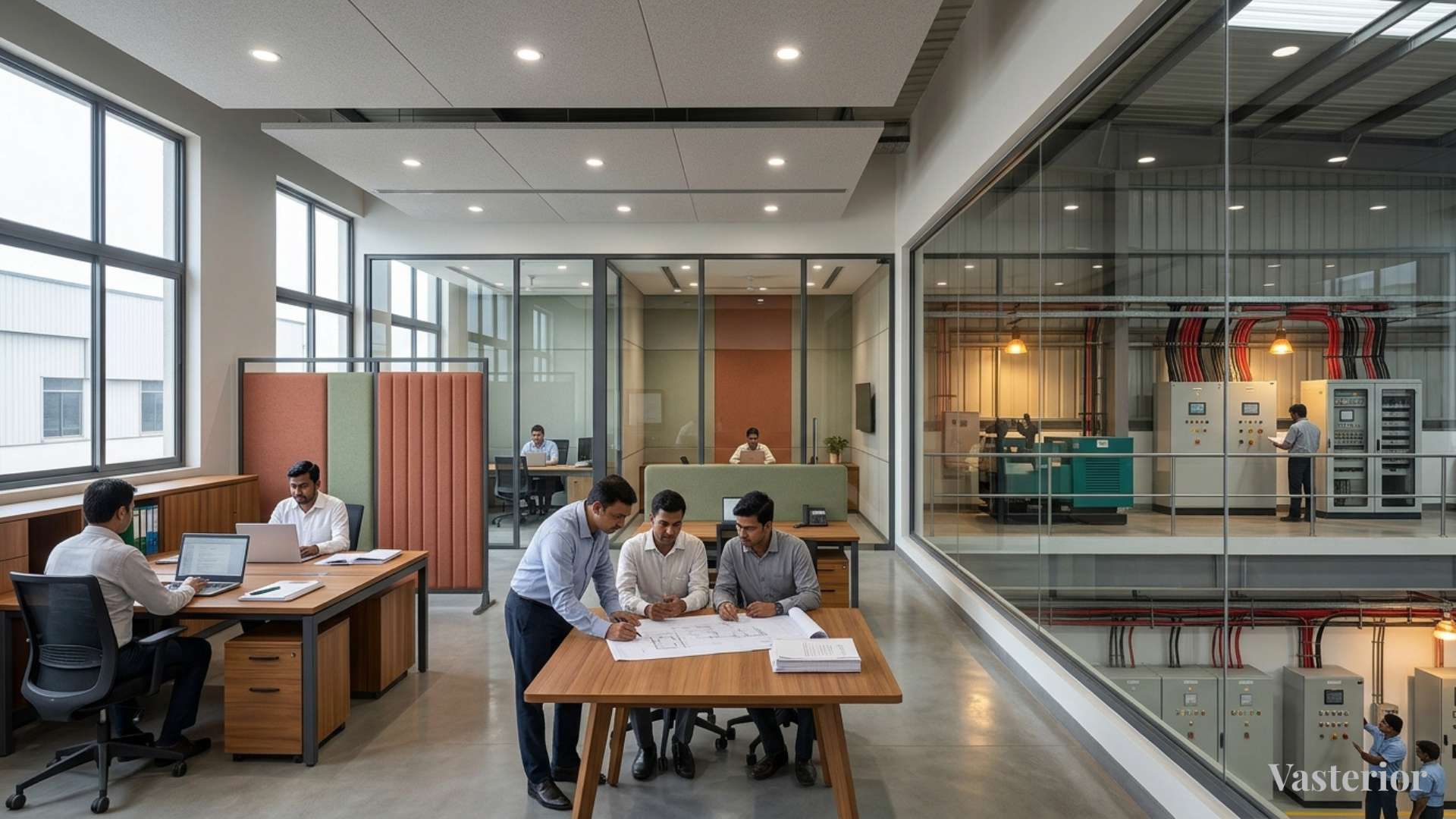
The administrative block controls decision-making, planning, and management flow.
- Ideal placement: North or East directions
- Owner and leadership seating: Facing North or East while working
These zones enhance clarity, strategic thinking, and communication. Facing North or East aligns leadership with opportunity-driven energy.
Utilities and Electrical Systems
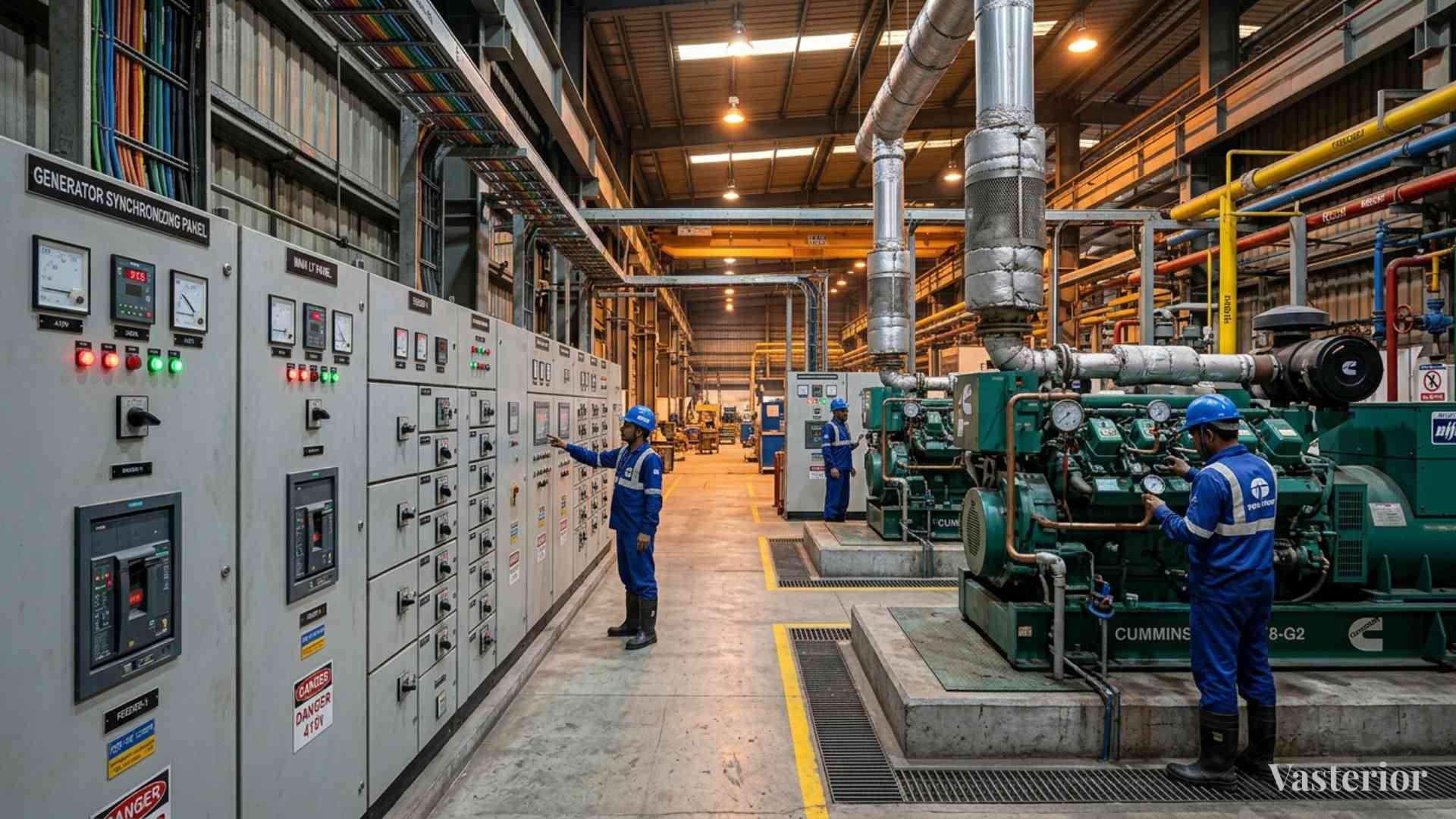
Utilities such as generators, boilers, and electrical panels have a clear directional preference.
- Ideal placement: South East
- Reason: This direction governs fire and energy
Improper placement of utilities often leads to recurring technical issues, higher maintenance costs, and inconsistent performance.
Common Mistakes Factory Owners Make
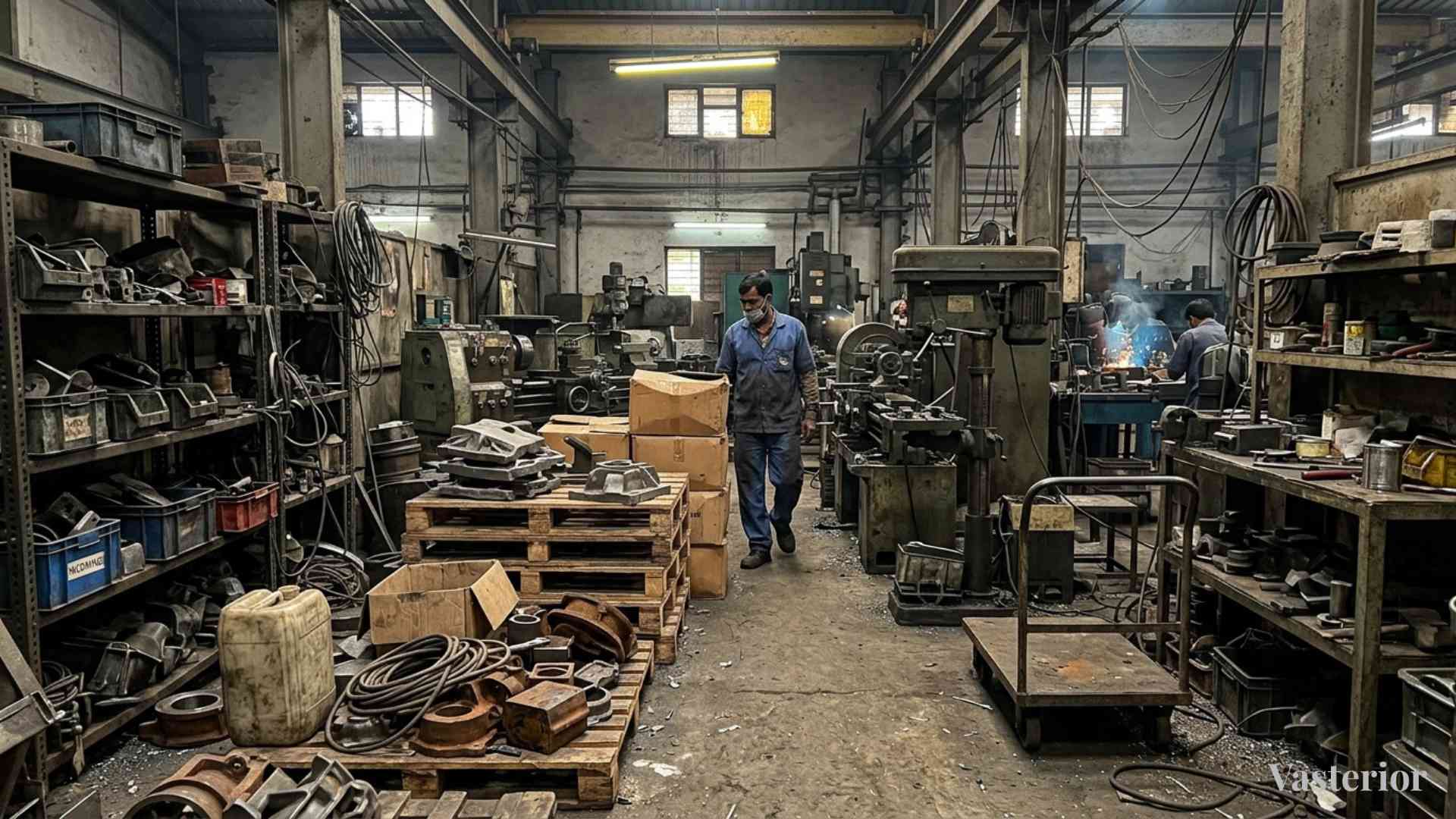
One of the most frequent mistakes is designing purely for convenience without considering directional impact. It may seem efficient initially, but over time, misalignment shows up in subtle disruptions.
- Overloading the North East with storage or heavy structures — this zone needs openness
- Blocking North direction restricts the inflow of growth energy
- Ignoring entrance alignment — the entrance sets the tone for everything that follows
- Treating Vastu as an afterthought — structural limitations make late corrections more complex
- Mixing fire and water element zones without proper spatial separation
These mistakes do not always cause immediate damage, but they create long-term inefficiencies that compound over time.
Quick Vastu Checklist for Factory Owners
A practical reference for factory owners who want to audit their current layout or plan a new one.
- Ensure that the main entrance is aligned towards North, East, or North East for optimal inflow of opportunities
- Keep the North East zone light, clean, and free from heavy storage or machinery
- Position heavy machinery in the South East or South West depending on function and weight
- Use the West and South West for raw material storage to maintain stability
- Place finished goods in the North West for smoother dispatch cycles
- Align administrative offices towards North or East to enhance clarity and decision-making
- Position electrical and heat-generating systems in the South East to align with fire energy
Running through this checklist regularly helps identify misalignments before they translate into operational friction.
Real-World Impact of Correct Factory Vastu
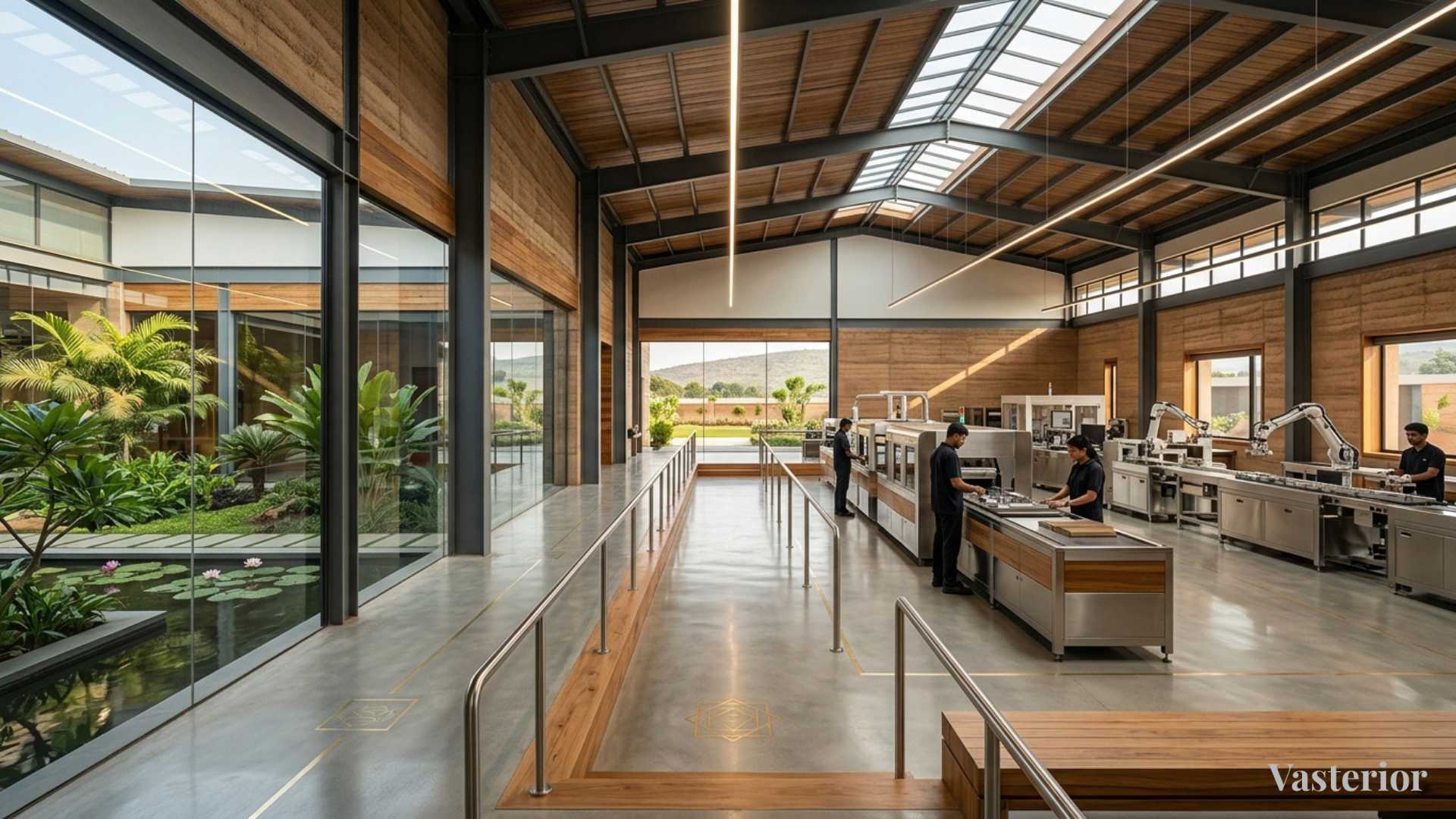
When a factory is aligned correctly, the changes are rarely dramatic overnight. Instead, they are consistent and cumulative.
- Production cycles become smoother and delays reduce
- Financial flow stabilises over time
- Teams operate with better coordination
- Decision-making becomes sharper
Many business owners describe it as things finally falling into place. That is the effect of an environment that supports operations instead of quietly resisting them.
In 2026, where operational efficiency directly impacts scalability, these subtle shifts create measurable outcomes.
How Vasterior Translates Vastu into Design Excellence
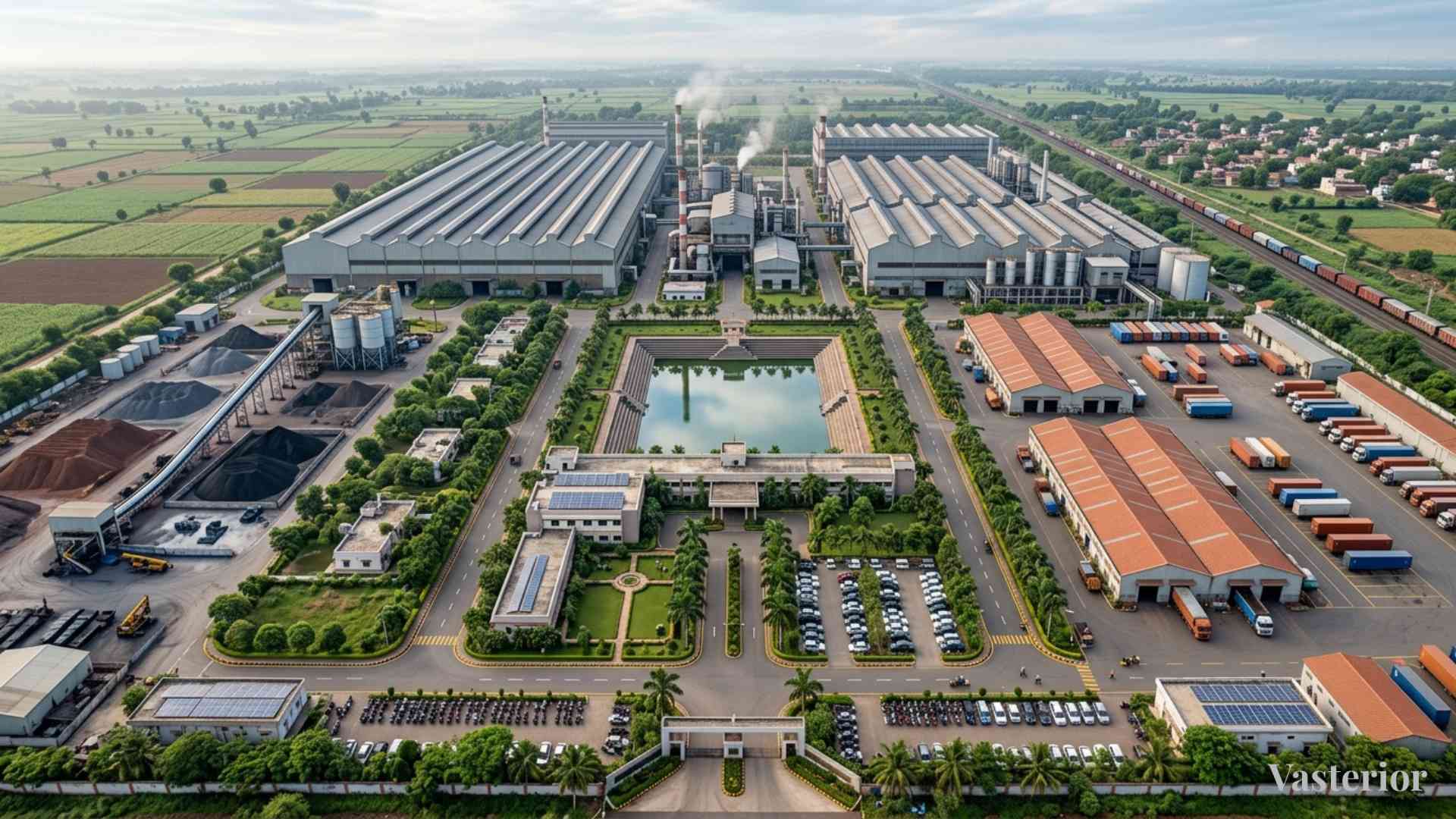
Vasterior does not approach Vastu as a rigid checklist. It treats it as a design language.
The focus is on integrating Vastu principles into layouts that are visually refined, operationally efficient, and aligned with modern industrial requirements. Instead of forcing traditional rules, the approach is to interpret them intelligently within the context of each factory.
This means creating spaces that feel intuitive to work in while being energetically aligned beneath the surface.
From layout planning to spatial corrections, Vasterior ensures that Vastu enhances the design rather than restricting it.
If you are planning a new factory or looking to optimise an existing one, thoughtful guidance can make all the difference. Reach out at +91 9100883355 or drop a note at info@vasterior.com.
Conclusion
A factory is more than a production unit. It is a living system where movement, energy, and intention intersect.
Aligning your space with the right Factory Vastu Directions 2026 is not about tradition versus modernity. It is about using every available advantage to create a space that works with you.
If you are planning a new factory or looking to optimise an existing one, thoughtful guidance can make all the difference. Sometimes, a few strategic shifts are enough to unlock smoother operations and stronger growth.
And when you feel ready to explore that alignment in a more refined, design-led way, reaching out for expert insight might just be the next logical step. A quiet conversation, perhaps over a quick call at +91 9100883355 or a detailed brief shared at info@vasterior.com, could be where that shift begins.