
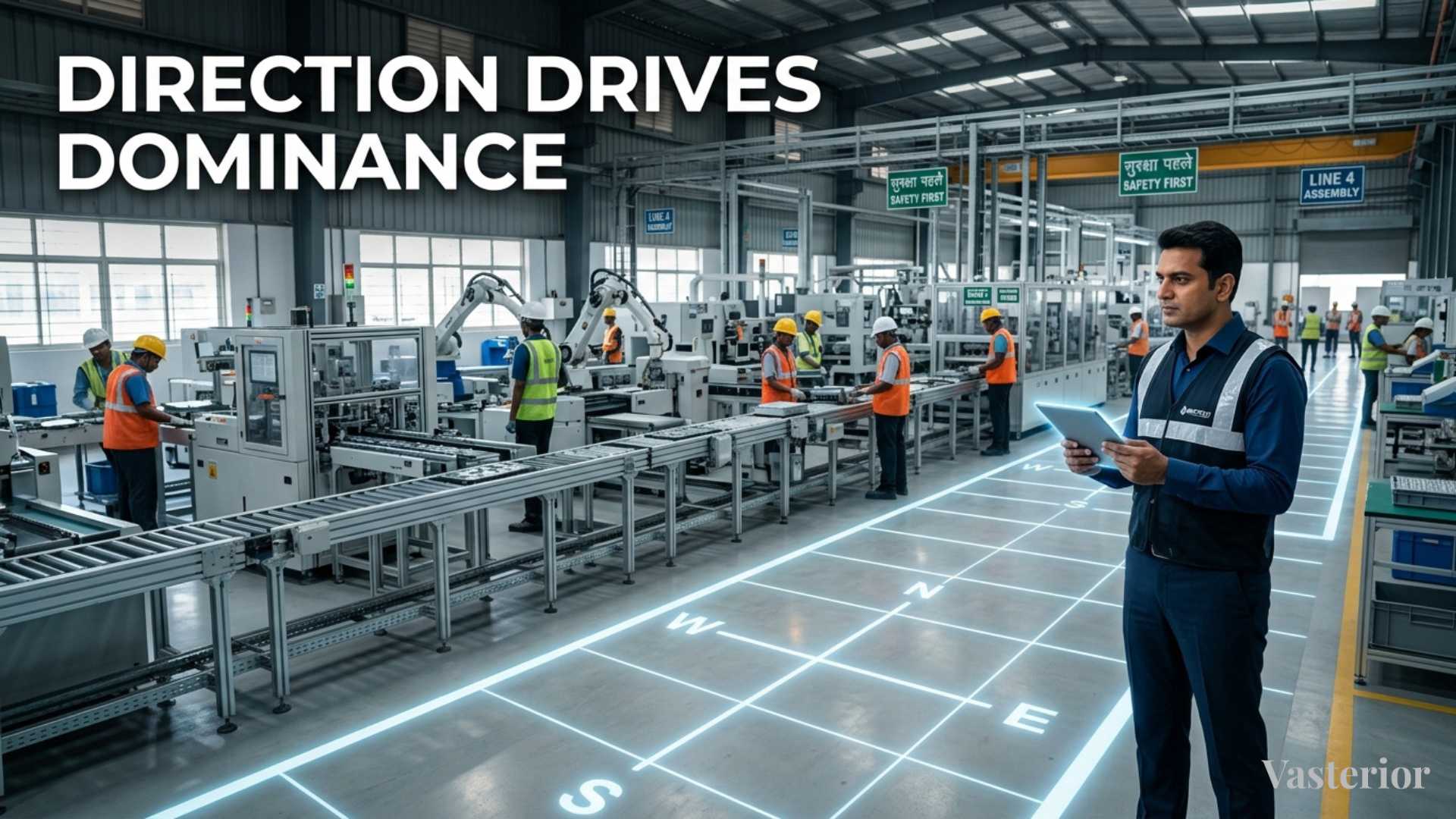
Most factory owners obsess over machinery, manpower, and margins. Very few pause to consider something far more foundational, which is how the space itself is influencing outcomes.
A factory is not just a physical setup. It is a system of movement, energy, workflow, and decision-making. When direction and layout are ignored, inefficiencies quietly creep in. Delays increase. Costs rise. Teams feel friction even if they cannot explain why.
This is where Vastu, when applied intelligently, becomes a strategic advantage rather than a belief system.
At Vasterior, the approach is not about superstition. It is about aligning spatial design with functional logic so that your factory performs like a well-calibrated machine.
Why Factory Direction Matters More Than You Think
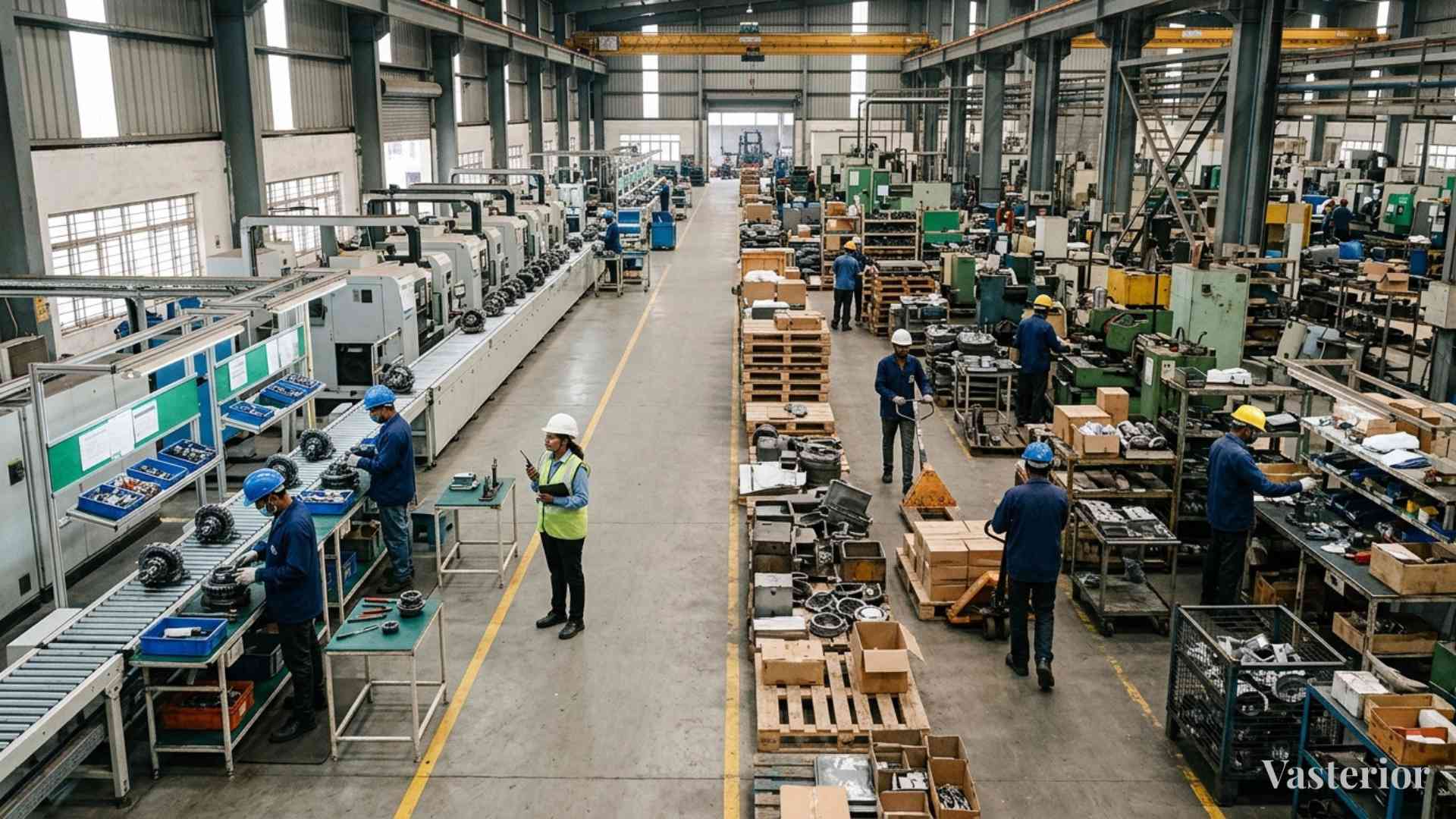
Direction is not just about compass points. It directly affects how light enters, how air circulates, how teams move, and how operations flow.
- Chaotic material movement
- Bottlenecks in production
- Frequent machinery breakdowns
- Low workforce efficiency
- Financial instability
On the other hand, a well-directed factory layout can streamline workflow, improve decision-making clarity, enhance operational speed, reduce wastage, and support long-term growth.
In simple terms, direction determines whether your factory works with you or against you.
Core Vastu Principles for Industrial Spaces
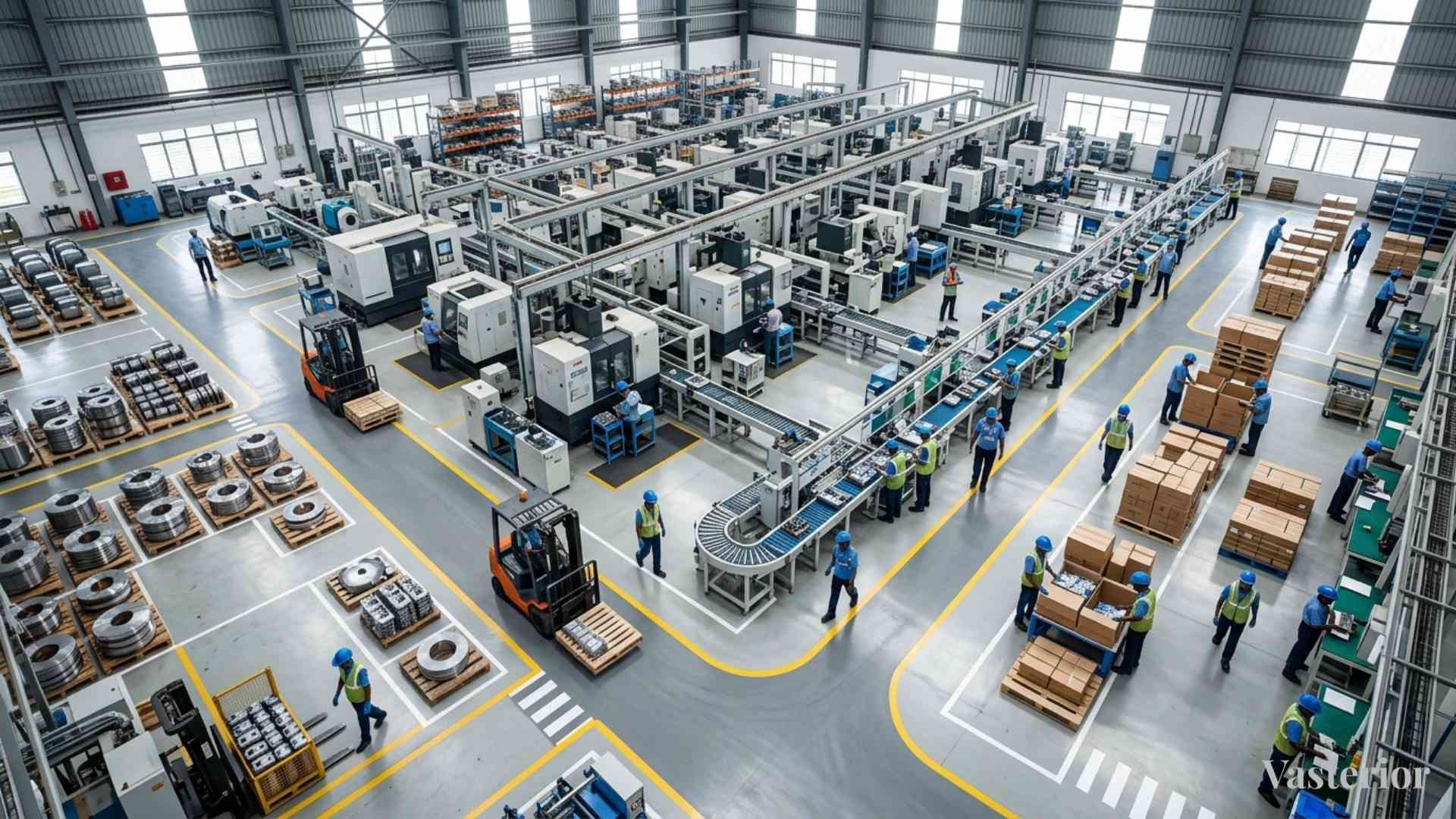
Before jumping into tips, it is important to understand the foundation. Vastu for factories is based on five key elements:
- Earth — for stability and structure
- Water — for flow and finances
- Fire — for energy and transformation
- Air — for movement and communication
- Space — for balance and expansion
The goal is not to blindly follow rules but to create equilibrium between these elements through spatial planning. When done right, the factory becomes more than efficient. It becomes aligned.
Industry-Proven Factory Direction Tips
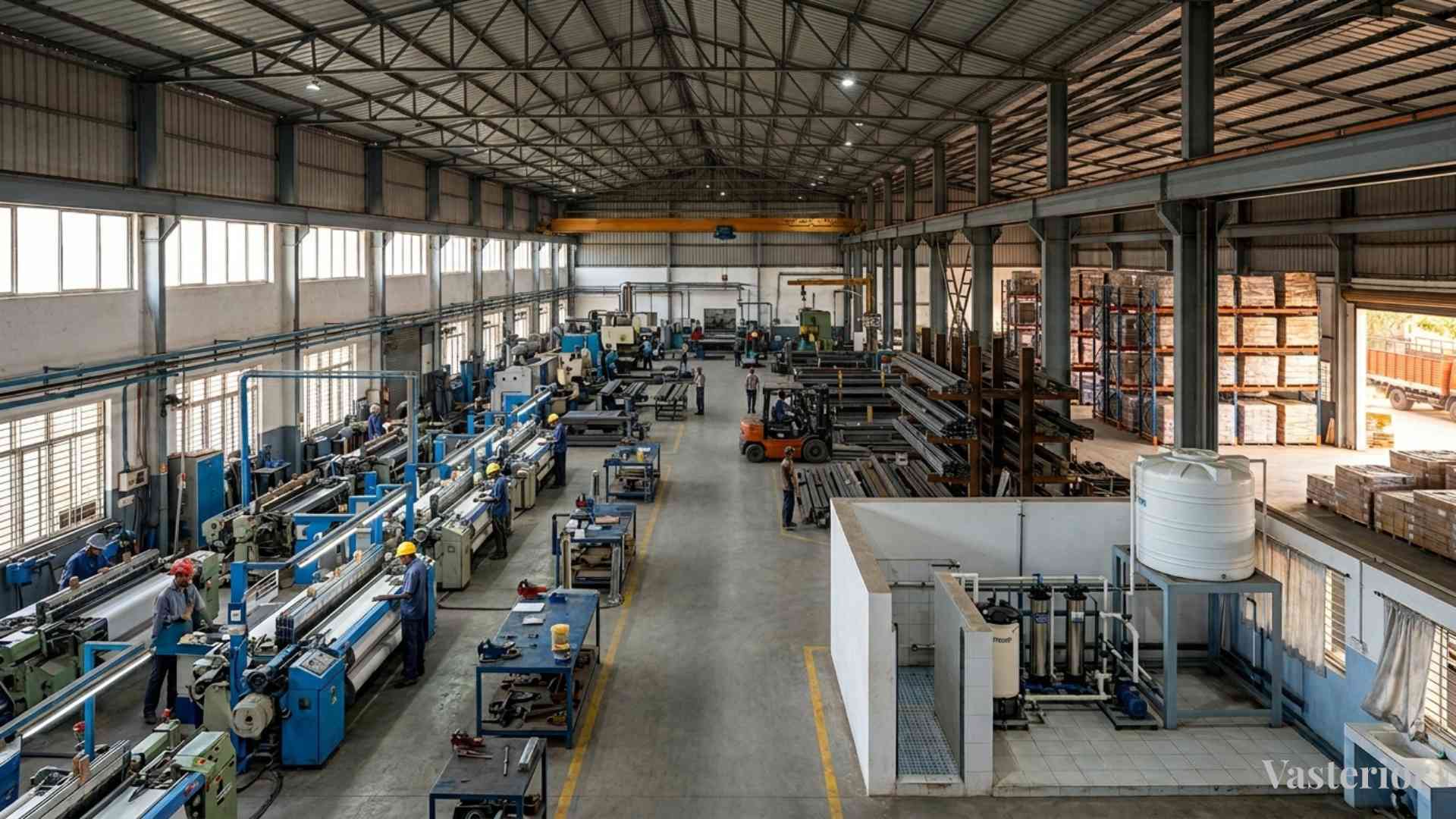
Each of the following tips is drawn from real-world factory layouts that have been analysed, restructured, and optimised for performance.
1. Entrance Placement
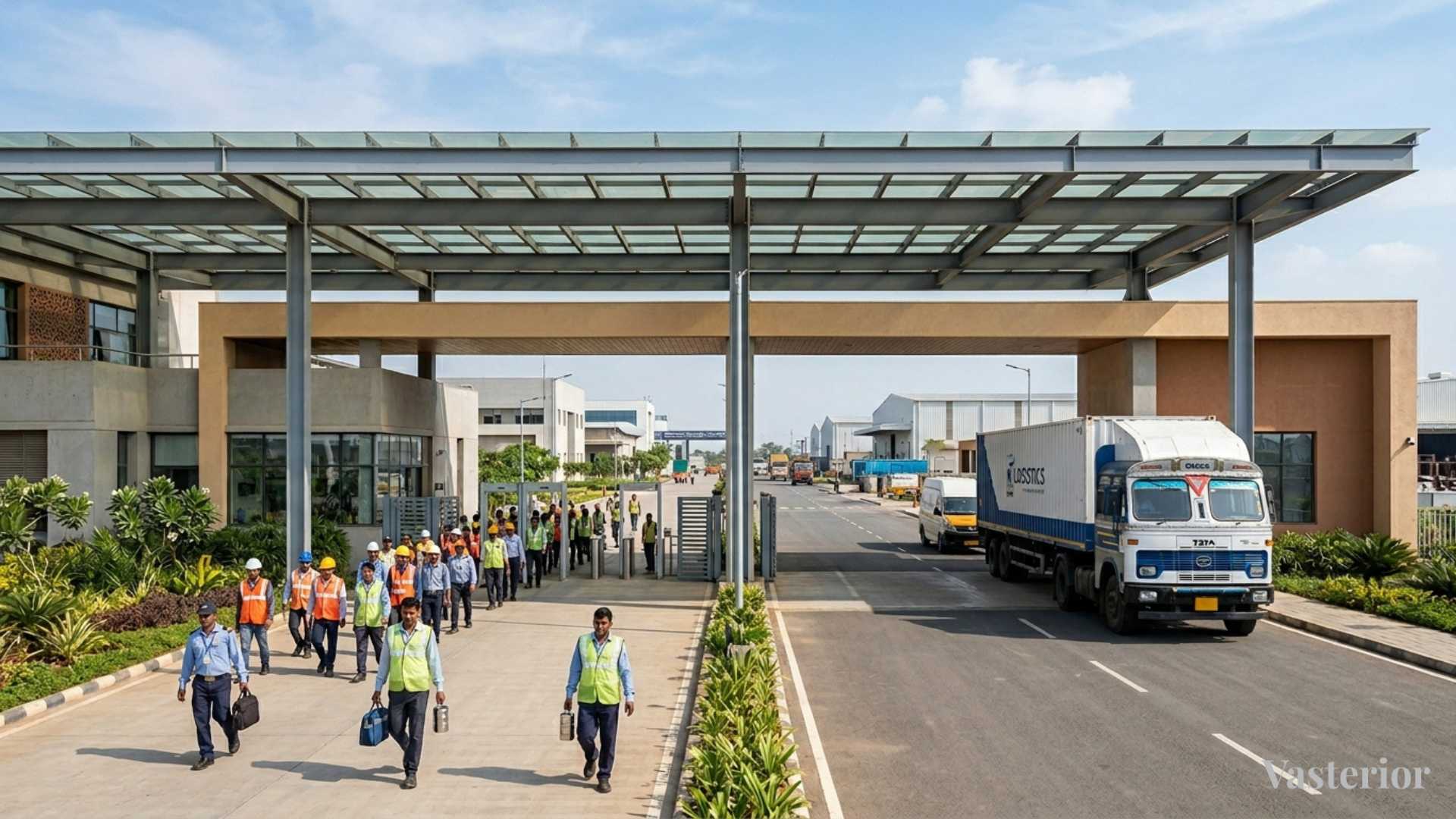
The entrance is where everything begins. It sets the tone for energy, movement, and opportunity.
- Best Practice: Place the main entrance in the North, North-East, or East direction
- Why It Works: These directions support clarity, opportunity flow, and smooth inflow of resources
- Impact: Factories with well-positioned entrances often experience better client inflow, smoother operations, and fewer disruptions
2. Machinery Placement
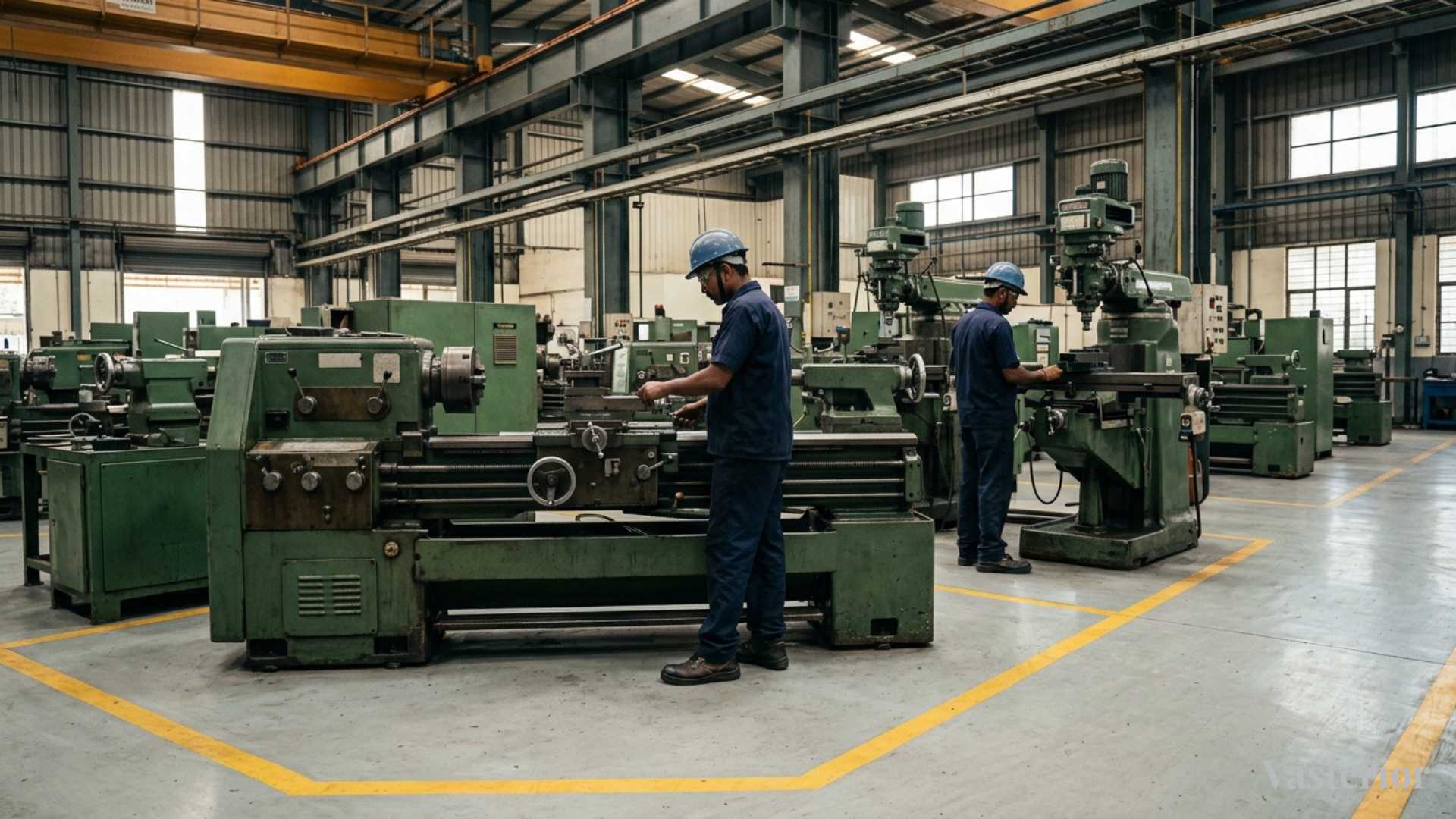
Heavy machinery is the backbone of any factory, but its placement is often random.
- Best Practice: Install heavy machinery in the South, South-West, or West zones
- Why It Works: These directions provide stability and grounding, which suits heavy operational load
- Impact: Reduced breakdowns, improved lifespan of machines, and more stable production cycles
3. Raw Material Storage
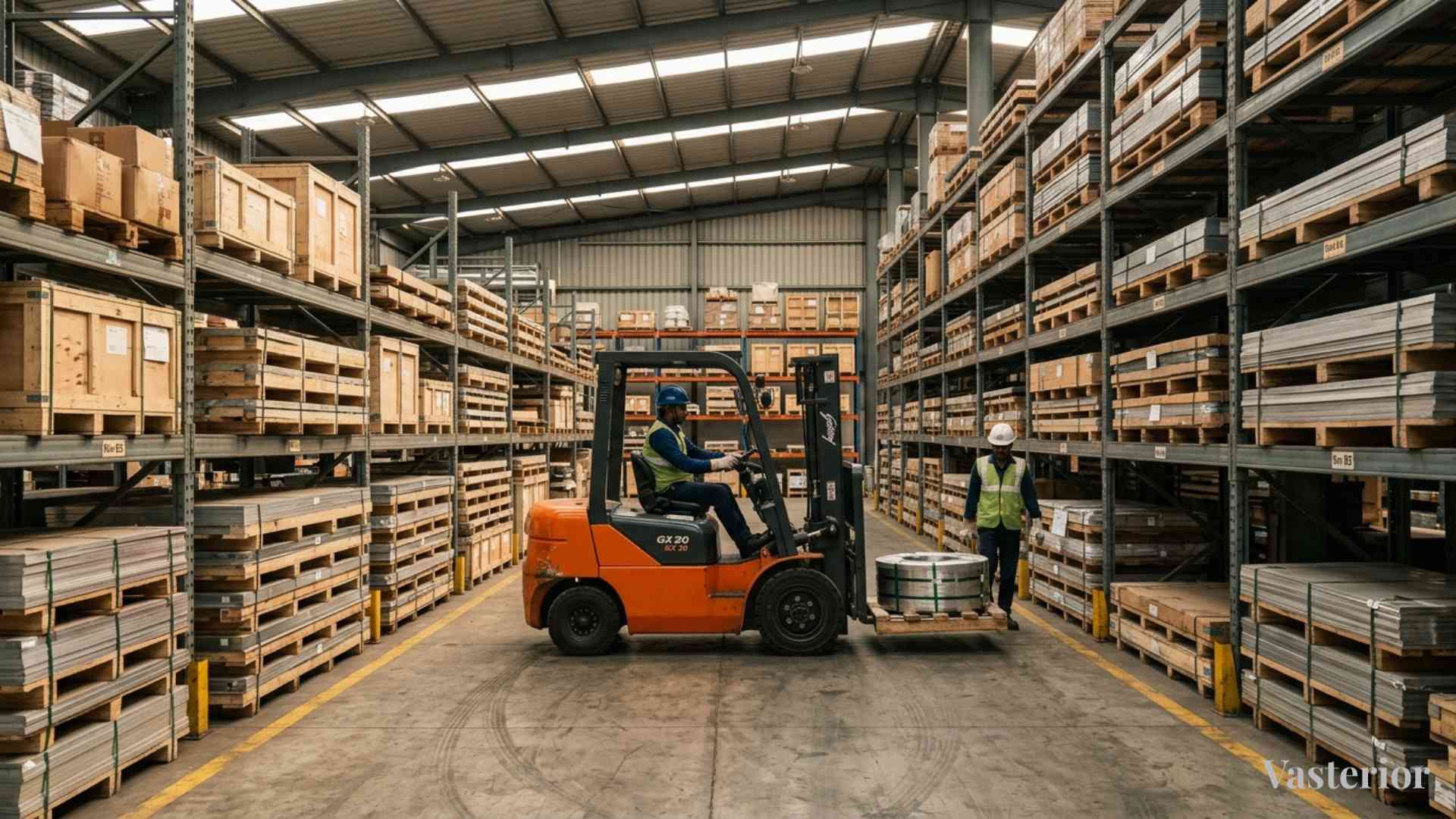
Where you store your inputs determines how efficiently you can start your processes.
- Best Practice: Store raw materials in the South-West direction
- Why It Works: This zone symbolises weight and stability, making it ideal for holding resources
- Impact: Better inventory control and fewer supply chain disruptions
4. Finished Goods Dispatch Area
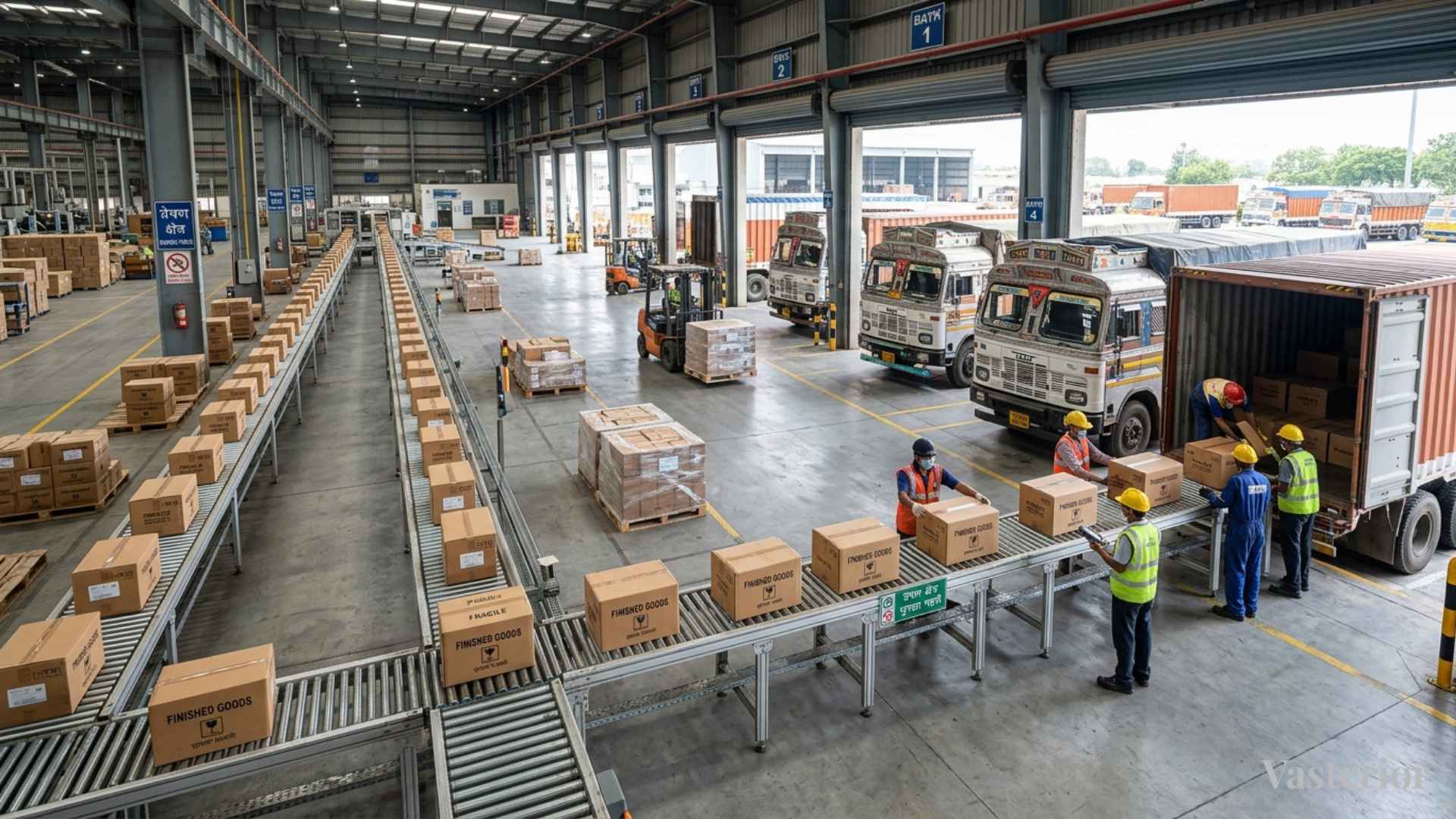
Your output flow should be as smooth as your input.
- Best Practice: Place dispatch zones in the North-West direction
- Why It Works: North-West supports movement and transition
- Impact: Faster dispatch cycles and improved logistics efficiency
5. Office and Administrative Block
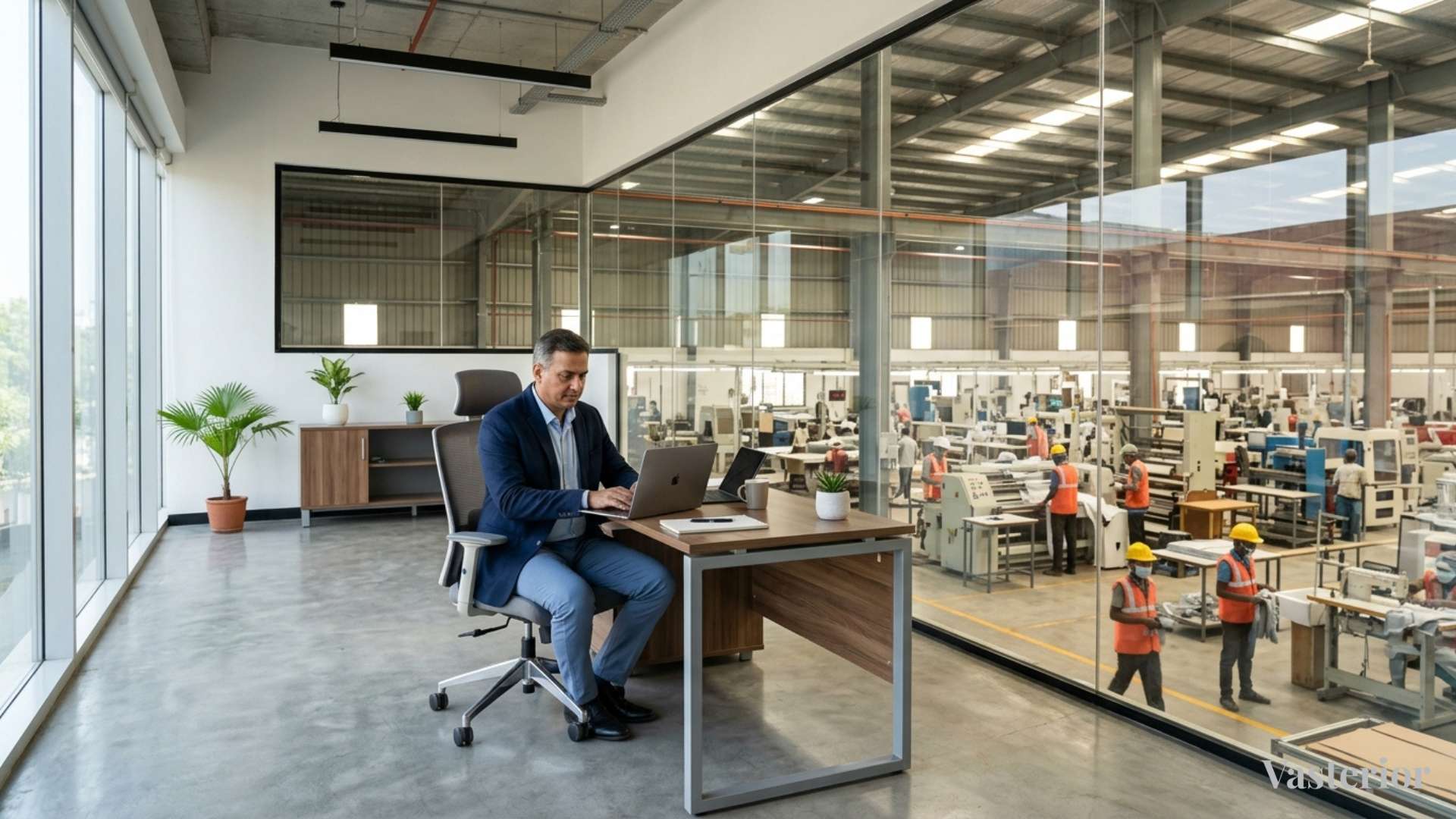
Decisions drive factories. Where those decisions are made matters.
- Best Practice: Locate offices in the North or East zones
- Why It Works: These directions enhance clarity, focus, and strategic thinking
- Impact: Better leadership decisions and improved business outcomes
6. Power and Electrical Systems
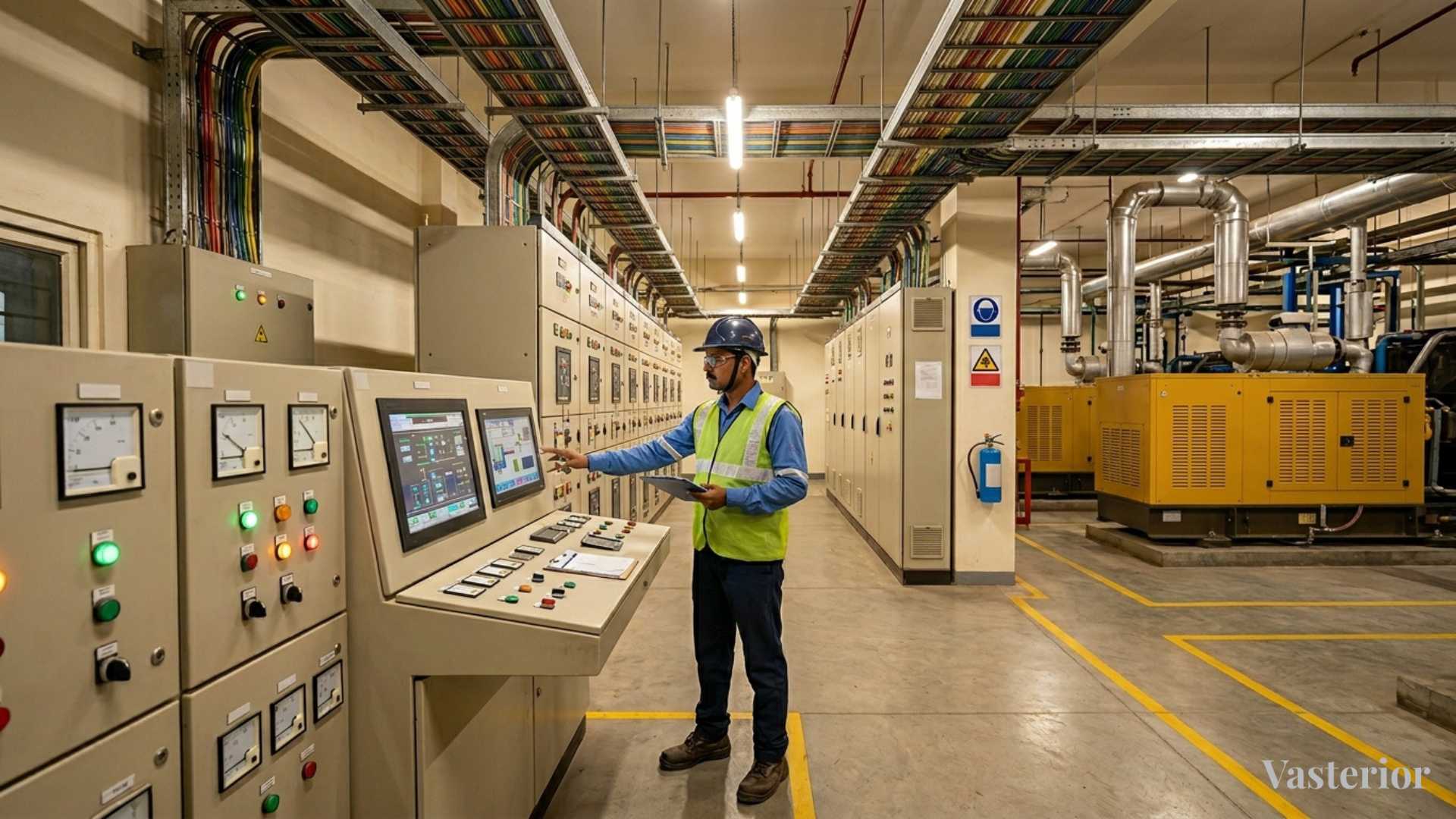
Factories run on energy, literally.
- Best Practice: Place generators, boilers, and electrical panels in the South-East direction
- Why It Works: South-East is associated with fire and energy
- Impact: Optimised energy utilisation and reduced electrical issues
7. Water Elements and Drainage
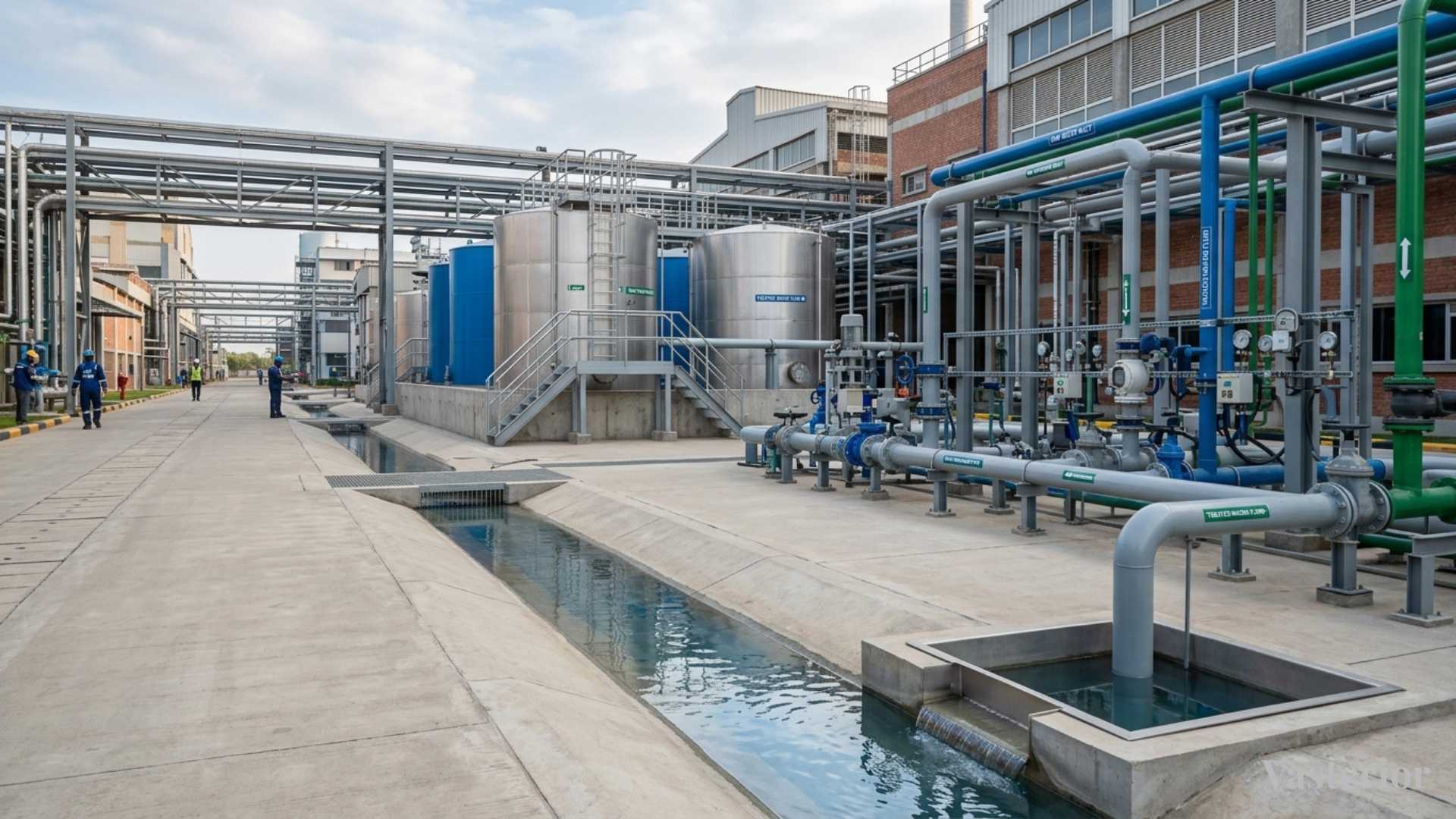
Water influences flow, both physically and financially.
- Best Practice: Keep water sources like tanks and borewells in the North-East
- Why It Works: This direction supports financial flow and clarity
- Impact: Improved financial stability and smoother operations
8. Worker Movement and Workflow
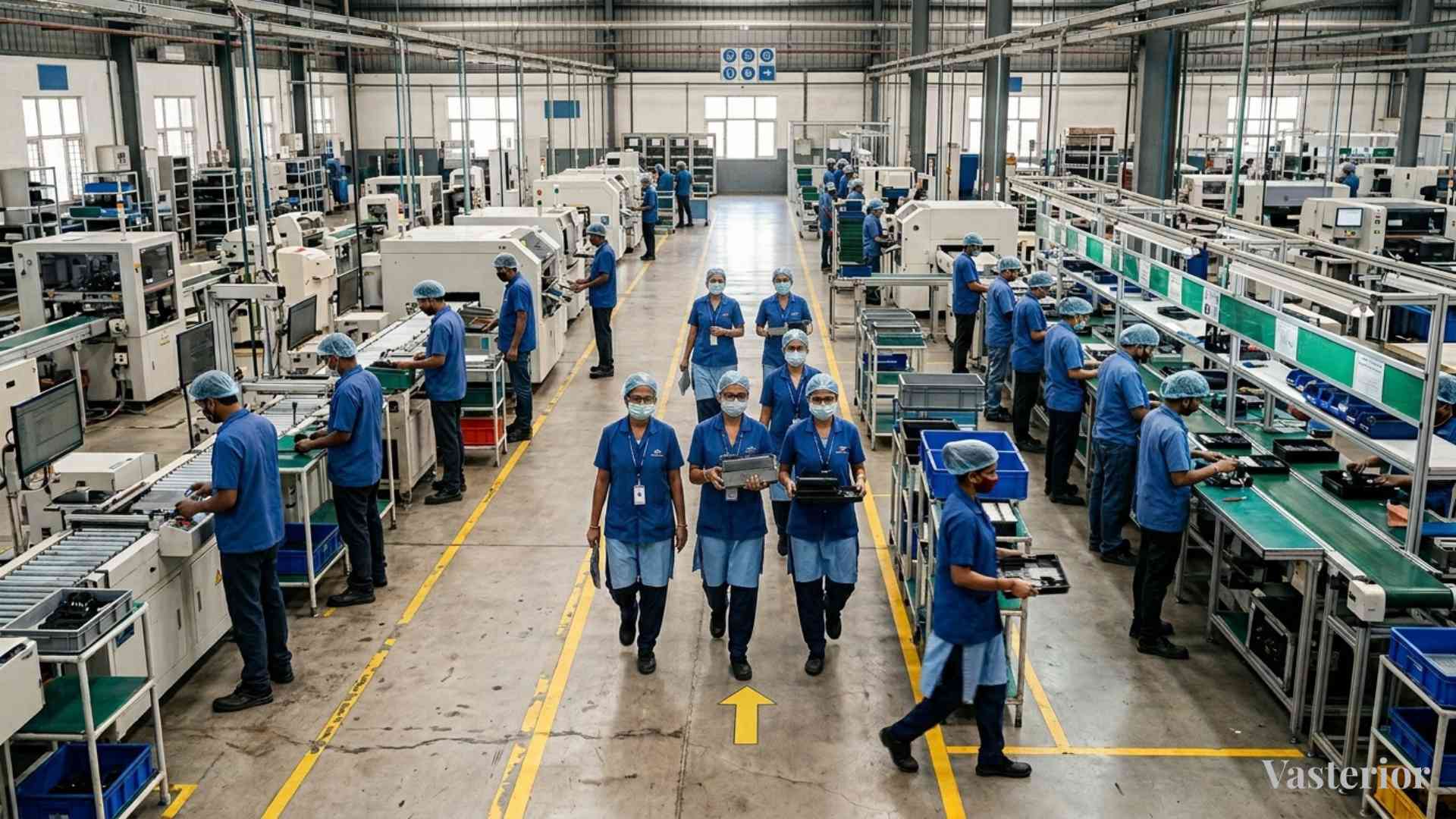
A factory is only as efficient as its people.
- Best Practice: Design movement in a clockwise or linear flow without cross-interference
- Why It Works: Reduces confusion and unnecessary overlap
- Impact: Higher productivity, fewer errors, and smoother operations
Common Mistakes to Avoid
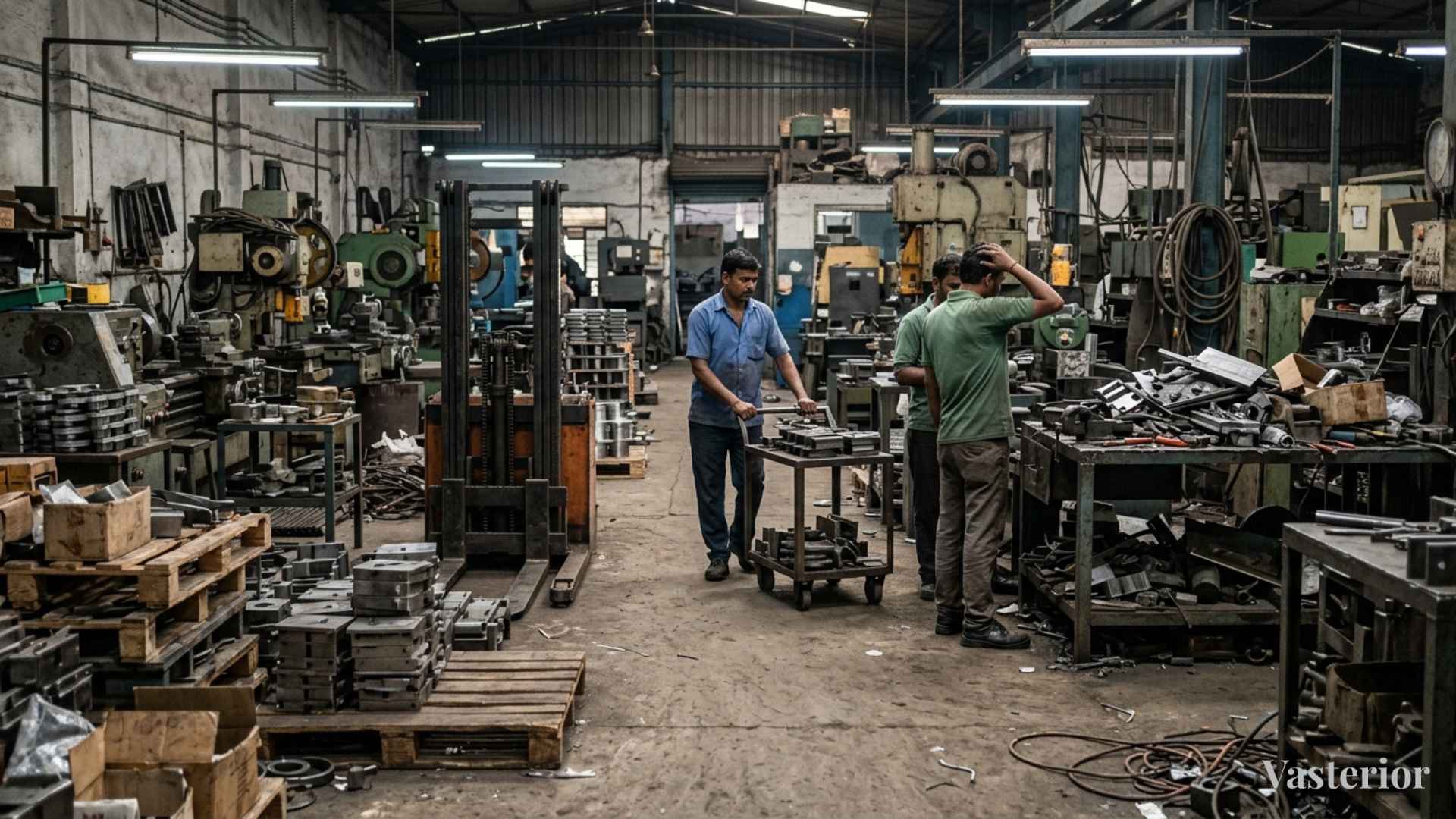
Even well-funded factories make basic layout mistakes that cost heavily over time.
- Placing heavy machinery in the North-East
- Blocking natural light and ventilation
- Ignoring directional zoning altogether
- Mixing storage and production zones
- Designing layouts purely based on convenience
These errors do not just affect structure. They impact profitability.
Modern Factory Design Meets Vastu
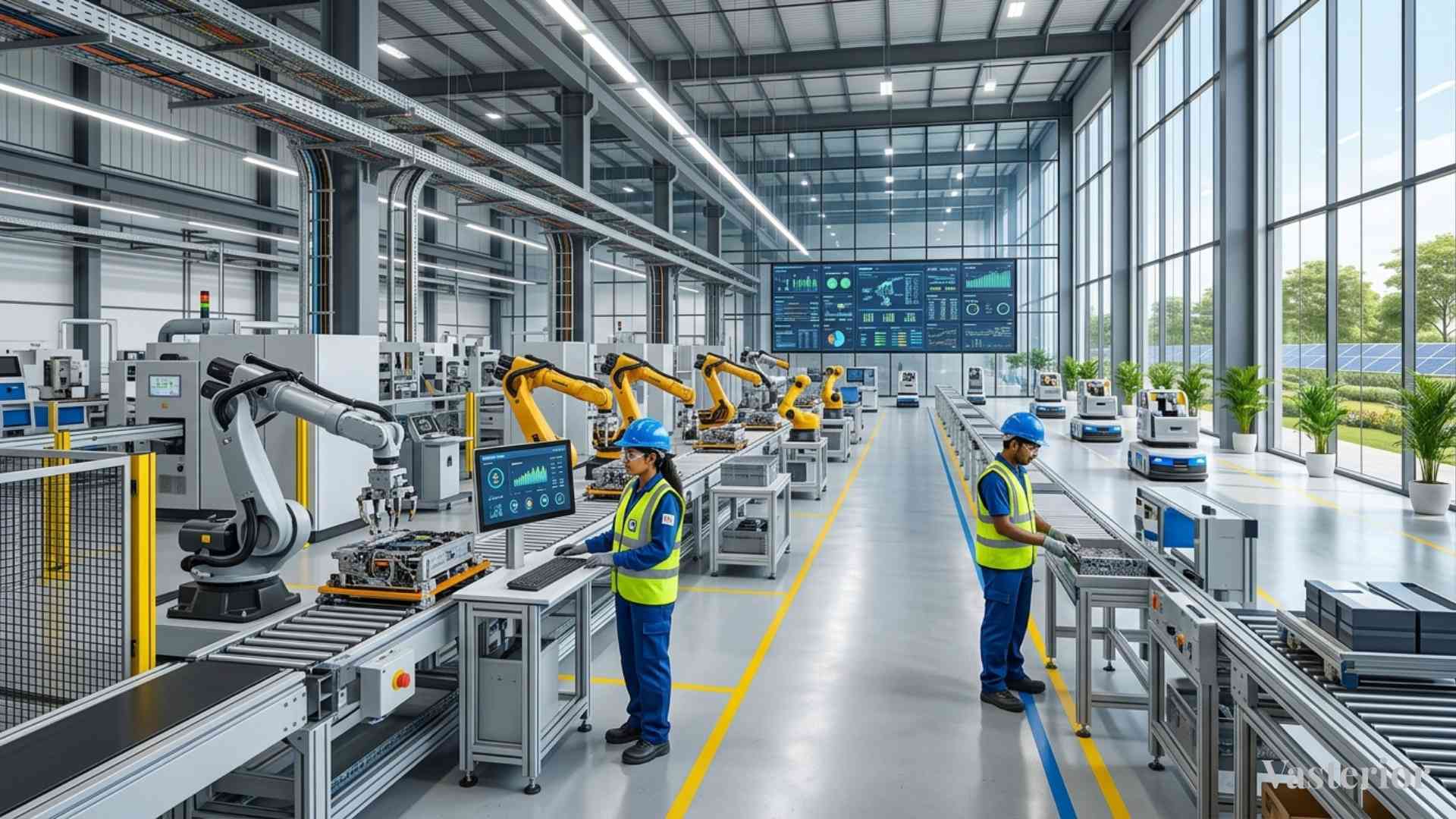
There is a misconception that Vastu conflicts with modern architecture. It does not. In fact, when combined with lean manufacturing principles, smart factory layouts, automation systems, and efficient material handling, Vastu becomes a layer of optimisation rather than restriction.
The smartest factories today are not choosing between science and tradition. They are integrating both.
A Practical Transformation Example
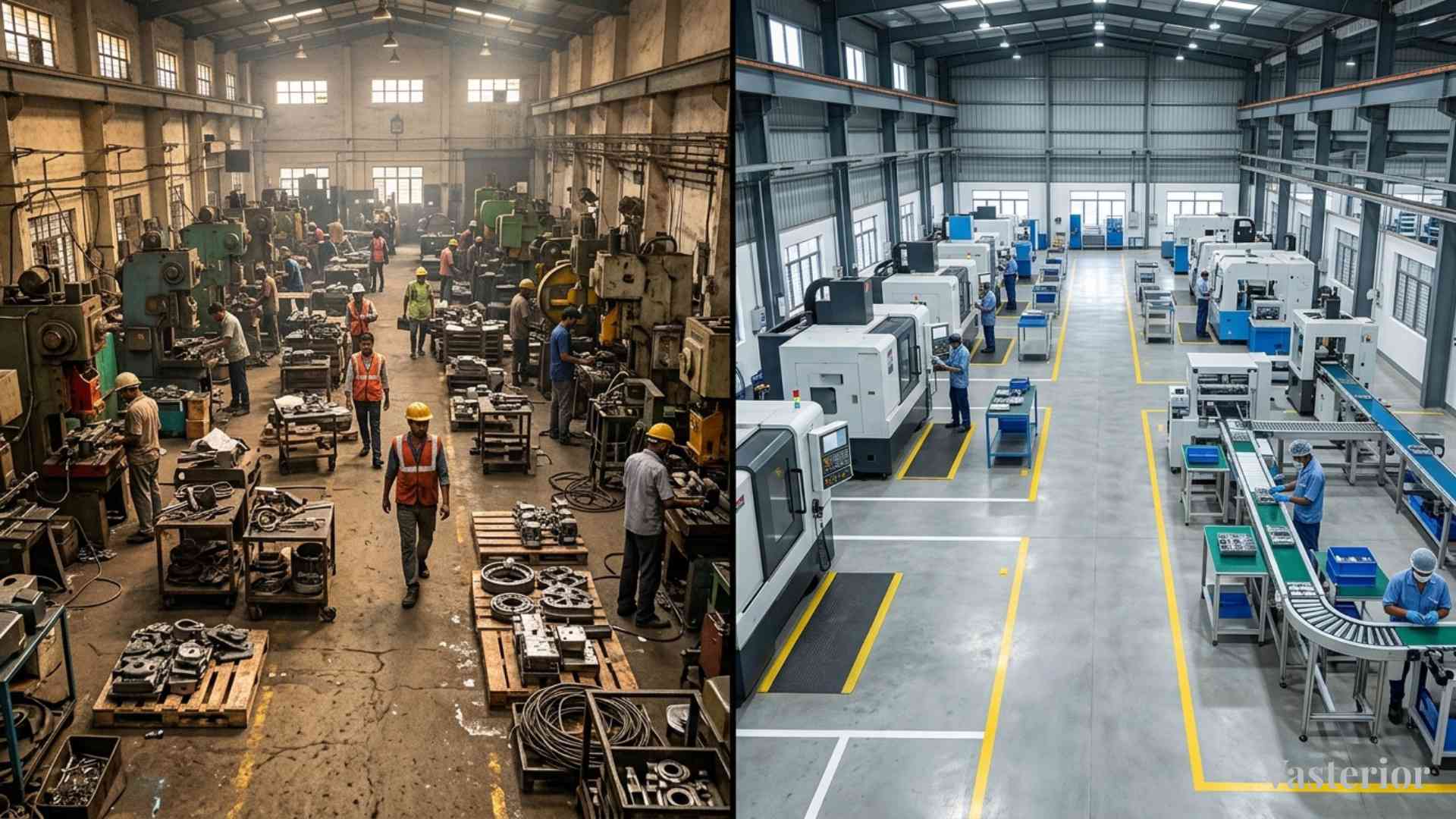
Consider a mid-sized manufacturing unit struggling with delays and frequent machine downtime. The issues seemed technical. But the root cause was spatial.
- Heavy machinery was placed in the North-East
- Dispatch zone was in the South-West
- Office cabin faced a blocked direction
After restructuring, machinery moved to South-West, dispatch shifted to North-West, and the office was aligned to East.
Within months, downtime reduced, dispatch speed improved, and decision-making became faster. Nothing mystical. Just alignment.
How Vasterior Approaches Factory Design
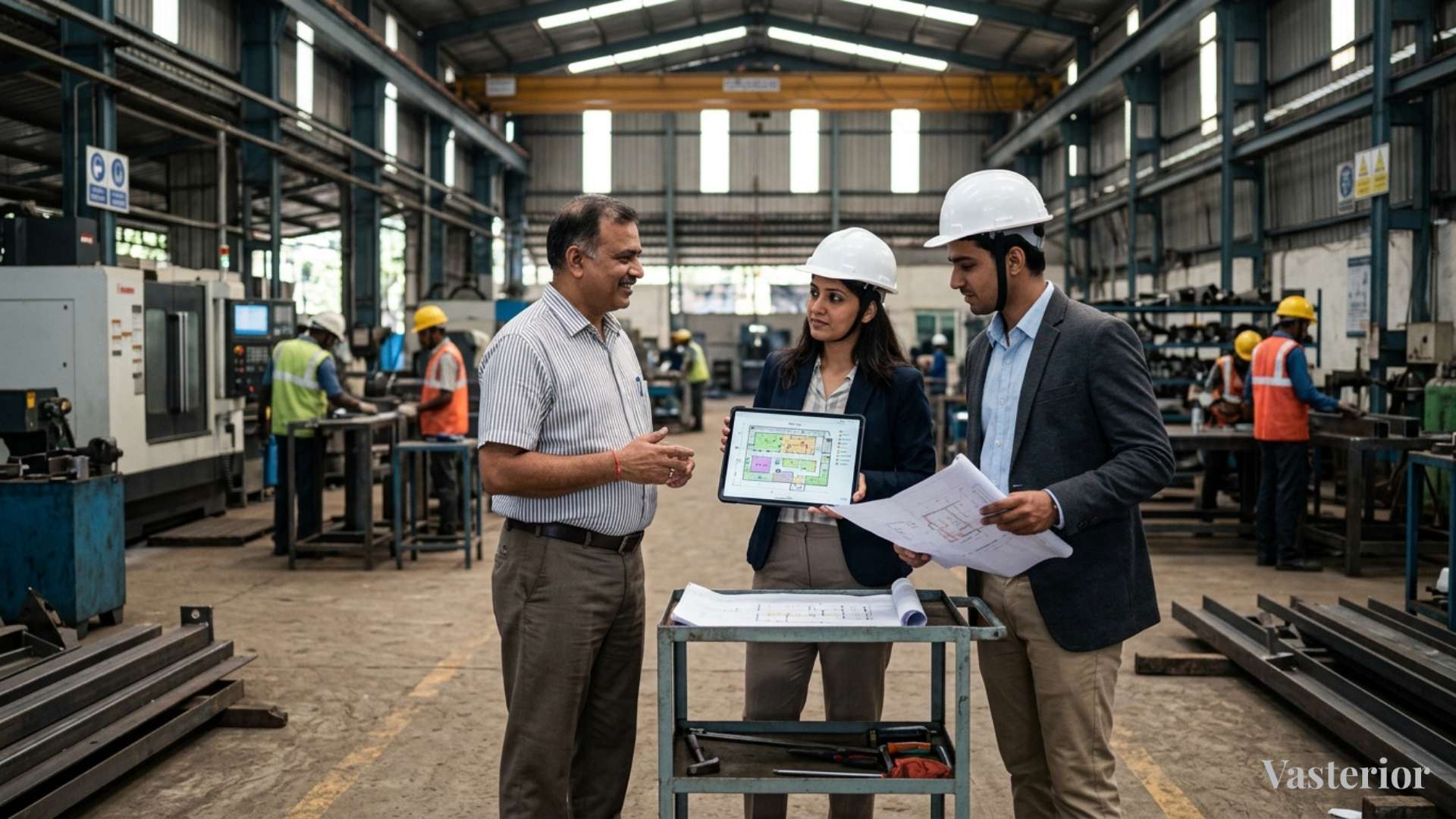
Vasterior does not apply Vastu as a checklist. The approach is layered:
- Understanding your business operations
- Mapping workflow and bottlenecks
- Aligning layout with directional logic
- Integrating design with functionality
The goal is simple. Make your space work as intelligently as your business strategy.
If you are setting up a factory or struggling with inefficiencies that do not seem to have a clear cause, it might be worth looking at your space differently. A quick conversation can often reveal what months of troubleshooting cannot.
You can explore this further with Vasterior by reaching out at +91 9100883355 or writing to info@vasterior.com.
FAQs
Answers to the most common questions about factory Vastu direction and layout planning.
- What is the best direction for a factory entrance? — North, North-East, and East are considered the most favourable for smooth inflow and growth.
- Can Vastu really impact factory productivity? — Yes, when applied logically, it improves workflow, reduces friction, and enhances operational efficiency.
- Where should heavy machinery be placed in a factory? — South, South-West, or West zones are ideal for stability and performance.
- Is Vastu relevant for modern automated factories? — Absolutely. It complements modern systems by improving spatial alignment.
- What is the ideal direction for factory offices? — North and East directions are best for decision-making and clarity.
- How does Vastu affect financial growth in factories? — It optimises flow, reduces inefficiencies, and supports better management decisions.
- Where should raw materials be stored? — South-West is ideal for storing heavy materials.
- What is the role of the North-East in factory layout? — It should remain light and open, often used for water elements or open space.
- Can existing factories be corrected without rebuilding? — Yes, many adjustments can be made through layout restructuring and zoning.
- How do I know if my factory has Vastu issues? — Signs include constant delays, frequent breakdowns, and operational inefficiencies without clear causes.