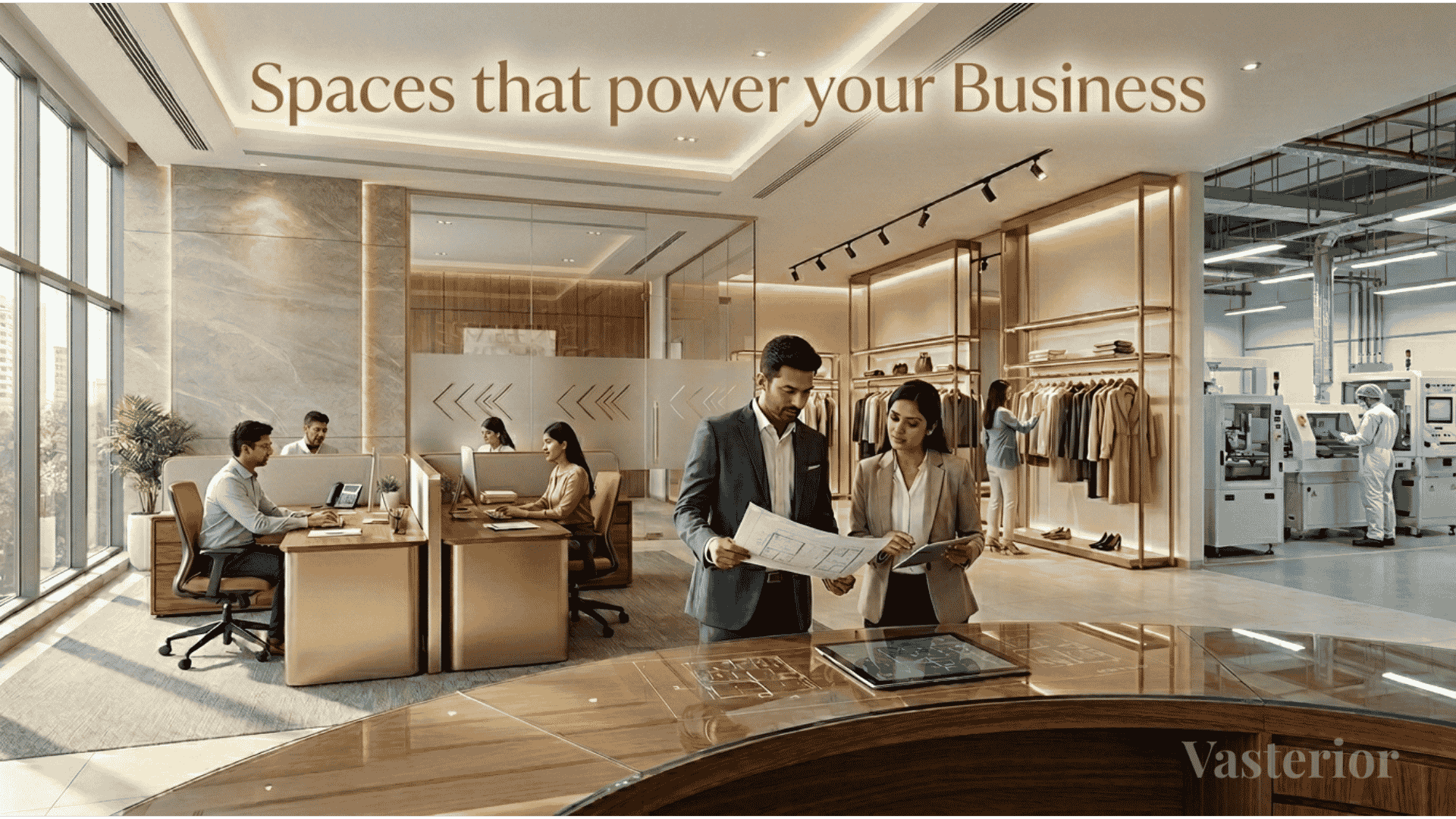
A successful business is built on vision, strategy, execution, and people. Yet there is one factor that often goes unnoticed despite influencing every aspect of operations: the space where business happens.
Whether it is a corporate office, a retail store, or a manufacturing facility, the environment directly impacts productivity, customer experiences, employee well-being, and overall business performance. A thoughtfully planned commercial space can support growth, while a poorly organized one can create inefficiencies and obstacles.
This is where commercial Vastu becomes relevant in today's business landscape.
At Vasterior, we believe that truly successful spaces are created when intelligent spatial planning meets the science of MahaVastu. By combining modern design expertise with proven spatial principles, businesses can create environments that encourage prosperity, harmony, and sustainable growth.
Why Commercial Spaces Need More Than Good Design
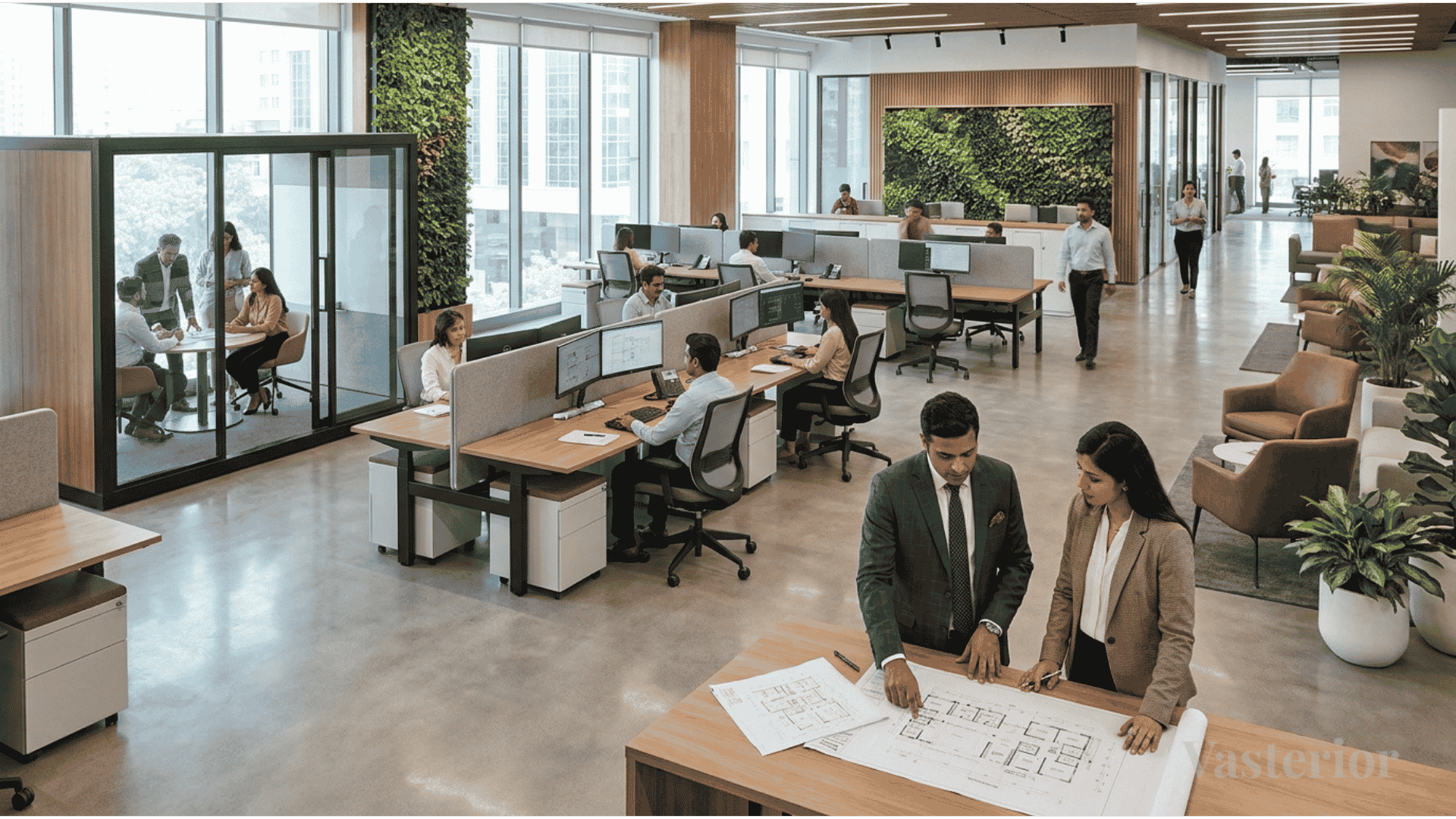
Many business owners invest heavily in attractive interiors, premium furniture, and modern aesthetics. While these elements certainly contribute to a positive impression, appearance alone does not determine how effectively a space performs.
A beautifully designed office may still suffer from poor employee collaboration. A well-decorated retail store may struggle with customer flow. An industrial facility may experience operational inefficiencies despite having advanced infrastructure.
This happens because successful commercial environments require more than visual appeal. They require strategic planning that considers movement, functionality, energy balance, and human interaction.
When design decisions are aligned with both operational requirements and MahaVastu principles, businesses often experience improved efficiency and a more harmonious work environment.
Understanding MahaVastu in Commercial Environments
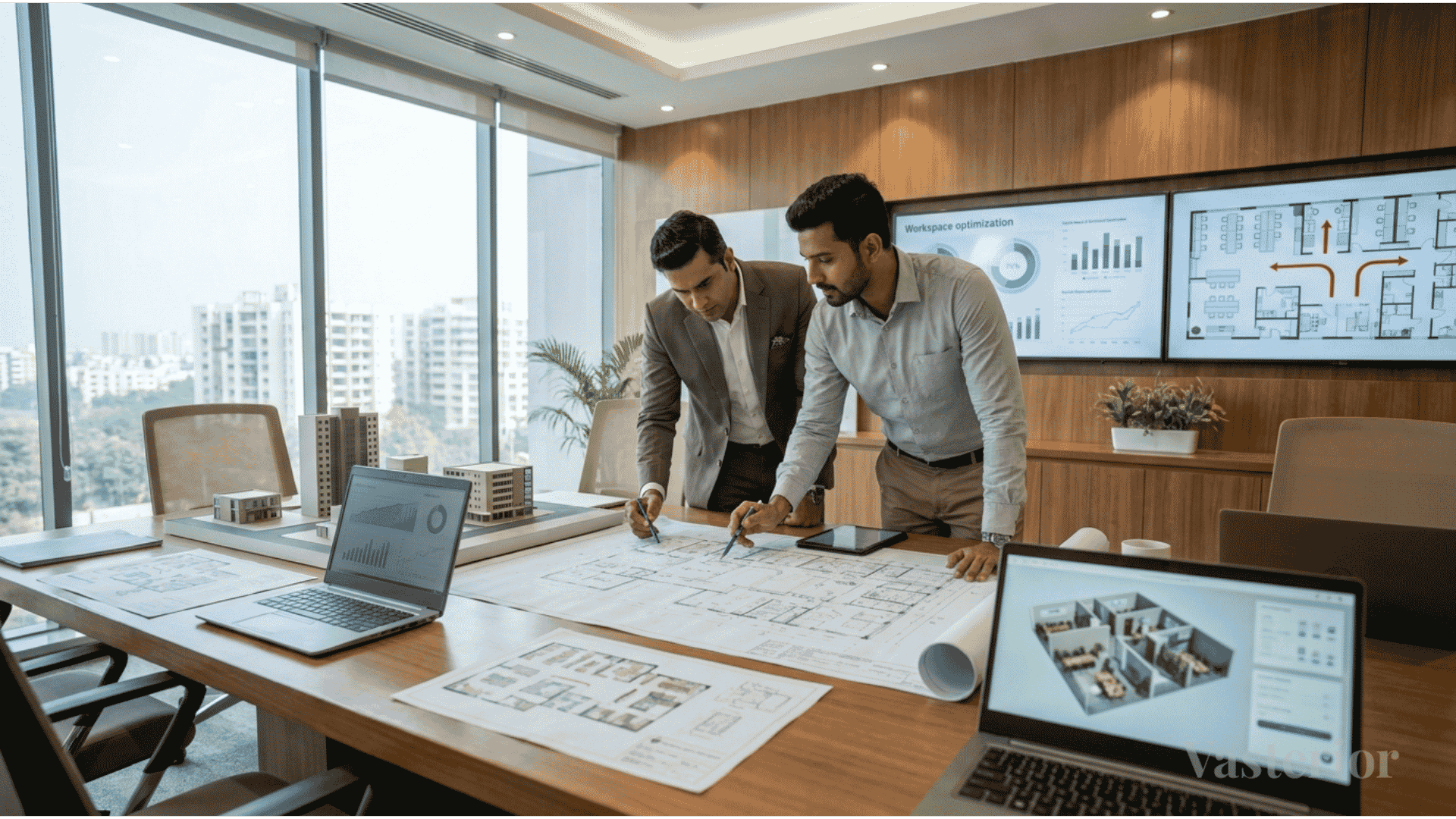
MahaVastu is often misunderstood as a collection of traditional rituals or symbolic recommendations. In reality, MahaVastu is a systematic approach that studies directional influences and their impact on various aspects of life and business.
For commercial spaces, MahaVastu focuses on optimizing key zones associated with leadership, finance, communication, innovation, productivity, and growth.
Rather than relying on drastic structural changes, modern MahaVastu solutions identify opportunities to enhance the functionality and effectiveness of existing spaces.
At Vasterior, these principles are seamlessly integrated into spatial planning strategies to create practical and business-oriented solutions.
Commercial Vastu Tips for Offices
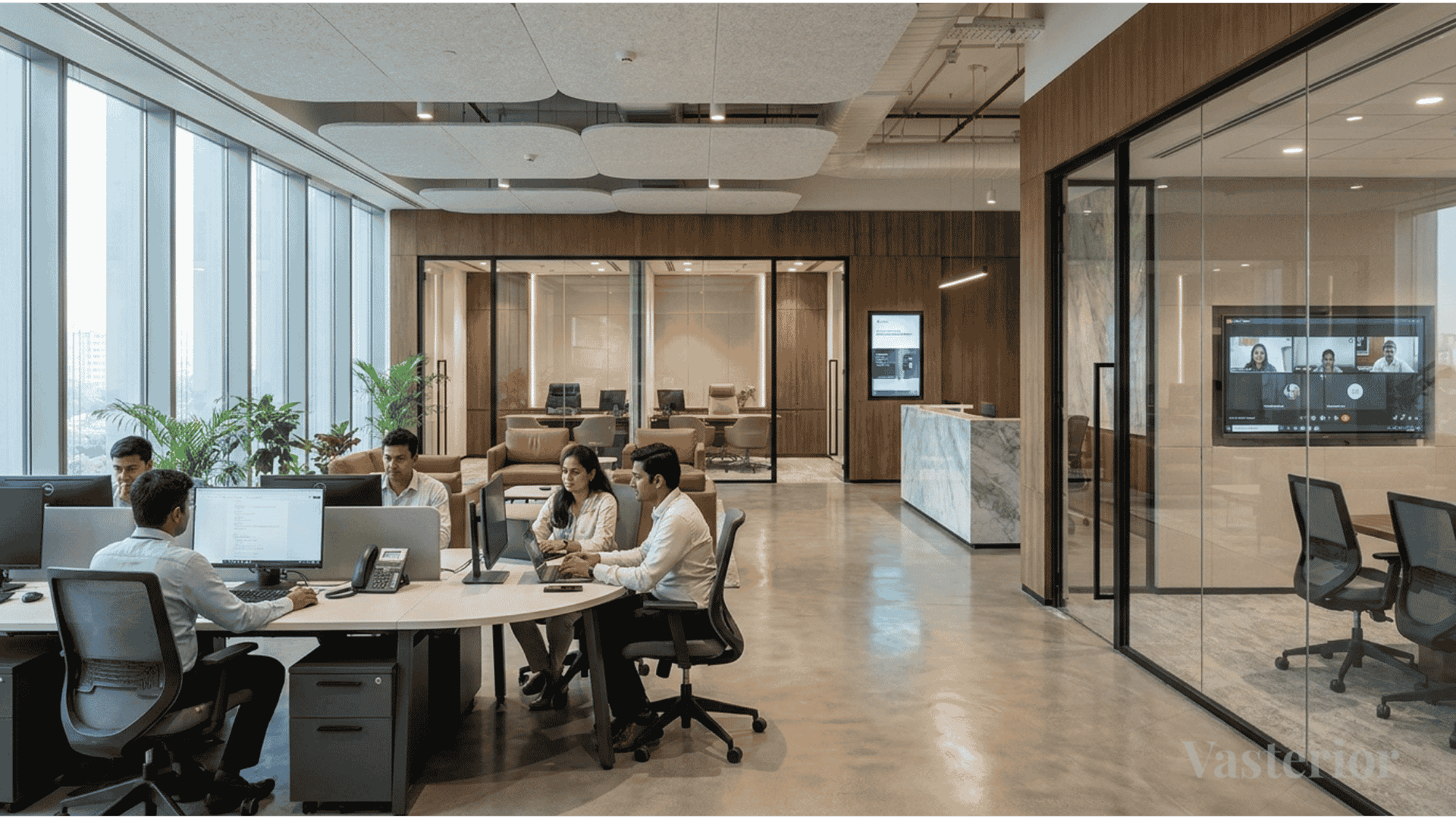
A well-planned office environment supports leadership, productivity, collaboration, and growth. The following tips highlight key areas to focus on when planning or optimizing a commercial office space.
Optimize the Main Entrance
The entrance acts as the first point of interaction for employees, clients, and visitors.
A welcoming, clutter-free, and strategically positioned entrance can create a positive first impression while supporting smoother energy flow throughout the workspace.
Position Leadership Cabins Strategically
Business leaders influence the direction and growth of an organization.
The placement of leadership cabins should support clarity, authority, and confident decision-making while maintaining visibility and accessibility within the workspace.
Create Productive Employee Workstations
Workstations should be arranged to encourage concentration, collaboration, and comfort.
Avoid cramped layouts and ensure employees have adequate movement space to reduce workplace stress and improve productivity.
Design Effective Meeting Rooms
Meeting rooms should support communication, strategic thinking, and collaboration.
Proper positioning and thoughtful spatial planning can help create an environment conducive to productive discussions and decision-making.
Plan Reception Areas Carefully
Reception areas shape first impressions.
A professionally designed reception space should feel organized, welcoming, and aligned with the company's brand identity.
Locate Financial Departments Thoughtfully
Finance teams handle one of the most critical functions within any business.
Their placement should support focus, organization, and operational efficiency.
Use Color Psychology Wisely
Colors influence emotions, productivity, and perception.
Combining color psychology with MahaVastu principles can create environments that support creativity, focus, confidence, and growth.
Commercial Vastu Tips for Retail Shops
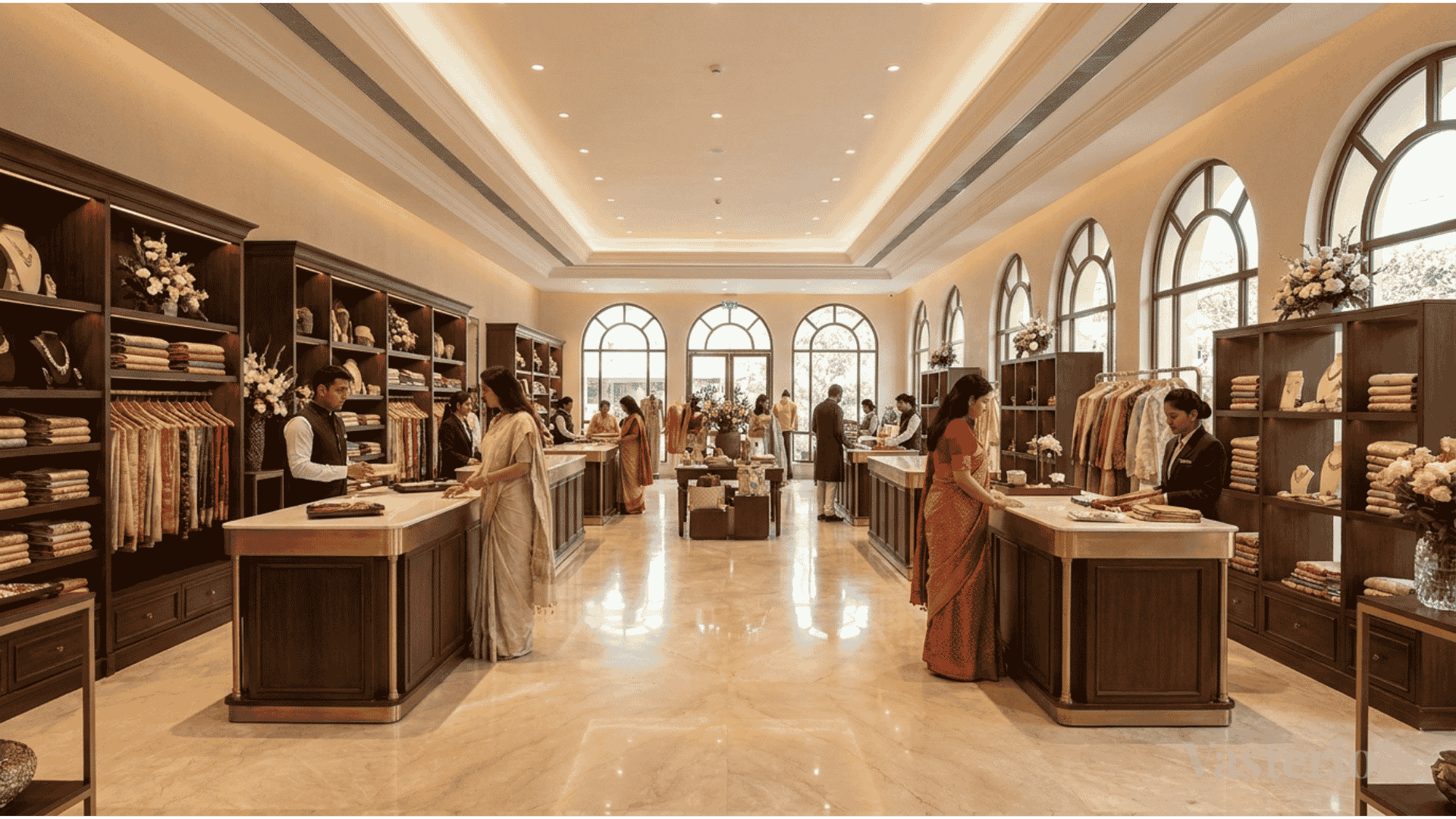
Retail success depends on how naturally customers move through and interact with a space. Strategic planning of key zones can significantly improve the shopping experience and business outcomes.
Create an Inviting Entrance
Retail success often begins at the entrance.
An accessible and visually appealing entry point can encourage customer engagement and increase foot traffic.
Position the Cash Counter Strategically
The cash counter represents the financial heart of a retail business.
Its placement should support smooth customer transactions and operational convenience.
Optimize Product Displays
Product placement influences purchasing decisions.
Displays should guide customer attention naturally while making products easy to access and explore.
Improve Customer Movement Patterns
Customers should be able to navigate the store comfortably without confusion.
A well-planned circulation path can improve the shopping experience and encourage longer visits.
Enhance Lighting and Visibility
Lighting plays a significant role in customer perception.
Strategic lighting can highlight products, improve ambience, and create a more engaging shopping environment.
Commercial Vastu Tips for Industries and Manufacturing Units
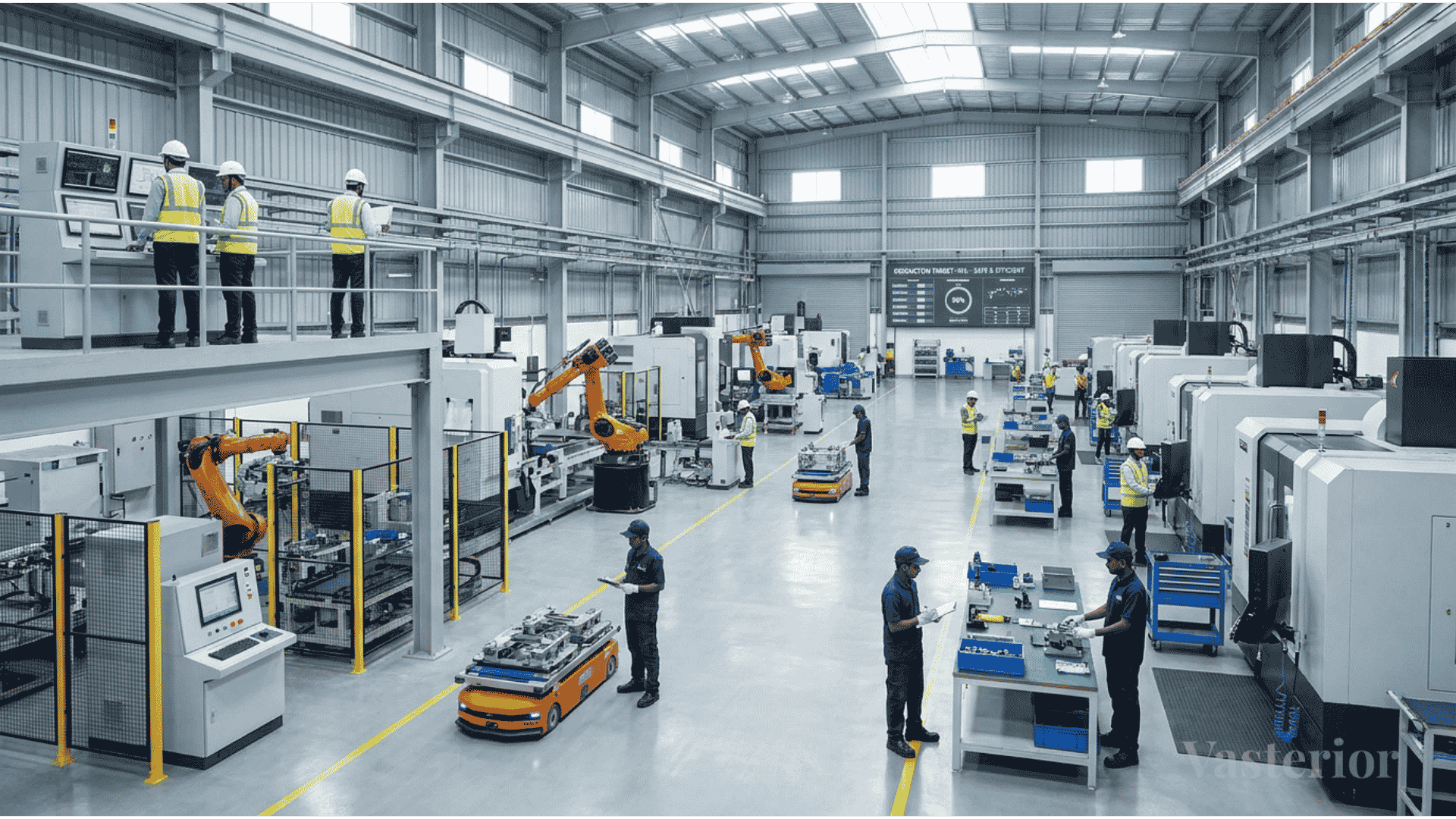
Industrial spaces require careful planning to ensure operational efficiency, safety, and workflow continuity. MahaVastu principles, when combined with industrial spatial planning, can meaningfully improve performance.
Plan Machinery Placement Carefully
Heavy machinery should be positioned to support operational efficiency, safety, and workflow continuity.
Proper zoning can help reduce unnecessary movement and improve productivity.
Organize Storage Areas Effectively
Storage zones should allow easy inventory management while supporting streamlined logistics and operations.
Separate Administrative Functions
Administrative offices should be strategically located to maintain oversight while minimizing operational disruptions.
Optimize Raw Material Handling
Efficient movement of raw materials can reduce delays and improve overall productivity.
Thoughtful planning helps create smoother workflows across departments.
Focus on Operational Efficiency
Industrial success depends heavily on efficiency.
Integrating MahaVastu principles with workflow planning can contribute to better space utilization and reduced bottlenecks.
The Role of Spatial Planning in Business Success
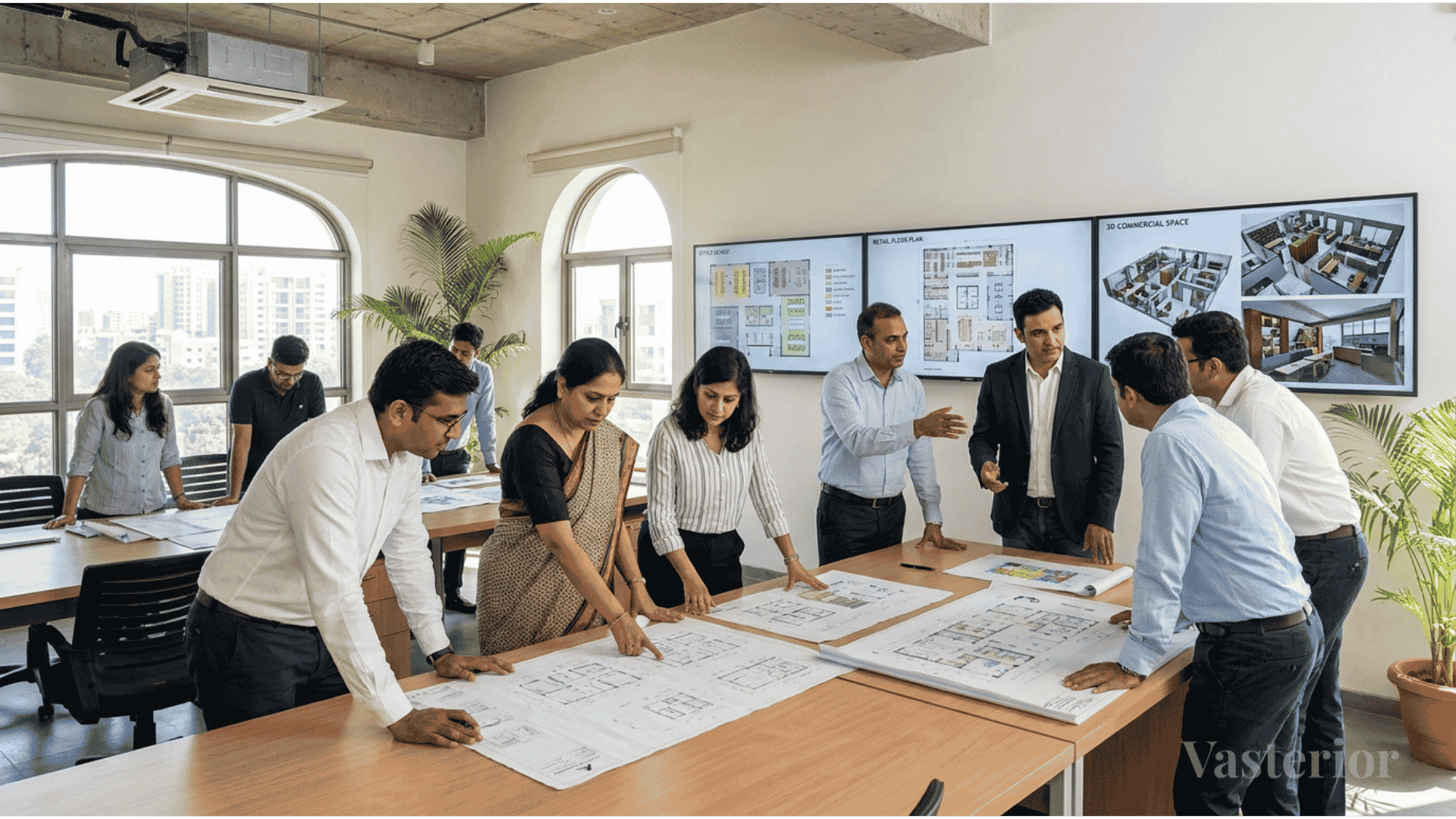
One of the biggest misconceptions about Vastu is that it functions independently of design.
In reality, the most effective commercial environments emerge when Vastu principles and spatial planning work together.
At Vasterior, our approach focuses on:
- Functional layouts
- Human movement analysis
- Departmental relationships
- Space optimization
- Employee comfort
- Customer experience
- MahaVastu alignment
Rather than forcing spaces into rigid frameworks, we create solutions that balance business objectives with spatial harmony.
The result is a commercial environment that feels natural, efficient, and purpose-driven.
Common Commercial Vastu Mistakes Businesses Make
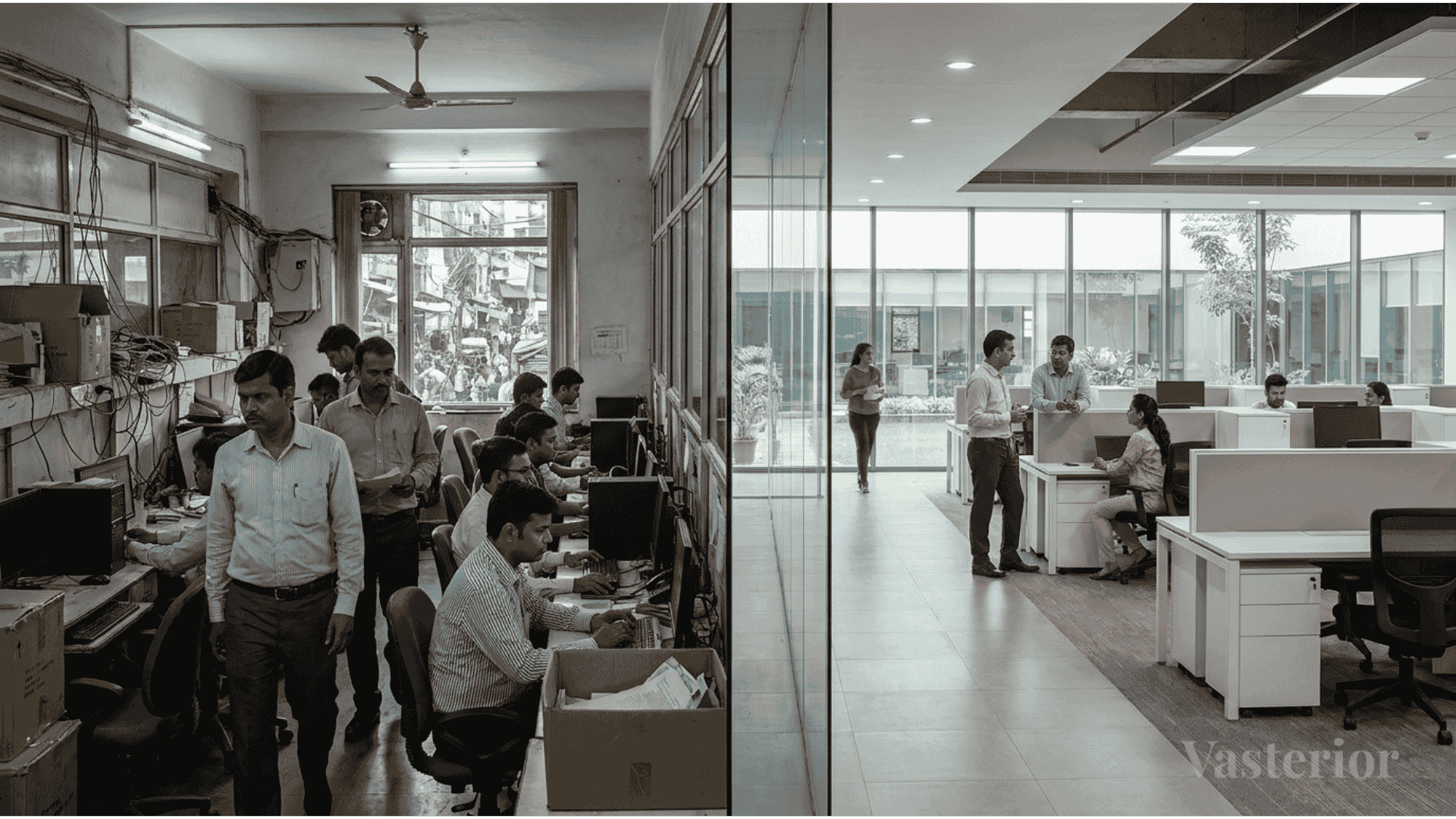
Many businesses unknowingly create obstacles through poor planning.
Some common mistakes include:
- Cluttered entrances that create negative first impressions
- Poor workstation layouts that reduce productivity
- Inefficient customer circulation in retail stores
- Overcrowded office spaces
- Improper zoning of departments
- Neglecting natural light and ventilation
- Ignoring directional influences during planning
Addressing these issues often leads to noticeable improvements in daily operations and employee satisfaction.
How Vasterior Creates Prosperous Commercial Spaces

Every business is unique. That is why Vasterior follows a customized process rather than offering generic recommendations.
Comprehensive Site Analysis
We evaluate the existing layout, operational requirements, and business objectives.
Detailed MahaVastu Assessment
Our experts identify spatial strengths and areas that may require optimization.
Strategic Space Planning
We create layouts that support productivity, efficiency, and long-term growth.
Design Integration
MahaVastu recommendations are seamlessly incorporated into modern interior design concepts.
Customized Recommendations
Solutions are tailored to the specific needs of offices, retail spaces, and industrial facilities.
Long-Term Business Benefits
Our goal is not simply to improve aesthetics but to help businesses create environments that support sustainable success.
Real Business Benefits of a Well-Planned Commercial Space

Businesses that invest in thoughtful spatial planning often experience meaningful advantages.
Better Employee Productivity
Employees perform more effectively when they work in organized and comfortable environments.
Improved Customer Experiences
Customers are naturally drawn to spaces that feel intuitive and welcoming.
Enhanced Decision-Making
Leaders benefit from environments that support focus and strategic thinking.
Reduced Operational Friction
Efficient layouts reduce unnecessary movement and improve workflow.
Stronger Brand Perception
A professionally planned commercial space reinforces trust and credibility.
Long-Term Business Growth
When people, processes, and spaces work together, growth becomes more sustainable and scalable.
Conclusion
A commercial space is more than a physical location. It is an active contributor to business performance.
From offices and retail stores to large industrial facilities, the way a space is planned can influence productivity, customer satisfaction, operational efficiency, and overall success.
By combining the science of MahaVastu with intelligent spatial planning, Vasterior helps businesses create environments that support harmony, prosperity, and growth.
If you are planning a new commercial project or looking to optimize an existing space, Vasterior can help you unlock the full potential of your business environment through customized MahaVastu-driven spatial planning solutions.
Connect with our team at +91 9100883355 or write to info@vasterior.com.
Frequently Asked Questions
1. What is commercial Vastu?
Commercial Vastu involves applying Vastu principles to offices, shops, and industrial spaces to support productivity, efficiency, and business growth.
2. How does MahaVastu differ from traditional Vastu?
MahaVastu uses a systematic and practical approach focused on directional influences and spatial optimization.
3. Can Vastu improve office productivity?
Proper planning can help create a more organized and comfortable workspace, which may positively influence productivity.
4. Is commercial Vastu suitable for startups?
Yes. Startups can benefit from optimized layouts that support growth, collaboration, and efficient operations.
5. Does Vastu require major structural changes?
Not always. Many improvements can be implemented through planning, zoning, and interior modifications.
6. Can Vastu help retail businesses?
Strategic placement of entrances, displays, and cash counters can improve customer experiences and operational flow.
7. Is industrial Vastu relevant for manufacturing units?
Yes. Industrial Vastu can support workflow optimization, operational efficiency, and better space utilization.
8. How does spatial planning support business growth?
Effective spatial planning improves functionality, employee comfort, customer movement, and overall efficiency.
9. Why choose Vasterior for commercial Vastu consultation?
Vasterior combines MahaVastu expertise with modern spatial planning and interior design to create practical business solutions.
10. Can Vasterior provide customized solutions for different industries?
Yes. Every recommendation is tailored to the unique operational and spatial requirements of the business.