Designing a new home is more than choosing finishes, furniture, or layouts. It is the rare moment where intention, architecture, and lifestyle intersect. At this stage, the decisions you make do not merely define how your home looks; they quietly shape how it supports your thinking, your relationships, and your everyday rhythm.
This is where Vastu, when understood correctly, becomes profoundly relevant.
Contrary to popular perception, Vastu is not a belief system or a collection of rigid rules. At its essence, it is the ancient Indian science of spatial intelligence, a framework that studies how direction, light, movement, elements, and human activity interact within a built environment. When applied thoughtfully, Vastu does not impose restrictions. Instead, it removes resistance. The result is a home that feels calmer, more balanced, and intuitively supportive of its occupants.
For new homes especially, Vastu-compliant interior design offers a rare advantage: alignment can be built into the foundation of the space rather than forced later through compromises. This guide explores how Vastu and interior design, when integrated intelligently, create homes that are not only beautiful, but deeply supportive of life.
What Vastu Really Means in Modern Interior Design
Vastu, in its classical form, emerged from centuries of observation. It studied how natural forces, sunlight, wind flow, gravity, and orientation, influence human comfort and productivity. Over time, however, Vastu became widely misunderstood. Simplified interpretations reduced it to superstition, rigid do's and don'ts, and fear-based remedies.
Modern homes demand a more evolved approach.
This evolution comes through MahaVastu, a contemporary, research-backed system derived from thousands of real-world case studies. MahaVastu reframes Vastu into four clear principles: Direction, Element, Activity, and Object. Instead of asking homeowners to demolish or rebuild, it focuses on correcting alignment through placement, proportion, material choice, and spatial flow.
In modern interior design, Vastu is not about restricting creativity. It is about enhancing it. When a space is aligned correctly, interiors feel effortless. Light behaves naturally. Movement feels intuitive. Rooms support their intended function without mental or emotional friction. Good design looks appealing. Aligned design feels right.
Why Vastu Must Be Integrated with Interior Design and Not Added Later
One of the most common mistakes homeowners make is treating Vastu as a separate layer applied after interior design is complete. This approach often leads to visual compromises, unnecessary stress, or ineffective remedies.
Vastu works best when it is integrated at the planning stage.
Interior design defines how a space is used. Vastu defines how that usage aligns with natural forces. When both work together, the home supports clarity of thought, emotional balance, and smooth day-to-day functioning. When they work against each other, even the most luxurious interiors can feel heavy or unsettled.
At Vasterior, Vastu is never used to override design. Instead, design is refined through alignment. This ensures that corrections are subtle, non-destructive, and aesthetically seamless, allowing the home to feel intentional rather than adjusted.
Vastu-Compliant Planning for a New Home
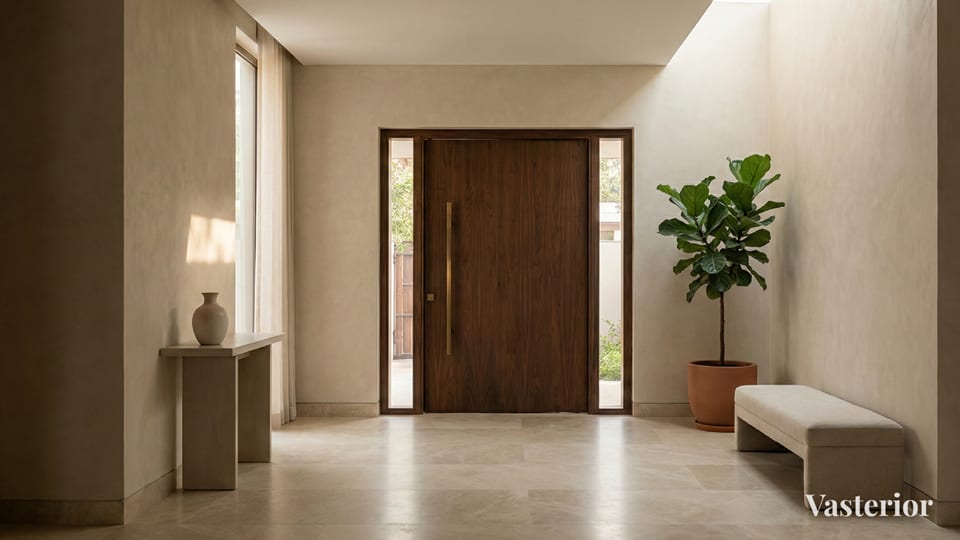
Entrance and Main Door
The entrance is the first point of interaction between the home and its external environment. Beyond aesthetics, its orientation, proportion, and openness influence how energy enters and circulates.
A well-aligned entrance feels welcoming, uncluttered, and balanced. Thoughtful lighting, material selection, and clear movement paths are as important as direction. When designed correctly, the entrance supports clarity, opportunity, and a sense of arrival without appearing symbolic or forced.
Living and Family Areas
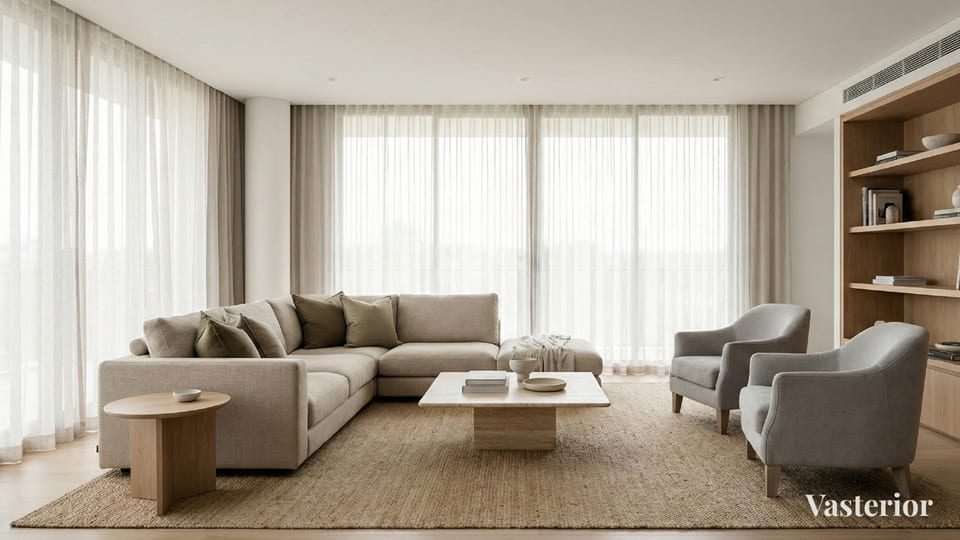
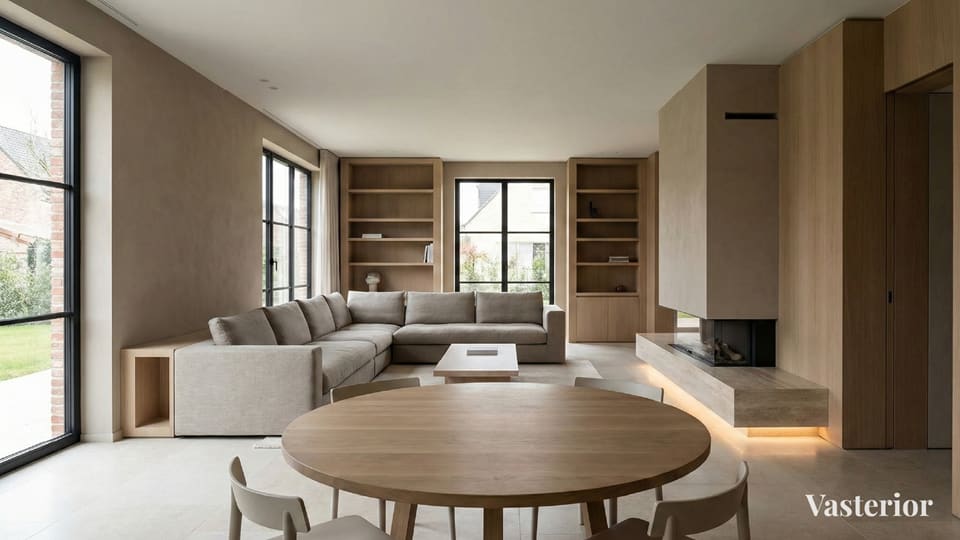
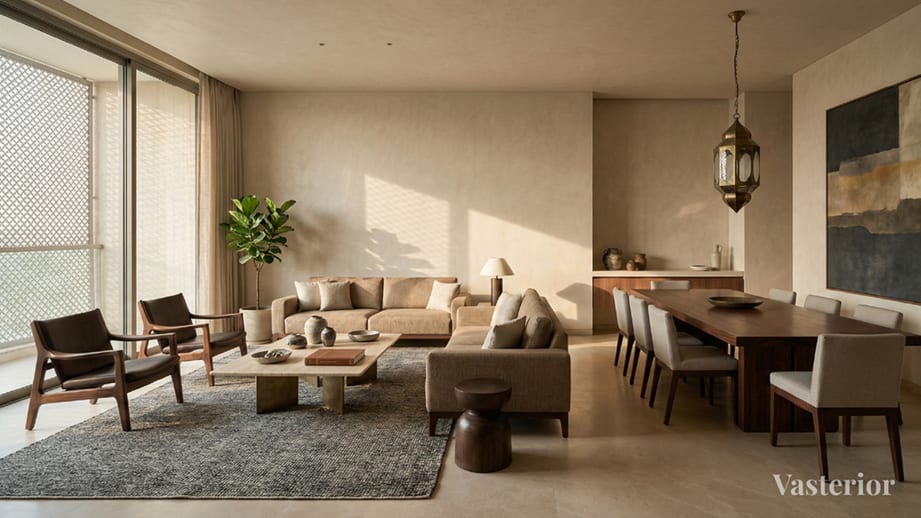
Living spaces are meant for connection, conversation, and relaxation. Vastu-compliant planning focuses on openness, natural light, and smooth circulation rather than heavy furniture clustering.
Seating arrangements should encourage interaction while allowing energy to flow freely. Balanced proportions, grounded materials, and controlled visual weight help create a space that feels lively yet calm, ideal for both hosting and everyday living.
Kitchen Planning
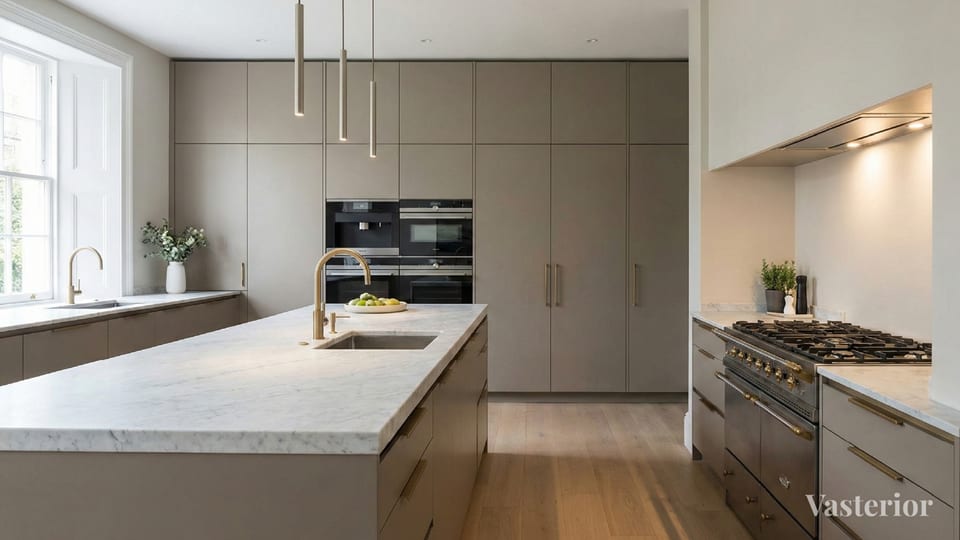
The kitchen represents nourishment and activity. From a Vastu perspective, placement of cooking zones, storage, and preparation areas must support efficiency and comfort.
In interior design terms, this translates to intelligent zoning, proper ventilation, and ergonomic layouts. Material choices, colour palettes, and lighting further reinforce warmth and stability without overwhelming the space.
Bedrooms: Master, Children, and Guest Rooms
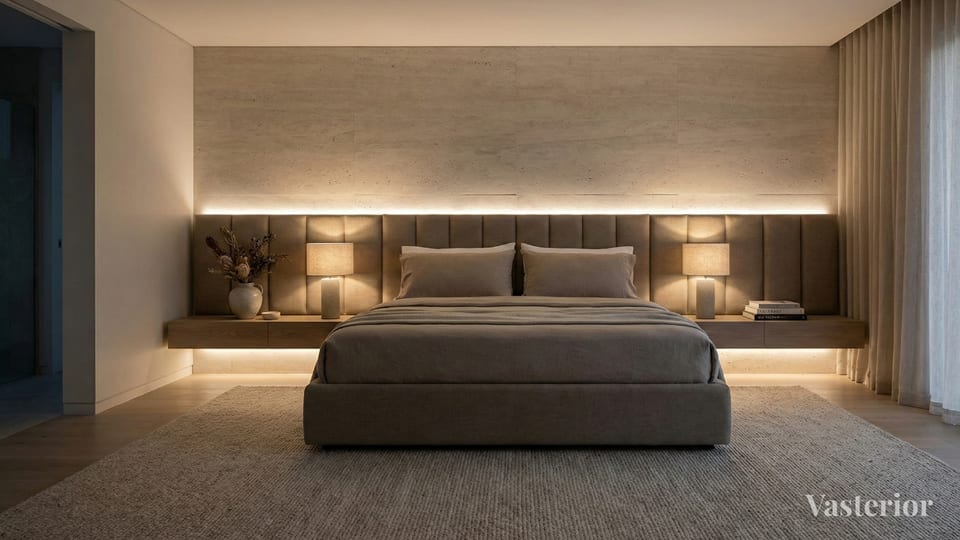
Bedrooms are deeply personal spaces where rest and recovery occur. Vastu-compliant design ensures that bed placement, storage weight, and circulation do not create subconscious restlessness.
For master bedrooms, alignment supports stability and grounding. Children's bedrooms benefit from layouts that encourage focus, creativity, and emotional balance. Guest rooms are designed to feel welcoming yet neutral, allowing visitors to rest without overstimulation.
Bathrooms and Utilities
Bathrooms, often overlooked, play a significant role in energy movement. Proper zoning, drainage planning, and ventilation prevent stagnation.
In modern interiors, this aligns with clean layouts, minimal clutter, and material choices that feel hygienic and calming. When designed well, bathrooms quietly support comfort rather than disrupting the home's balance.
Brahmasthan: The Central Zone
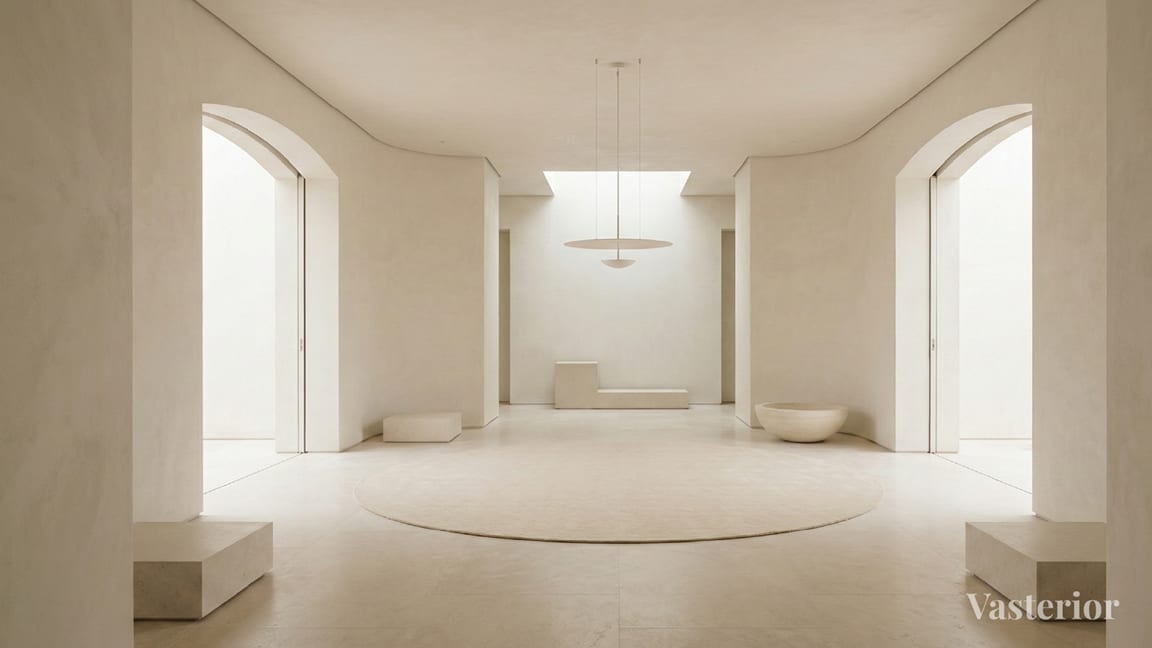
The Brahmasthan, the central area of the home, is considered the core of spatial balance. Keeping this zone open, light, and free of excessive load allows energy to circulate smoothly.
From an interior design standpoint, this means avoiding heavy furniture, excessive partitions, or visual clutter at the centre. Even subtle openness here enhances the overall harmony of the home.
Storage and Heavy Elements
Wardrobes, safes, and storage units carry significant physical and visual weight. Their placement influences how grounded or congested a space feels.
Vastu-aligned storage planning ensures stability without obstruction. Clean lines, integrated cabinetry, and thoughtful proportions help maintain both balance and elegance.
Common Vastu Mistakes in New Homes
Many Vastu issues arise not from architecture, but from misunderstanding. Some of the most common mistakes include:
- Treating Vastu as a checklist rather than a system
- Over-decorating sensitive zones
- Ignoring movement and circulation
- Applying fear-based remedies without analysis
- Copy-pasting layouts without site-specific understanding
True Vastu compliance is contextual. What works for one home may not work for another. Alignment must be derived from the space itself.
How Vasterior Designs Vastu-Compliant Interiors
Vasterior approaches Vastu as an integral part of design intelligence. Every project begins with gridding and layout mapping, ensuring that spatial alignment is understood before aesthetics are finalized.
Using MahaVastu principles, corrections are introduced subtly, through layout refinement, furniture placement, material selection, lighting, and proportion. There is no demolition-driven approach, no fear-based messaging, and no visual compromise.
Services such as MahaVastu Yogdaan, paid consultations, Vastu styling, and spatial flow planning allow homeowners to experience alignment in a calm, structured manner. The result is a home that supports growth quietly, without demanding attention.
Who Should Consider Vastu-Compliant Interior Design
Vastu-compliant interiors are especially beneficial for:
- First-time homeowners
- Families upgrading or renovating homes
- Entrepreneurs and professionals seeking clarity
- Anyone looking for emotional balance and long-term stability
Aligned spaces do not promise miracles. They offer support, subtle, consistent, and deeply impactful.
Designing Homes That Support Life
A truly successful home is one that works with you, not against you. Vastu-compliant interior design is not about control or restriction. It is about creating environments that reduce friction and allow life to flow more naturally.
When Vastu is understood as spatial intelligence and integrated thoughtfully with interior design, homes become more than structures. They become supportive ecosystems.
At Vasterior, every space is designed with this philosophy at heart, ensuring that beauty, function, and alignment exist in quiet harmony. Call us today at +91 9100883355 or info@vasterior.com.