For decades, the word Vastu has carried unnecessary weight. Fear. Confusion. Rigid rules. Anxiety about directions, doors, corners, and consequences.
For many homeowners and business leaders, Vastu has slowly transformed from a guiding science into a source of stress. People worry about what is wrong with their space rather than understanding how their space can support them. Somewhere along the way, the original intention of Vastu was diluted, misinterpreted, and packaged as superstition.
At Vasterior, we believe it is time to reset the narrative.
Vastu was never meant to scare you. It was never meant to restrict modern life. And it was certainly never meant to override logic, design, or comfort.
The truth is simple: Vastu is about flow. When flow is right, life feels lighter.
Why Vastu Became Fear-Driven
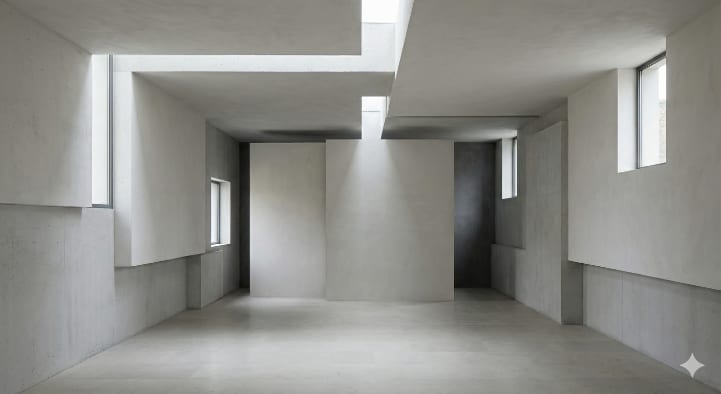
The roots of Vastu are deeply intelligent. It is an ancient Indian science of spatial observation that studied how direction, light, air, movement, elements, and human activity interact within a built environment. Over centuries, this knowledge helped people design homes, temples, cities, and workplaces that felt harmonious and supportive.
However, as time passed, context was lost.
What was once observational became prescriptive. What was once adaptable became rigid. What was once guidance became fear.
Instead of understanding why something worked, people were told what not to do. Instead of alignment, there was alarm.
This shift turned Vastu into a list of dos and don'ts:
- Don't place this here.
- Don't sleep there.
- Don't build this way.
- Otherwise, something bad will happen.
Fear replaced understanding. And when fear enters design, creativity exits.
The Problem With Fear-Based Vastu
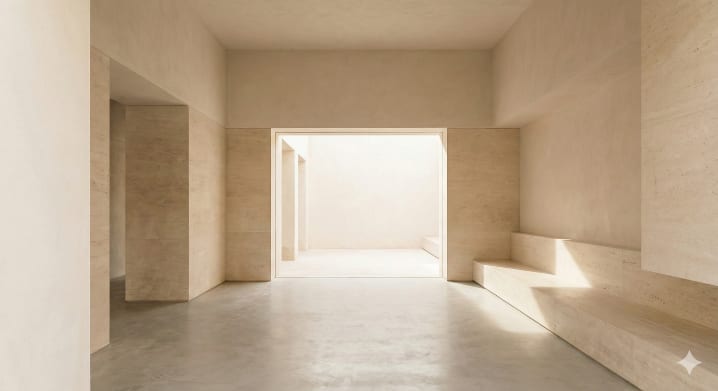
Fear-based Vastu creates resistance, ironically, the very thing Vastu was meant to remove.
When people approach their homes or offices with anxiety, they stop listening to the space. Every decision becomes tense. Renovations feel forced. Choices are made out of panic rather than clarity.
More importantly, fear-based Vastu disconnects people from responsibility. Instead of observing how a space functions, people begin blaming directions, planets, or invisible forces for very human challenges.
A poorly planned layout becomes "bad Vastu." Lack of light becomes "energy blockage." Noise, clutter, and chaos get spiritualized instead of solved.
True Vastu was never about blame. It was about awareness and correction.
What Vastu Was Always Meant to Be
At its essence, Vastu is a science of spatial intelligence.
It observes:
- How light enters a space
- How air moves
- How people circulate
- Where activity concentrates
- How objects interact with direction and function
When these elements align, a space stops working against you.
Your mind feels calmer. Decisions feel easier. Energy flows with less resistance. This is not belief. This is lived experience.

Flow vs Force: How Spaces Actually Influence Life
Think of a river.
When it flows naturally, it nourishes everything around it. When blocked or forced, it overflows, stagnates, or erodes.
Spaces behave the same way.
A well-aligned space does not push you. It supports you quietly. You may not consciously notice it, but you feel it:
- You focus better.
- Conversations feel smoother.
- Sleep improves.
- Work becomes more efficient.
- Emotional volatility reduces.
A misaligned space, on the other hand, creates subtle friction. Not dramatic chaos, but persistent resistance. Things feel heavier than they should.
Vastu is simply the study of removing that resistance.
MahaVastu: A Contemporary Lens on Ancient Wisdom
As architecture evolved and lifestyles modernized, traditional Vastu needed a more flexible framework. Urban homes, apartments, commercial buildings, and renovated spaces required solutions that respected existing structures.
This is where MahaVastu emerges.
- Direction
- Element
- Activity
- Object
Instead of demolition, it focuses on correction. Instead of rigidity, it allows adaptation. Instead of fear, it prioritizes flow.
MahaVastu understands that modern life cannot be paused for perfection. It works with the space you already have.
MahaVastu is not a rejection of classical Vastu, it is its evolution. Rooted in thousands of real-life case studies, MahaVastu simplifies spatial alignment into four core principles:
How Vasterior Practices Vastu Differently
At Vasterior, we do not separate Vastu from design.
We do not treat it as a checklist or an afterthought. We treat it as foundational intelligence.
Our process begins long before furniture, finishes, or aesthetics. We start with:
- Spatial gridding
- Layout mapping
- Zoning analysis
- Activity alignment
- Light and movement study
This allows us to understand how a space behaves, not just how it looks.
Design, in our philosophy, is not decoration. It is decision-making made visible.
When Vastu and design work together, the result is not a "Vastu-compliant" space, it is a supportive space.
What a Well-Aligned Space Feels Like
Clients often ask us, "How will I know if it's working?"
The answer is simple: you won't feel the struggle.
A well-aligned space does not announce itself. It does not perform. It simply allows life to move smoothly.
People often describe it as:
- "Things feel less complicated."
- "Decisions don't drain me anymore."
- "There's a sense of calm I can't explain."
- "Work feels lighter."
- "Home finally feels restful."
That is flow.
Not magic. Not miracles. Just alignment.
Letting Go of Myths Without Losing Meaning
Letting go of fear-based Vastu does not mean abandoning tradition. It means honoring it correctly.
Ancient sciences were never meant to be static. They were meant to evolve with human needs. When applied with intelligence and sensitivity, Vastu becomes a powerful ally, not a dictator.
You do not need to fear directions. You do not need to fear mistakes. You do not need to fear your own home.
What you need is understanding.
From Fear to Flow: A New Way Forward
At Vasterior, our role is not to impose beliefs. It is to bring clarity.
We believe spaces should:
- Support growth
- Reduce resistance
- Encourage clarity
- Reflect the people who inhabit them
Vastu, when practiced correctly, does exactly that.
It is not about control. It is about coherence.
And when coherence exists between space and life, everything begins to align naturally.
If you've ever felt confused, anxious, or skeptical about Vastu, you're not wrong. But you may have only seen one side of the story.
There is another way.
A calmer way. A modern way. A way rooted in observation, not fear.
Only flow.