Open Pinterest. Scroll for five minutes. Save twenty images. Now be honest—how many of those homes actually feel like you?
Exactly.
For years, Pinterest has been the internet's favourite design bible. Mood boards, colour palettes, "dream homes" neatly stacked into folders. But somewhere between saving the Scandinavian Japandi modern boho luxury minimalist living room and actually building a home, something broke. The connection. The intention. The soul.
In 2026–27, interior design is having its quiet rebellion. People aren't chasing picture-perfect homes anymore. They're chasing homes that make sense—emotionally, energetically, and practically. Homes that don't just look good on screens, but feel right at 7 a.m. on a Monday and 11 p.m. after a long day.
This is the era of purpose-led spaces. And yes, Pinterest fatigue is very, very real.
Pinterest Fatigue Is Real (And Everyone's Lowkey Over It)
Let's call it what it is. Pinterest didn't ruin interiors, but algorithm-led inspiration definitely diluted originality.
Most people today don't lack ideas. They're drowning in them.
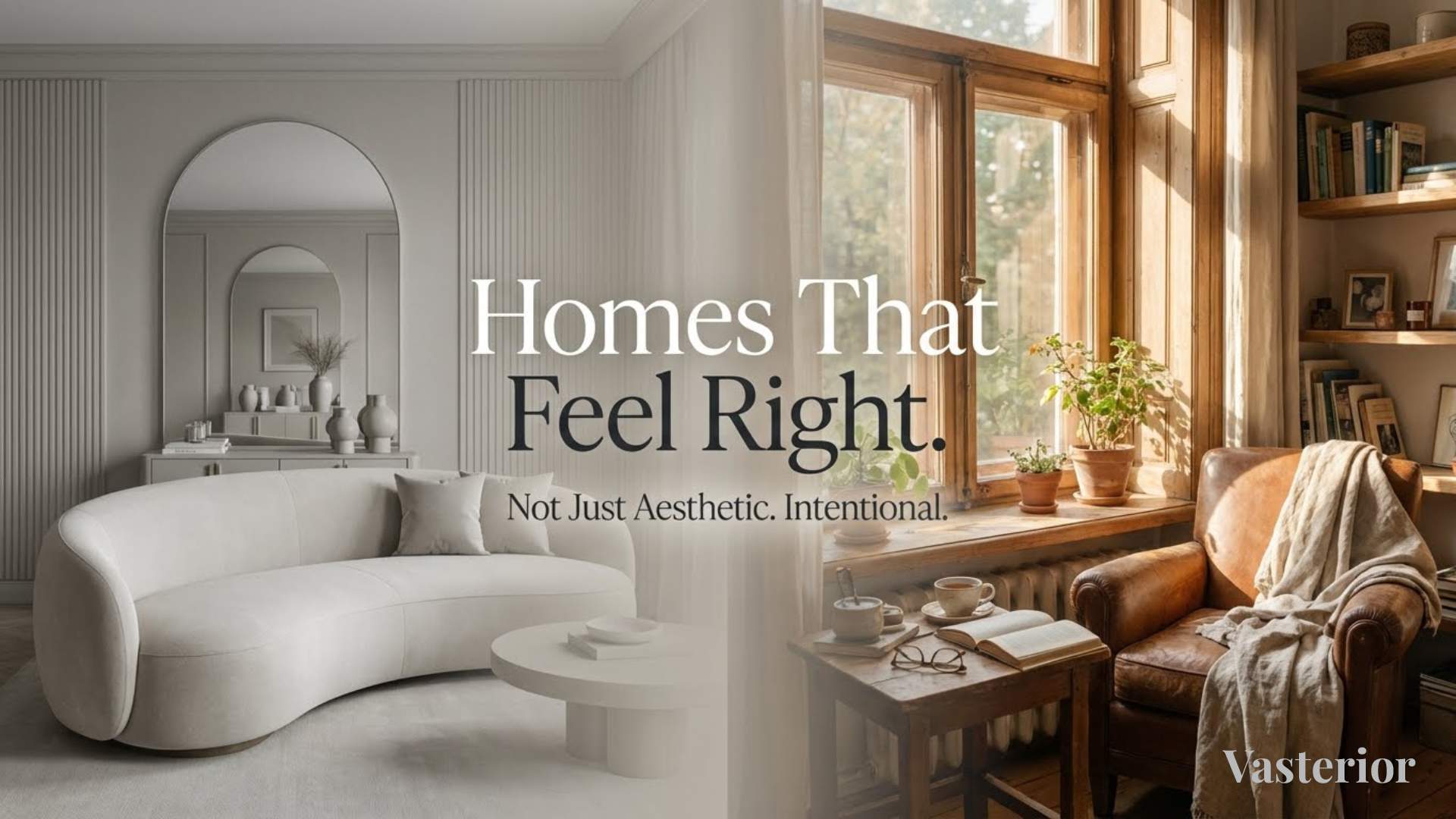
You scroll, you save, you screenshot. Every image looks stunning. But the more you consume, the harder it becomes to decide. Homes start blending into each other. Beige sofas. Curved mirrors. Fluted panels. Arches everywhere. The same "warm neutral" palette, copy-pasted across cities, cultures, and lifestyles.
The problem isn't Pinterest itself. It's how people started designing from references instead of reflection.
By the time a home is executed, it's often a collage of someone else's preferences:
- A kitchen inspired by a European apartment that doesn't suit Indian cooking
- A living room designed for photos, not conversations
- A bedroom that looks calm but somehow never helps you sleep better
And then comes the quiet disappointment. "It looks nice... but something feels off."
That "off" feeling? That's emotional disconnect. That's living in a space that was never designed for you.
The Big Shift: Designing From Intention, Not Images
Here's what changed in 2026–27: people started asking better questions.
Not: "Which style do you like?"
But: "How do you live?"
Purpose-led interiors don't start with Pinterest boards. They start with life patterns.
- How do your mornings actually look?
- Do you work from home or escape it?
- Are you hosting people often, or protecting your solitude?
- What drains you? What grounds you?
- Are you building for a phase... or for longevity?
Designing from intention means the home grows out of your life, not out of trending aesthetics.
Instead of choosing colours because they're popular, people are choosing them because they affect mood. Instead of layouts that look luxurious, they're opting for layouts that reduce friction. Instead of décor for validation, they're investing in spaces for regulation, comfort, and clarity.
In short: homes are becoming more human again.
Custom Layouts vs Trending Aesthetics (The Real Difference)
Let's get blunt—most trending designs aren't bad. They're just generic.
Trending aesthetics are built for mass appeal. Custom layouts are built for individual lives. And that difference shows up fast once you actually start living in the space.
Trending Aesthetic Homes
- Designed to look impressive at first glance
- Heavy on visual drama, light on daily usability
- Follow what's popular right now
- Age quickly when trends shift
Custom, Purpose-Led Homes
- Designed around routines, habits, and energy flow
- Prioritise movement, storage, light, and comfort
- Look quieter, but feel stronger
- Age well because they're rooted in function and meaning
Think about it. A home isn't a showroom. It's where you wake up groggy, cook half-asleep, argue, celebrate, work, rest, and reset. If design doesn't support those moments, what's the point?
This is why 2026–27 interiors are moving away from "What looks good?" to "What actually works?"
The Rise of Purpose-Led Spaces in 2026–27
Purpose-led spaces aren't a trend. They're a correction.
After years of hyper-visual culture, people want homes that regulate their nervous systems, not stimulate them endlessly. That's why we're seeing:
- Fewer but more meaningful design elements
- Multi-functional spaces that adapt through the day
- Softer transitions instead of dramatic visual breaks
- Design decisions rooted in lifestyle, not likes
There's also a renewed respect for spatial alignment—how a space flows, how energy moves, how certain placements affect mood and productivity. This is where concepts like Vastu are being reinterpreted—not as superstition, but as spatial wisdom.
In modern homes, alignment isn't about rigid rules. It's about awareness. About designing spaces that feel stable, balanced, and supportive over time.
And quietly, this has become the new luxury.
Not gold finishes. Not imported marble. But homes that feel good to live in.
Why Copy-Paste Design Is Finally Dying
Copy-paste design worked when people wanted validation. It's failing now because people want alignment.
In 2026–27, homeowners are more self-aware. They know when something doesn't feel right. They're less interested in impressing guests and more interested in not feeling drained in their own space.
They don't want:
- A home that looks like everyone else's
- A space that performs online but fails offline
- A design that needs constant justification
They want homes that:
• Reflect who they are becoming, not who they copied
• Support routines, not interrupt them
• Feel calm without being boring
• Feel personal without being chaotic
This is why originality is back—not loud originality, but grounded, intentional originality.
Vasterior's Approach: Designing From People, Not Pinterest
This shift is exactly where Vasterior operates.
The philosophy is simple but rare: no two lives are the same, so no two homes should be either.
Instead of starting with reference images, the process begins with understanding:
- How the space will be used daily
- The emotional needs of the people living there
- Energy flow, movement patterns, and natural light
- Functional priorities before visual preferences
Design decisions are layered—not rushed. Layout first. Alignment second. Aesthetics last. Because when the foundation is right, the visuals naturally fall into place.
That's why Vasterior homes don't follow a signature "look." Some are minimal. Some are warm. Some are bold. Some are deeply understated. The common thread isn't style—it's intention.
The result? Spaces that feel lived-in from day one. Homes that don't need constant explaining. Homes that quietly support the people inside them.
And honestly, that's the flex now.
What "Good Design" Really Means in 2026–27
Good design is no longer about being featured. It's about being functional, emotionally aligned, and sustainable for the long run.
A good home:
- Makes daily life easier, not harder
- Reflects your values, not trends
- Evolves with you instead of forcing upgrades every few years
- Feels grounding, even on chaotic days
The most beautiful homes today aren't the loudest ones. They're the ones where you walk in and instantly exhale.
Final Thought: Homes Are Meant to Be Lived In, Not Scrolled Past
Pinterest will still exist. Trends will still come and go. But the era of blindly replicating someone else's home is fading fast.
In 2026–27, the real aspiration isn't aesthetic perfection. It's emotional connection. Get in touch with our experts at +91 9100883355 or info@vasterior.com.
Because at the end of the day, the best-designed home isn't the one that gets saved the most—it's the one that feels like home the moment you step inside.
And once you experience that, there's no going back to copy-paste design.