
Vasterior often hears this question even before the first sketch is drawn: "How long will interior designing take?"
It's a fair question, and an important one. In a world used to instant deliveries and overnight transformations on social media, interior design can feel mysterious, even unpredictable. But here's the truth: great interiors don't run on deadlines alone; they run on rhythm, intention, and alignment.
This blog walks you through a room-by-room interior design timeline, explaining what typically happens, why it takes the time it does, and how patience quietly turns into permanence.
The Short Answer (Before We Go Deeper)
Interior designing is not a single timeline. It's a layered journey that depends on:
- the size of your home,
- whether it's a new build or renovation,
- the level of customization,
- decision-making speed,
- and whether execution is involved.
Some homes move faster, some take longer, but every well-designed home follows a natural sequence.
Now let's unfold that sequence.
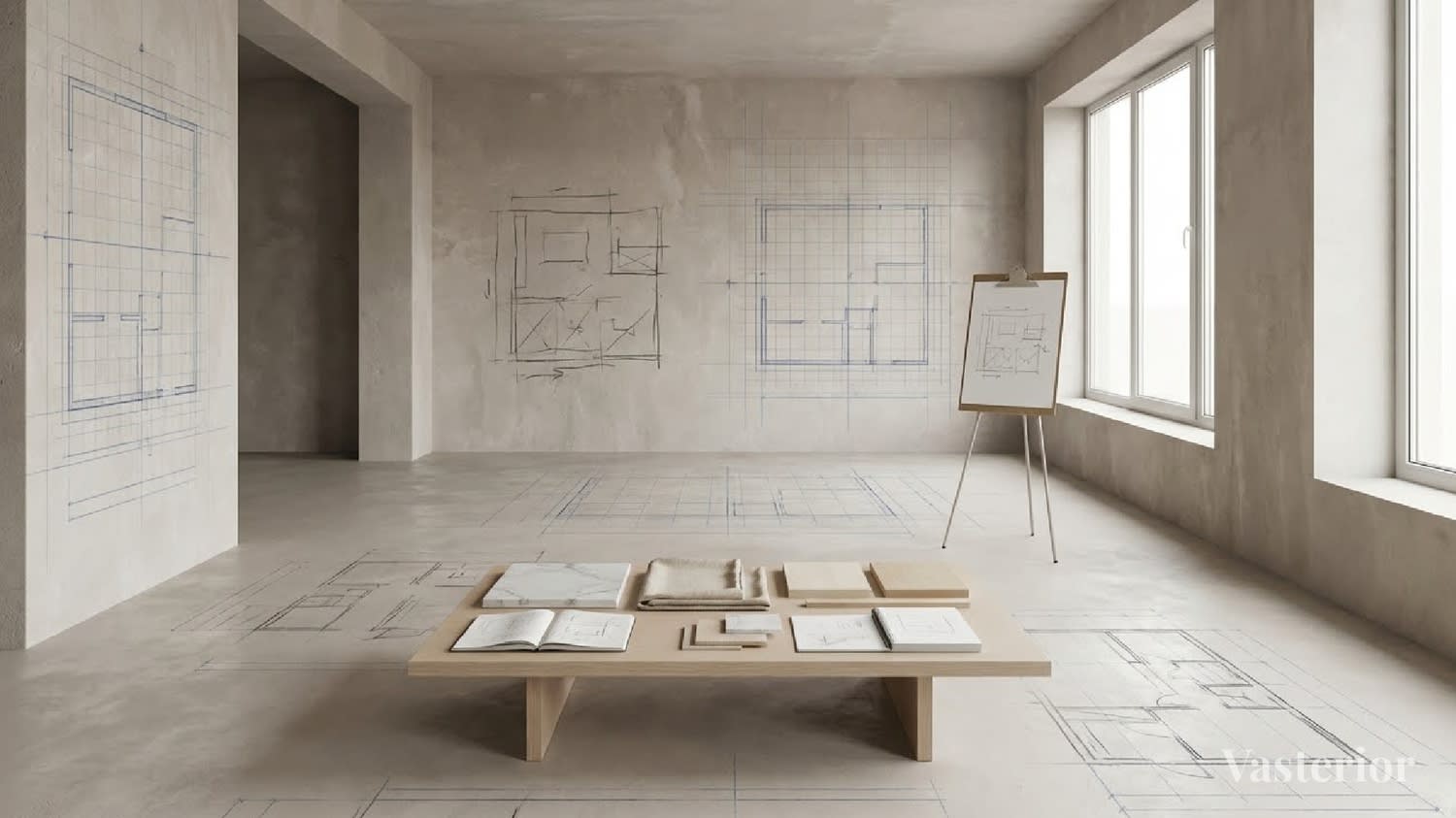
What Really Determines an Interior Design Timeline?
Before we talk rooms, it's important to understand what controls the clock.
1. Scope of the Project
A design-only consultation moves differently from a design + execution project. The more moving parts, the more coordination time is required.
2. New Home vs Renovation
Renovations often need:
- site dismantling,
- structural checks,
- utility rerouting, which naturally adds complexity.
3. Customisation Level
Bespoke wardrobes, handcrafted furniture, layered lighting, or curated materials take longer than off-the-shelf solutions, but they also age better.
4. Client Decision Cycles
Design is collaborative. Feedback, revisions, approvals—each decision shapes the pace.
5. Material Availability
Certain finishes, stones, fabrics, or custom hardware may require sourcing time.
In short, time is shaped by intention.
Phase 1: The Pre-Design Phase - The Invisible Foundation
Typical duration: a few weeks
This is where most people underestimate the importance of time.
At Vasterior, this phase includes:
- understanding your lifestyle and aspirations,
- studying spatial flow and functionality,
- analyzing how each room is used (and misused),
- aligning layouts with energy and movement patterns,
- and setting realistic budget expectations.
Nothing visible happens yet, but everything essential does.
Think of it as tuning an instrument before a performance.
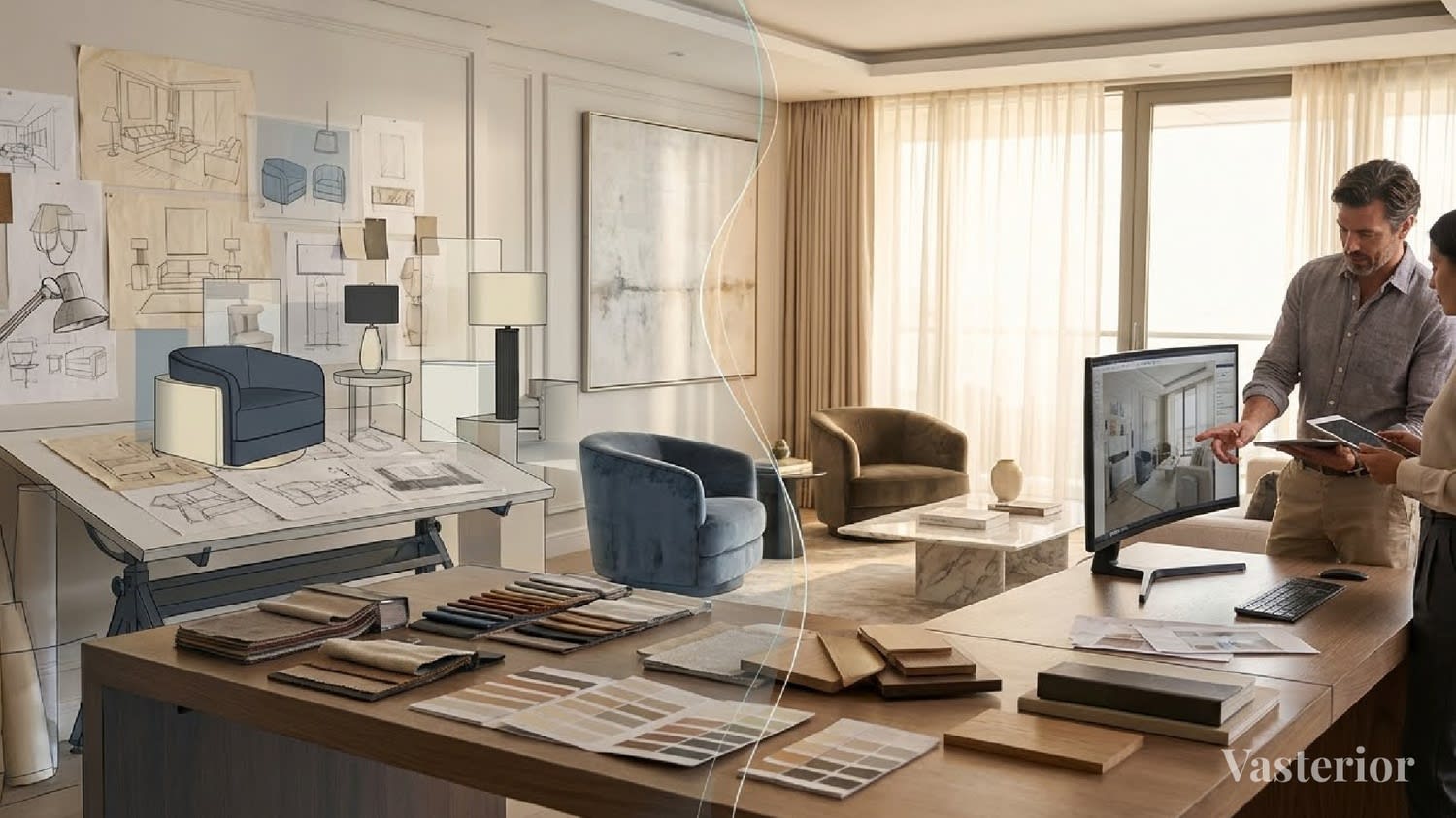
Phase 2: Design Development - Where Vision Takes Form
Typical duration: several weeks
This is where imagination meets structure.
You'll usually see:
- layout planning,
- mood boards and material stories,
- color and texture palettes,
- 3D visualizations,
- and thoughtful revisions.
Good design is rarely "one and done."
It evolves, slowly refining itself until it feels inevitable.
The Heart of the Matter: Room-by-Room Interior Design Timeline
Let's break it down space by space.
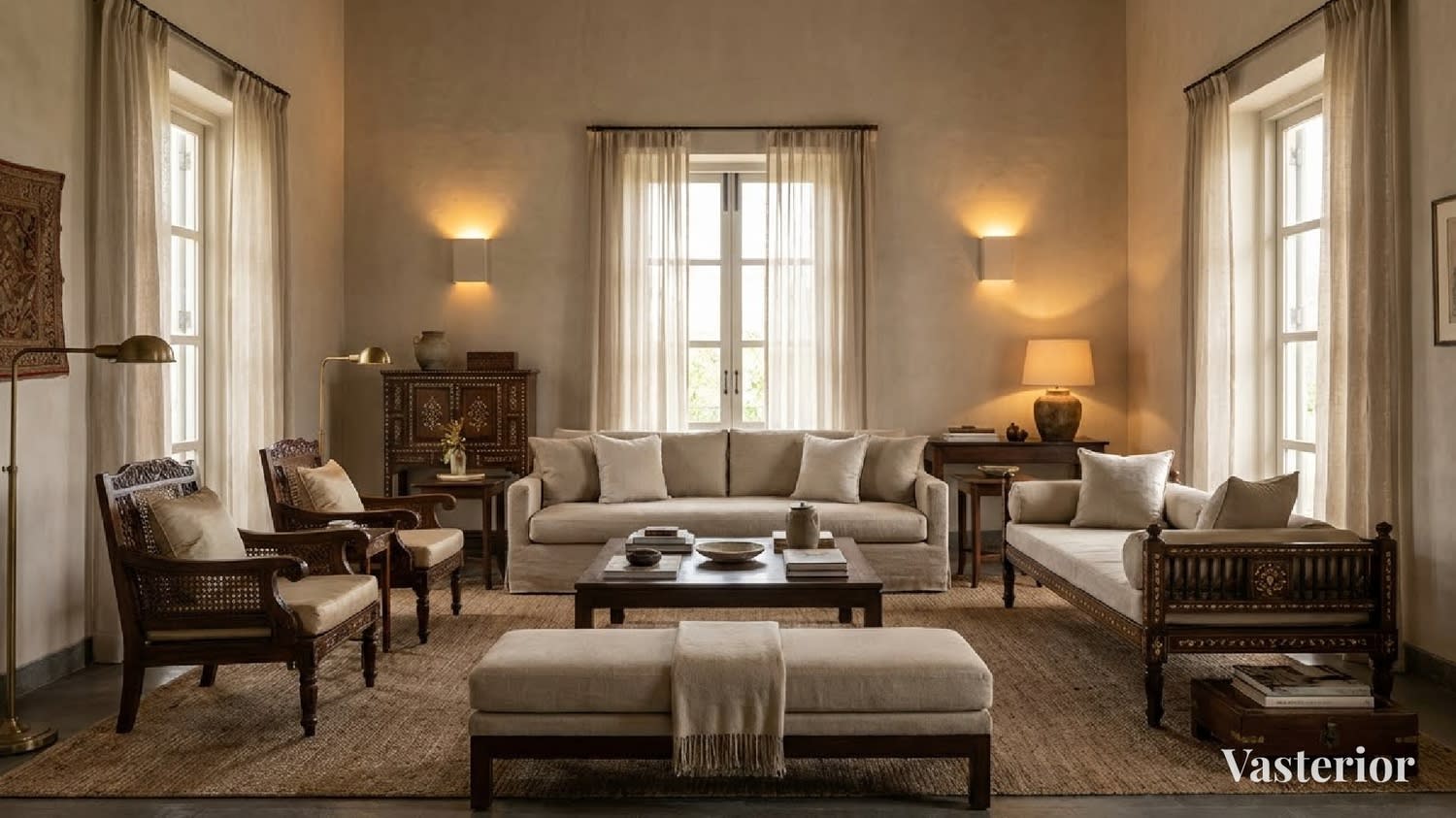
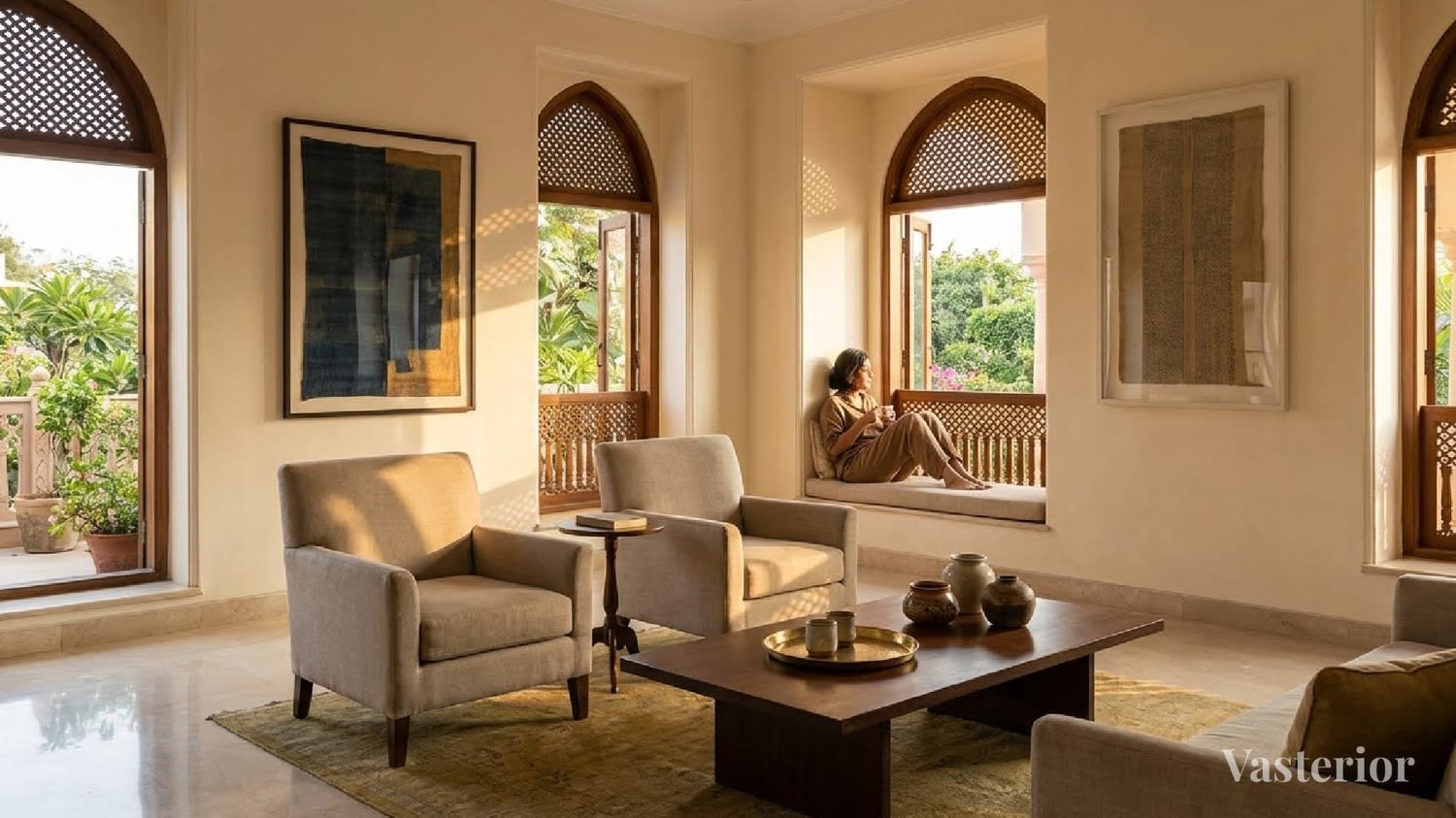
Living Room
Typical timeline: a few weeks
The living room sets the emotional tone of the home.
Designing it involves:
- seating layouts and circulation,
- focal points,
- lighting layers,
- material balance.
Because this space carries both hospitality and identity, it often takes a little longer to perfect, and rightly so.
Master Bedroom
Typical timeline: a few weeks
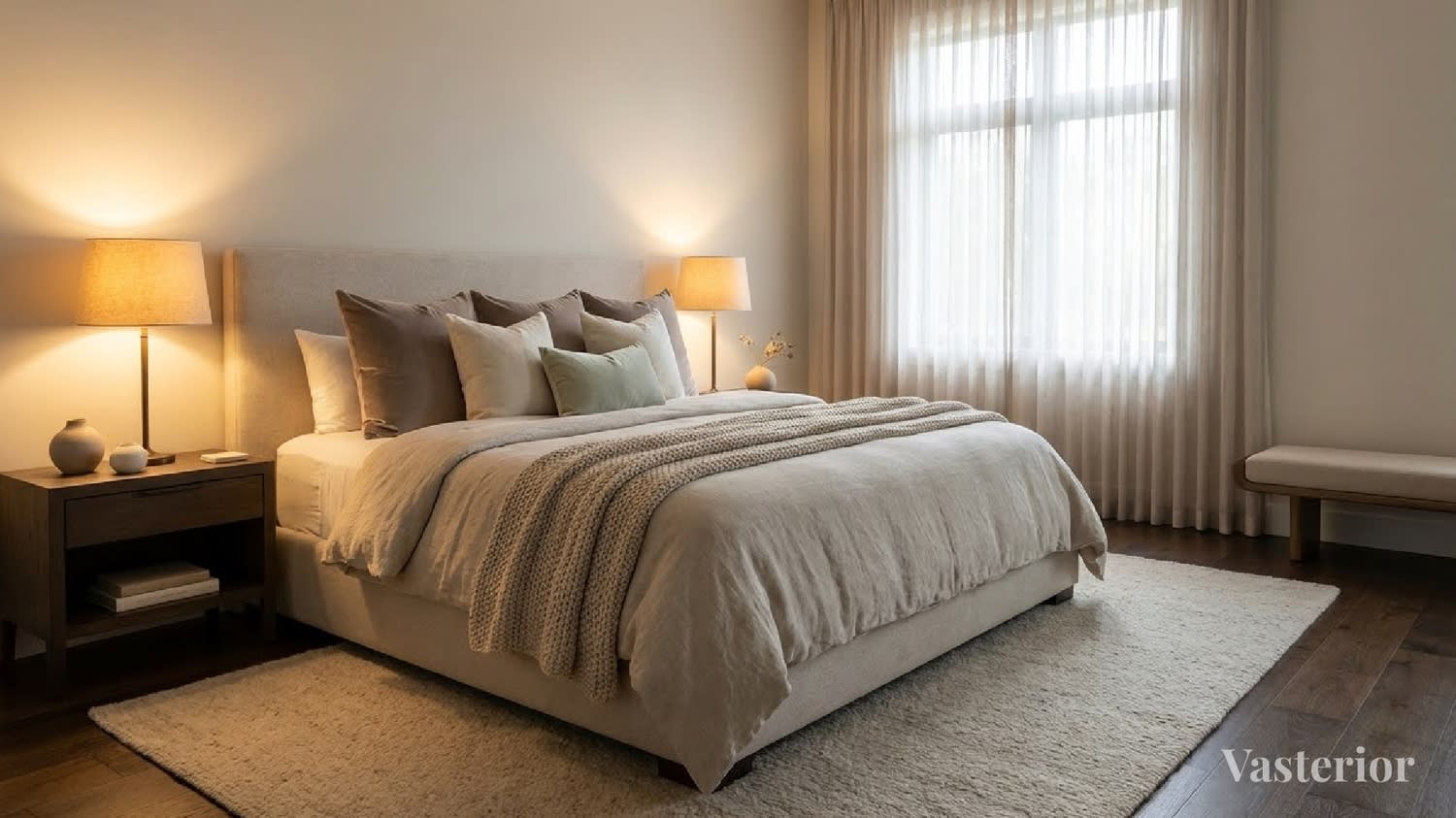
This is your most personal space.
Design focus includes:
- bed placement,
- storage planning,
- lighting for rest and intimacy,
- textures that calm rather than stimulate.
Bedrooms demand subtlety.
Nothing loud, nothing rushed.
Kitchen
Typical timeline: several weeks
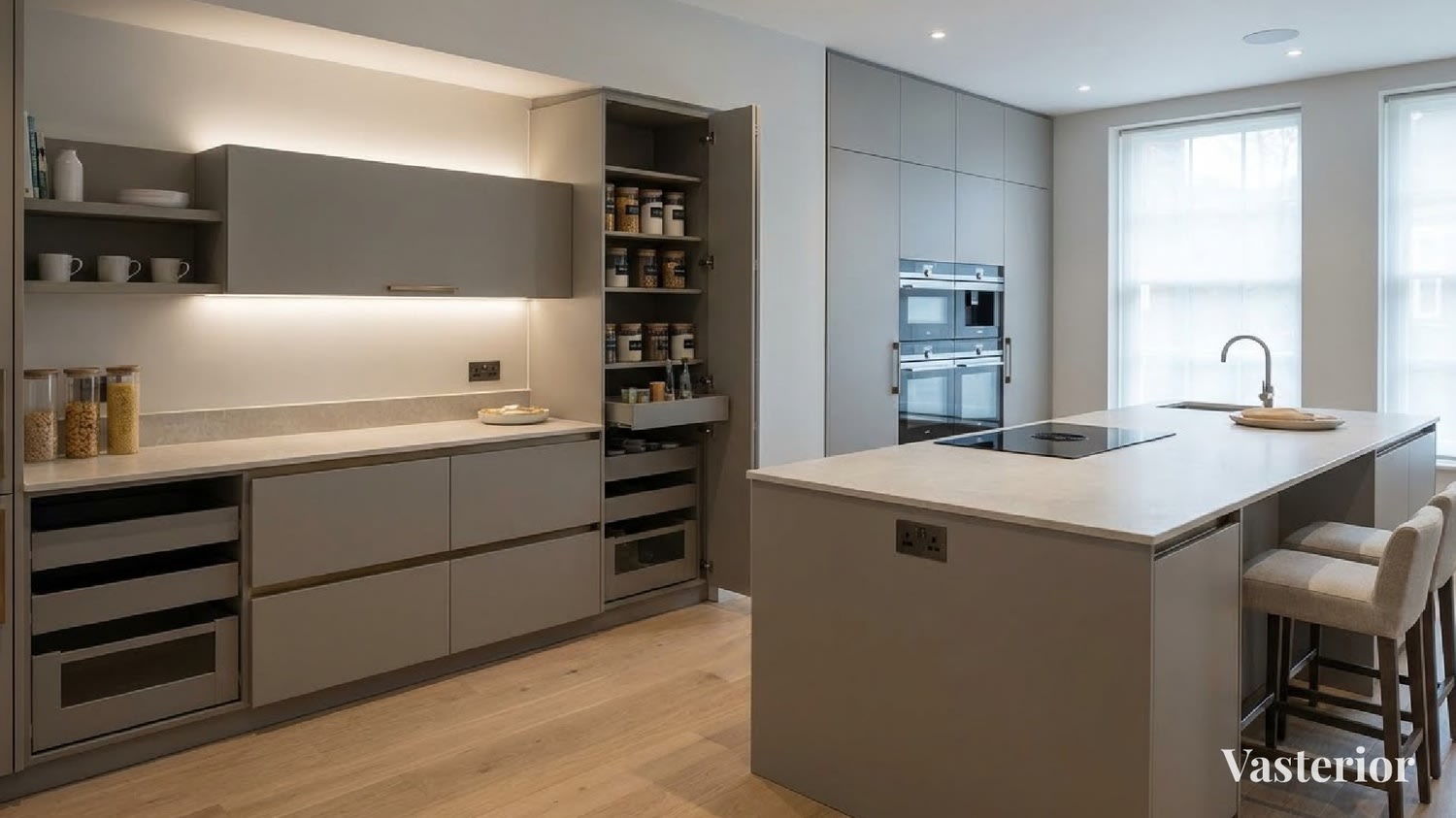
Kitchens are technical and emotional at once.
Designing a kitchen requires:
- workflow planning,
- storage optimization,
- appliance coordination,
- finishes that age gracefully.
Even small changes here have long-term impact, so precision matters.
Bathrooms
Typical timeline: a few weeks
Bathrooms involve:
- layout clarity,
- waterproofing logic,
- material compatibility,
- and lighting accuracy.
Because multiple services converge here, timelines are usually deliberate rather than fast.
Wardrobes & Storage Areas
Typical timeline: a few weeks
Storage design is about anticipation:
- future needs,
- evolving lifestyles,
- clutter control.
Well-planned storage saves years of frustration, which is why it deserves thoughtful time.
Home Office / Study
Typical timeline: a few weeks
With work-from-home becoming permanent, this room is designed around:
- ergonomics,
- acoustics,
- lighting comfort,
- and focus.
Productivity spaces benefit from calm, not speed.
Kids' Room
Typical timeline: a few weeks
Children grow quickly, but rooms shouldn't feel outdated just as fast.
Design balances:
- adaptability,
- safety,
- personality,
- and longevity.
That balance takes care.
Dining Area
Typical timeline: a few weeks
Dining spaces are about:
- proportions,
- lighting drama,
- comfort,
- and flow between kitchen and living.
It's not just about eating—it's about gathering.
Balconies & Transitional Spaces
Typical timeline: a few weeks
Often overlooked, these spaces are where:
- light enters,
- air moves,
- and the home breathes.
Designing them last often brings the entire home together.
Phase 3: Execution & Site Coordination (If Included)
Typical duration: several weeks to a few months
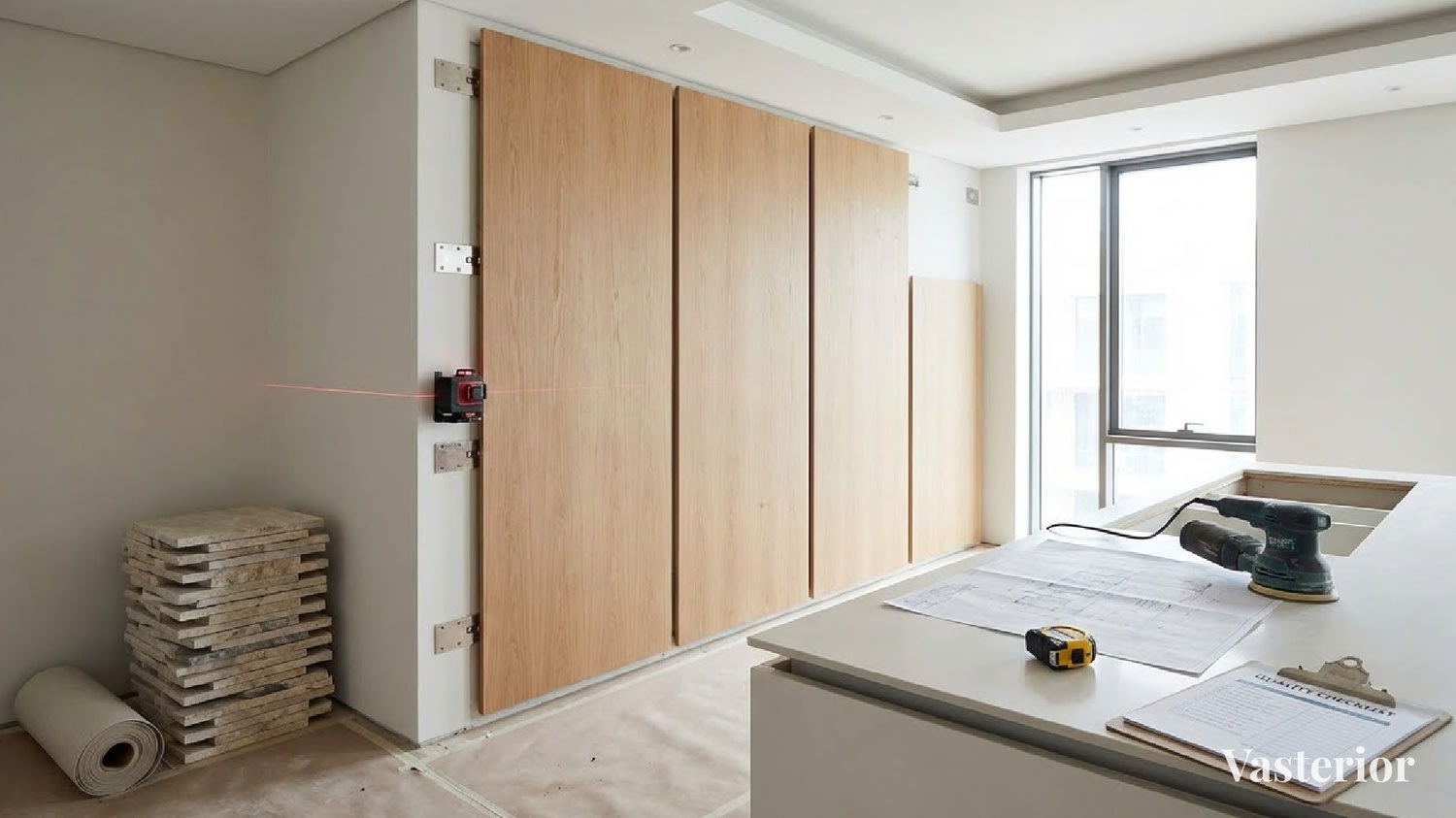
Execution introduces:
- vendor coordination,
- site supervision,
- quality control,
- and sequencing of work.
Rushing execution almost always shows—sometimes immediately, sometimes years later.
Why Flexible Timelines Are a Good Sign
A flexible timeline means:
- design decisions are thoughtful,
- craftsmanship isn't compromised,
- and the home evolves naturally.
Fast homes look good quickly.
Well-designed homes feel good for decades.
Common Myths About Interior Design Timelines
Myth 1: "It should finish in 30 days."
Reality: That's a makeover—not a design process.
Myth 2: "Pinterest homes are quick."
Reality: Pinterest homes hide months of planning.
Myth 3: "Designers delay work."
Reality: Designers protect outcomes.
How Vasterior Manages Time Without Compromising Quality
Vasterior works with:
- structured design phases,
- clear milestones,
- transparent communication,
- and design-first thinking.
Time is not stretched—it's respected.
Designing at the Right Pace
Interior design isn't about racing to the finish line. It's about arriving at a space that feels right, not just complete.
If you're curious about what your home's timeline could look like, a conversation often brings more clarity than a calendar.
You can reach us at +91 9100883355 or simply write to info@vasterior.com—sometimes the best designs begin with nothing more than a thoughtful question.