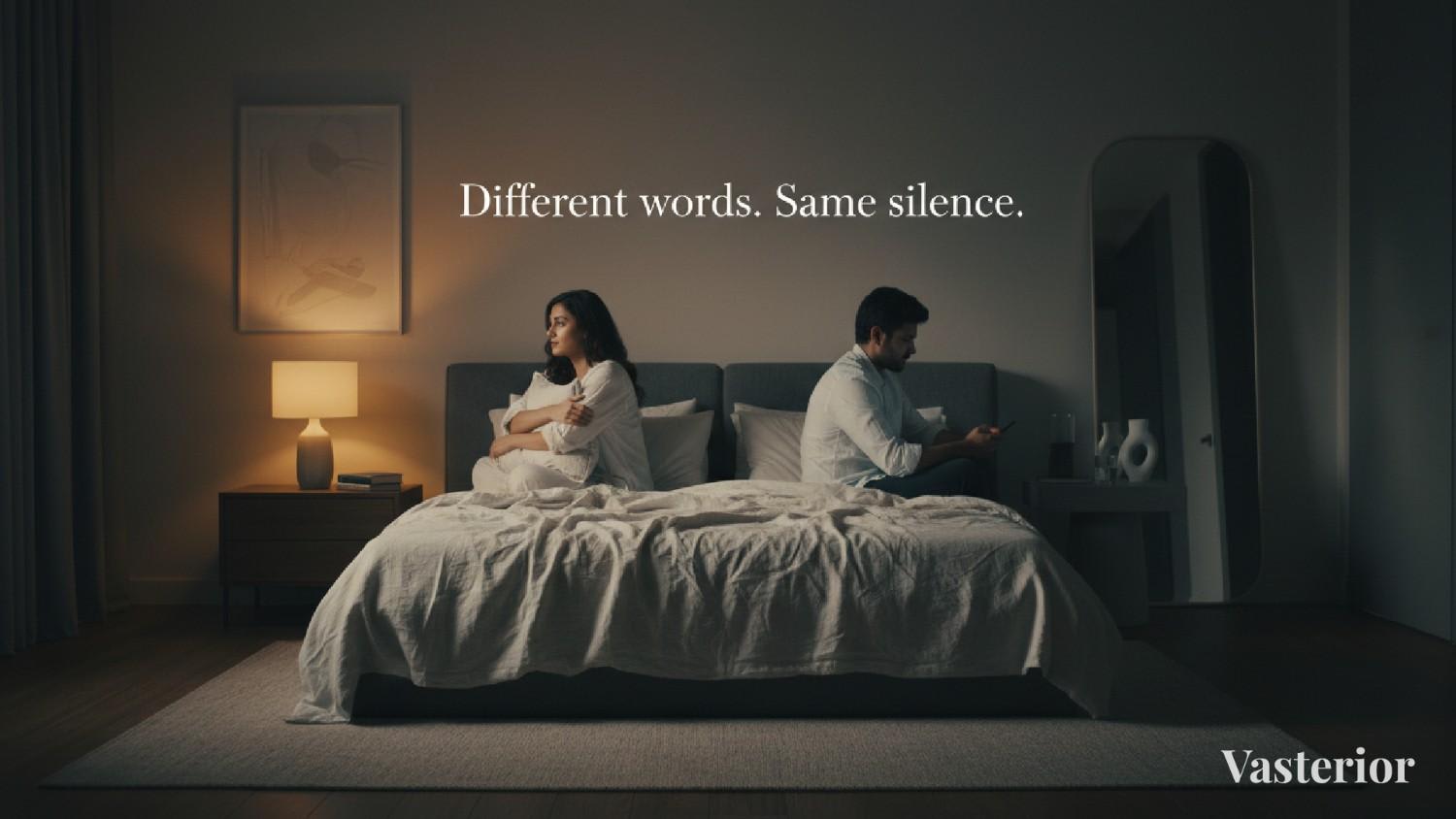
You promise yourself it will be different this time.
Different tone. Different words. More patience. Less reaction.
And yet, somehow, you find yourselves back in the same argument—not identical in detail, but identical in feeling. The same emotional fatigue. The same heaviness in the chest. The same silence that follows, louder than the fight itself.
Most couples don't argue because they don't love each other. They argue because something keeps pulling the same emotional trigger, again and again, no matter how much they try to "fix" it consciously.
And here's the uncomfortable truth most people never consider: Not every repeated argument is about communication. Some are about conditioning—and some conditioning comes from the space you live in.
The Argument Loop Nobody Talks About
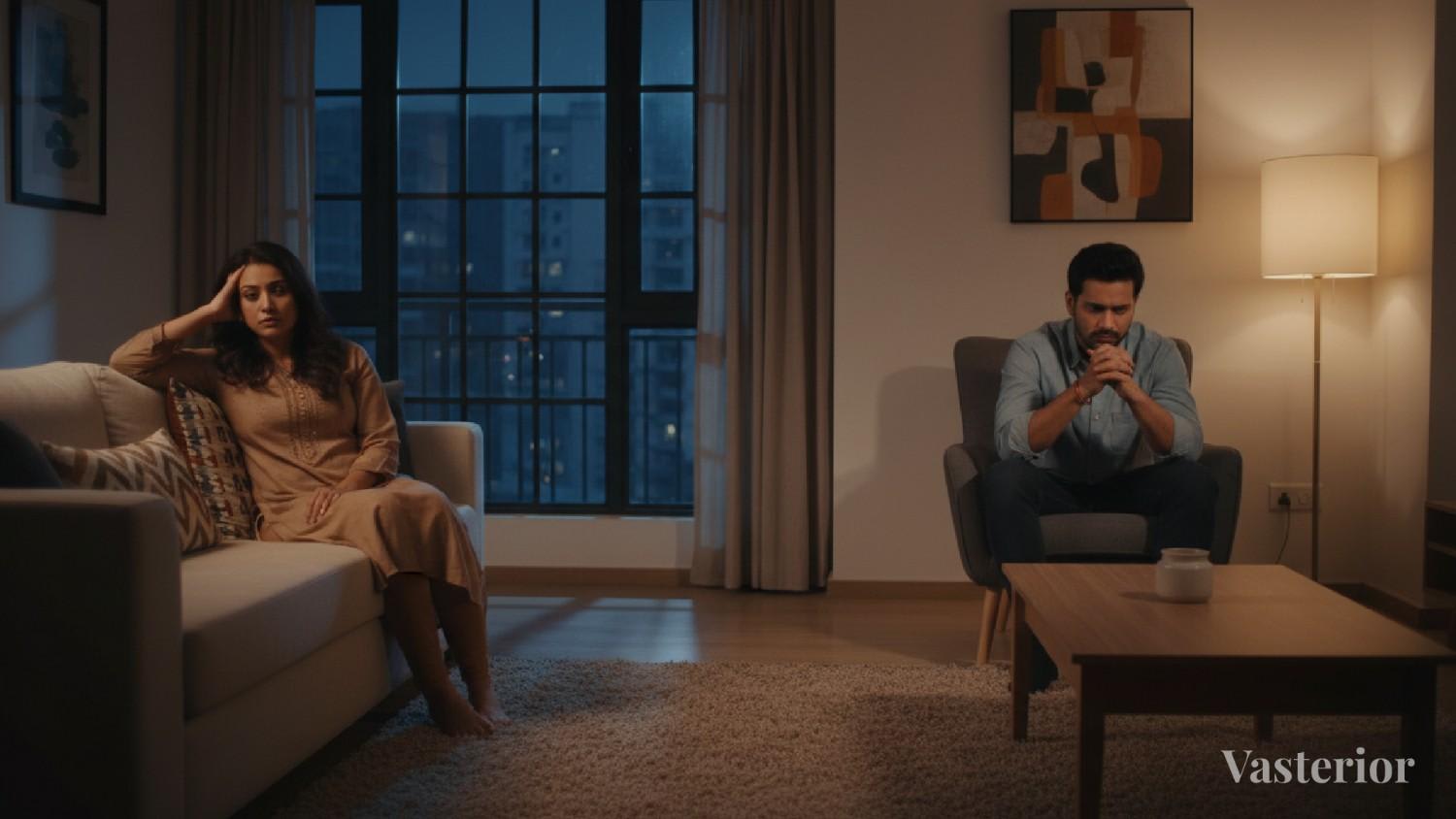
Repeated arguments follow a pattern.
One person feels unheard. The other feels attacked. The same emotional roles activate automatically, even before the conversation fully begins.
What's scary is how fast it happens. One comment, one look, one tone shift—and suddenly you're both reacting, not choosing.
Most advice online tells you to:
- communicate better
- listen more
- regulate emotions
All valid. All incomplete.
Because none of it explains why the same emotional reactions fire so effortlessly, even when both people genuinely want peace.
What rarely gets discussed is that spaces hold emotional memory. Not in a mystical sense, but in a behavioural one.
Where you sleep, where you argue, where you withdraw—these places train your nervous system. Over time, your body learns how to feel in a space before your mind catches up.
This is where Vastu quietly enters the conversation.
Why Logic Alone Fails in Emotional Conflicts
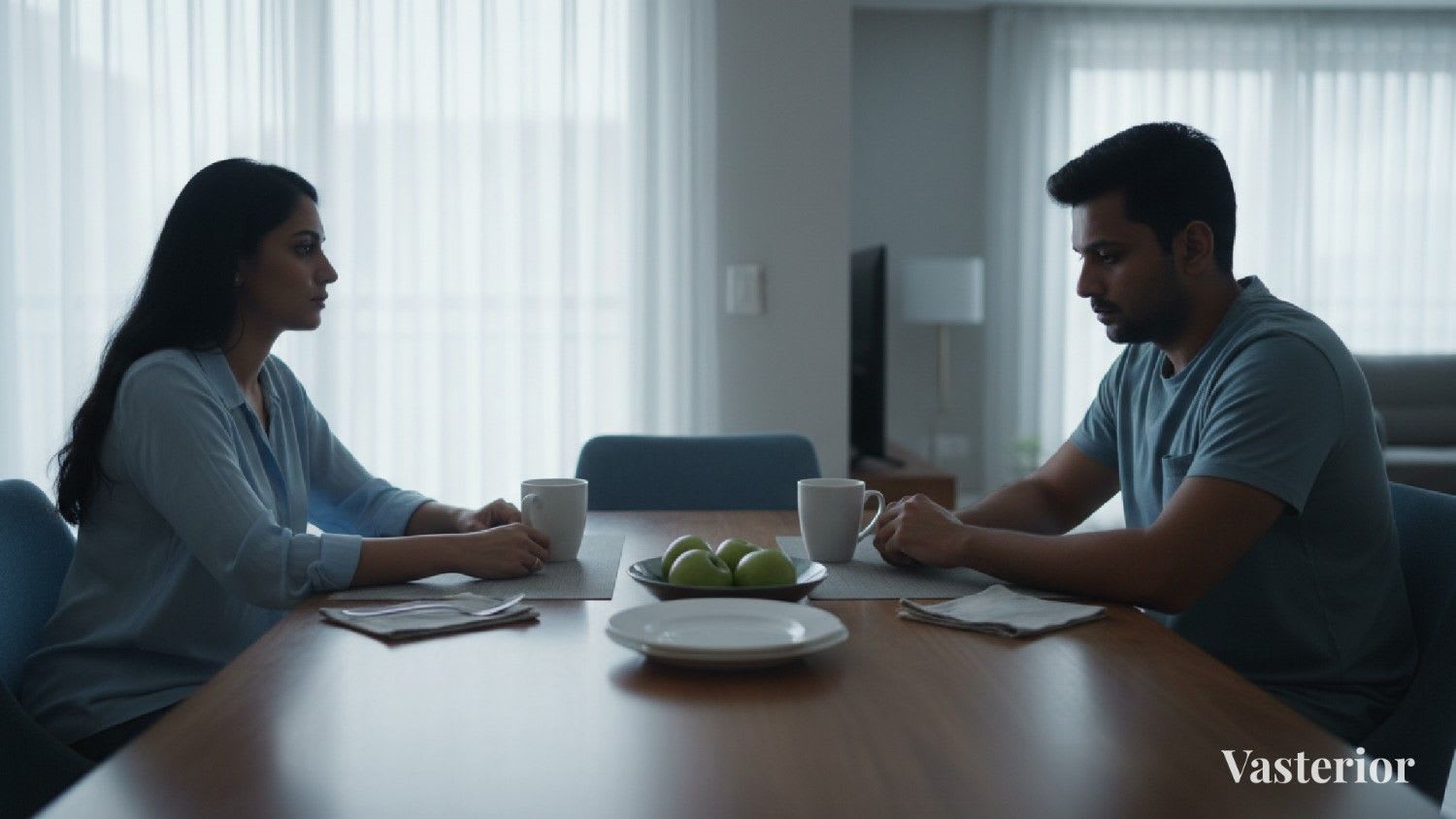
You can intellectually understand your partner and still emotionally react to them.
That's not immaturity. That's biology.
Emotions are processed faster than logic, and environments influence emotions faster than words ever could. Your home is not neutral—it constantly signals safety, threat, dominance, or unrest to the subconscious mind.
So when couples keep saying,
"We've talked about this already. Why is it happening again?"
The answer is often simple and unsettling: Because the environment keeps reinforcing the same emotional state.
No amount of verbal clarity can override a space that constantly dysregulates the nervous system.
Vastu, Without the Religious Baggage
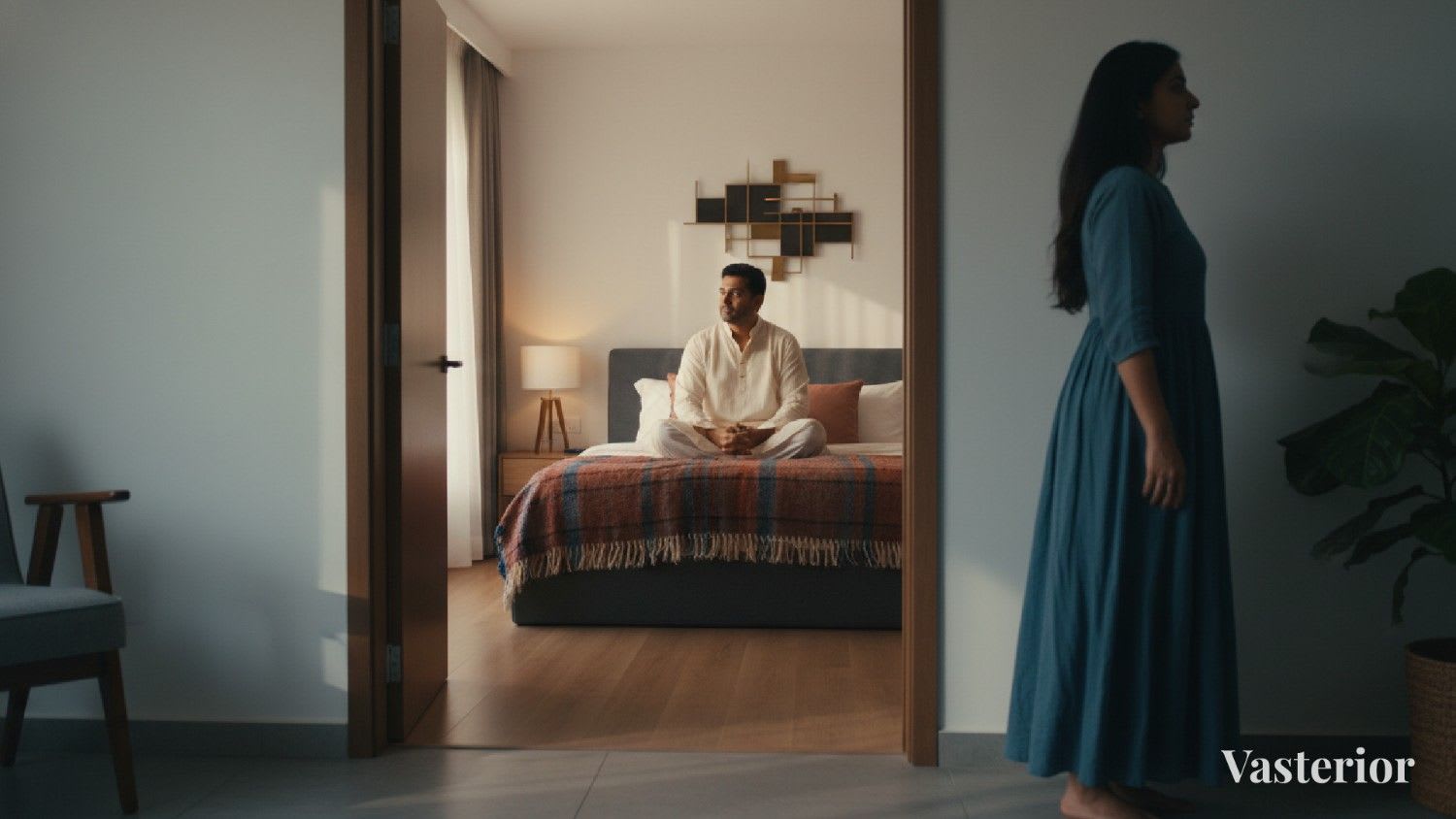
Let's clear this up.
Vastu is not superstition. It is not about fear. And it is definitely not about blind ritual.
At its core, Vastu is spatial psychology—an ancient system that observed how orientation, balance, and flow affect human behaviour, emotional regulation, and interpersonal dynamics.
Modern science talks about:
- environmental psychology
- circadian rhythm alignment
- sensory regulation
Vastu talked about these things long before they had English names.
When applied correctly, Vastu does not "fix" relationships. It removes the invisible friction that keeps sabotaging them.
Vastu Triggers That Quietly Fuel Relationship Conflict
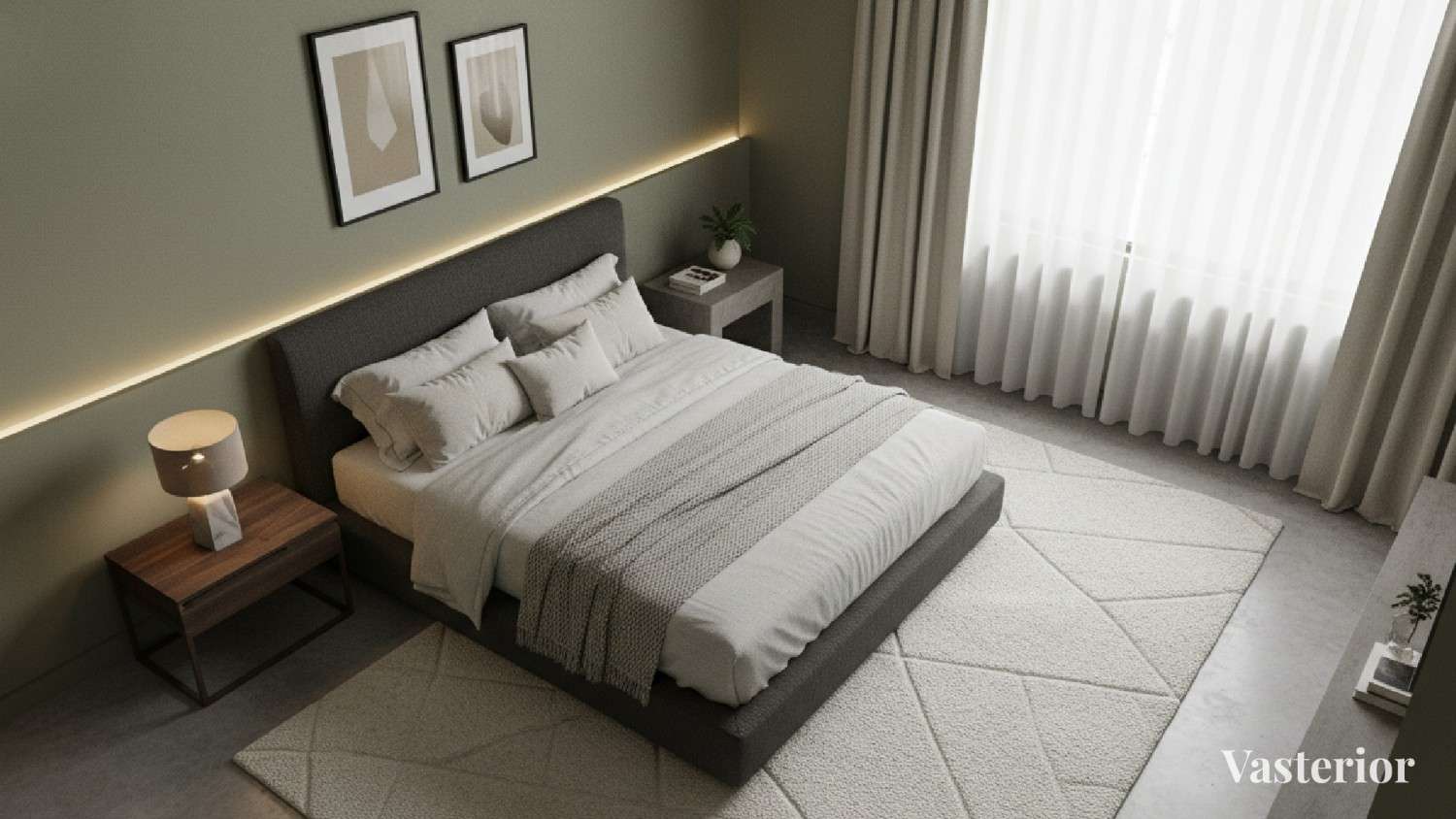
1. Bedroom Placement and Emotional Safety
The bedroom is where vulnerability lives. If this space is misaligned—especially placed in zones associated with instability or excess stimulation—couples often experience:
- emotional distance
- frequent misunderstandings
- lack of rest even after sleep
A restless bedroom creates restless emotions.
2. Bed Alignment and Power Struggles
When the bed placement creates asymmetry—one partner energetically dominating the space—emotional dynamics shift subtly. One feels unheard. The other feels burdened.
Arguments then become about control, not content.
3. Mirrors That Multiply Tension
Improper mirror placement reflects movement and light during rest hours, keeping the subconscious alert. Over time, this leads to:
- irritability
- heightened sensitivity
- overreaction to minor issues
You're not "too sensitive". Your nervous system is tired.
4. Fire-Water Imbalance (Kitchen & Bedroom Conflict)
Fire zones influence aggression and impatience. When these energies clash with rest areas, emotional volatility increases. Small disagreements escalate faster—not because of ego, but overstimulation.
5. Electronic Clutter and Emotional Overload
Screens in rest zones fragment emotional presence. Couples may coexist but not connect. This breeds resentment masked as independence.
Real Relationship Scenarios You'll Recognise
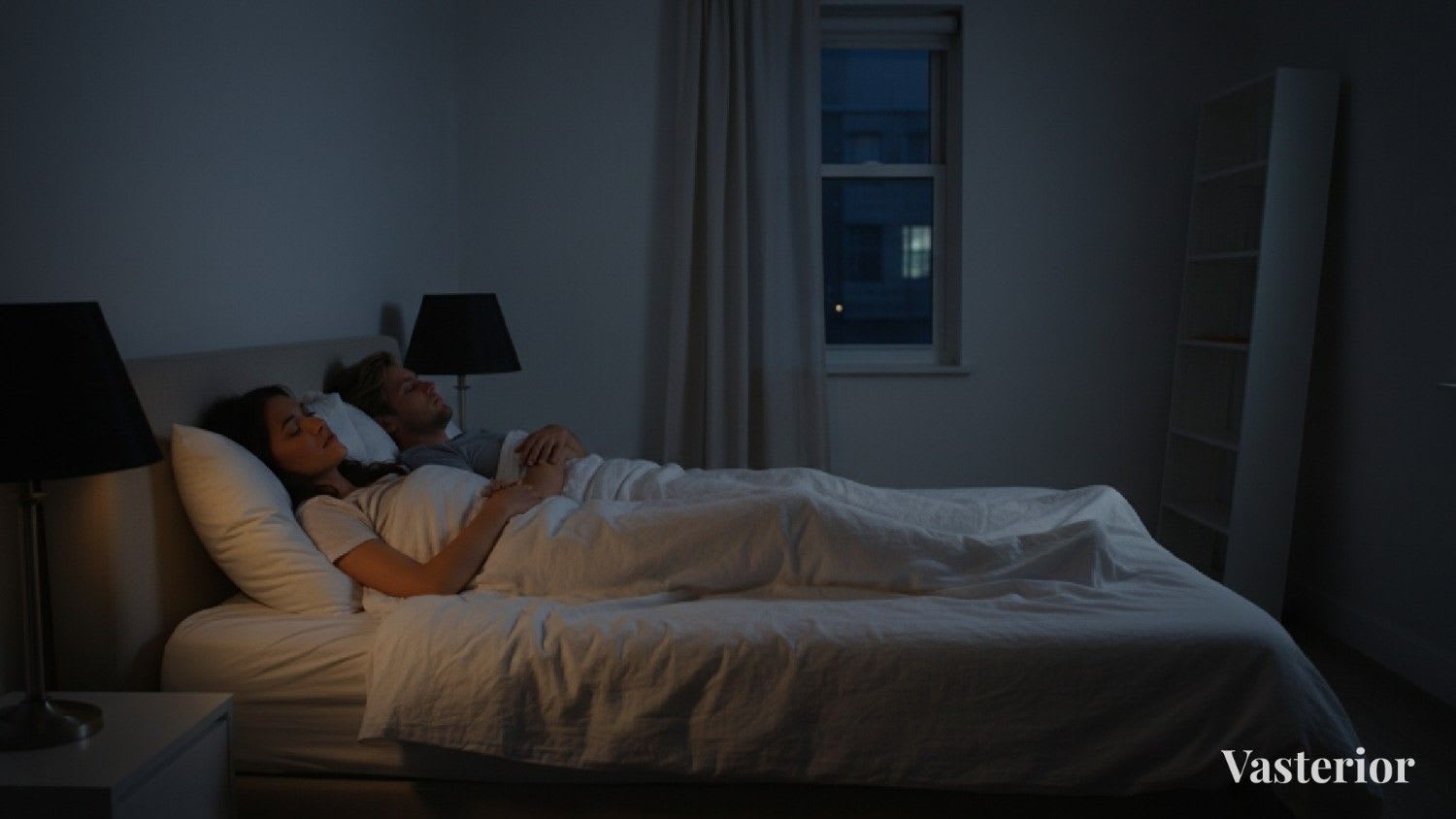
The Quiet Drift
You love each other, but conversations feel flat. There's no fight, just distance. Often linked to suppressed emotional flow caused by blocked zones in the home.
The Explosive Small Fight
One forgotten task turns into a full-blown argument. This is classic overstimulation combined with poor rest alignment.
The Same Argument, New Week
Different topic, same outcome. This usually indicates unresolved emotional loops reinforced by space.
When spatial corrections are made, couples often report something unexpected—not passion, not fireworks, but calm.
And calm is where emotional safety begins.
What Emotional Peace Actually Feels Like
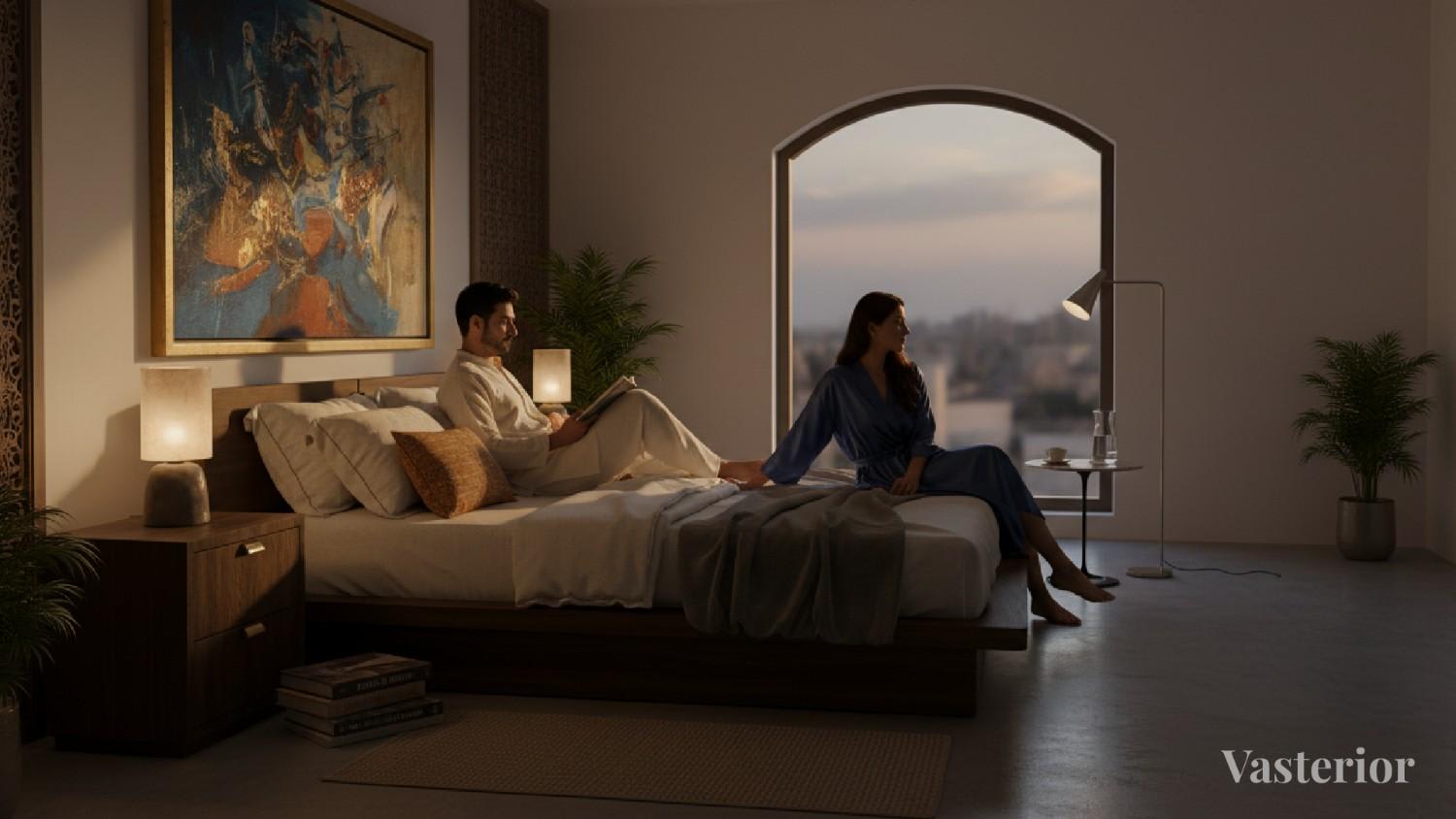
Emotional peace doesn't mean you never disagree.
It means disagreements don't feel threatening.
It means your body doesn't tense up before conversations. It means silence feels restful, not heavy. It means you stop bracing for conflict that hasn't even happened yet.
When a home supports emotional regulation, love doesn't need defending.
Why Most People Never Fix This
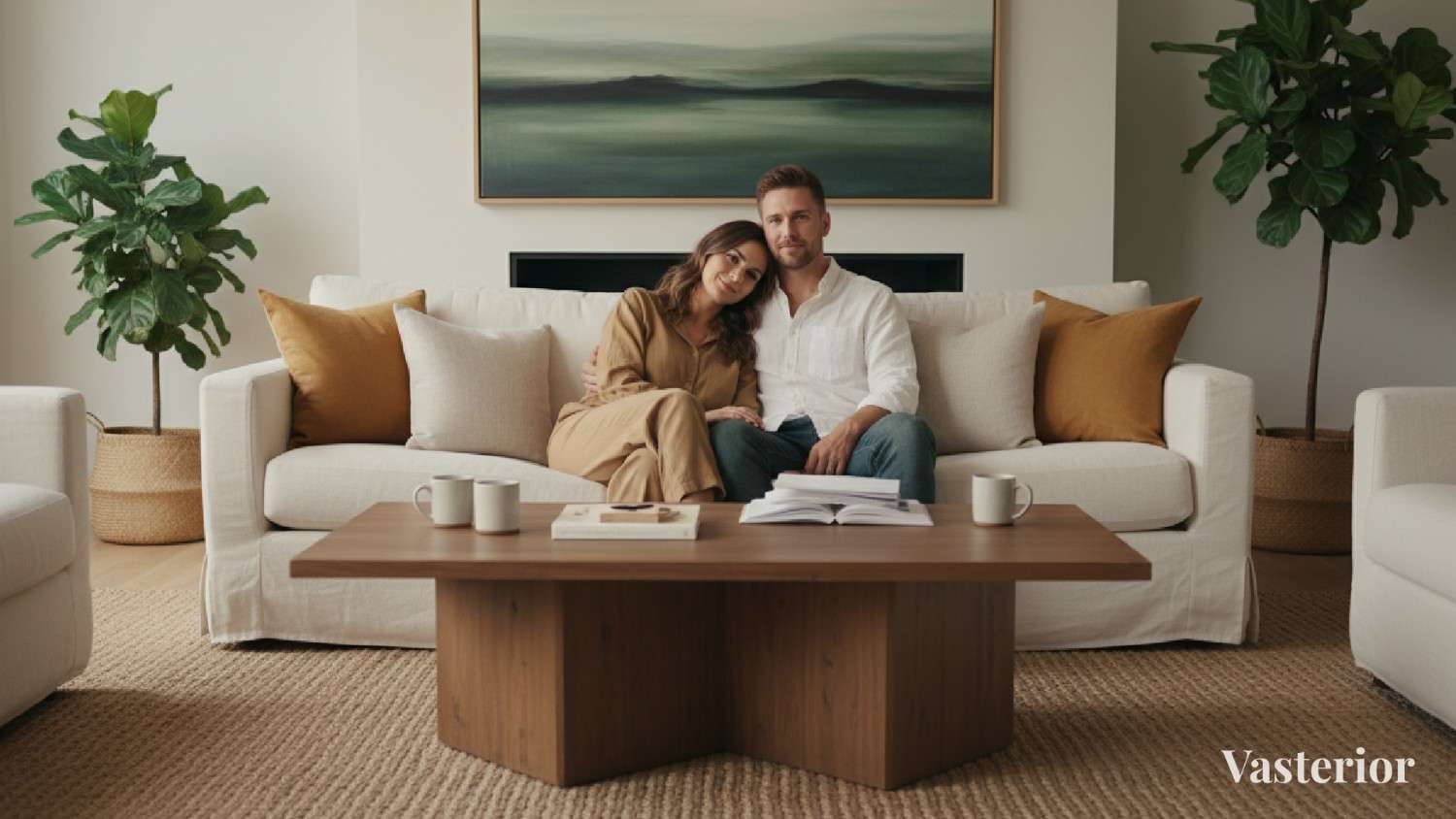
Because it's easier to blame:
- compatibility
- personality
- timing
It's easier to scroll through relationship advice than to question the space that shapes daily emotional behaviour.
People change partners, therapists, even cities—but carry the same emotional patterns with them.
Very few pause and ask: "What if the problem isn't us, but the environment we're asking our relationship to survive in?"
The Vasterior Way of Looking at Relationships
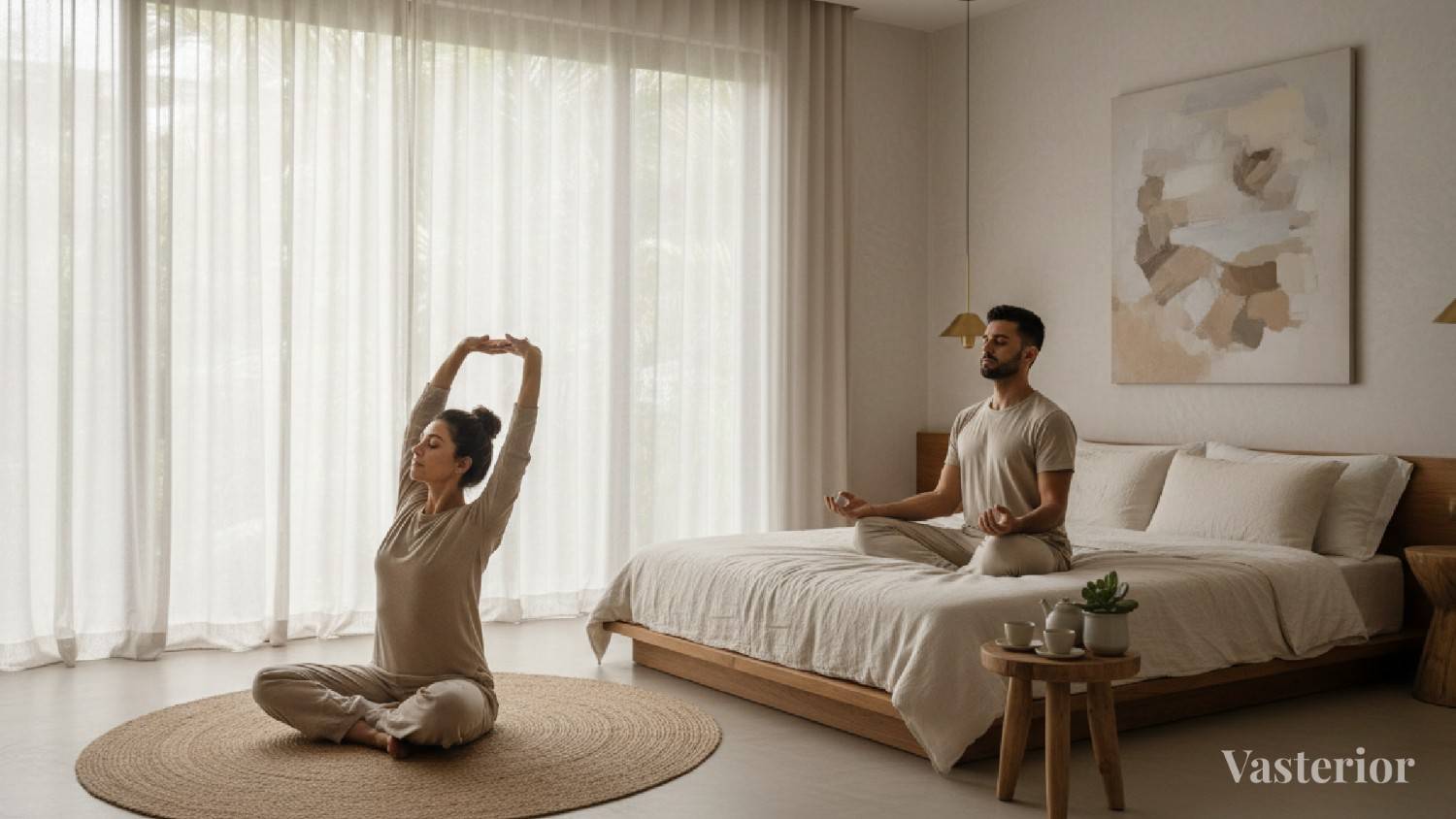
Vasterior doesn't treat homes as aesthetic projects.
They read spaces the way psychologists read patterns—quietly, deeply, without judgement. Their approach integrates Vastu with lived emotional realities, not textbook rules.
The focus isn't correction. It's recalibration.
Spaces are adjusted so relationships can breathe instead of brace.
A Thought Before You Close This Tab

Some arguments don't need better words. Some relationships don't need more effort. Some homes simply need alignment.
For those who feel they've had the same conversation one too many times, a quiet conversation with the Vasterior team often begins without urgency—sometimes as a late-evening message, sometimes as a thoughtful call when the house finally goes silent.
No pressure. Just clarity, when you're ready.
Connect with Vasterior at +91 9100883355 or info@vasterior.com.
FAQs
Does Vastu really affect relationships?
Yes—because it influences emotional regulation, rest quality, and subconscious stress patterns.
Can Vastu help without major renovations?
In many cases, yes. Strategic adjustments often create noticeable emotional shifts.
Is this suitable for modern apartments?
Absolutely. Vastu adapts to contemporary living, not the other way around.
Will both partners feel the change?
Usually. Emotional shifts are often mutual, even when only one partner initiates the process.
Is this a replacement for communication or therapy?
No. It complements them by removing environmental resistance.