
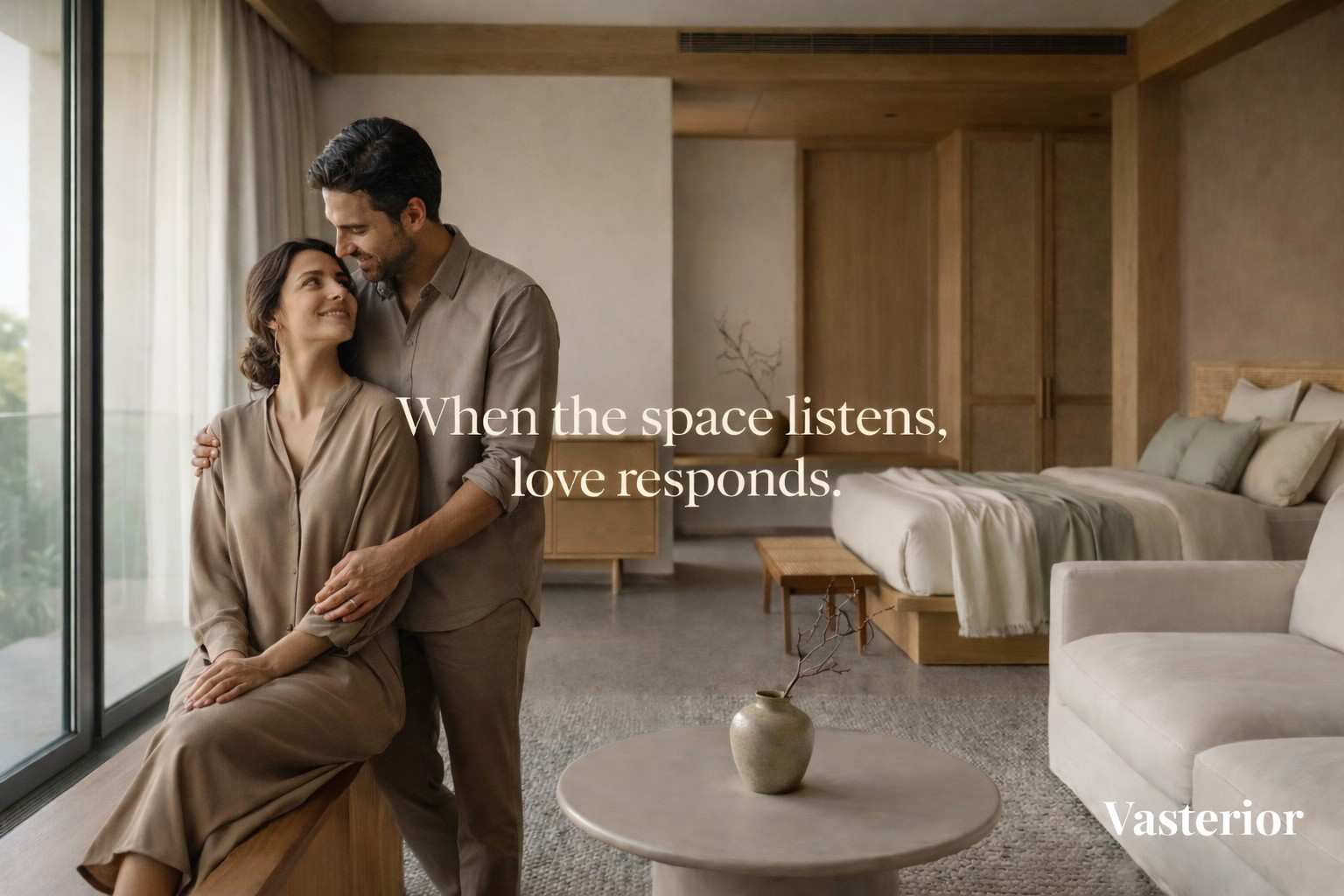
Vasterior often encounters this question not as a complaint, but as a quiet admission.
On the surface, life appears well-ordered. Education is complete. Careers are steady. Families are supportive. There has been patience, adjustment, even acceptance.
And yet, marriage remains elusive. Or, having arrived, harmony seems strangely absent.
Conversations feel restrained. Affection feels scheduled. The home, meant to offer comfort, feels inexplicably heavy.
In such moments, individuals are encouraged to look inward: to question temperament, timing, or destiny.
But there is another influence, rarely examined with seriousness:
The space in which one lives.
Marriage Is Not Merely Emotional—It Is Environmental
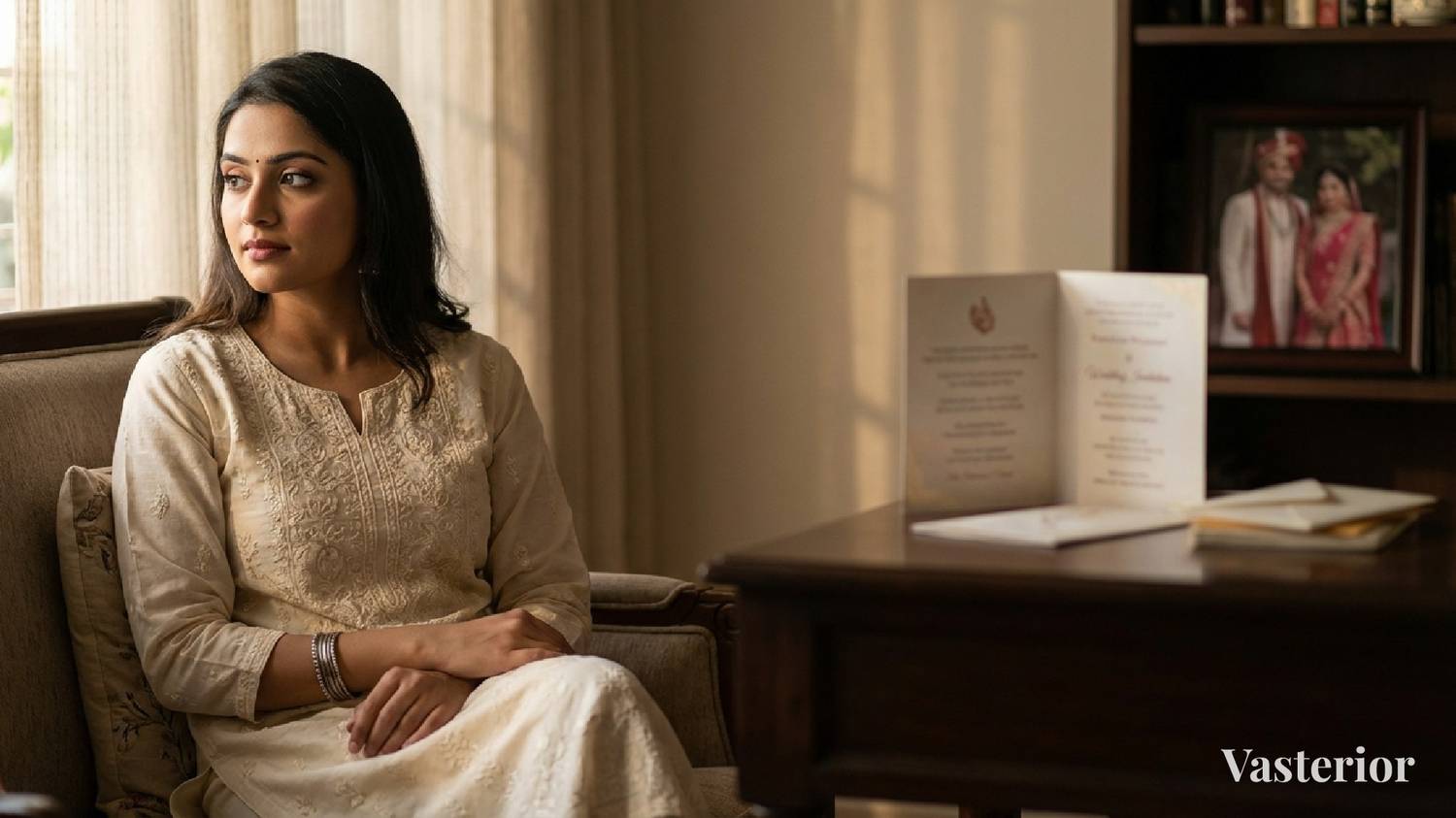
Marriage, particularly within the Indian context, is not sustained by emotion alone. It is shaped daily by routine, proximity, rest, interaction, and silence.
Yet modern homes are designed almost exclusively for efficiency and appearance—rarely for emotional coherence.
Bedrooms are positioned by convenience rather than calm. Furniture prioritises form over interaction. Clutter accumulates unnoticed, movement becomes constrained, and certain areas of the home remain dormant.
Over time, the environment begins to condition behaviour.
Irritability increases without provocation. Patience diminishes. Communication requires effort.
This is not coincidence. It is spatial psychology at work.
Just as an ill-designed workplace affects focus and morale, an unsupportive home subtly erodes relational ease.
Vastu for Marriage: Not Belief, but Support
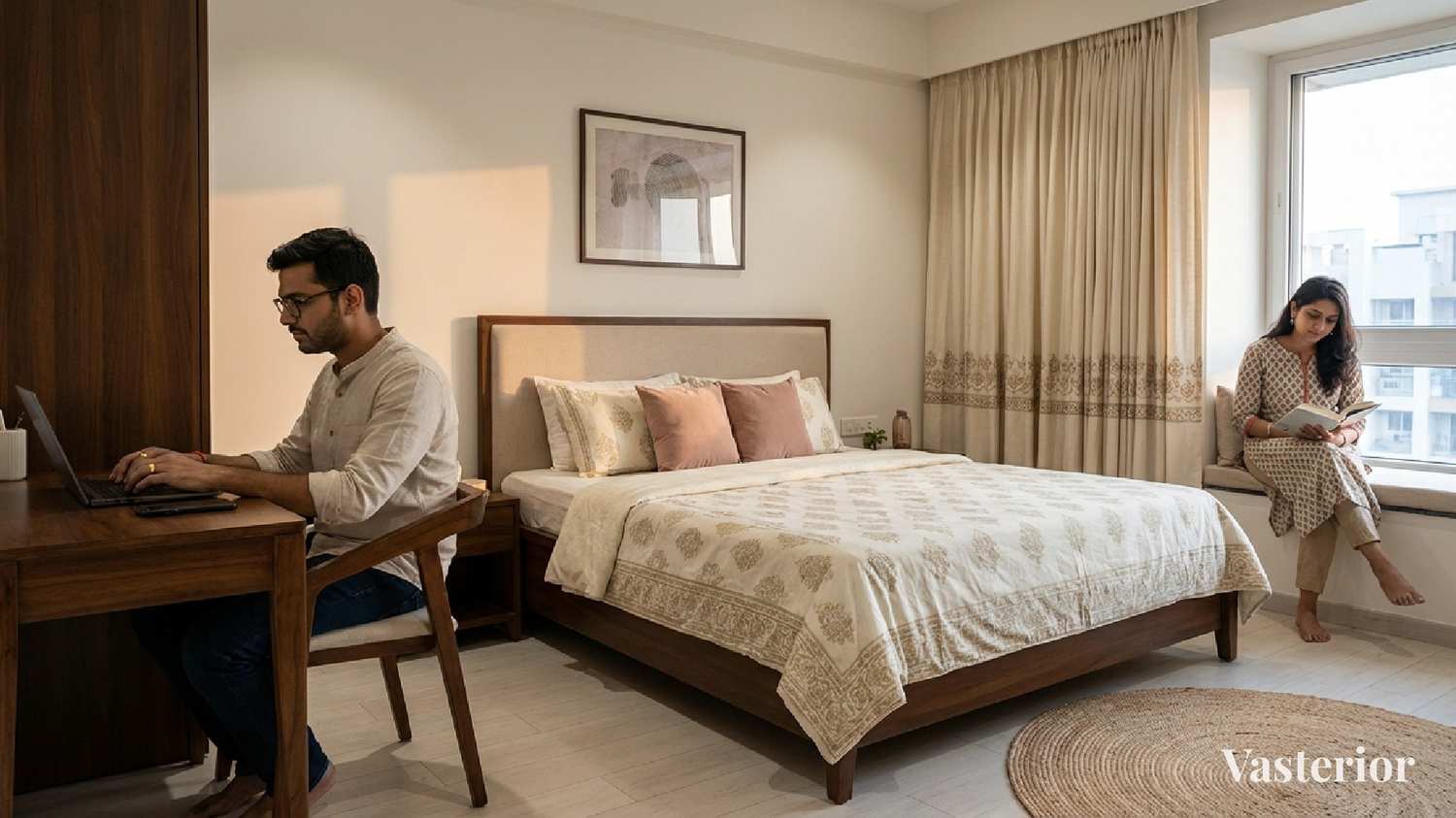
It is important to clarify what Vastu is, and what it is not.
Vastu does not compel marriage. It does not alter destiny. Nor does it promise outcomes through ritual.
Its function is far more precise.
Vastu creates conditions of support.
Conditions in which:
- Emotional safety is reinforced
- Communication flows without resistance
- Intimacy is not obstructed by restlessness
- Relationships are not constantly strained by the environment
In essence, Vastu does not manufacture harmony. It removes the friction that prevents it.
When Marriage Is Delayed Despite Everything Else Being in Order
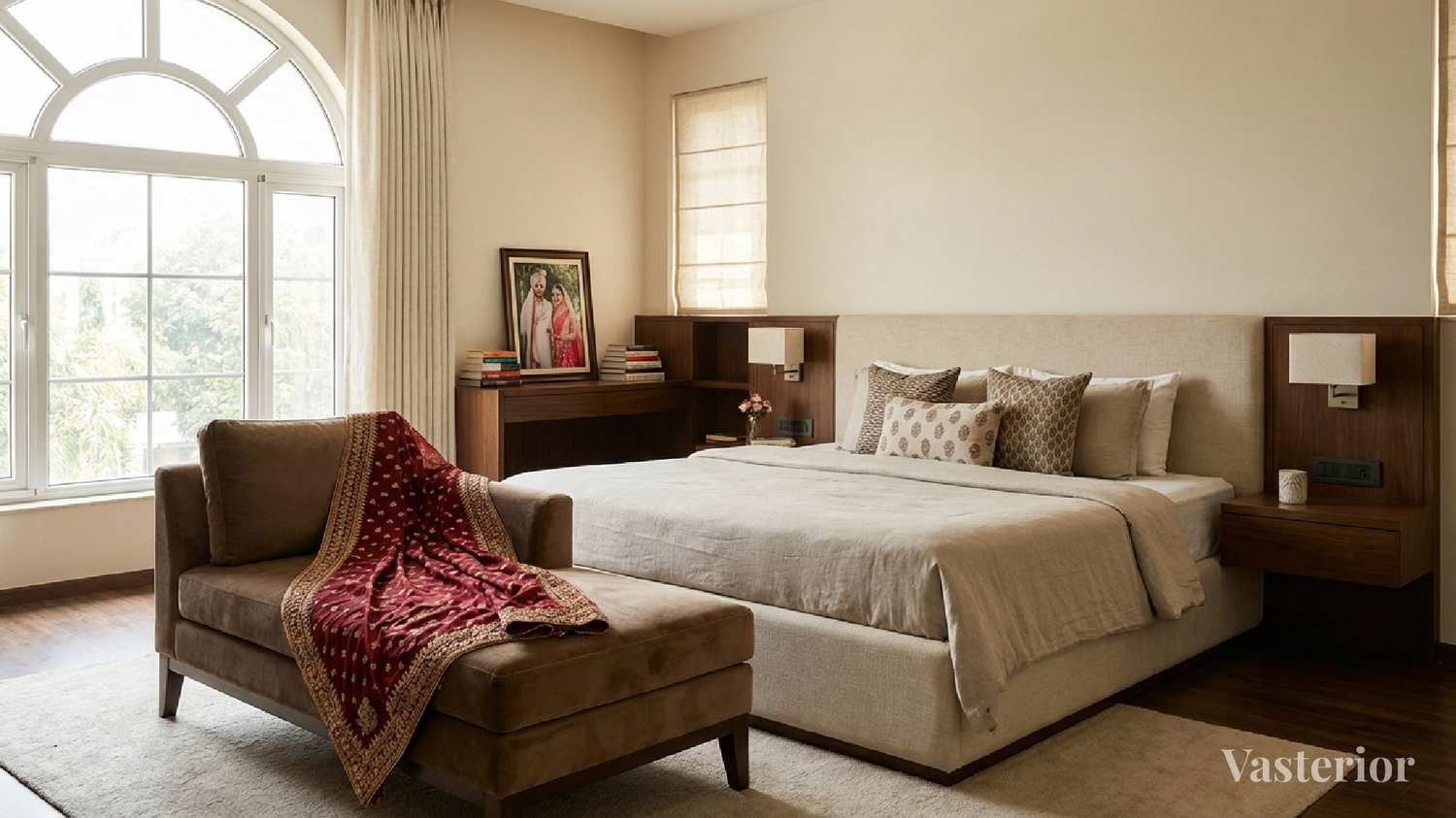
A common refrain heard in Indian households is this:
"Everything is fine, except marriage."
From a MahaVastu perspective, such situations often point toward imbalance in zones connected to emotional stability, partnership, and grounding.
Not because something is "wrong," but because the home is not structured to hold relational energy.
Bedrooms may not support deep rest. Daily activities may occupy zones that stimulate conflict rather than connection. Spaces meant for bonding may feel inactive or unsettled.
Gradually, the mind adapts.
Emotional availability declines. Defensiveness increases. Openness becomes effortful.
Marriage requires receptivity. Receptivity requires a space that feels safe.
When Married Life Feels Strained at Home
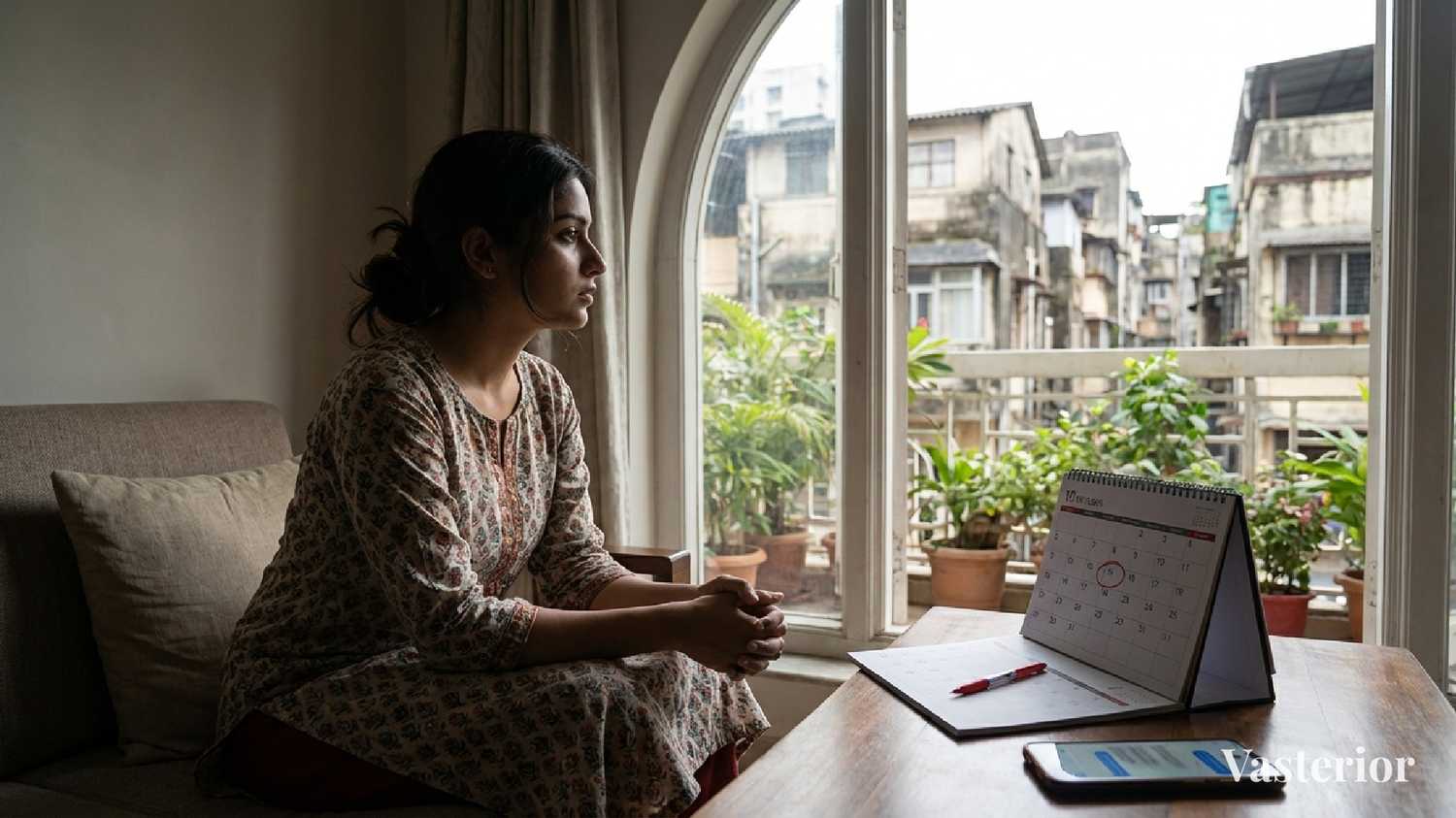
Another reality frequently observed is this:
Couples who function well socially and professionally, yet find themselves tense within their own home.
Arguments arise without proportion. Silence replaces dialogue. Time spent outside feels easier than time spent within.
This is rarely a failure of commitment.
More often, it is a response to spatial fatigue.
Homes that blur rest and activity, overstimulate the nervous system, or restrict natural movement slowly diminish emotional capacity.
One does not fall out of love. One simply becomes depleted.
Recurring Spatial Patterns Seen in Indian Homes
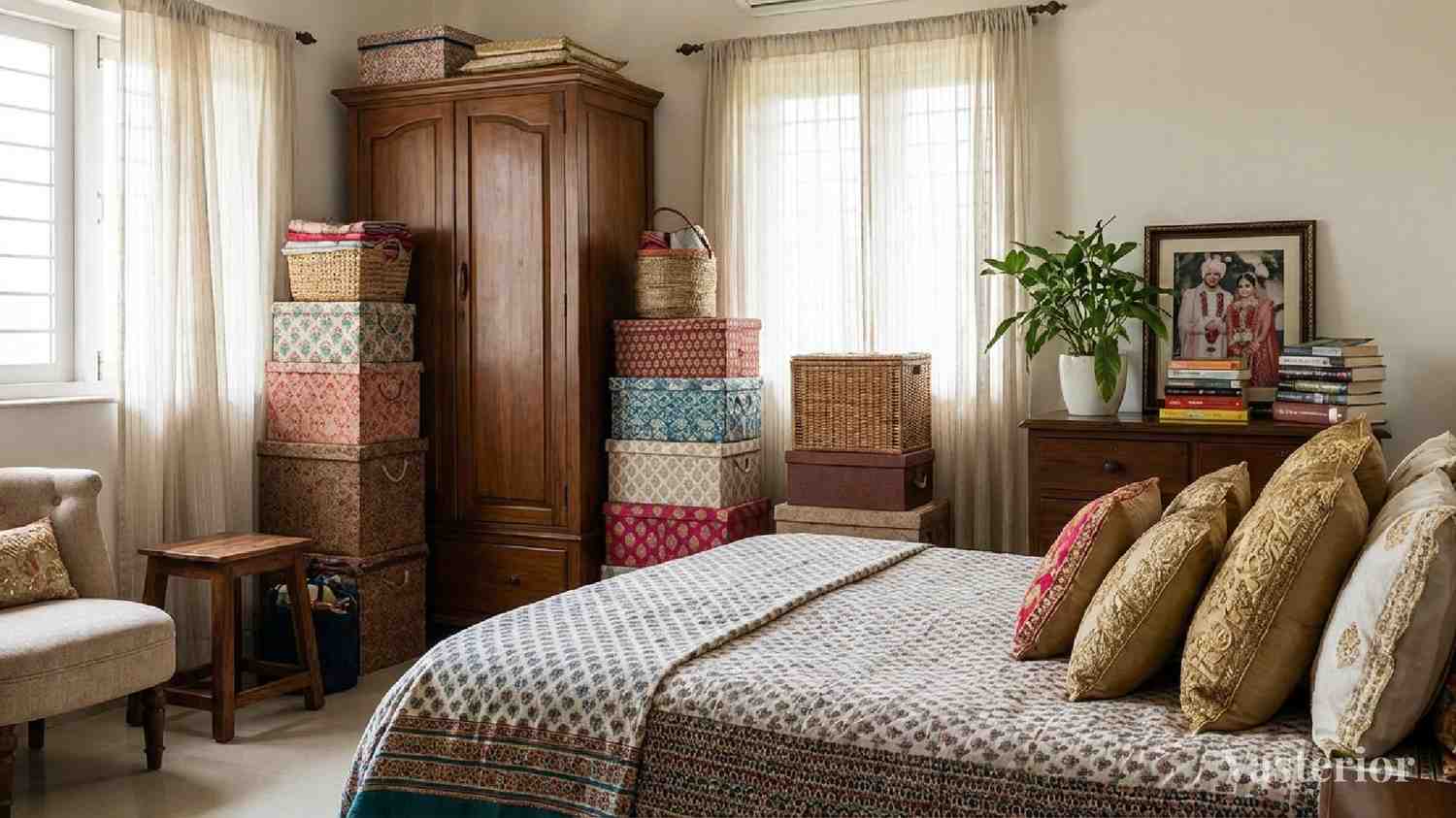
Without resorting to alarmism, certain patterns consistently emerge:
- Bedrooms serving secondary purposes beyond rest
- Bed placements that disturb sleep quality
- Excessive electronic presence near sleeping zones
- Subtle dominance or withdrawal between partners
- Constant external interference amplified by layout
Such factors do not create discord overnight. They intensify what already exists.
Marriage, however, flourishes on ease, not endurance.
The Persistent Myth: Objects as Solutions
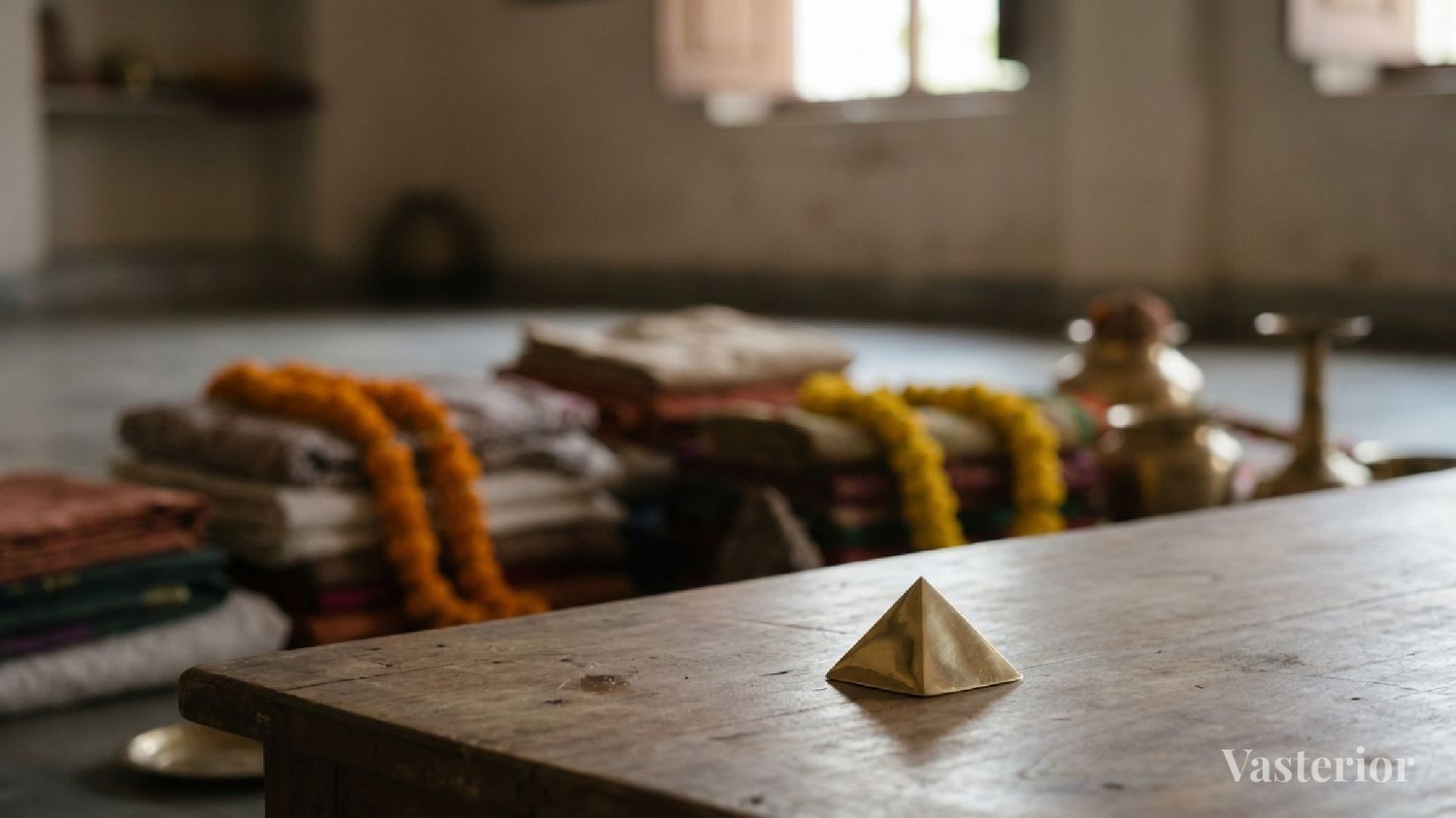
There is a persistent belief that placing an object can resolve relational strain.
If this were true, harmony would be effortless.
But environments shape behaviour, objects do not.
No symbol can compensate for:
- A disordered layout
- Inappropriate activity placement
- Congested emotional zones
MahaVastu focuses instead on non-destructive, structural corrections—adjustments that allow the home to function as it was meant to.
The result is subtle, but unmistakable.
What True Alignment Feels Like
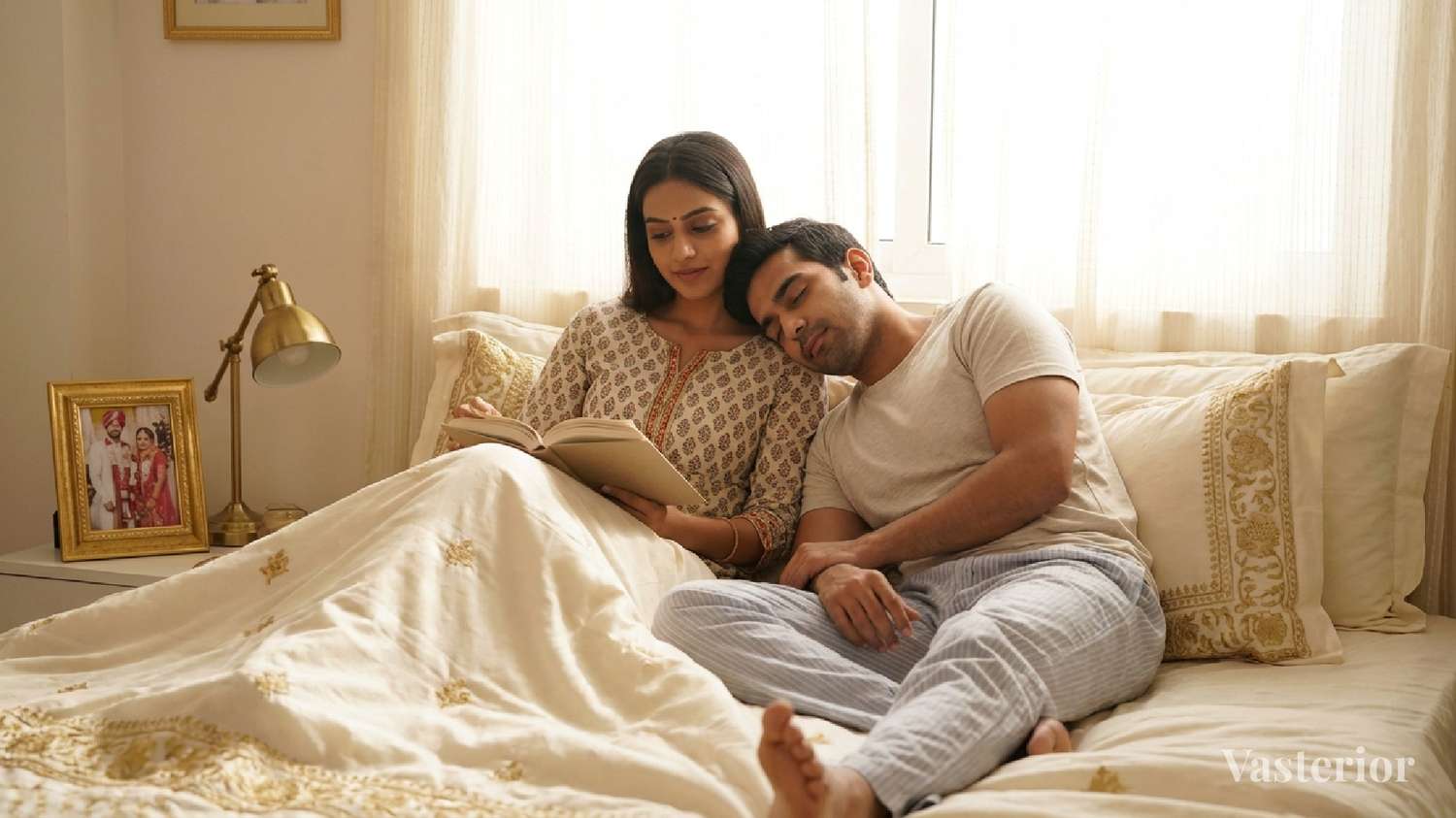
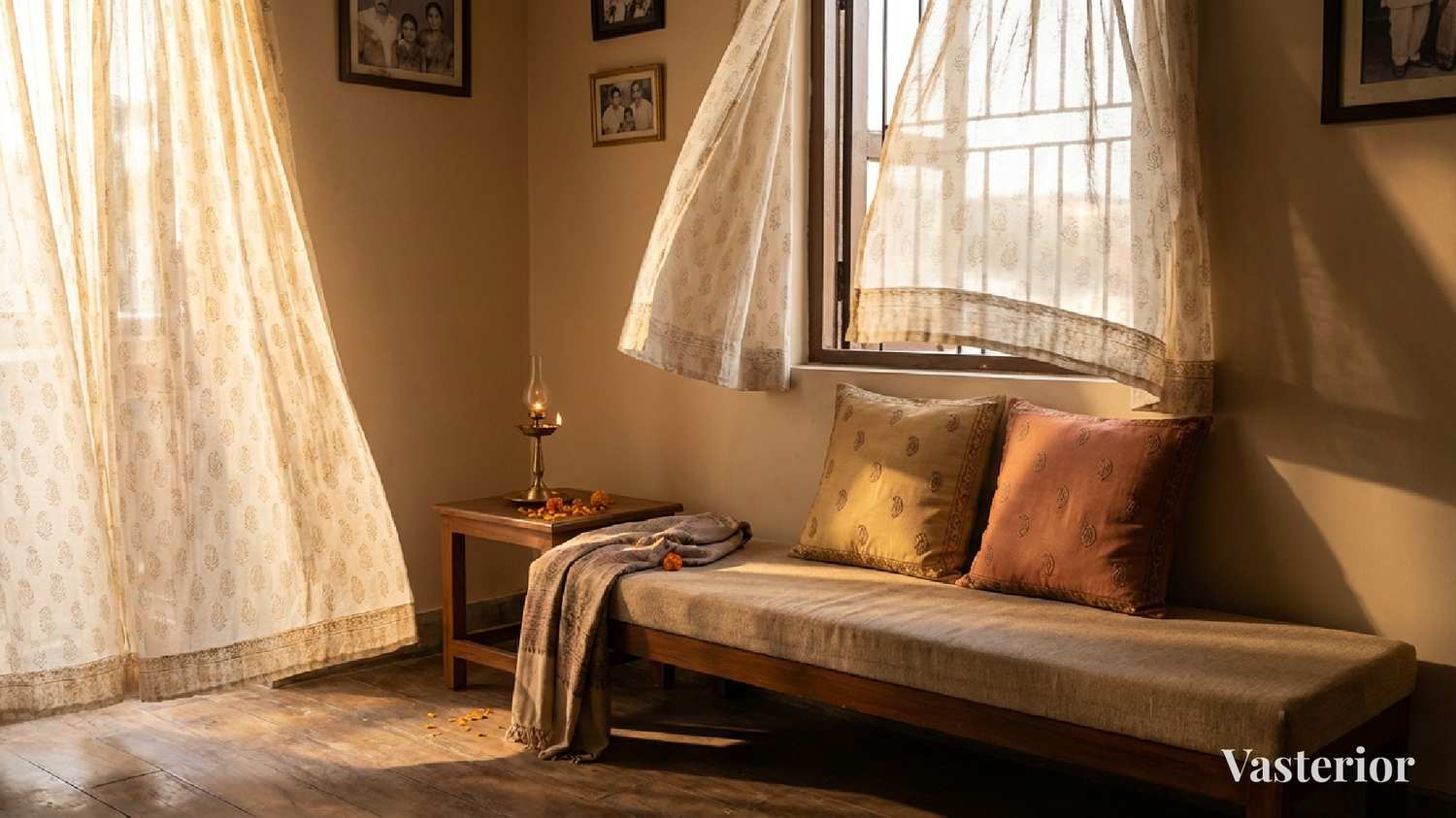
A home aligned for marriage does not feel ceremonial. It feels composed.
Conversation becomes unforced. Rest becomes restorative. Closeness emerges naturally, without insistence.
There is no dramatic transformation, only relief.
That is alignment.
Not mysticism. Not belief.
Support.
When to Seek Perspective
If any of the following feel familiar:
- Unexplained delays in marriage
- Emotional coldness within the home
- Escalating conflict without clear cause
- A persistent sense of being unsupported
it may be time to examine the space itself.
Often, clarity begins simply with a conversation—whether through a quiet call on +91 9100883355, or by articulating one's concerns in writing at info@vasterior.com—not to seek remedies, but understanding.
Alignment begins with awareness.
A Closing Thought
Marriage is rarely obstructed. Affection is rarely absent. Effort is rarely insufficient.
More often, the environment is simply not providing the support it should.
When space begins to hold you correctly, relationships do not suddenly change—they cease to feel difficult.
That is the understated power of alignment.