
Why do some factories scale effortlessly while others keep pushing harder with little to show for it?
It is rarely just about capital, labour, or machinery. There is an invisible layer that most industrial owners overlook. Alignment.
Vasterior has observed a consistent pattern across manufacturing units. When spatial alignment is off, results feel forced. When alignment is corrected, growth starts to feel natural.
Vastu for factory setup is not superstition. It is a structured approach to aligning space with energy flow, operational logic, and human behaviour. And once you understand it, you start seeing why some businesses break through while others remain stuck in cycles.
Why Vastu Matters in Factory Setup
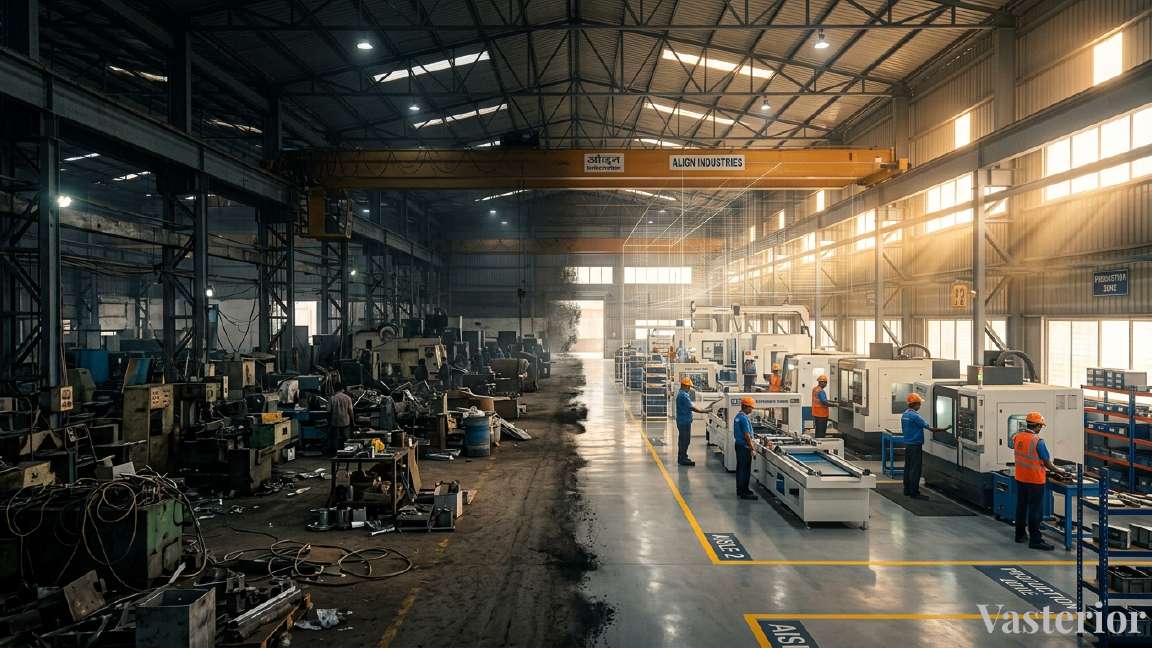
A factory is not just a physical structure. It is a living ecosystem where movement, decisions, and outcomes are constantly interacting.
When directions, placements, and elements are aligned correctly:
- Machinery operates more smoothly
- Workers experience less friction and conflict
- Production cycles become more consistent
- Financial flow improves
When they are not aligned:
- Output feels inconsistent despite effort
- Machines break down more often than expected
- Teams struggle with coordination
- Profits fluctuate without clear reason
Industrial vastu tips are not about rituals. They are about creating an environment where operations are supported instead of resisted.
Ideal Vastu Directions for Factory Setup
A well-planned factory is not random. Each section must serve its purpose in harmony with directional energy.
Entrance Direction
The entrance is where opportunity enters your factory.
- The most favourable directions for factory entrance are North, North East, and East
- These directions are associated with growth, expansion, and incoming opportunities
- An entrance in the South West can create resistance, delays, and decision bottlenecks
Machinery Placement
Heavy machinery represents stability and control.
- The ideal placement is in the South West or South zone of the factory
- This creates grounding energy and reduces operational instability
- Avoid placing heavy machinery in the North East as it disrupts flow and can lead to inefficiencies
Raw Material Storage
Raw materials symbolise potential.
- The South West and West zones are ideal for storing raw materials
- This ensures stability and proper utilisation
- Placing raw materials in the North East often leads to wastage or underutilisation
Finished Goods Placement
Finished goods represent realised value.
- The North West direction is ideal for storing finished goods
- It supports movement and timely dispatch
- Improper placement can lead to delays in delivery and blocked revenue cycles
Office Cabin Direction
Leadership direction influences decision quality.
- The factory owner or manager should ideally sit facing North or East
- This enhances clarity and decision-making ability
- Cabins placed in the South West with correct orientation provide authority and control
Water and Fire Elements
Balance between water and fire is crucial.
- Water elements like borewell or water tanks should be in the North East
- Fire elements like boilers or generators should be in the South East
- When these elements are misplaced, it often reflects in financial imbalance or operational stress
Common Vastu Mistakes That Kill Factory Growth
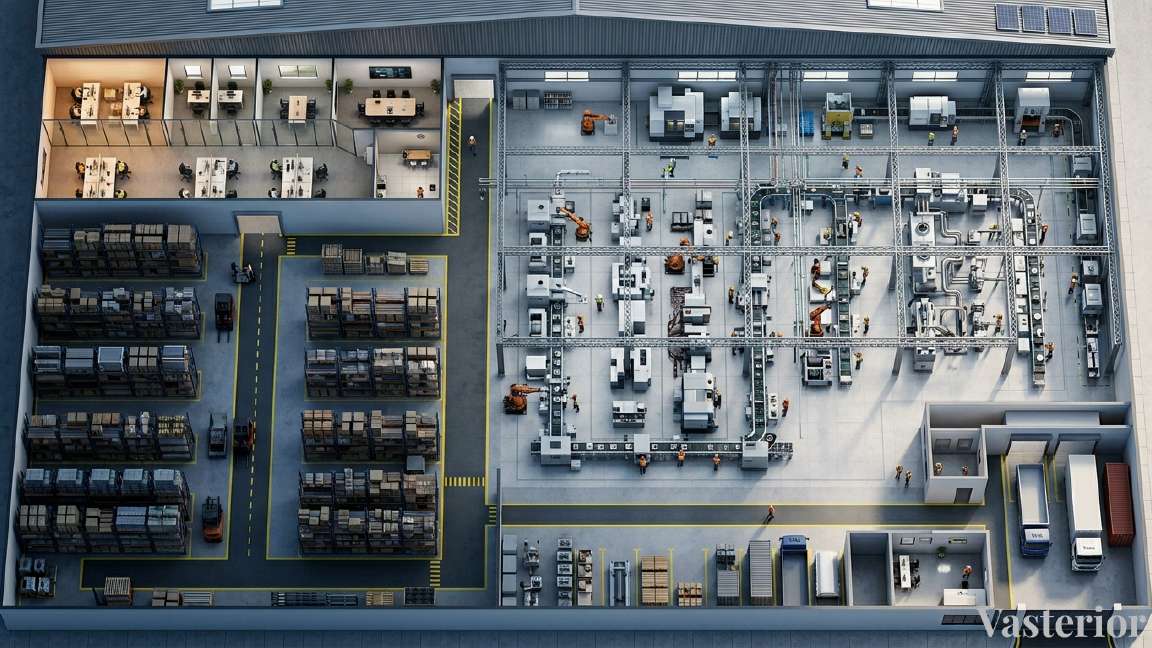
Many factories are not failing because of effort. They are failing because of unnoticed mistakes.
- Entrance placed in a restrictive direction
- Heavy machinery disturbing energy flow
- Water and fire elements clashing
- Office cabins positioned without directional awareness
These mistakes do not show immediate damage. They slowly drain efficiency, consistency, and profitability.
Signs Your Factory Has Vastu Issues
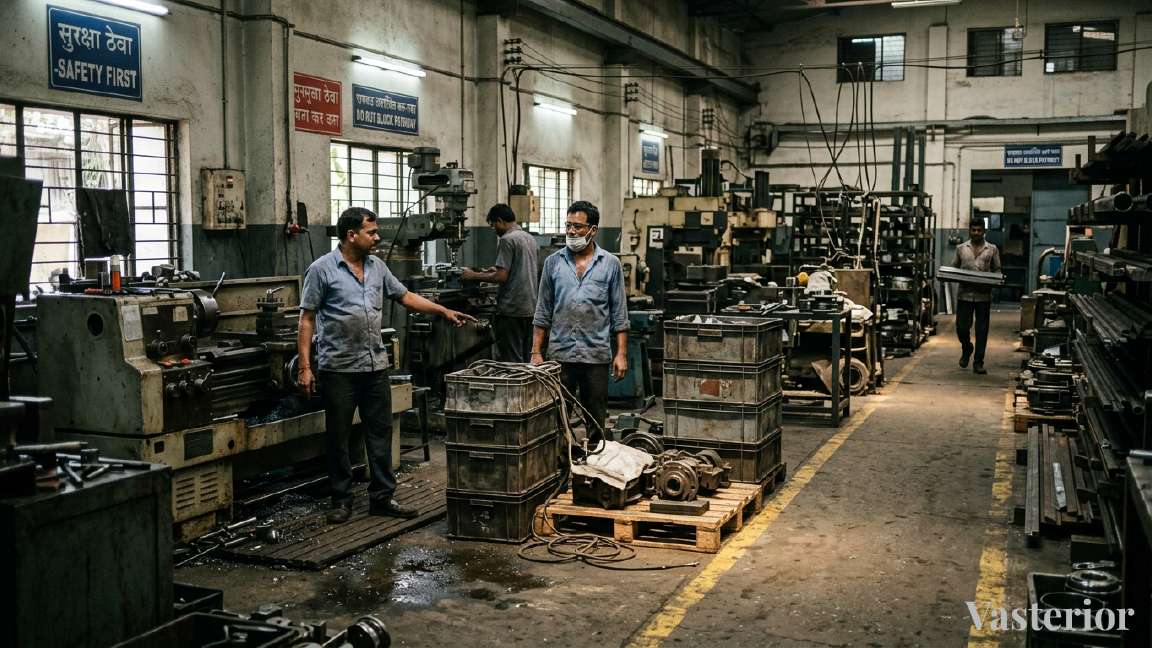
If you are experiencing any of these, it is worth paying attention.
- Continuous losses despite strong market demand
- Frequent machine breakdowns without technical cause
- High employee turnover or internal conflicts
- Delayed payments and unstable cash flow
These are not always operational problems. Sometimes, they are alignment problems.
Practical Vastu Remedies Without Demolition
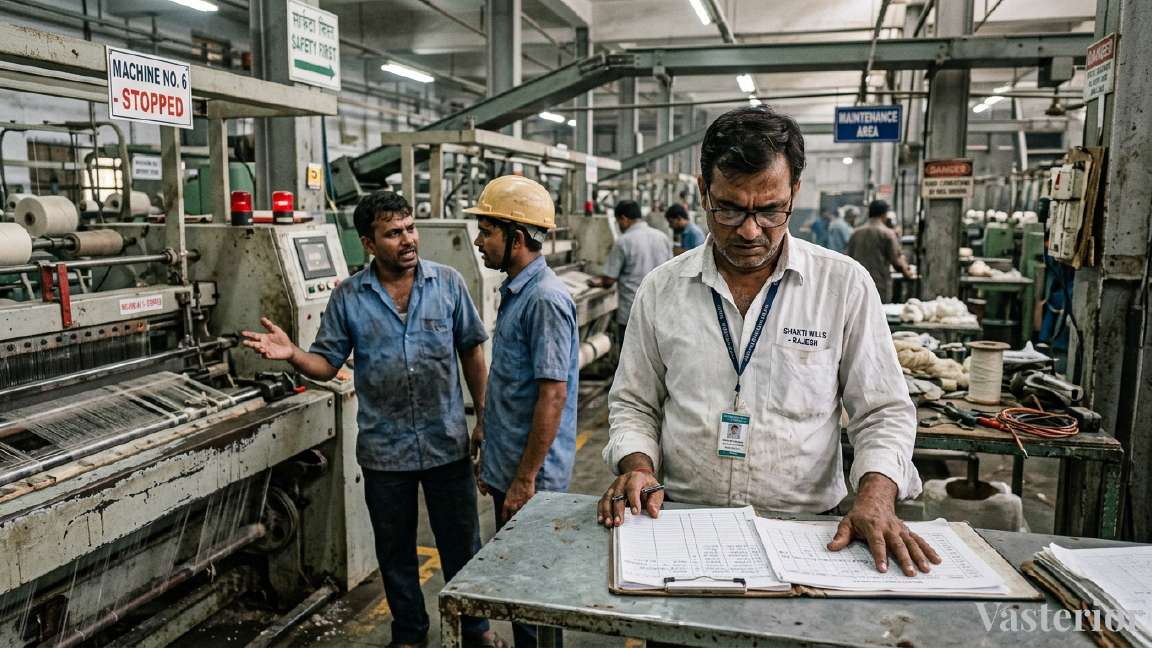
One of the biggest myths about vastu for manufacturing unit setup is that it requires reconstruction.
That is not true.
Modern vastu solutions focus on non-invasive corrections.
- Directional balancing using colour elements
- Strategic repositioning of machinery or workstations
- Energy correction through layout adjustments
These changes are subtle but powerful. They do not disrupt operations, yet they influence outcomes.
The Vasterior Approach
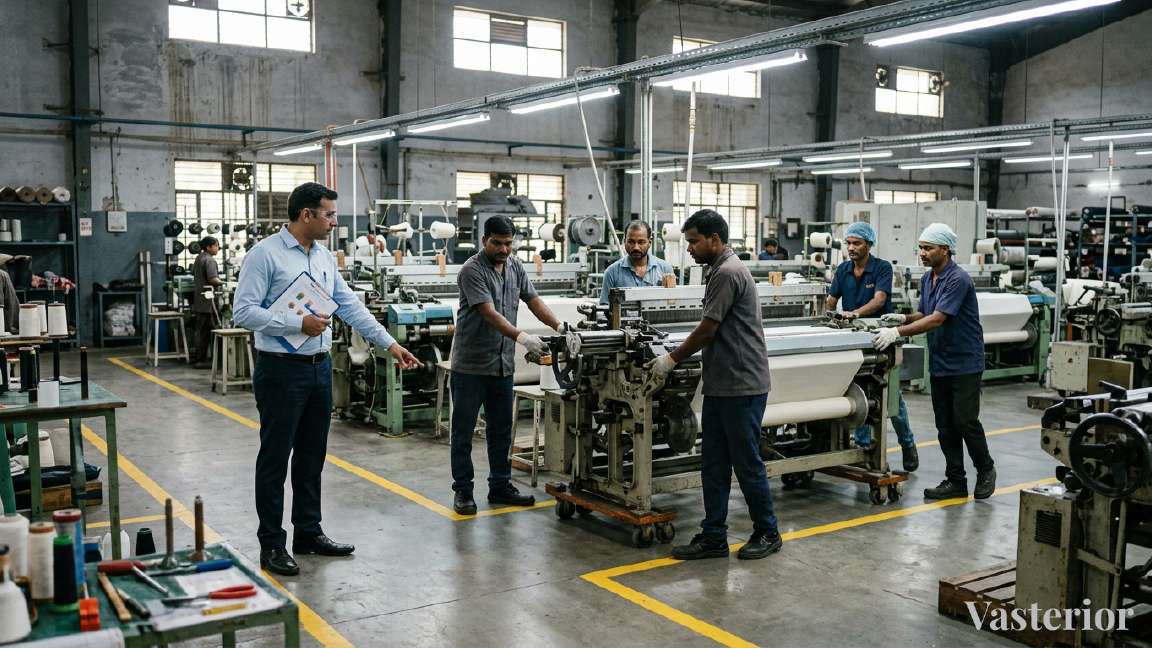
This is where Vasterior stands apart.
Instead of generic advice, Vasterior offers a structured and practical approach.
The ₹11,000 package is designed as a starting point.
It includes:
- A complete gridded layout of your factory
- Identification of directional imbalances
- Practical remedies using colour alignment and repositioning
The focus is not on theory. It is on execution.
What makes this powerful is that it allows factory owners to experience change without heavy investment or downtime.
Future Possibilities
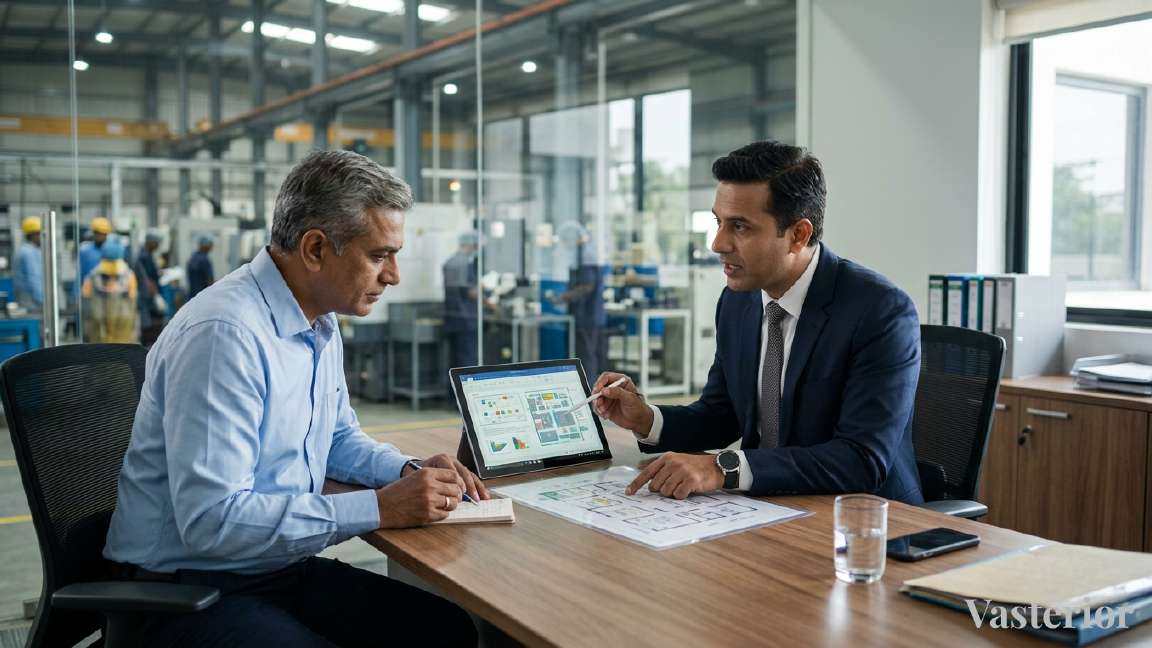
Alignment is not a one-time event.
Once the foundational corrections are made, deeper layers of optimisation can be explored.
Advanced alignments can further enhance growth, scale, and stability.
But the first step is always awareness and correction.
A Realistic Transformation Story
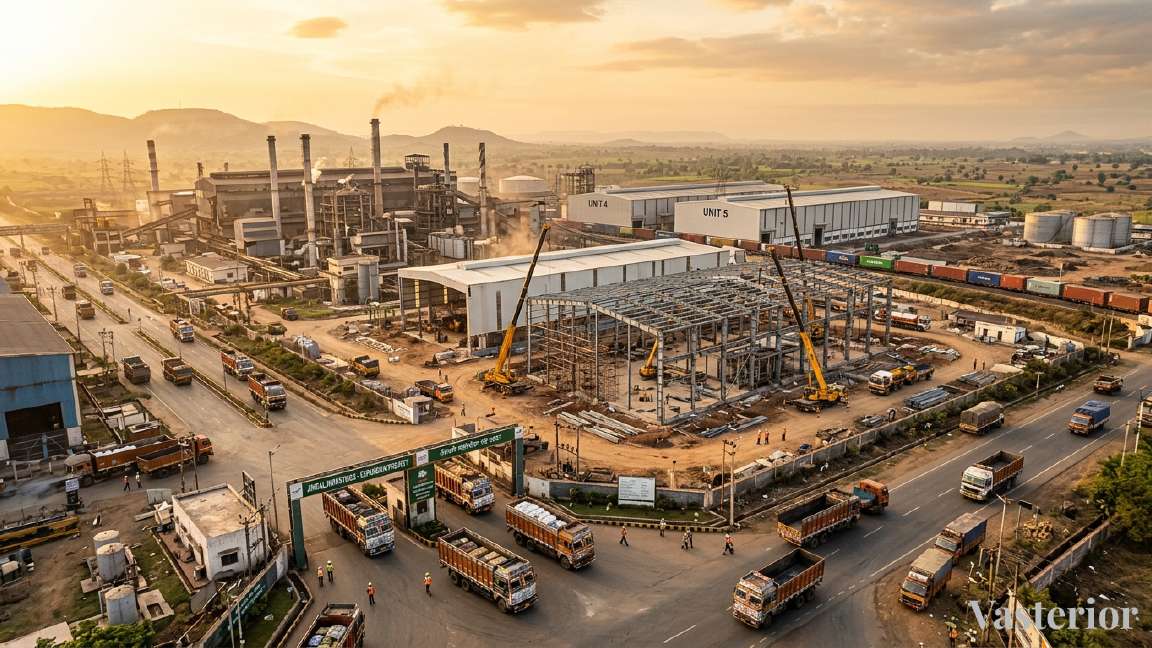
Consider a mid-sized manufacturing unit struggling with inconsistent output.
The owner had invested in better machinery, hired skilled labour, and improved processes. Yet, results remained unpredictable.
After analysing the vastu layout for factory operations, a few key issues were identified.
- Entrance misalignment
- Heavy machinery placed in a conflicting zone
- Water element disrupting financial flow
Without any demolition, simple corrections were applied.
- Machinery repositioned
- Directional adjustments introduced
- Energy balance restored
Within months, production stabilised. Delays reduced. Financial flow became more predictable.
Nothing dramatic was added. Something fundamental was corrected.
Conclusion
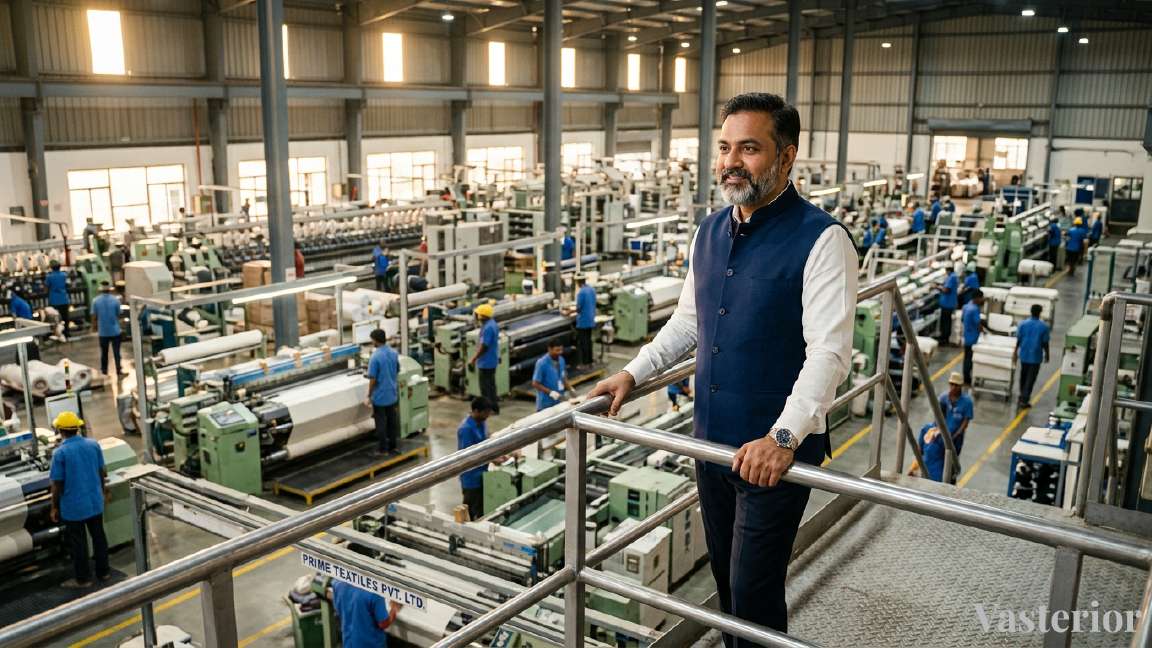
Factory success is not just about working harder.
It is about working in alignment.
Vastu for factory setup provides a framework where effort meets flow.
When your space supports your operations, growth stops feeling like a struggle and starts becoming a natural outcome.
If you have been sensing that something in your factory is not quite clicking despite your best efforts, it may be time to look beyond the obvious.
A simple conversation can often reveal what is being missed.
You may explore your factory's alignment with Vasterior by reaching out at +91 9100883355 or sharing your requirements at info@vasterior.com, and take the first step towards a more balanced and efficient setup.
FAQs
- What is the best vastu direction for a factory entrance? North, North East, and East-facing entrances are most favourable as they attract growth and opportunities.
- Where should heavy machinery be placed as per vastu? The South West or South zone is ideal for heavy machinery as it provides grounding energy and operational stability.
- Can vastu improve factory profitability? Yes, correct spatial alignment helps reduce inefficiencies, improve workflow, and support more consistent financial performance.
- Does vastu for factory require demolition or construction? No, modern vastu corrections are non-invasive and involve repositioning, colour adjustments, and layout changes without any structural work.
- What direction should the factory owner sit facing? The owner or manager should ideally face North or East to enhance clarity and decision-making.
- Where should finished goods be stored in a factory? The North West zone supports movement and timely dispatch, making it ideal for finished goods storage.
- What are signs of vastu issues in a factory? Frequent machine breakdowns, high employee turnover, delayed payments, and inconsistent output despite effort are common indicators.
- How is Vasterior different from traditional vastu consultants? Vasterior focuses on practical, non-invasive, and business-oriented solutions with a clear gridded layout analysis and actionable remedies.