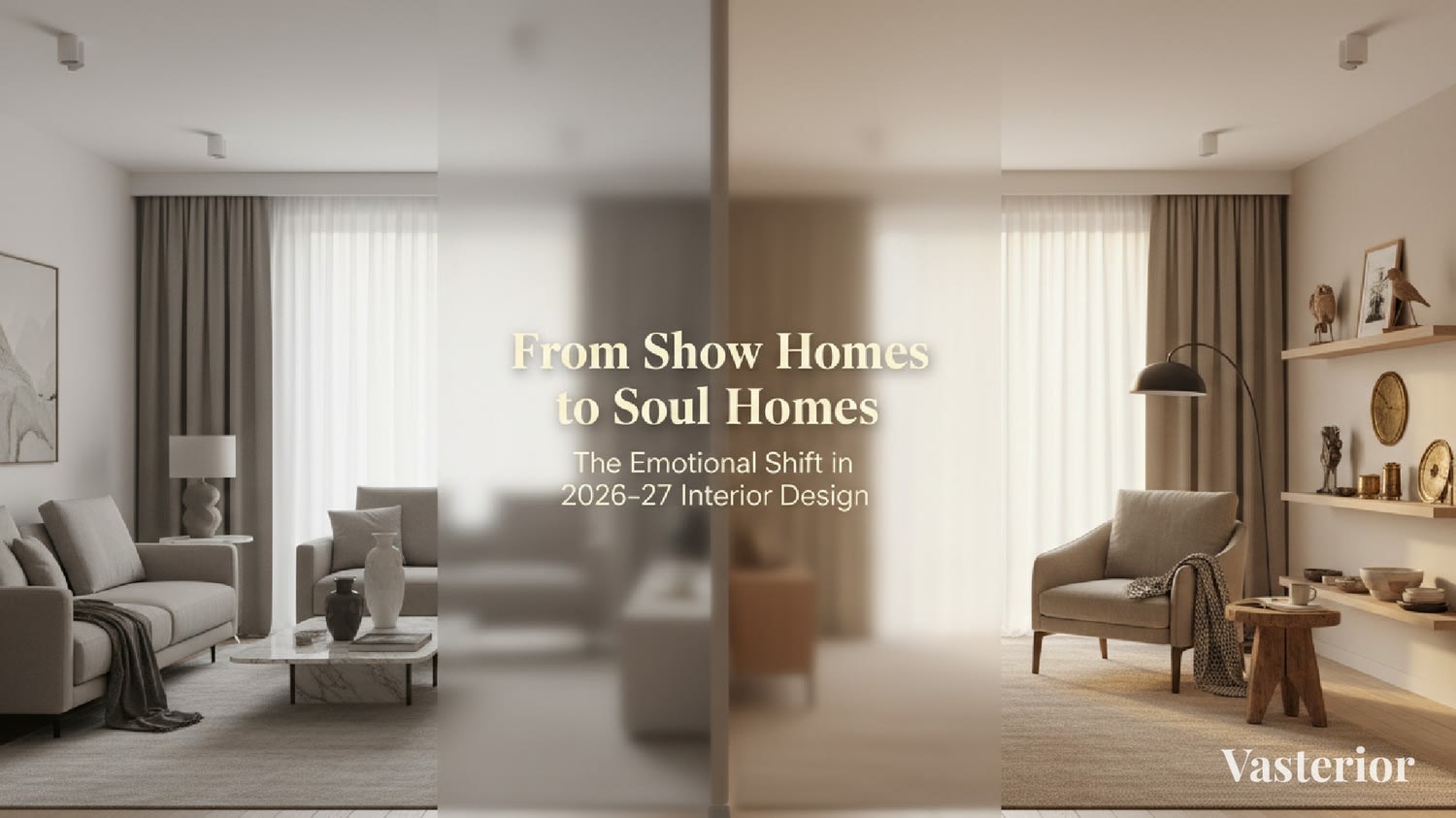
There was a time when homes were designed to impress. Perfect cushions. Untouched sofas. Dining tables staged for dinners that never happened.
That era is quietly ending.
In 2026–27, homes are no longer built for outsiders. They're being designed for the people who actually live inside them—on slow mornings, tired evenings, chaotic weekdays, and unplanned moments. The focus has shifted from how a home looks to how a home feels.
Welcome to the age of the soul home.
The End of the Show Home Era
The show home was aspirational, yes, but also exhausting.
Homes began to feel like sets. Spaces styled once and frozen forever. Rooms designed for photos instead of people. Over time, that visual perfection started to feel emotionally hollow.
Life changed. Work moved home. Rest became intentional. Mental well-being stopped being optional. And suddenly, hyper-styled interiors felt out of sync with real life.
People no longer want to perform their homes. They want homes that hold them.
Design in 2026–27 is responding to this shift by turning inward—away from trends, away from spectacle, and toward lived reality.
Emotional Design vs Performative Design
Performative design asks one question: "Will this look good?"
Emotional design asks a better one: "Will this support my life?"
A performative living room photographs beautifully but feels awkward to sit in. An emotional living room invites you to sink in, stretch out, stay longer.
Performative bedrooms prioritize symmetry and statement lighting. Emotional bedrooms prioritize sleep, softness, and psychological calm.
In emotional design:
- Comfort beats contrast
- Familiarity beats novelty
- Flow beats drama
This isn't about sacrificing beauty—it's about redefining it. Beauty now lies in how naturally a space works, not how loudly it announces itself.
Personal Rituals Are the New Floor Plans
In 2026–27, homes are no longer designed room by room. They're designed ritual by ritual.
The morning chai or coffee moment becomes a dedicated corner, not an afterthought. Evening wind-down routines influence lighting, textures, and furniture placement. Quiet practices—prayer, journaling, meditation, or simply sitting—shape spatial planning.
Designers are mapping lives before drawing layouts.
Kitchens respond to how families gather, not just how they cook. Bedrooms reflect sleep patterns, not Pinterest boards. Living areas evolve around conversation, rest, and movement—not staging.
When rituals lead design, homes feel intuitive. Nothing feels forced. Everything has a reason.
Custom Corners & Meaningful Objects
One of the clearest signals of the soul-home movement is the return of meaningful imperfection.
Homes are no longer filled with décor bought all at once. Instead, they're layered with:
- Inherited furniture that carries memory
- Travel finds that tell personal stories
- Handmade pieces that feel human, not mass-produced
Custom corners are replacing generic spaces:
- A chair by the window that exists purely for thinking
- A shelf that holds objects no one else understands, but the homeowner does
- A corner that looks unfinished to outsiders but feels complete to its owner
In 2026–27, emotional attachment matters more than trend alignment. A space doesn't need to make sense to everyone—it just needs to feel right to the person living there.
Sensory Design: Homes That Regulate, Not Overstimulate
Design is no longer just visual. It's sensory, and deeply emotional.
Light is used to soften moods, not create drama. Textures are chosen for touch, not contrast. Colors are selected for emotional balance, not trend relevance.
Silence is designed intentionally. So is negative space.
Homes are being shaped to regulate nervous systems—calm rather than excite, support rather than overwhelm. There's a quiet confidence in spaces that don't try too hard.
Luxury, now, is the absence of excess.
Vasterior's Approach: Designing from the Inside Out
At Vasterior, this shift isn't a trend—it's a philosophy.
Homes are not approached as blank canvases to decorate, but as lived environments to understand. The design process begins with listening: routines, habits, emotional needs, and unspoken preferences.
Every project starts from the inside out:
- How the client moves through their day
- Where they pause, gather, retreat
- What makes them feel grounded
Design decisions follow life, not the other way around.
The result isn't just a well-designed home. It's a space that feels aligned, supportive, and deeply personal.
Vasterior doesn't design houses for display. They design homes for belonging.
Homes That Hold You
The future of interior design isn't louder, bigger, or more dramatic.
It's quieter. Truer. More human.
The most successful homes of 2026–27 won't shout their design choices. They'll simply work—gently, intuitively, emotionally.
Because at the end of the day, the best homes don't impress you.
They hold you.
Begin Where Your Life Truly Begins
If you're ready to move beyond styling and toward spaces that genuinely reflect how you live, Vasterior designs homes that feel as good as they look—long after the first impression fades.
If you're ready to create a home that feels personal, grounded, and quietly powerful—one that reflects your rhythms rather than trends—Vasterior invites you to begin that conversation.
Connect with us at +91 9100883355 or write to info@vasterior.com, and let's design a space that doesn't just look beautiful, but feels unmistakably yours.