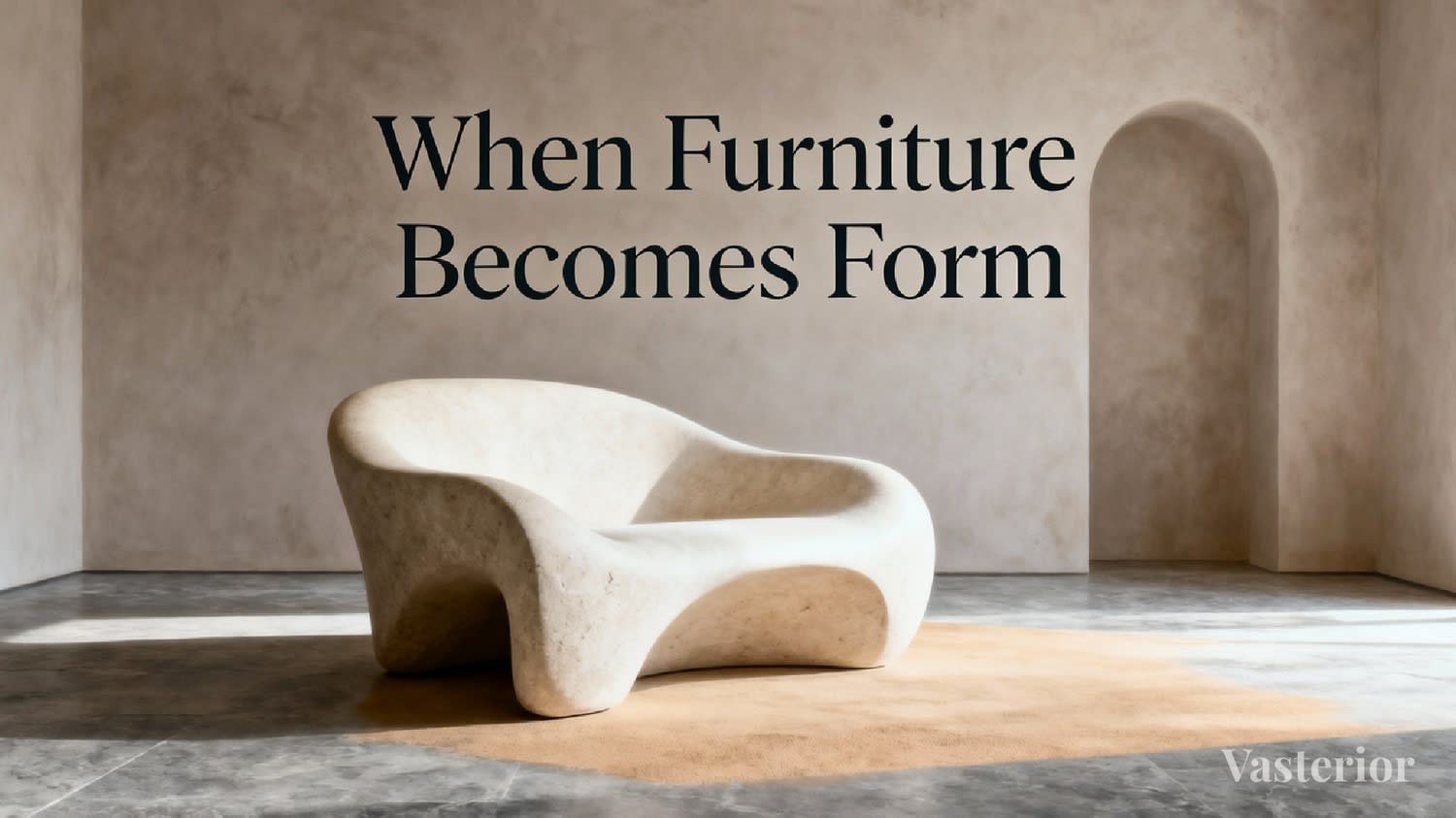
Vasterior believes that furniture has never been merely functional. At its best, it has always lived somewhere between art, architecture, and the human body. Chairs were once conceived as forms in space. Tables were composed like landscapes. Even storage carried rhythm, mass, and intent. Somewhere along the way, furniture became quieter, safer, flatter, designed to disappear rather than to speak.
Today, sculptural furniture marks a return to that older, deeper understanding of design. Not as excess. Not as visual noise. But as form with purpose.
This revival is not loud or theatrical. It is calm, confident, and deliberate. Sculptural furniture is not about announcing itself. It is about shaping how a space feels, how it flows, and how the body moves through it. When used well, it anchors a room without overwhelming it. When understood deeply, it becomes the silent author of a space's story.
What Sculptural Furniture Really Means
Sculptural furniture is often misunderstood as furniture that "looks artistic." In reality, it goes much further than surface aesthetics.
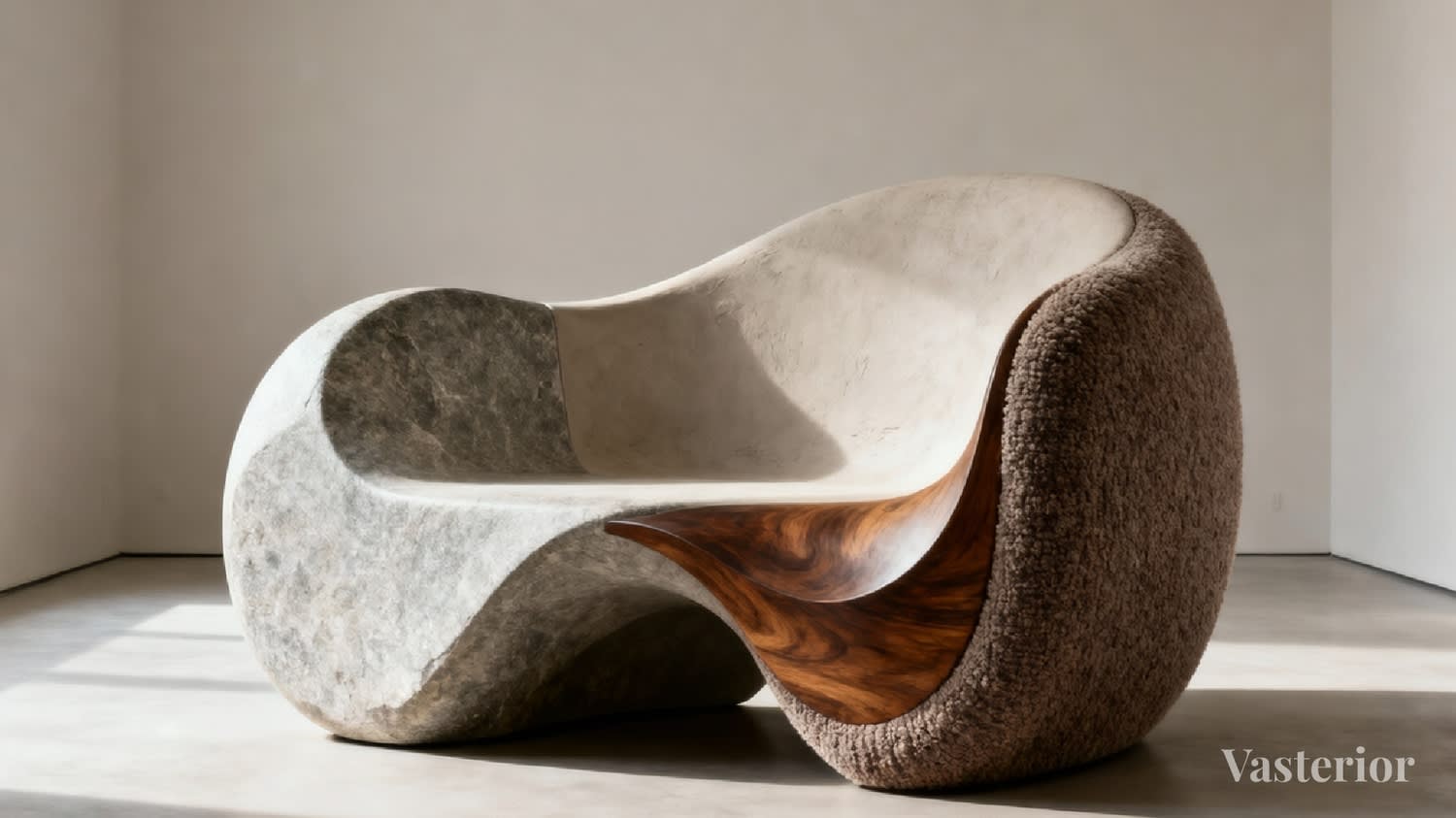
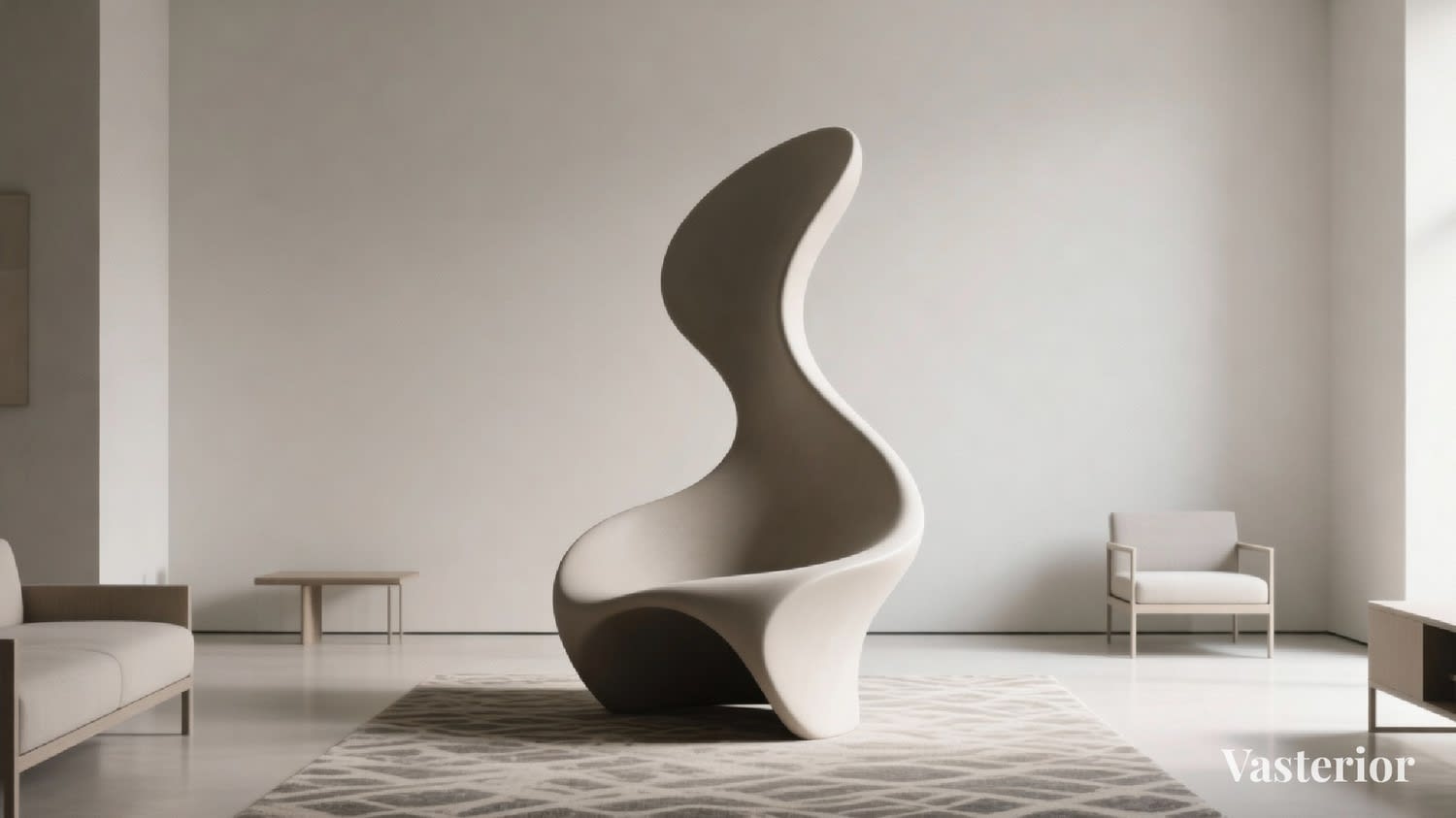
At its core, sculptural furniture is defined by form-led design, where shape, volume, curvature, mass, and negative space are consciously composed. These pieces are designed to be experienced three-dimensionally, from every angle, much like a sculpture placed in a gallery.
However, unlike art that exists purely to be observed, sculptural furniture remains fully functional. A sculptural chair still invites the body. A sculptural console still performs its role. The difference lies in how these functions are resolved through form.
Materials play a critical role here. Stone softened into gentle edges. Wood carved into continuous curves. Plastered finishes that absorb light rather than reflect it. Bouclé, leather, metal, or polished concrete, each chosen not for trend, but for how it supports the geometry of the piece.
True sculptural furniture feels intentional even when it appears effortless.
Why Sculptural Furniture Is Making a Return
The resurgence of sculptural furniture is not accidental. It reflects a broader cultural shift in how people relate to their homes.
Modern living has become more intentional. Homes are no longer treated as static backdrops but as environments that actively influence mood, productivity, and well-being. As spaces shrink in size but grow in emotional significance, every object within them must earn its place.
Sculptural furniture aligns perfectly with this mindset. One thoughtfully designed piece can replace several decorative elements. Instead of filling a room, it defines it.
Globally, design is also moving away from excessive ornamentation toward tactile honesty. Organic shapes, hand-finished surfaces, and visible craftsmanship feel grounding in an increasingly digital world. Sculptural furniture responds to this need by offering visual depth, material authenticity, and emotional presence.
It is also a quiet rebellion against fast furniture. These pieces are not meant to be replaced every season. They age well. They adapt. They stay relevant because their appeal lies in proportion and balance, not novelty.
Sculptural Furniture vs. Decorative Furniture
Understanding this distinction is essential.
Decorative furniture often relies on surface treatments, patterns, finishes, or stylistic references, to create visual interest. Sculptural furniture, on the other hand, derives its impact from structure and silhouette.
Where decorative pieces add to a space, sculptural pieces anchor it.
A sculptural coffee table does not sit passively in a living room. It establishes a center of gravity. A sculptural chair does not merely provide seating. It introduces rhythm and movement. Even storage, when sculptural, contributes to spatial balance rather than blending into the background.
This difference explains why sculptural furniture feels calmer over time. It does not compete for attention. It holds space.
Using Sculptural Furniture Like a Pro
Understanding Scale and Breathing Space
Sculptural furniture thrives on clarity. These pieces need space around them to be understood fully. When overcrowded, their impact is diluted. When given room, their form becomes legible and powerful.
The key lies in restraint. Allow one sculptural piece to lead, while the surrounding elements remain quieter and more linear. This contrast allows form to stand out without visual strain.
Let One Piece Lead the Narrative
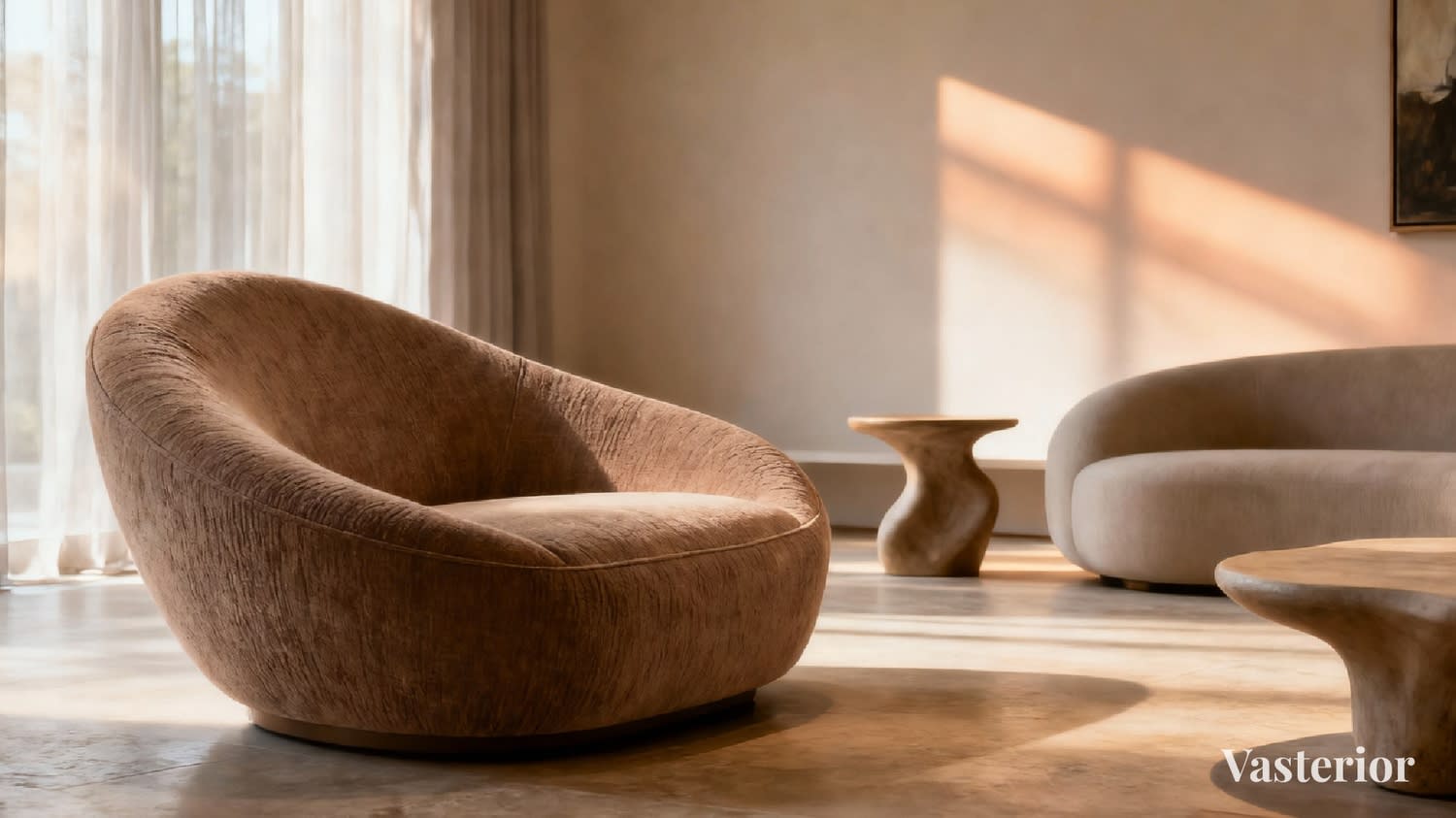
Every room benefits from a focal point. In sculptural design, this focal point is often furniture rather than décor.
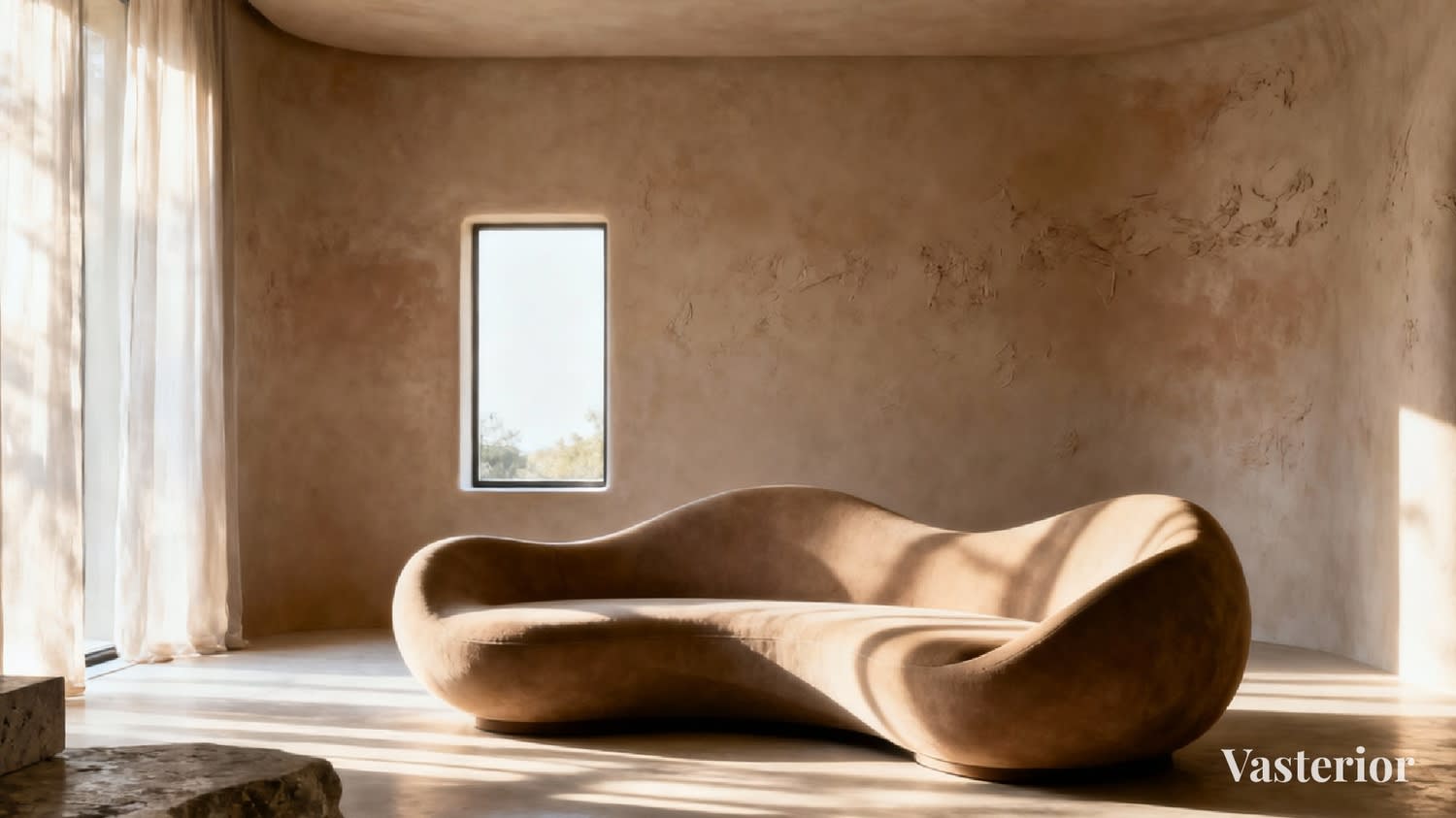
A curved sofa can define a living area. A solid, monolithic dining table can ground an open-plan space. A sculptural lounge chair can create a pause within a larger room.
Once this lead piece is established, other elements should support it rather than challenge it. Think in terms of hierarchy, not abundance.
Neutral Palettes That Amplify Form
Sculptural furniture reveals its beauty through shadow, contour, and volume. Neutral palettes, soft beiges, warm greys, muted browns, stone whites, allow these qualities to emerge naturally.
This does not mean spaces must feel monochromatic. Variation can come from texture rather than color. The subtle contrast between matte and polished surfaces, rough and smooth finishes, or soft and solid materials adds depth without distraction.
Placement Logic and Visual Balance
Sculptural furniture should feel grounded. Placement matters as much as design.
Align pieces with architectural elements whenever possible, walls, windows, columns, or natural circulation paths. This creates a sense of inevitability, as though the furniture belongs exactly where it stands.
Balance is equally important. A visually heavy piece can be countered by openness elsewhere. Negative space is not emptiness; it is an active design element that allows form to breathe.
Light as the Final Design Layer
Light completes sculptural furniture.
Natural light enhances curves and edges throughout the day, creating shifting shadows that add life to static forms. Artificial lighting, when layered thoughtfully, can highlight contours and textures without drama.
The goal is not spotlighting but subtle emphasis. Sculptural furniture reveals itself slowly, rewarding attention rather than demanding it.
Where Sculptural Furniture Works Best
Living Rooms
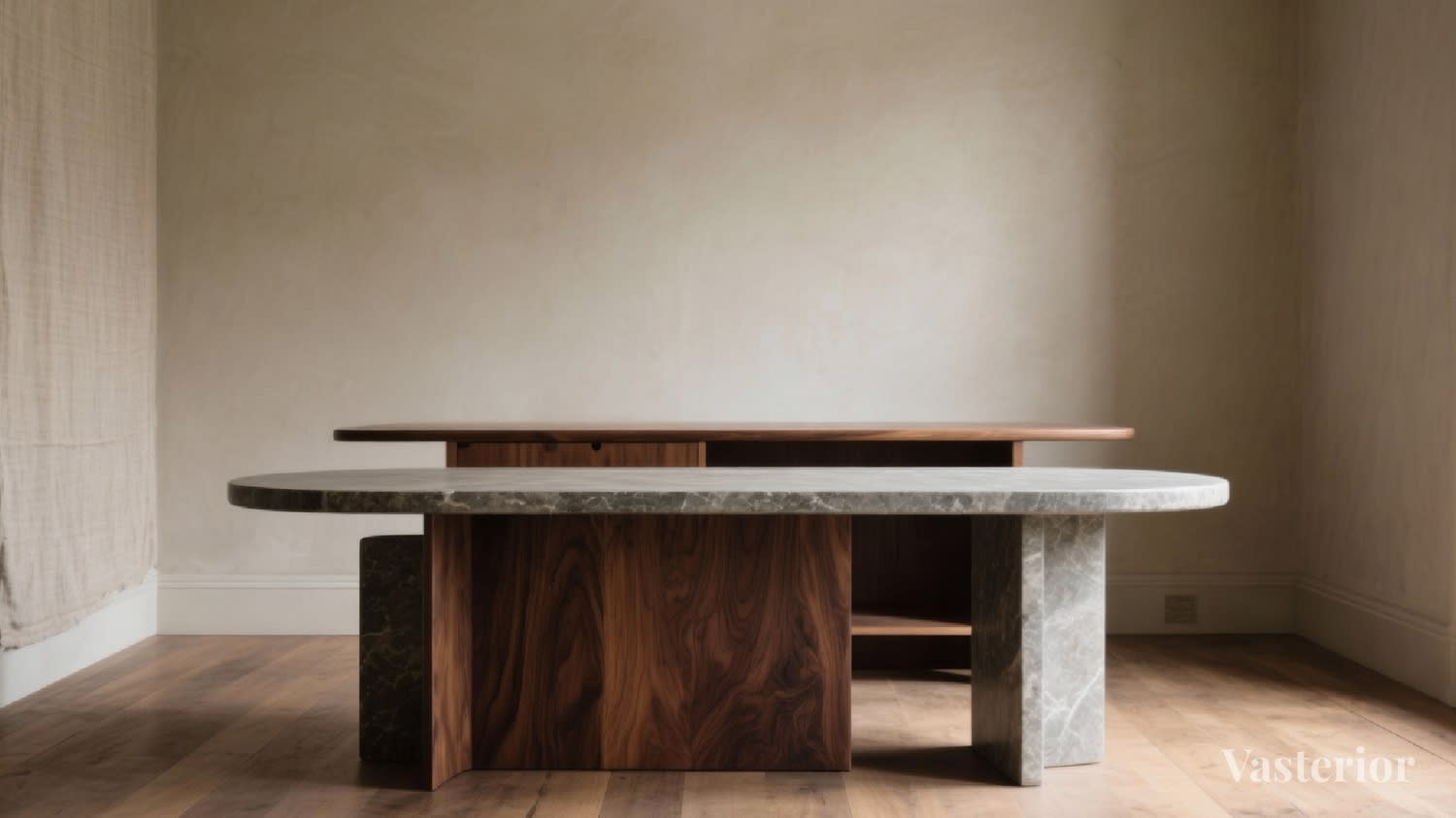
In living spaces, sculptural furniture establishes emotional tone. A curved sofa invites conversation. A solid coffee table creates calm. These pieces make the room feel intentional rather than assembled.
Lounges and Informal Seating Areas
Lounges benefit from sculptural chairs and side tables that act as visual punctuation marks. They create moments within open layouts, encouraging pause and comfort.
Bedrooms
Sculptural furniture in bedrooms should feel grounding and gentle. Bed frames, benches, or lounge chairs with softened forms enhance relaxation and visual serenity.
Entry Foyers
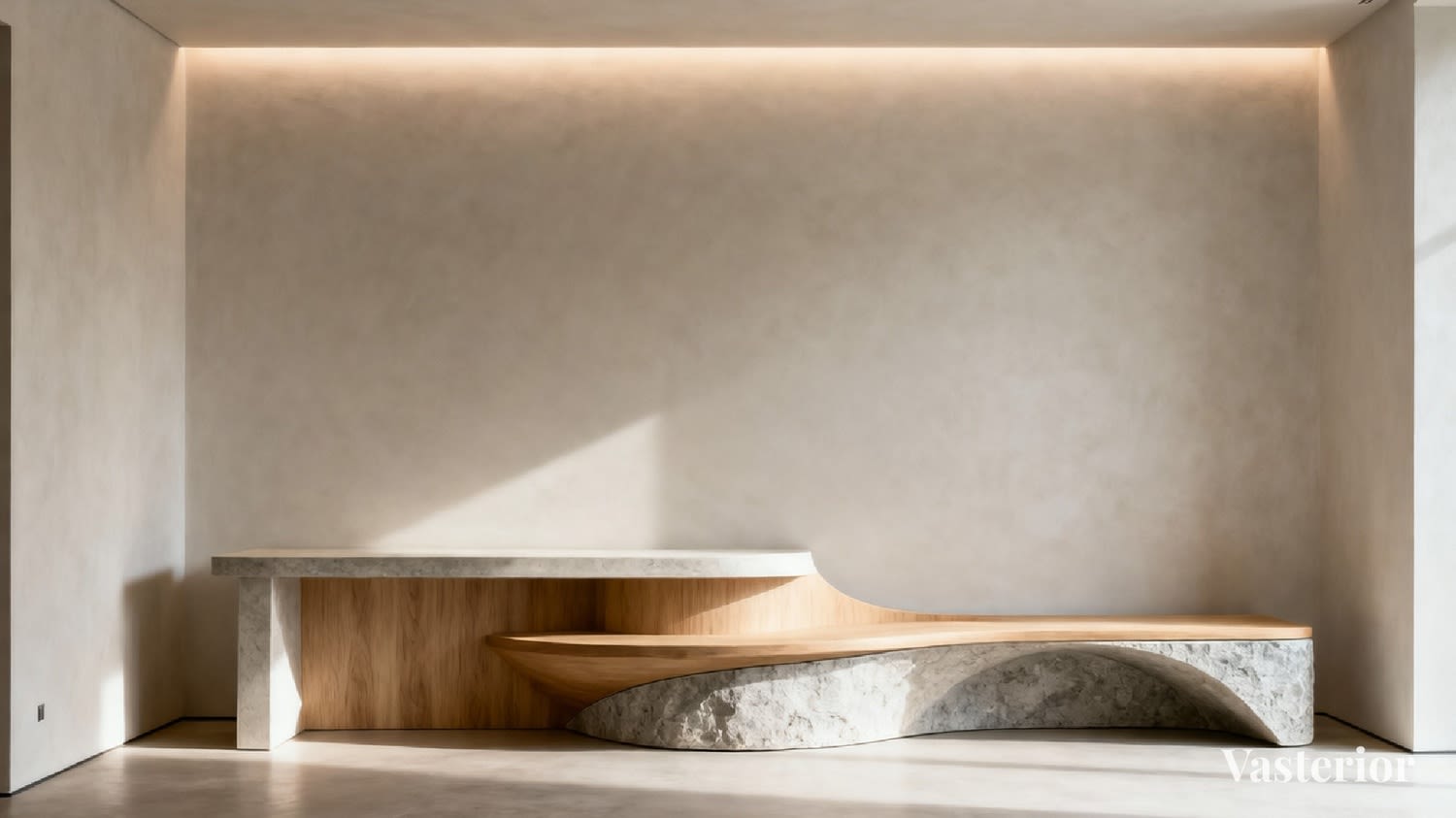
An entry sets the first impression. A sculptural console or bench immediately communicates design confidence and restraint. It signals that the home values thoughtfulness over display.
Boutique Offices and Studios
In professional spaces, sculptural furniture conveys maturity and clarity. It reflects leadership, creativity, and calm authority, qualities increasingly valued in modern work environments.
Sculptural Furniture as a Long-Term Investment
Sculptural furniture rewards patience. Its value becomes clearer with time.
Because it is rooted in proportion rather than trend, it adapts to changing interiors. It can move homes, shift contexts, or pair with new elements without losing relevance. Its presence reduces the need for constant updates or decorative additions.
Emotionally, these pieces also age well. They become familiar landmarks within daily life---objects that quietly witness routines, conversations, and transitions.
This is furniture chosen not for novelty, but for longevity.
The Vasterior Design Perspective
At Vasterior, sculptural furniture is approached as part of a larger spatial dialogue. Every piece is evaluated not only for its form, but for how it interacts with movement, light, materiality, and human behavior.
We view furniture as a mediator between architecture and experience. A sculptural piece must respond to its surroundings, align with the energy of the space, and support the life unfolding within it.
Rather than filling rooms, we compose them. Proportion, rhythm, and balance guide our decisions. Sculptural furniture is never introduced for effect---it arrives because it belongs.
A Quiet Closing Thought
Sculptural furniture is not about making a statement. It is about creating presence.
In spaces designed with intention, furniture does not shout. It listens. It supports. It anchors. When chosen with clarity and placed with care, sculptural furniture becomes more than an object. It becomes part of the architecture of daily life.
And that is where timeless design truly begins. Call us today at +91 7599208222 or pradeepshukladecor@gmail.com.