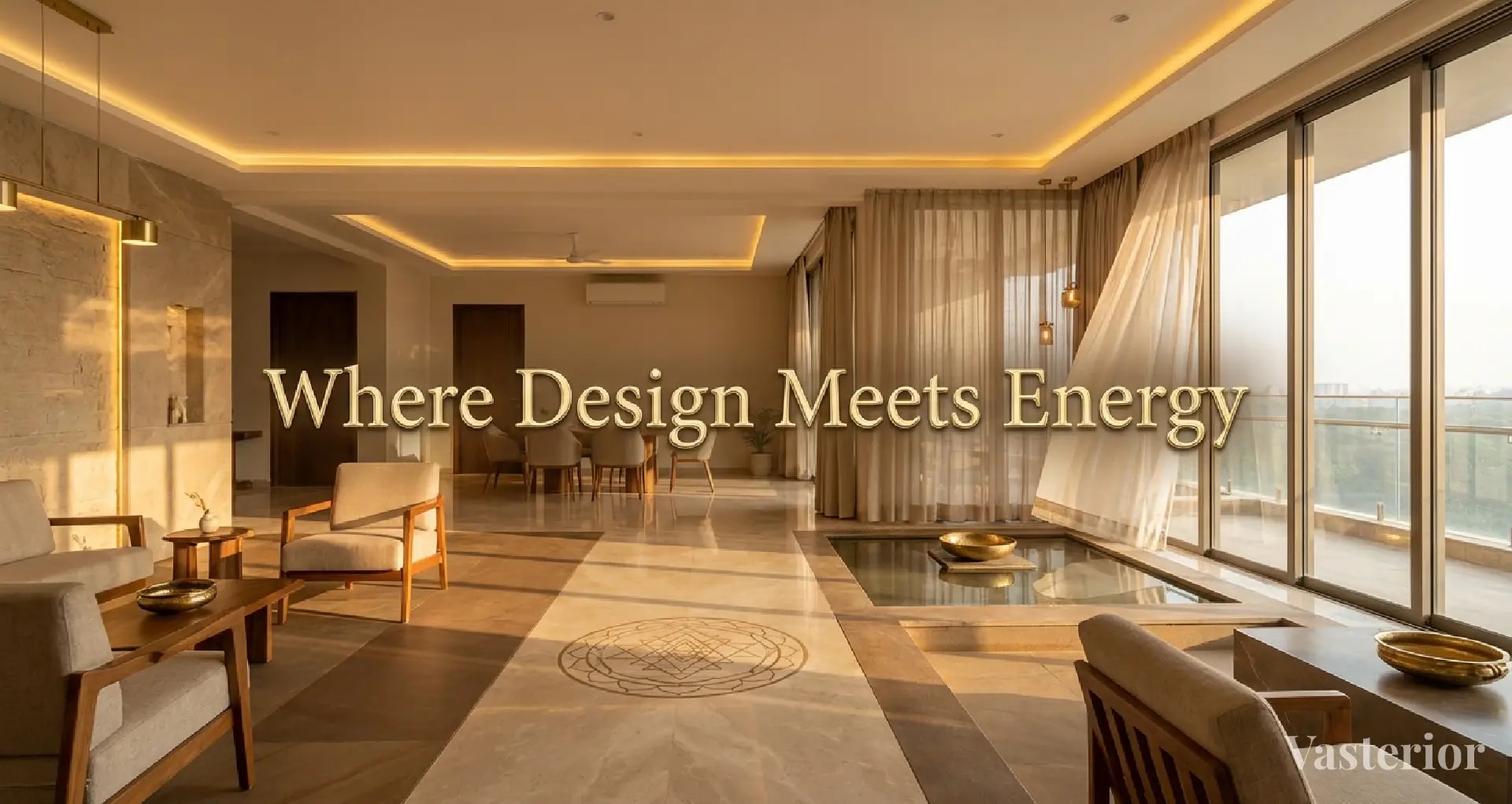
Walk into certain spaces and something immediately feels right. The air seems lighter, the atmosphere calmer, and your mind somehow settles. Yet in other places, even if they look visually appealing, you might feel slightly uneasy or restless.
That subtle difference is precisely what ancient Indian architects tried to understand thousands of years ago. Their answer eventually evolved into what we now know as Vastu Shastra.
Often dismissed as superstition or traditional belief, Vastu Shastra is actually rooted in principles that overlap with environmental science, architecture, sunlight orientation, airflow patterns, and human psychology. When explained simply, Vastu is less about ritual and more about how spatial design influences energy, comfort, and wellbeing.
In modern design conversations, people talk about wellness architecture, biophilic design, and energy-efficient homes. Interestingly, many of these ideas echo the same principles that Vastu has been emphasising for centuries.
Let us break down the science behind Vastu Shastra in a way that is simple, practical, and easy to understand.
What Exactly Is Vastu Shastra?
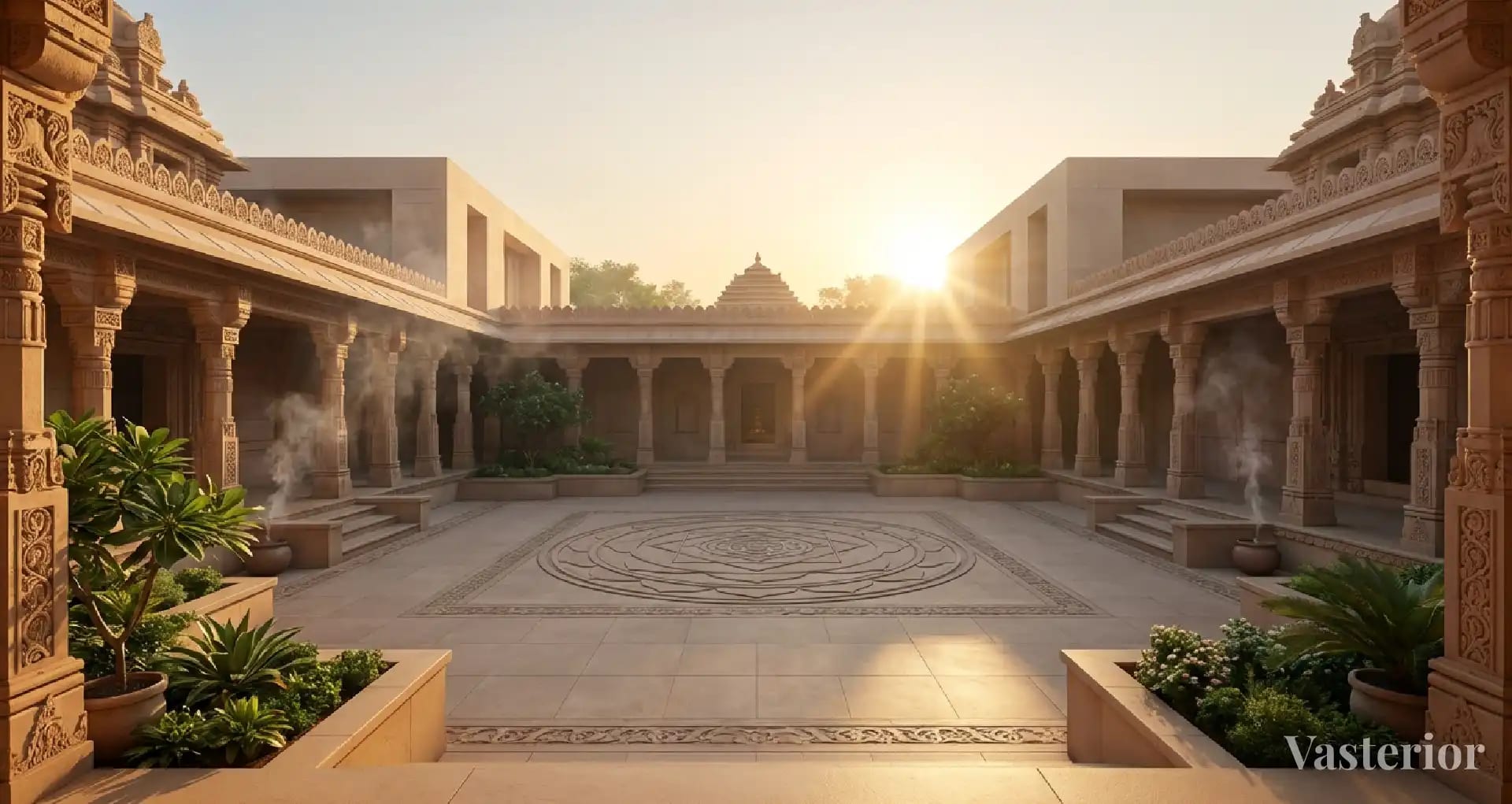
Vastu Shastra is an ancient Indian architectural system that focuses on creating balanced, harmonious spaces aligned with natural forces.
The term itself comes from two Sanskrit words:
- Vastu – dwelling or physical space
- Shastra – science or system of knowledge
In essence, Vastu Shastra is the science of spatial harmony.
Ancient Indian builders used these principles while designing temples, homes, palaces, and entire towns and cities. The goal was not merely aesthetic beauty but energetic balance between humans and nature.
Vastu recognises that a building is not an isolated structure. It exists within a larger ecosystem influenced by:
- Sunlight
- Earth's magnetic field
- Wind direction
- Thermal patterns
- Surrounding environment
When these natural forces are aligned with the layout of a building, the space tends to feel calmer, more functional, and energetically balanced.
The Five Elements That Shape Every Space
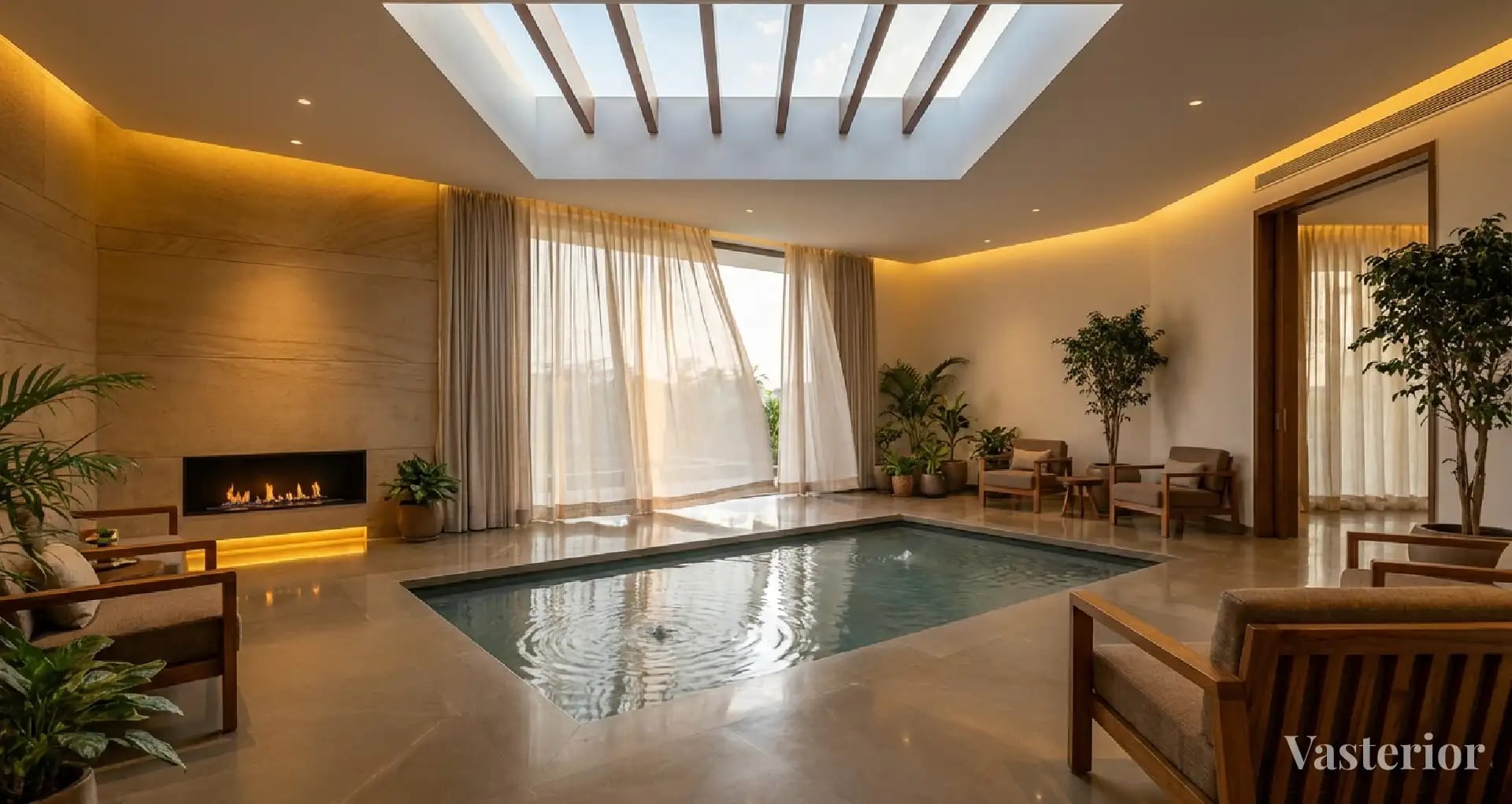
At the core of Vastu Shastra lies the concept of the Pancha Mahabhutas, or the five fundamental elements of nature.
These elements influence not just the environment but also how we experience a space psychologically and physically.
Earth (Prithvi)
Earth symbolises stability and grounding.
In architecture, this translates to structural strength and balanced layout. Spaces that are properly anchored with the right weight distribution often feel secure and stable.
Homes that respect this element tend to evoke a sense of comfort and rootedness.
Water (Jal)
Water represents flow, movement, and prosperity.
In spatial design, water elements influence:
- Emotional balance
- Cooling effect in environments
- Movement and fluidity in layout
This is why Vastu often associates water-related spaces such as wash areas or fountains with specific directions.
Fire (Agni)
Fire symbolises energy, transformation, and vitality.
In modern terms, this relates strongly to heat and light sources within a home.
Kitchen placement, sunlight exposure, and even electrical systems are connected to this element. When positioned correctly, these features support efficient functioning and balanced thermal comfort.
Air (Vayu)
Air governs ventilation, movement, and freshness.
A home that allows natural airflow tends to feel lighter and healthier. Poor ventilation, on the other hand, often results in discomfort, humidity, and stagnation.
Ancient Vastu planners paid close attention to wind directions to ensure optimal airflow throughout living spaces.
Space (Akash)
Space represents openness and expansion.
In design terms, this translates to:
- Uncluttered layouts
- Breathing room between elements
- Balanced proportions
Modern interior design calls this spatial balance or negative space, but the principle has been part of Vastu philosophy for centuries.
The Science of Direction and Energy Flow
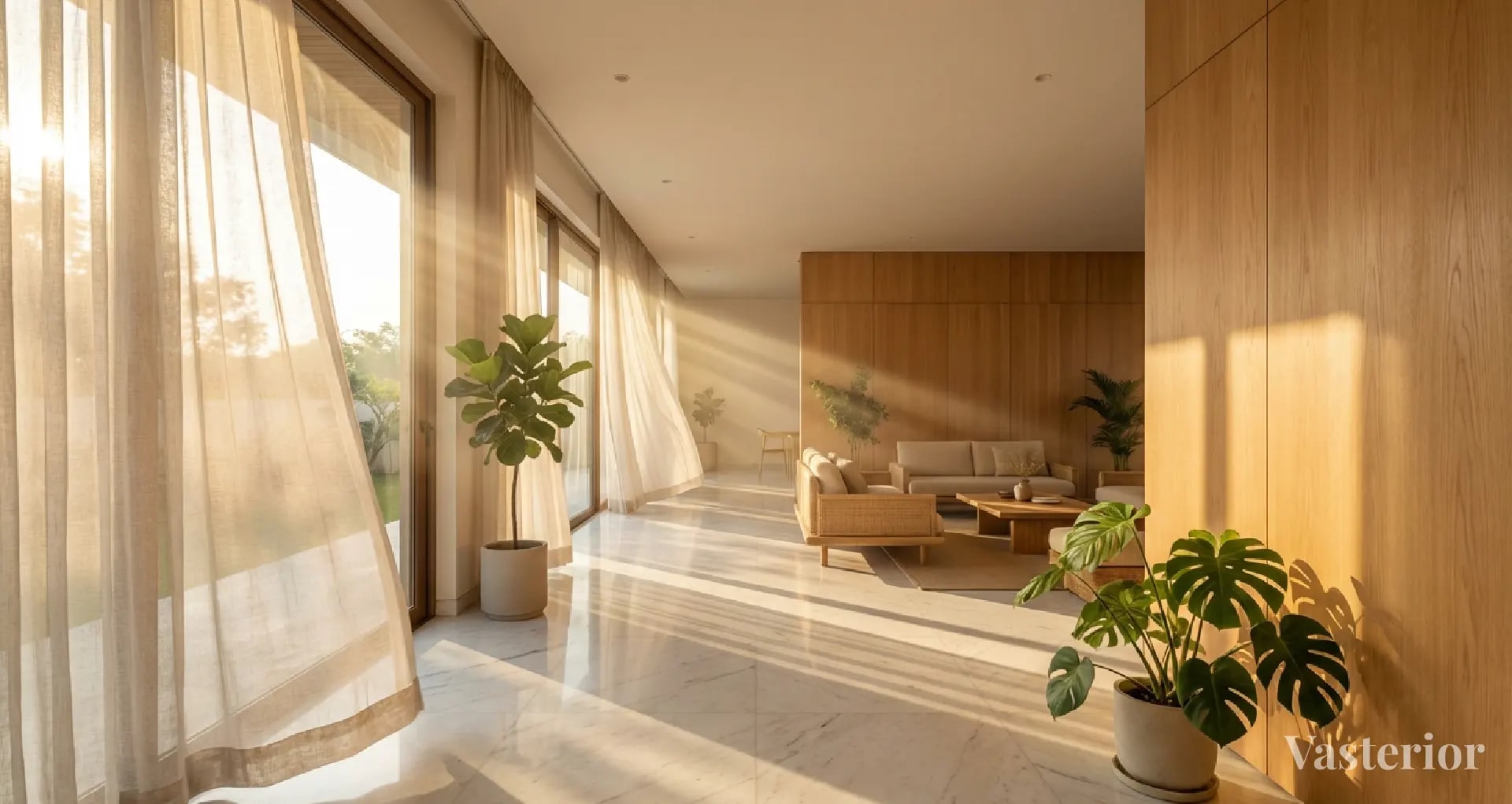
One of the most discussed aspects of Vastu Shastra is the significance of cardinal directions.
At first glance, assigning importance to directions may appear mystical. However, when examined through environmental science, the logic becomes surprisingly clear.
Sunlight Orientation
The sun rises in the east and travels westward. This daily cycle influences:
- Natural light levels
- Heat gain in buildings
- Indoor temperature balance
Homes designed with this movement in mind tend to maintain better lighting and thermal comfort throughout the day.
Earth's Magnetic Field
The Earth has a natural magnetic field running from north to south.
Some architects believe that aligning spaces with this field can subtly influence orientation, sleep patterns, and spatial balance.
While research in this area continues to evolve, many cultures — including Chinese Feng Shui — have recognised directional energy patterns for centuries.
Wind Patterns and Ventilation
Air movement plays a crucial role in indoor comfort.
Traditional Vastu-based homes often incorporated features such as:
- Courtyards
- Cross ventilation
- Strategically placed windows
These designs naturally improved air circulation and cooling, especially in warm climates.
Why Some Rooms Work Better in Certain Directions
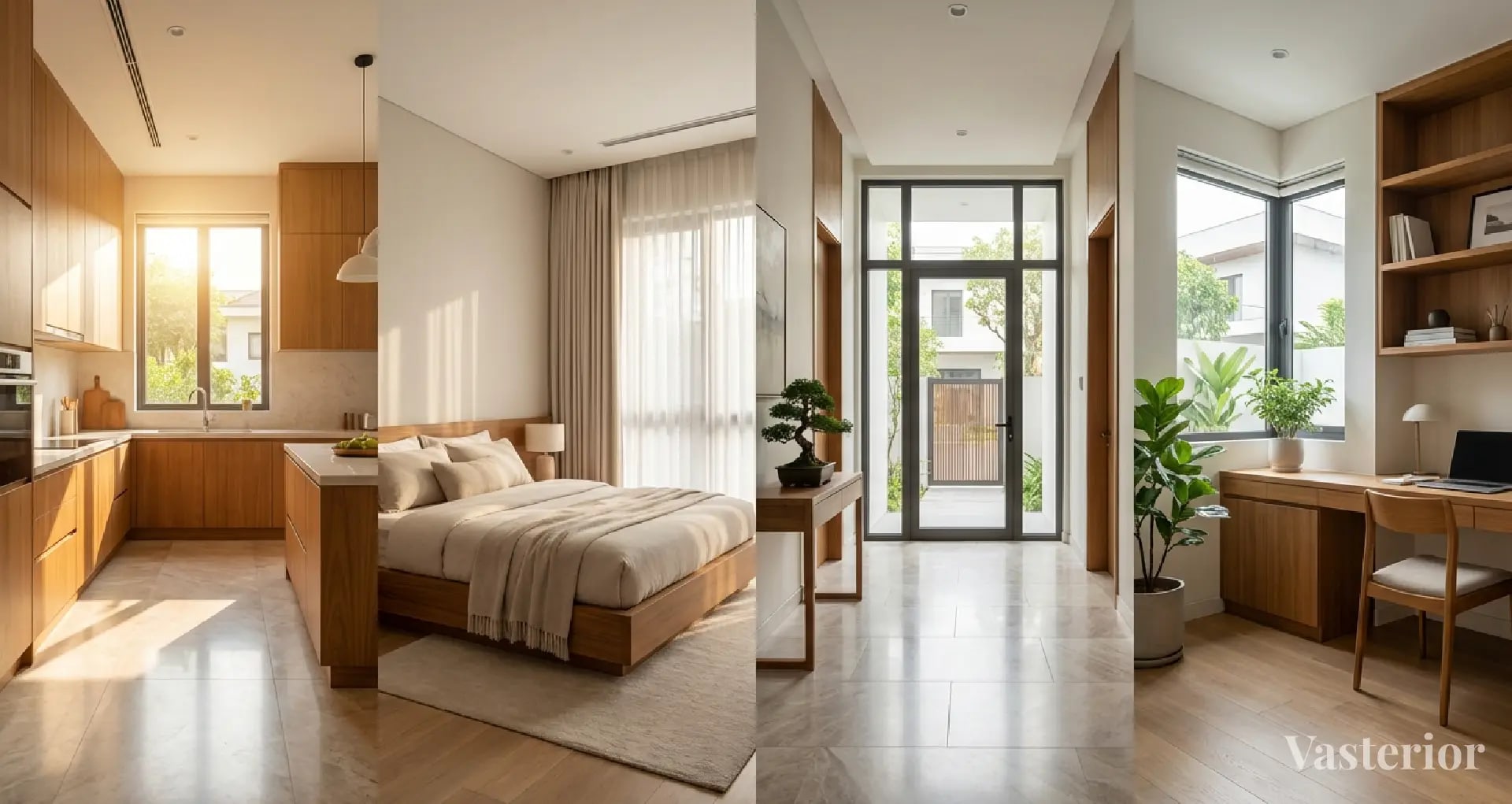
Vastu Shastra suggests particular directions for different areas of a home. While often interpreted spiritually, these placements frequently align with practical reasoning.
Kitchen Placement
The kitchen is associated with the fire element.
Placing it in areas receiving morning sunlight helps maintain hygiene, reduces dampness, and provides natural warmth during early hours.
Bedrooms
Bedrooms are ideally positioned in quieter zones of the house.
Proper orientation can influence:
- Sleep quality
- Temperature balance
- Noise levels
Modern sleep science also highlights the importance of darkness, quietness, and thermal comfort — all factors influenced by spatial orientation.
Entrance Direction
The entrance determines how light, air, and movement flow into a home.
A well-positioned entrance often ensures:
- Natural illumination
- Smoother circulation
- Welcoming atmosphere
Architecturally speaking, the entrance acts as the energy gateway of a building.
Vastu and Modern Interior Design
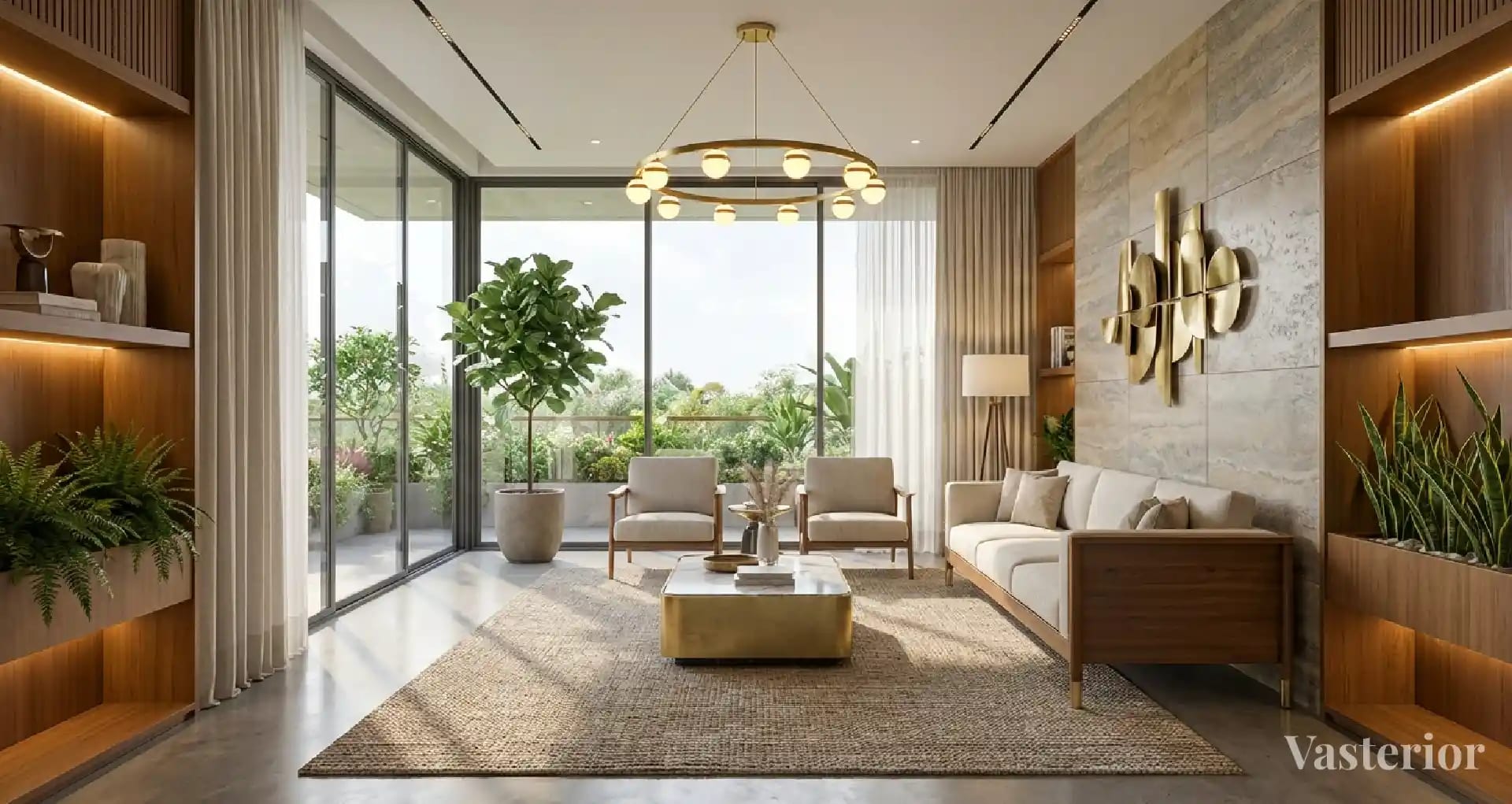
Contrary to popular belief, Vastu Shastra does not conflict with modern design.
In fact, many contemporary architects unknowingly apply similar principles through:
- Sustainable architecture
- Passive solar design
- Climate-responsive layouts
- Wellness-based interiors
Modern homes that incorporate natural light, ventilation, and balanced layouts are essentially echoing Vastu principles.
The difference lies mainly in terminology rather than intent.
Today, interior designers often combine aesthetic elegance with spatial harmony, ensuring that homes look beautiful while also feeling energetically balanced.
The Psychology of Balanced Spaces
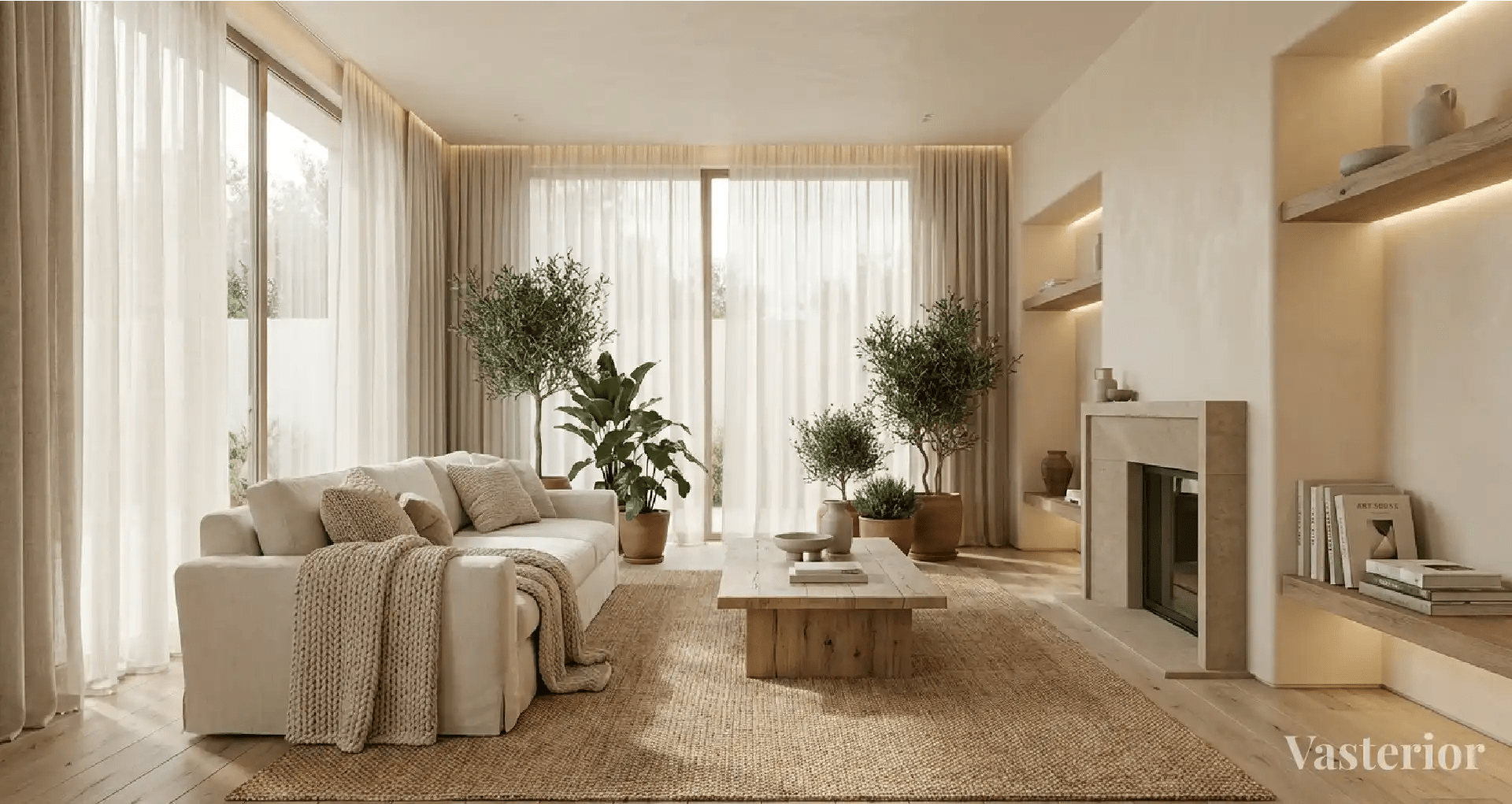
Design does not only influence how a space looks. It deeply affects how we feel and behave within it.
Environmental psychology studies show that spatial organisation impacts:
- Productivity
- Emotional stability
- Stress levels
- Cognitive focus
- Sleep patterns
For example, cluttered environments increase mental fatigue, poor lighting affects mood, and inadequate airflow reduces comfort.
Vastu Shastra intuitively addressed these issues centuries ago by encouraging organised layouts, natural lighting, and directional alignment.
When these elements come together, the result is a space that feels both functional and emotionally supportive.
Common Myths About Vastu Shastra
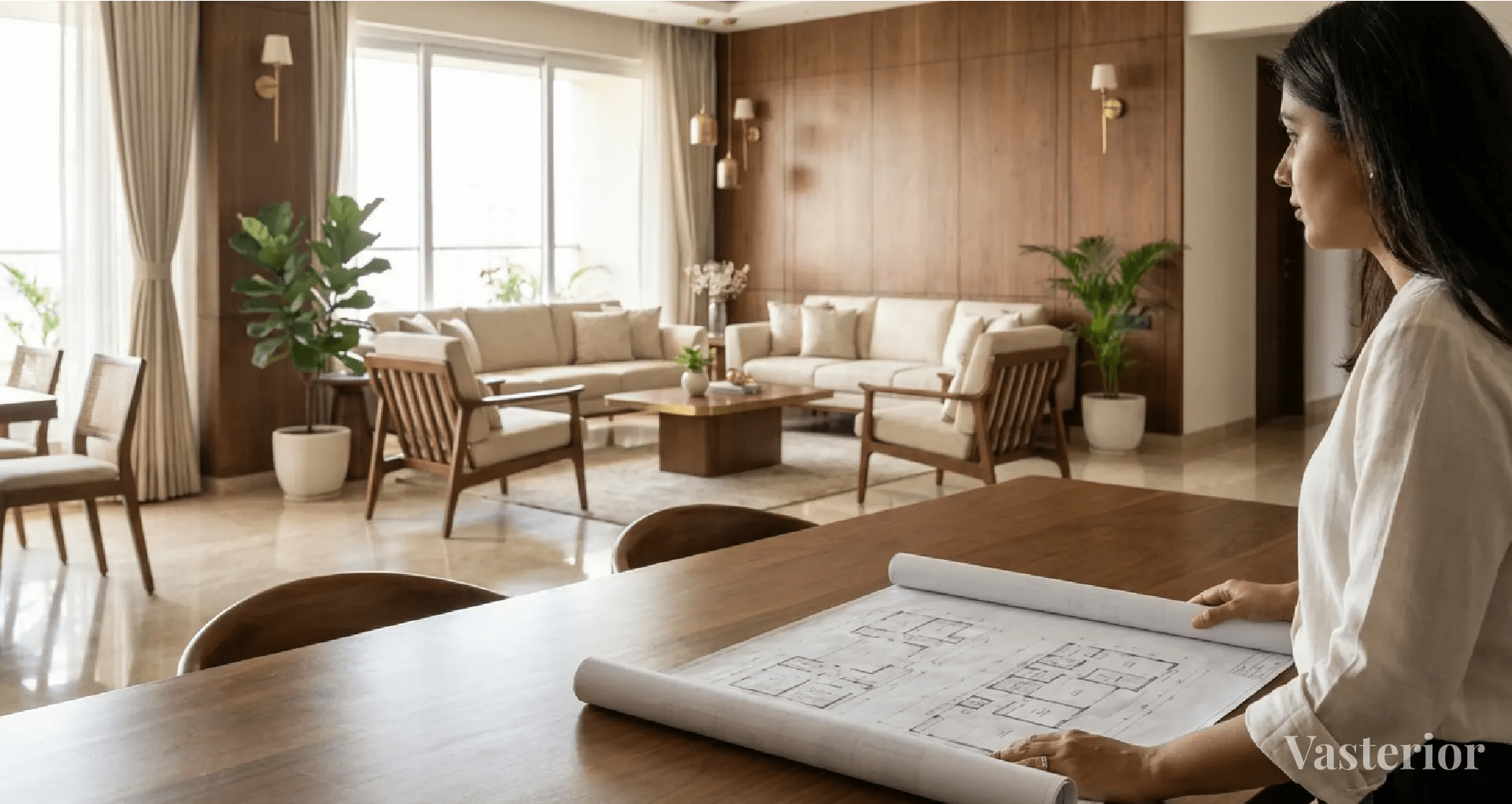
Despite its practical foundations, Vastu is often misunderstood. Let us clear up a few misconceptions.
Myth 1: Vastu Is Purely Religious
Vastu originated as an architectural discipline, not a religious ritual. While spiritual traditions adopted it later, its foundation lies in spatial science.
Myth 2: You Must Rebuild Your Home
One of the biggest misconceptions is that fixing Vastu requires demolition.
In reality, many corrections can be achieved through:
- Furniture placement
- Lighting adjustments
- Colour balance
- Spatial reorganisation
Myth 3: Modern Homes Cannot Follow Vastu
Modern apartments and urban homes can absolutely integrate Vastu principles.
Often, small design adjustments are enough to create better balance.
How Vasterior Aligns Design With Energy
Creating a beautiful home is one thing. Creating a home that feels energetically balanced and harmonious is another.
This is where thoughtful spatial design becomes essential.
At Vasterior, the focus goes beyond aesthetics. The approach combines modern interior design with intelligent Vastu alignment, ensuring that spaces are not only visually refined but also emotionally supportive.
Instead of rigid rules, the emphasis lies on practical design solutions, such as:
- Optimising layouts for better energy flow
- Adjusting spatial balance without structural changes
- Enhancing light and ventilation
- Integrating Vastu principles into modern interiors
The goal is simple: to create environments that feel peaceful, productive, and naturally uplifting.
Final Thoughts
When stripped of superstition and explained through modern reasoning, Vastu Shastra reveals itself as a remarkably thoughtful approach to spatial design.
It recognises something many of us intuitively feel — the spaces we inhabit influence how we think, feel, and live.
By aligning architecture with natural forces such as sunlight, airflow, and environmental balance, Vastu aims to create homes that support wellbeing, clarity, and comfort.
For homeowners and designers alike, understanding these principles offers a new perspective on how spaces can be shaped not just for beauty, but for true harmony.
Those curious about exploring how their homes or workspaces might benefit from thoughtful spatial alignment can connect with the Vasterior team for personalised guidance at +91 9100883355 or info@vasterior.com.
FAQs: Science Behind Vastu Shastra
1) Is there real science behind Vastu Shastra?
Yes. Vastu Shastra is grounded in environmental science, solar orientation, airflow patterns, and the Earth's magnetic field. Its principles overlap significantly with modern sustainable architecture and wellness design.
2) What are the five elements in Vastu?
The five elements are Earth (Prithvi), Water (Jal), Fire (Agni), Air (Vayu), and Space (Akash). Each element influences different aspects of spatial design and human wellbeing.
3) How does direction matter in Vastu?
Direction matters because it determines sunlight exposure, airflow patterns, and thermal comfort. For example, east-facing spaces receive morning sunlight, which supports hygiene and natural warmth.
4) Can Vastu principles be applied to modern apartments?
Absolutely. Modern Vastu focuses on non-structural adjustments such as furniture placement, lighting, colour, and layout optimisation — all of which work perfectly in apartments and rented spaces.
5) Does Vastu affect mental health?
Environmental psychology confirms that spatial organisation, lighting, and airflow directly impact mood, stress levels, cognitive focus, and sleep quality — all of which Vastu Shastra addresses through thoughtful design.
6) Is Vastu the same as Feng Shui?
They are different systems from different cultures — Vastu from ancient India and Feng Shui from China — but both recognise the influence of directional energy and spatial balance on human wellbeing.
7) Do I need to demolish walls to follow Vastu?
No. Most Vastu corrections can be achieved through non-structural changes like rearranging furniture, improving lighting, adjusting colours, or reorganising spaces.
8) How does Vasterior integrate Vastu with interior design?
Vasterior combines modern aesthetics with intelligent Vastu alignment — optimising layouts, enhancing natural light and ventilation, and creating spaces that are both visually refined and energetically balanced.