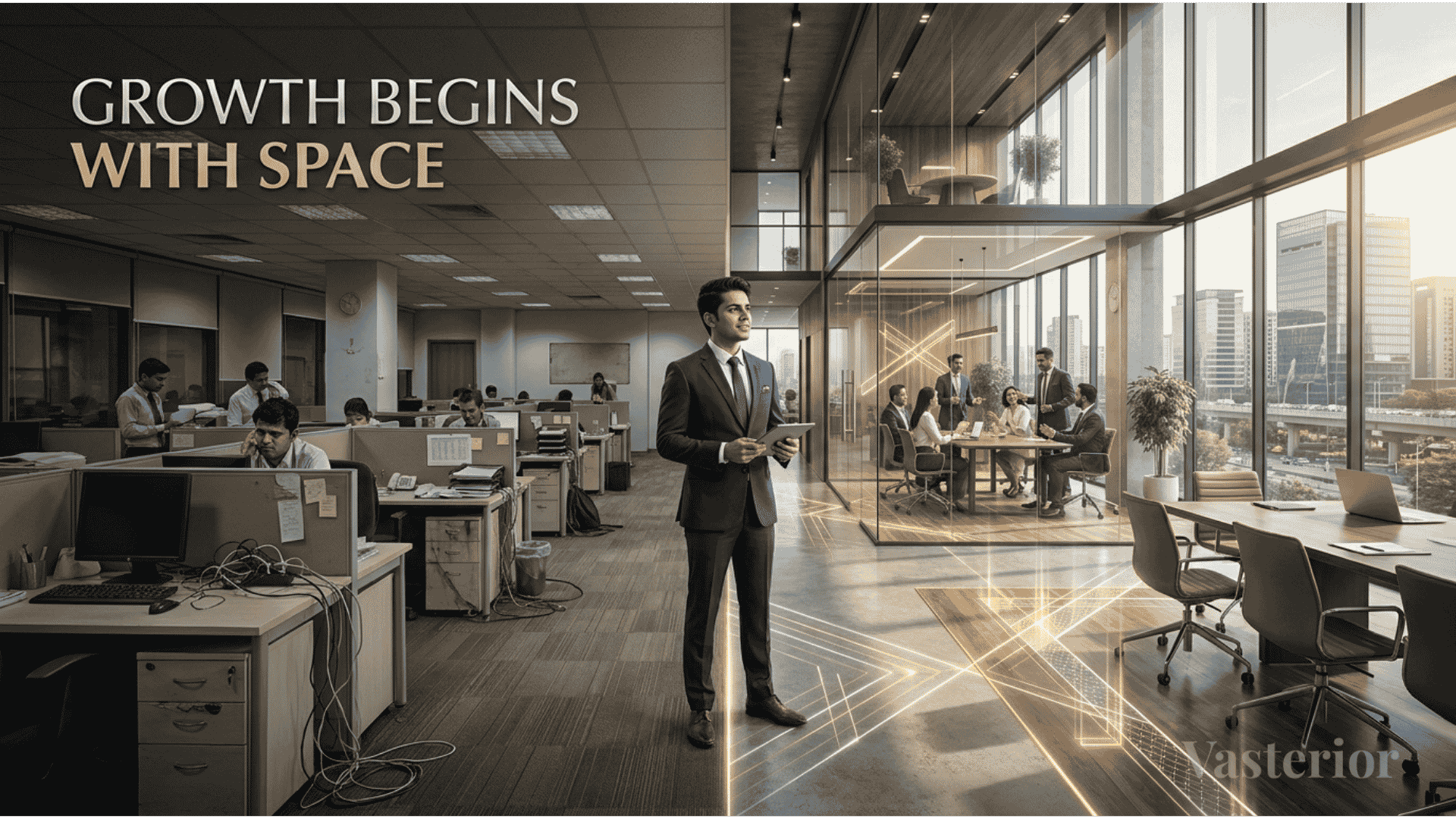
Two businesses operate in the same market. Both sell similar products. Both invest in advertising. Both hire talented people. Both target the same customers.
Yet one business grows relentlessly while the other struggles to break through.
Most people immediately blame marketing, leadership, competition, or luck. Almost nobody questions the environment in which those decisions are being made.
That is surprising because every important business decision happens inside a space. Strategies are developed inside rooms. Client relationships are built inside offices. Teams collaborate within work environments. Sales conversations take place across desks and conference tables.
When the environment itself is misaligned, it quietly influences everything happening within it. Not dramatically. Not overnight. But consistently.
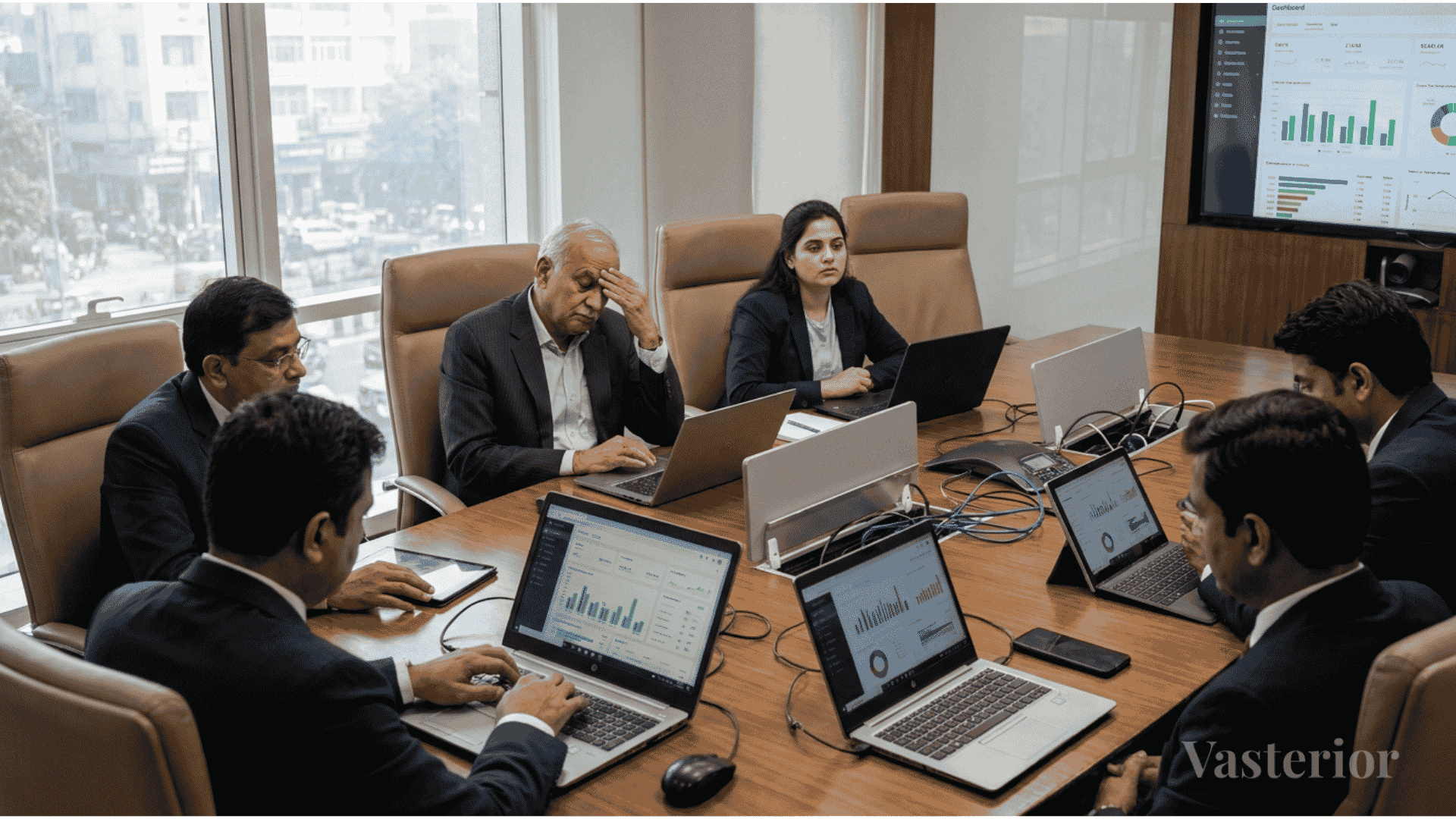
A poorly designed workspace can drain focus, increase friction, create confusion, and weaken confidence. Over time, these invisible effects become visible in business outcomes.
The smartest entrepreneurs are beginning to realize something important. Business growth is not only about what happens in the market. It is also about what happens within the space where the business operates.
The Cost of Ignoring Invisible Factors

Modern business owners obsess over metrics. Lead generation. Conversion rates. Customer acquisition costs. Revenue projections. Operational efficiency.
All of these matter. Yet one critical factor often remains unexamined. The physical environment from which all these activities emerge.
Think about elite athletes. They do not focus solely on performance. They optimize recovery, nutrition, sleep, training conditions, and mental preparation. They understand that performance is influenced by the ecosystem surrounding them.
Business is no different. A workplace can either support clarity or create confusion. It can encourage collaboration or trigger conflict. It can strengthen confidence or slowly diminish it.
Most organizations only react when problems become visible. By then, the space may have been influencing outcomes for years.
The reality is simple. An underperforming environment can quietly become one of the most expensive liabilities a business owns.
Why East Delhi Businesses Are Facing New Challenges
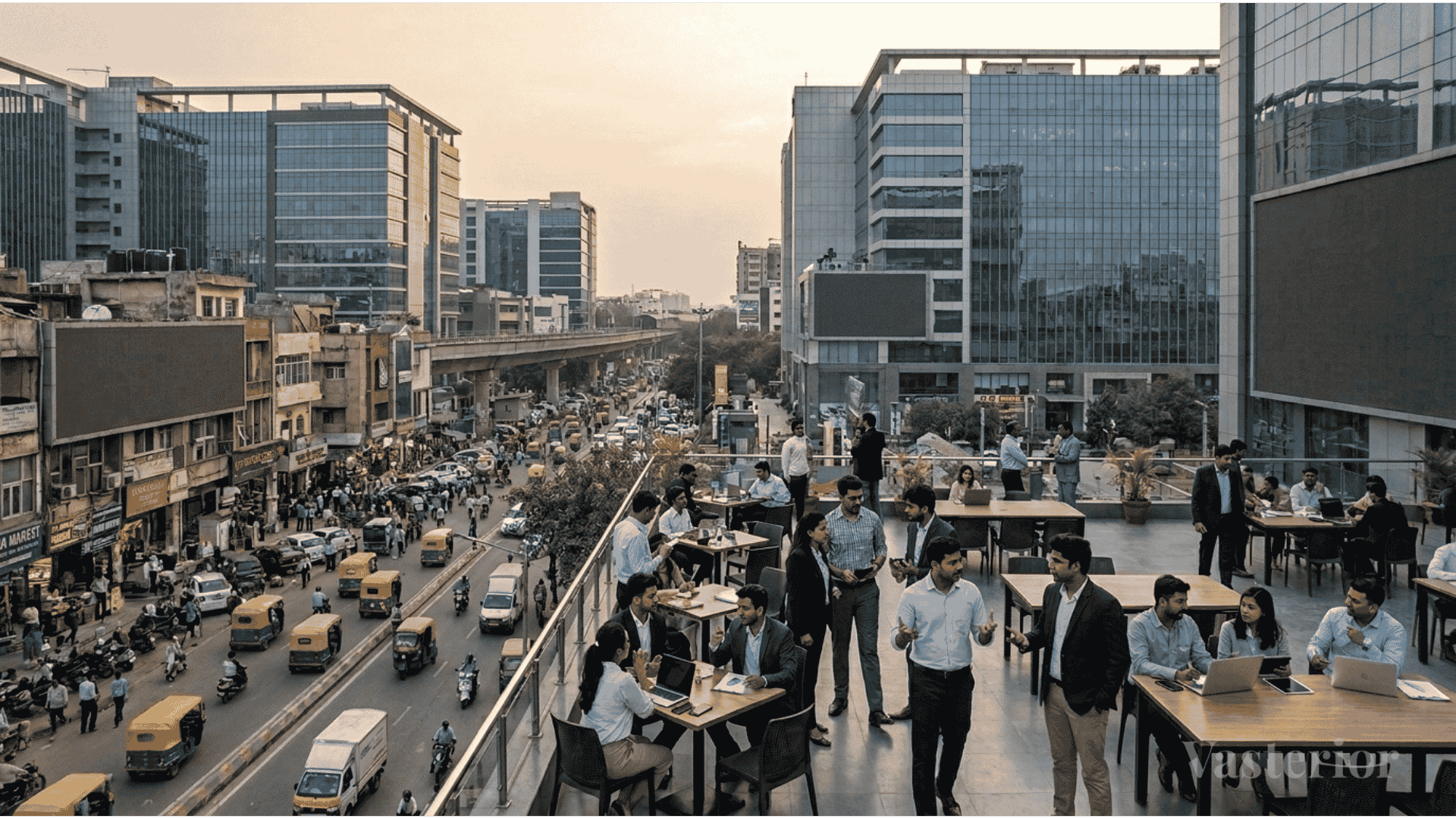
East Delhi has evolved dramatically over the past decade. Traditional businesses now compete with digital-first brands. Local retailers compete with online marketplaces. Professional service providers compete not only with nearby competitors but with businesses across the country.
Consumers have become more informed. Attention spans have become shorter. Expectations have become higher.
In this environment, every competitive advantage matters. A business can no longer rely solely on product quality or pricing. Customers evaluate experiences. Employees evaluate work environments. Partners evaluate professionalism. Investors evaluate operational maturity.
The physical space has become part of the business brand itself. An office is no longer just an office. A retail store is no longer just a store.
Every square foot communicates a message. The question is whether that message is helping the business grow or limiting its potential.
The Psychology of Prosperous Spaces
Most business owners understand the importance of mindset. Few understand how deeply space influences mindset.
The environment around us constantly affects how we think, feel, and behave. Research in workplace psychology repeatedly demonstrates that surroundings influence concentration, creativity, stress levels, communication patterns, and decision quality.
When people enter a well-designed space, they often experience a sense of clarity before they consciously understand why. When they enter a poorly organized environment, they often experience resistance before they can identify its source.
The same principle applies to business leadership. A founder making critical decisions every day is affected by the energy of the environment. A sales team interacts differently within a supportive space. Customers perceive professionalism differently within a strategically planned office. Employees feel valued differently within thoughtfully designed workplaces.
Prosperous spaces are not accidental. They are intentionally created ecosystems that encourage better human behavior. And better human behavior almost always leads to better business outcomes.
The MahaVastu Difference
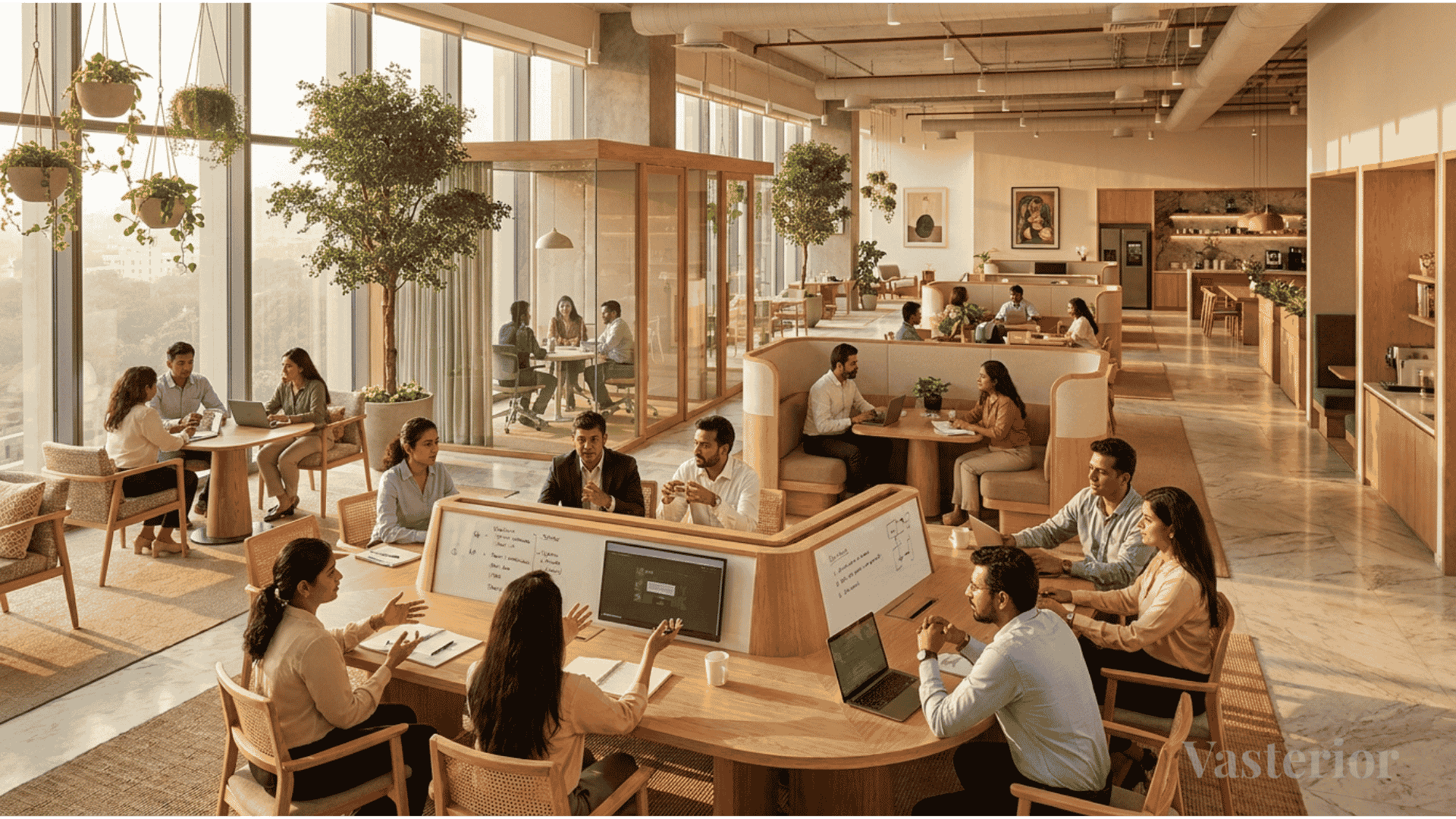
This is where MahaVastu introduces a completely different perspective.
Unlike superficial recommendations focused on isolated remedies, MahaVastu studies how directional energies interact with human activity and organizational goals. It is a systematic framework. A diagnostic approach. A methodology that examines the relationship between space and performance.
The objective is not decoration. The objective is alignment.
When applied correctly, MahaVastu helps identify whether the existing spatial arrangement is supporting business objectives or creating unnecessary resistance.
What makes it particularly relevant for modern businesses is that it provides a structured understanding of environmental influence rather than relying on assumptions.
For entrepreneurs, this means decisions can be made with greater awareness of how their space may be impacting leadership, finances, operations, client relationships, and growth potential.
The result is a workplace designed with intention rather than chance.
Where Most Vastu Consultations Fail
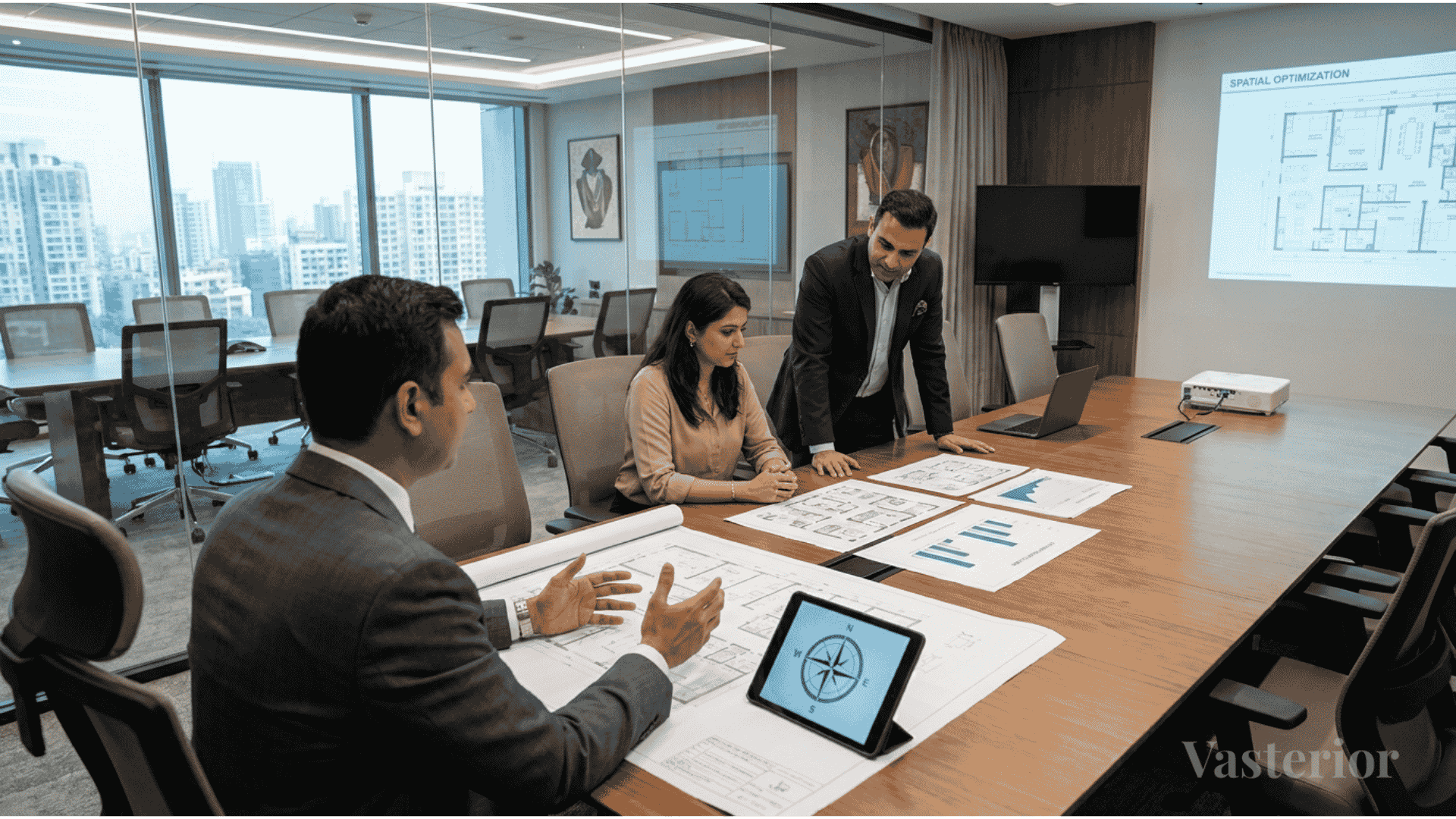
Many businesses that explore Vastu encounter a frustrating experience. The consultant identifies a problem. Recommendations are provided. The consultation ends.
What remains unanswered is the most important question. How do these recommendations integrate with the realities of modern business operations?
A growing company cannot sacrifice functionality. An office cannot ignore workflow requirements. A retail environment cannot compromise customer experience. A corporate space cannot overlook aesthetics and branding.
This is where traditional approaches often fall short. Identifying issues is only half the equation.
Implementing practical, visually appealing, and operationally effective solutions is where true transformation occurs. Without that integration, even the best recommendations struggle to create meaningful business impact.
Where Vasterior Changes the Game
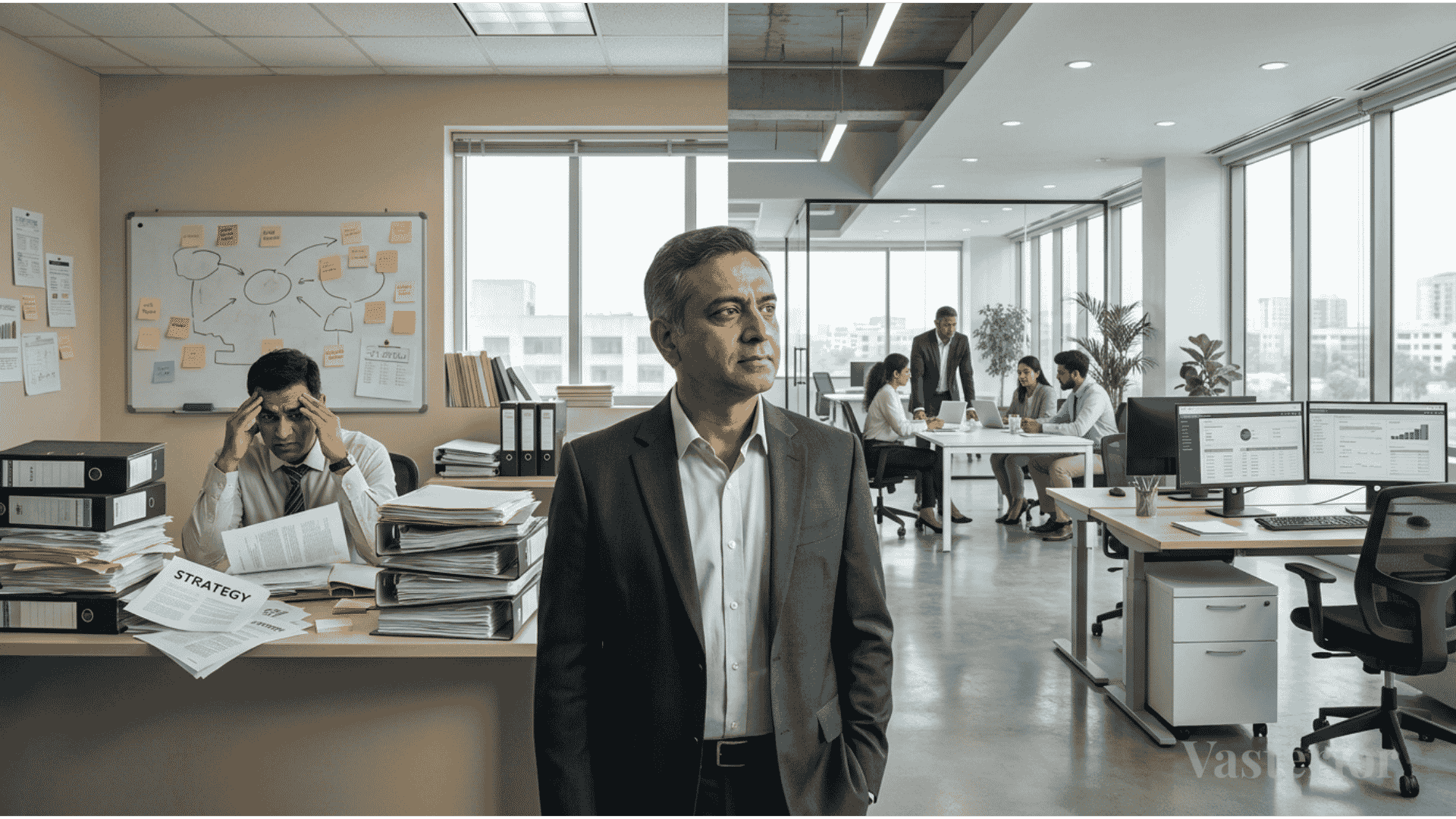
Most firms operate in one of two worlds. They are either interior designers with little understanding of MahaVastu. Or they are Vastu consultants with limited expertise in spatial planning and design. Vasterior operates where these two worlds meet.
Instead of treating Vastu and design as separate disciplines, Vasterior combines them into a unified strategy.
Every recommendation is evaluated through multiple lenses. Functionality. Aesthetics. Business objectives. Human behavior. Spatial flow. MahaVastu principles.
This integrated approach creates spaces that do more than look impressive. They perform.
A well-designed business environment should not merely impress visitors. It should actively support productivity, confidence, collaboration, customer trust, and growth.
That is the philosophy that drives every Vasterior project.
Real Business Problems Often Begin as Space Problems

Business owners are trained to search for external causes. Sales are slowing down. The team is disengaged. Customers are not converting. Departments are operating in silos. Growth feels stuck.
Naturally, attention shifts toward hiring, training, advertising, pricing, or technology. These areas deserve attention. But what if the environment itself is amplifying the problem?
A poorly aligned workspace can increase stress and decision fatigue. An ineffective layout can disrupt communication between teams. An uninspiring customer-facing environment can reduce trust and confidence. A leadership cabin placed without strategic consideration can unintentionally weaken authority and clarity.
The challenge is that these effects are gradual. They do not announce themselves. They quietly influence behavior day after day until they become accepted as normal.
Many business challenges that appear operational on the surface often have environmental contributors hidden beneath them.
When the space changes, the behavior within the space often changes as well. And when behavior changes, business outcomes begin to shift.
The Space Between Ambition and Achievement
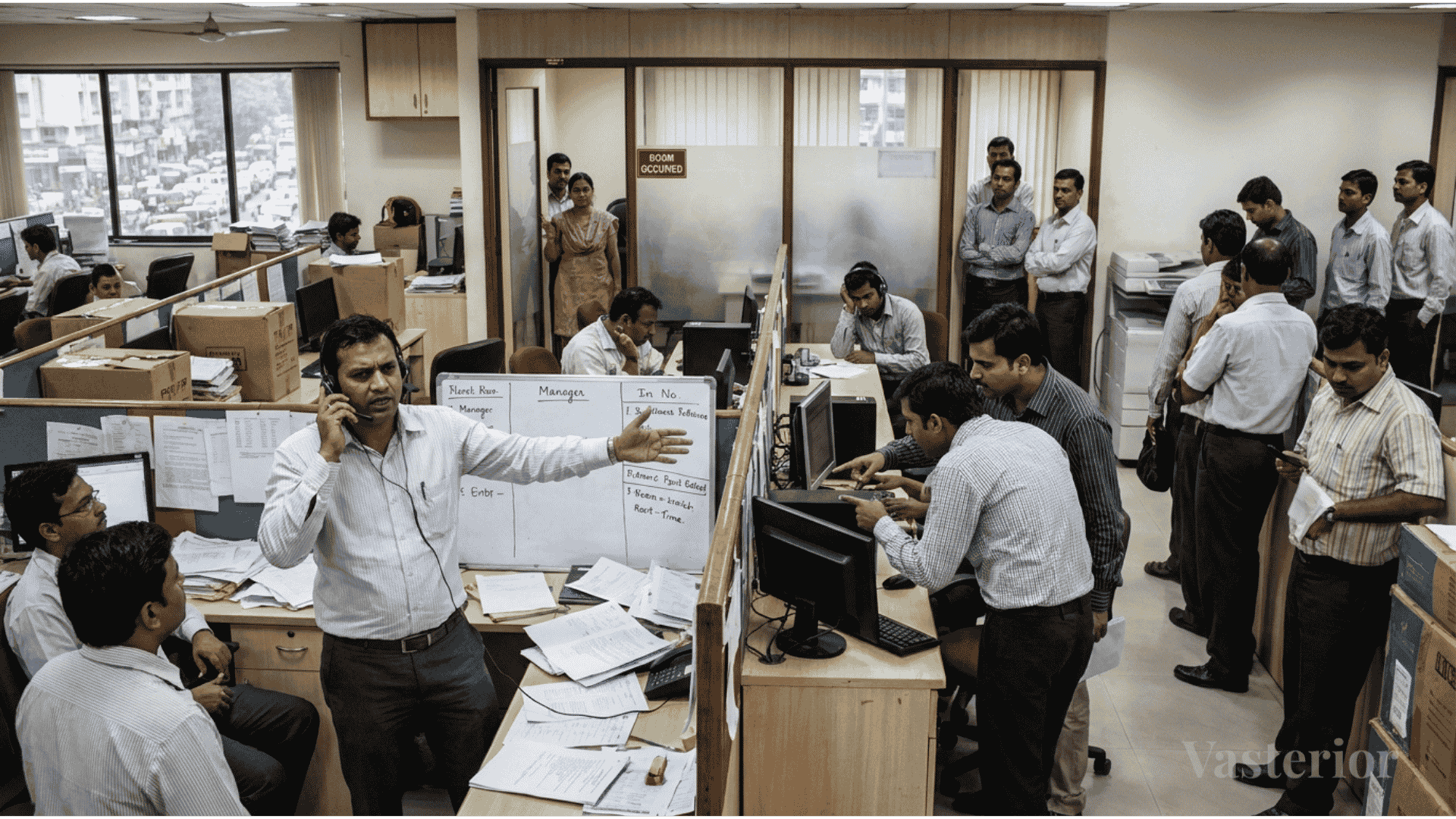
Every entrepreneur starts with ambition. A vision. A goal. A belief that something bigger is possible.
Yet the distance between ambition and achievement is rarely determined by ambition alone. It is shaped by consistency. Focus. Execution. Decision quality. Leadership effectiveness. Team performance. Client confidence.
Interestingly, every one of these factors is influenced by the environment in which people operate.
This is why some offices seem to generate momentum. People feel energized. Meetings become productive. Ideas flow naturally. Clients respond positively. The atmosphere supports progress.
Other spaces create the opposite effect. Despite talent and effort, growth feels heavier than it should.
The difference often lies not in the people but in the environment surrounding them.
Successful businesses increasingly recognize that space is not a background element. It is an active participant in business performance.
What Modern Entrepreneurs Understand Differently
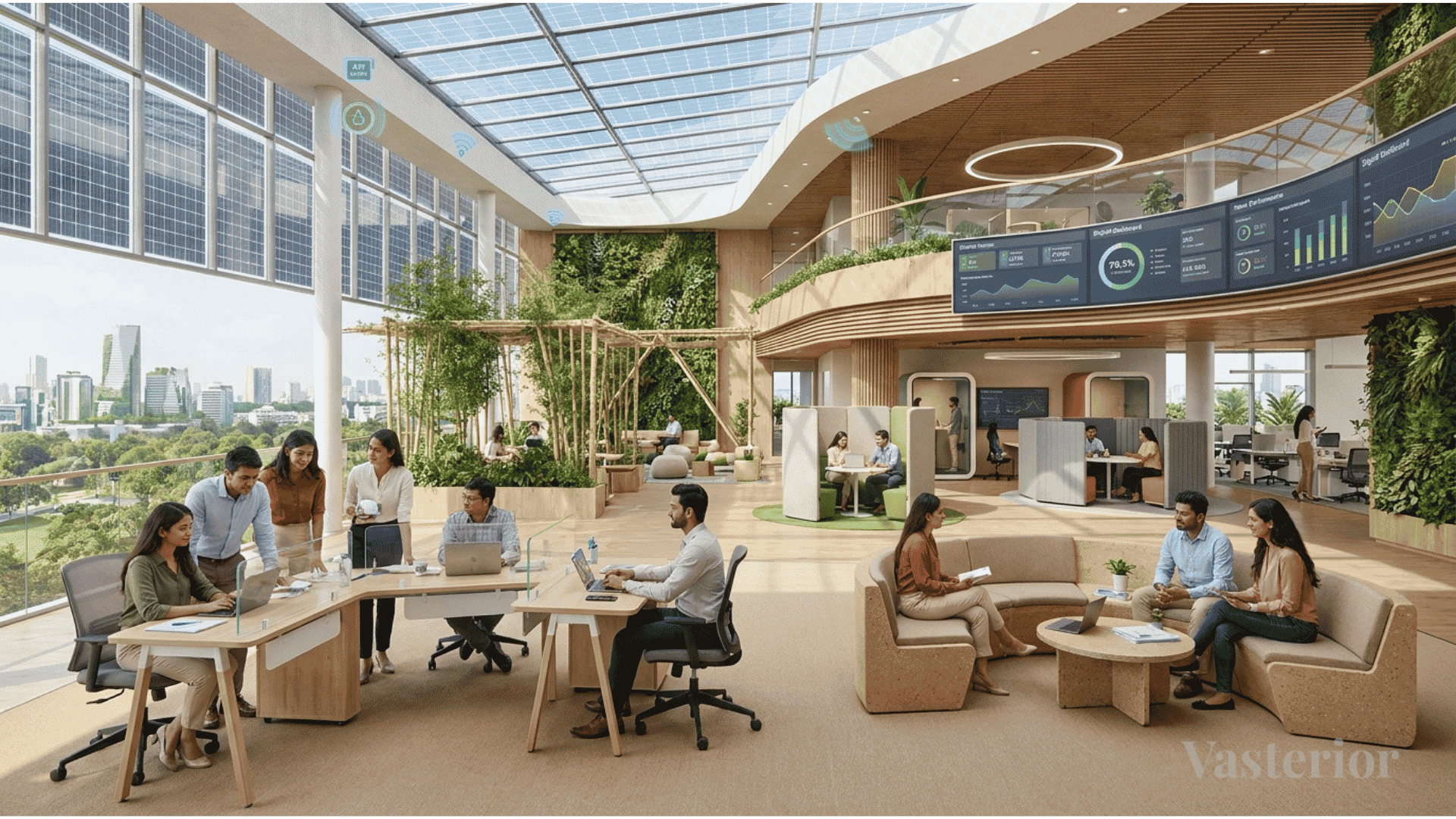
A new generation of business owners is emerging across East Delhi. They think differently. They are data-driven yet open-minded. They value strategy but also understand the importance of human experience.
They invest in branding, customer journeys, technology, and workplace culture. Increasingly, they are also paying attention to spatial intelligence.
They understand that the workplace is not simply a location where business happens. It is a strategic asset. Every design decision influences perception. Every layout decision influences movement. Every spatial decision influences interaction.
When MahaVastu principles are integrated with intelligent planning, the workplace becomes more than functional. It becomes intentional.
This shift in thinking is transforming how successful businesses approach their physical environments. The office is no longer treated as an expense. It is viewed as an investment in performance.
Why Spatial Planning Matters as Much as Vastu
Imagine receiving perfect Vastu recommendations for your office. Now imagine implementing them without considering employee movement, workflow efficiency, customer journeys, storage requirements, or aesthetics. The result would likely create new challenges.
This is precisely why spatial planning is so important. A successful business environment requires balance.
The space must support operational efficiency. It must create positive experiences. It must reinforce the brand identity. It must encourage productivity. And it must align with the principles identified through MahaVastu analysis.
Spatial planning acts as the bridge between theory and practical execution. Without it, recommendations remain ideas. With it, recommendations become business assets.
This is one of the most important distinctions that separates truly transformative projects from ordinary consultations.
The Future of Business Spaces
The future belongs to businesses that understand performance ecosystems.
Tomorrow's successful companies will not evaluate workplaces solely based on square footage or furniture. They will evaluate environments based on their ability to enhance human potential.
This shift is already happening. Across industries, organizations are redesigning spaces to improve collaboration, creativity, employee well-being, and customer engagement.
The next evolution is integrating environmental intelligence into that process. This is where MahaVastu and strategic design become increasingly relevant.
As competition intensifies, businesses will search for every possible advantage. Some advantages will come from technology. Others will come from marketing innovation. And some will come from optimizing the very environments where business decisions are made.
East Delhi's growing entrepreneurial ecosystem is perfectly positioned to benefit from this evolution. Businesses that embrace these ideas today may find themselves significantly ahead tomorrow.
What Should Business Owners Evaluate Today?
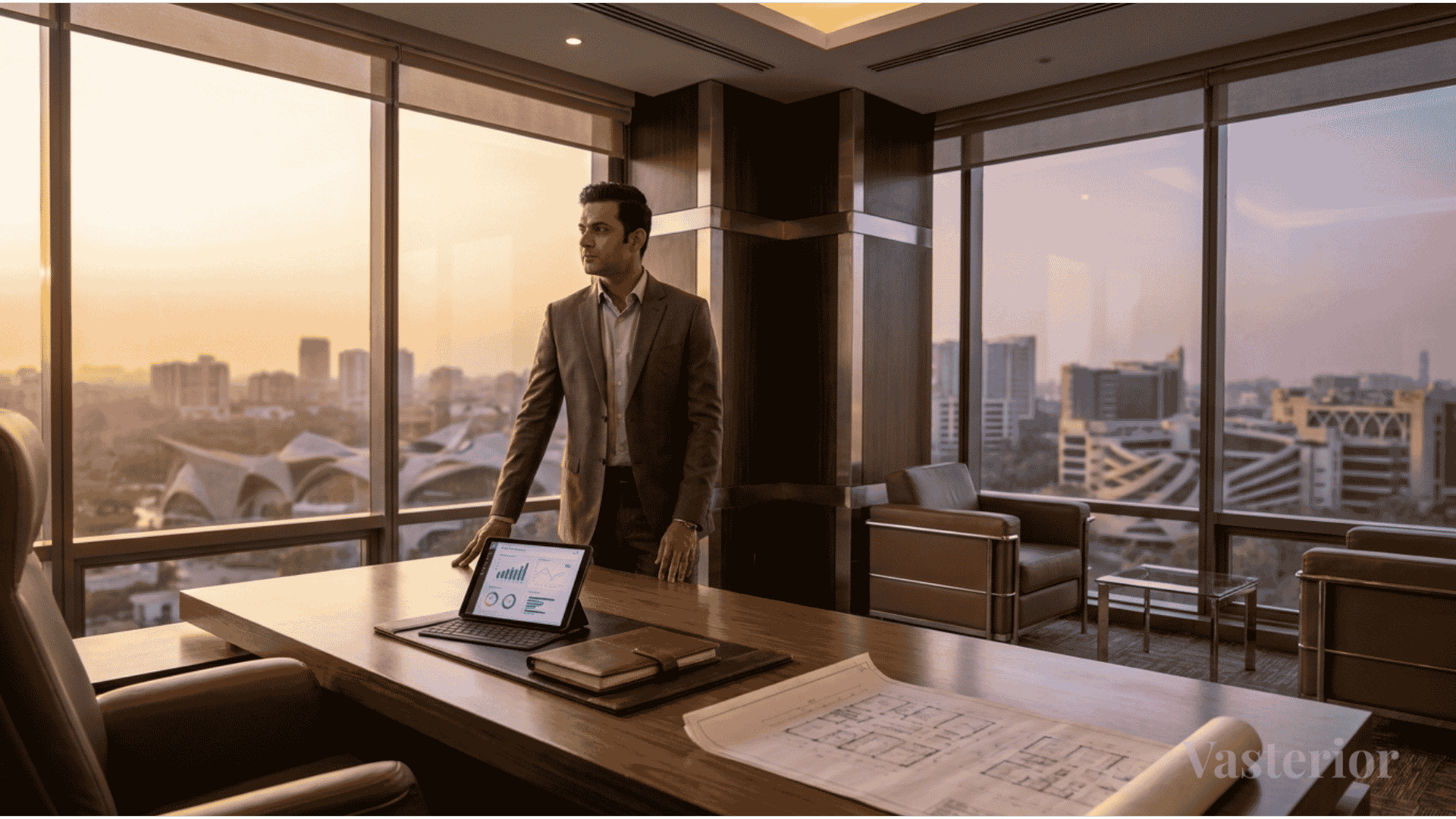
Before investing in another marketing campaign or operational overhaul, it may be worth evaluating the environment supporting those efforts.
Consider the following questions:
- Does your office layout support smooth communication between teams?
- Do clients experience trust and professionalism when they enter your space?
- Is your leadership area positioned to encourage clarity and authority?
- Are employees working within an environment that supports productivity and focus?
- Does the space reflect the ambitions of the business?
- Have MahaVastu principles ever been professionally evaluated within the property?
- Are design and functionality aligned with long-term business objectives?
- Is the environment helping create momentum or creating resistance?
These questions may reveal opportunities that traditional business audits often overlook.
Conclusion
Businesses often believe growth is the direct result of strategy. Strategy is certainly important. But strategy does not operate in isolation.
People execute strategy. Teams implement strategy. Leaders refine strategy. Clients respond to strategy. And all of this happens within a physical environment.
When that environment supports the right behaviors, growth becomes easier. When it creates friction, growth becomes harder.
The difference is rarely obvious at first. But over time, the impact becomes impossible to ignore.
The most successful business owners understand that every element influencing performance deserves attention. That includes the space itself.
By combining the precision of MahaVastu with intelligent spatial planning and sophisticated interior design, Vasterior helps businesses create environments that support productivity, confidence, prosperity, and sustainable growth.
Because sometimes the next breakthrough in business is not another strategy. It is the space where that strategy comes to life.
Connect with our team at +91 9100883355 or write to info@vasterior.com.
Frequently Asked Questions
1. How can Vastu support business growth in East Delhi?
Vastu helps create environments that support better decision-making, productivity, financial stability, team harmony, and customer confidence. When combined with strategic design, it can contribute to stronger business performance.
2. What makes MahaVastu different from traditional Vastu?
MahaVastu uses a systematic and analytical approach to understand directional influences within a property. It focuses on identifying root causes and creating practical solutions rather than relying on generic recommendations.
3. Can Vastu be applied to existing offices and commercial spaces?
Yes. Most commercial properties can be evaluated and optimized through MahaVastu principles and strategic spatial planning without requiring major structural changes.
4. Why is spatial planning important in commercial Vastu?
Spatial planning ensures that MahaVastu recommendations are implemented while maintaining functionality, workflow efficiency, aesthetics, and overall business practicality.
5. How does Vasterior help businesses in East Delhi?
Vasterior combines MahaVastu expertise, interior design, and spatial planning to create business environments that support operational efficiency, employee productivity, customer trust, and long-term growth.